Photo: Wikipedia
Personal Sovereignty in Martinsburg, WV
Strong independent fundamentals that actively favor personal liberty and low regulation.
What does Personal Sovereignty tell us?
Personal Sovereignty measures your capacity for self-reliance and independence with minimal government friction. Higher scores mean fewer barriers between you and the way you want to live... but it assumes you have the space you need and good neighbors.
What does this tell us?
Personal Sovereignty measures your capacity for self-reliance and independence with minimal government friction. Higher scores mean fewer barriers between you and the way you want to live... but it assumes you have the space you need and good neighbors.
State Policy
Energy independence: Net exporter (200% of energy produced in-state)
Personal Liberty
Homesteading

Personal Liberty Analysis
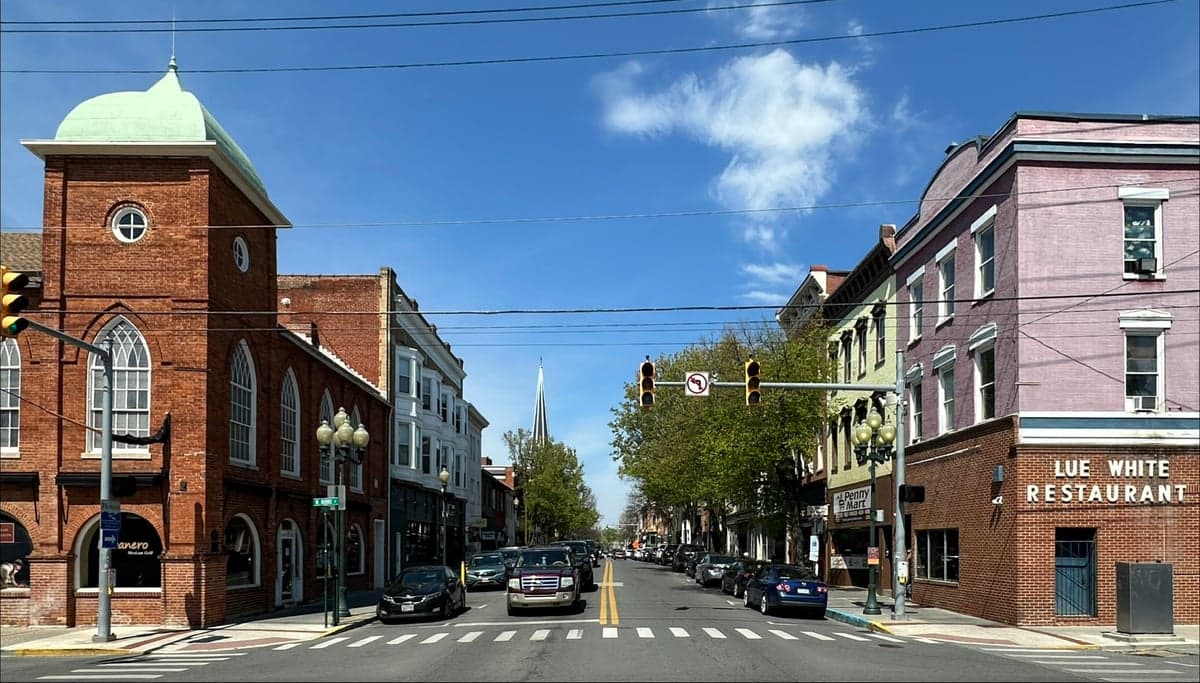
Martinsburg, West Virginia, offers a notably high degree of personal sovereignty compared to much of the Eastern Seaboard, functioning as a practical refuge for those prioritizing autonomy over government convenience. The city sits within a state that has consciously resisted many federal overreach trends, from pandemic-era mandates to environmental regulations, creating an environment where individual decision-making—on health, property, and self-defense—remains largely intact. For a single individual or parent looking to minimize state interference while maintaining access to regional job markets, Martinsburg represents a strategic balance of liberty and logistics, though it is not without its own local governance quirks.
Tax burden and regulatory posture: How West Virginia's fiscal policies protect your wallet and choices
West Virginia's tax structure is deliberately designed to reduce the financial leash of government on its citizens. The state has no estate tax, no inheritance tax, and no tax on Social Security benefits, which directly preserves wealth transfer and retirement income from state confiscation. The personal income tax is a graduated system with a top rate of 5.12% on income over $60,000, but recent legislative pushes aim to phase it out entirely, signaling a long-term trajectory toward lower fiscal burden. Property taxes are among the lowest in the nation, with effective rates averaging around 0.55% of assessed value—critical for those wanting to hold land without being taxed out of it. Sales tax is a modest 6%, with no local add-ons in Berkeley County. On the regulatory front, West Virginia is a right-to-work state, meaning no one can be forced to join a union as a condition of employment, and occupational licensing requirements are less onerous than in neighboring Maryland or Virginia. For a prepper or survivalist, this means fewer bureaucratic hurdles to starting a home-based business, running a firearms-related trade, or simply keeping more of what you earn. The state's regulatory climate is explicitly pro-business and pro-individual, with a strong legislative record of pushing back against federal environmental and labor rules.
Self-defense and gun law specifics: What the Second Sanctuary status means for carry and storage
Martinsburg sits in Berkeley County, which has been declared a Second Amendment Sanctuary, a formal resolution that local law enforcement will not enforce unconstitutional federal gun restrictions. This is not symbolic—it carries real weight in how local sheriffs and prosecutors handle self-defense cases. West Virginia is a constitutional carry state, meaning no permit is required to carry a concealed firearm for anyone legally allowed to possess one. Open carry is also fully legal without a permit. There is no state-level firearm registry, no waiting period for purchases, and no "red flag" law that allows confiscation without due process. For parents, this means you can train your children in firearms safety on your own property without state interference, and you are not required to store firearms in a specific manner inside your home. The state also has a strong Castle Doctrine and Stand Your Ground law, removing any duty to retreat before using deadly force in self-defense. The only notable restriction is that concealed carry is prohibited in certain posted areas like courthouses and schools, but even there, West Virginia law allows for secure storage in vehicles on school property. For someone concerned about government overreach, the legal framework here is as close to a free hand as you will find in the Mid-Atlantic region.
Self-reliance and homesteading viability: Lot sizes, zoning, and off-grid feasibility in Berkeley County
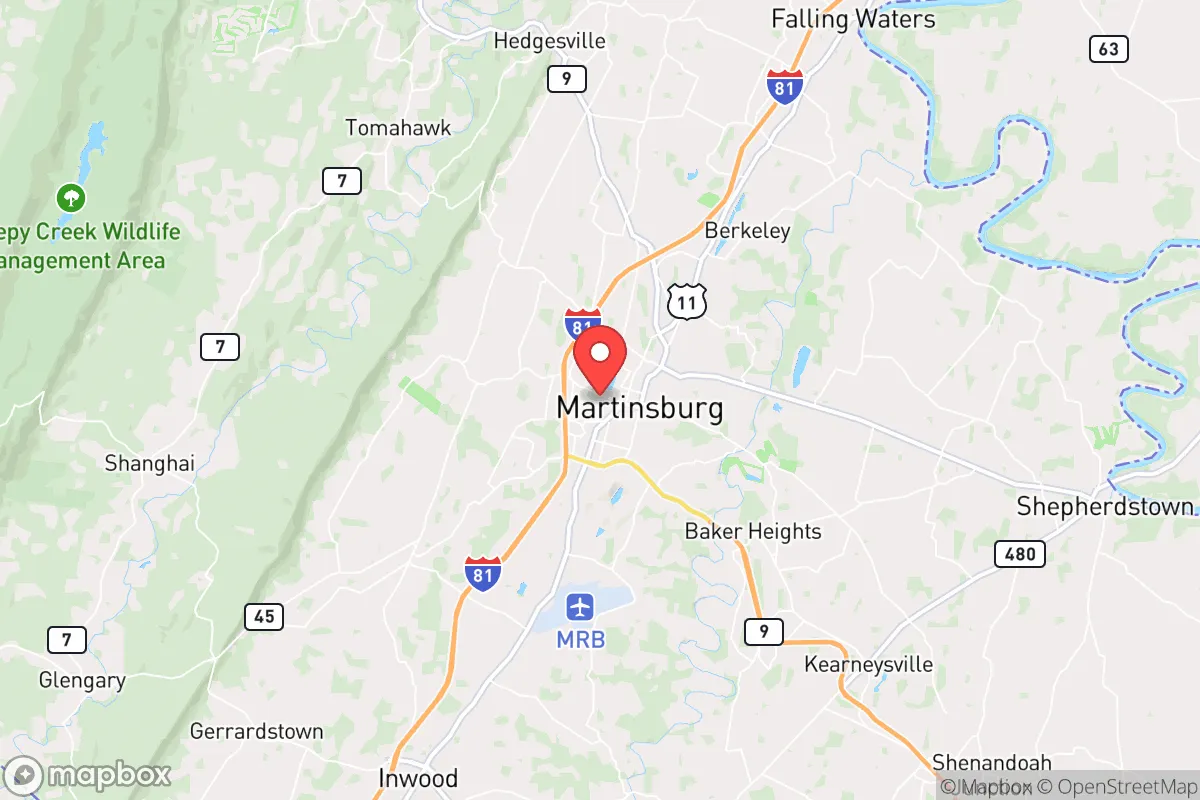
The practical ability to live self-sufficiently in Martinsburg depends heavily on where you buy. Within the city limits, zoning is more restrictive, with standard residential lots averaging 0.25 to 0.5 acres and regulations that limit livestock and accessory structures. However, the unincorporated areas of Berkeley County—places like Hedgesville, Gerrardstown, and the outskirts of Falling Waters—offer a dramatically different picture. Here, minimum lot sizes in agricultural zones are often 2 to 5 acres, and many parcels of 10 to 20 acres are available within a 20-minute drive of downtown Martinsburg. Zoning in these areas explicitly permits chickens, goats, and even cattle, with no requirement for a special permit for small-scale farming. Off-grid feasibility is high: West Virginia has no state-level ban on rainwater collection, and many rural properties already rely on well water and septic systems. Solar panel installation is straightforward, with no HOA restrictions in unincorporated areas and net metering policies that allow you to sell excess power back to the grid. The state also has relatively lax building codes in rural zones, meaning you can construct a pole barn, workshop, or root cellar without the permitting headaches common in Maryland or Virginia. For a prepper, the key takeaway is that true self-reliance—growing food, harvesting water, generating power—is legally and practically achievable within a short drive of a city with a Walmart, a hospital, and an interstate connection.
Personal liberties: Parental rights, medical autonomy, speech, and property protections
West Virginia has a strong legal tradition of protecting parental rights, codified in state law that affirms parents have the fundamental right to direct the upbringing, education, and healthcare of their children. This means no state-mandated vaccine requirements for school attendance beyond the standard childhood immunizations, and parents can opt out for religious or philosophical reasons with minimal paperwork. During the COVID-19 pandemic, the state legislature passed laws prohibiting mask mandates in schools and vaccine passports, reflecting a deep-seated resistance to federal health directives. Medical autonomy extends to adults as well: there is no state-level mandate for health insurance coverage of specific treatments, and the state has actively resisted federal pressure to expand Medicaid without local control. Free speech protections are robust, with no hate speech laws that could be weaponized against political dissent, and property rights are enshrined in the state constitution, which explicitly prohibits the taking of private property for economic development—a direct check on eminent domain abuse. For someone concerned about government overreach into personal medical decisions or the ability to speak freely without fear of censorship, Martinsburg sits in a state that has consistently prioritized individual liberty over collective compliance.
Overall, Martinsburg offers a level of personal sovereignty that is rare within a two-hour drive of Washington, D.C. The combination of constitutional carry, low taxes, minimal zoning in rural areas, and strong parental and property rights creates a buffer against the accelerating trend of government control seen in blue states. It is not a libertarian utopia—there are still local ordinances, school board politics, and the occasional overzealous code enforcement officer—but relative to the surrounding region, it is a clear outlier in favor of individual freedom. For a single person or family looking to opt out of the system while still participating in the economy, Martinsburg represents one of the most viable strategic relocation options on the East Coast.

* Values derived from national, state, county, city and local statistics and may differ in a specific area. Last updated: 2026-04-23T05:45:27.000Z
Narrative content on this page is AI-generated and may contain mistakes. Verify any details that matter before acting on them.
ReloMaps may earn a commission from affiliate links at no extra cost to you.

