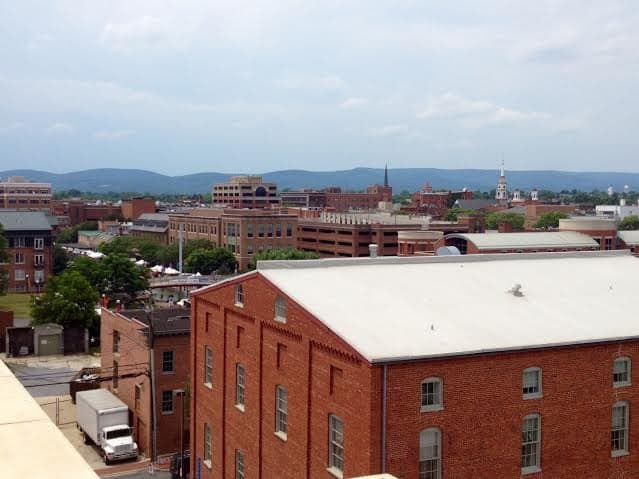
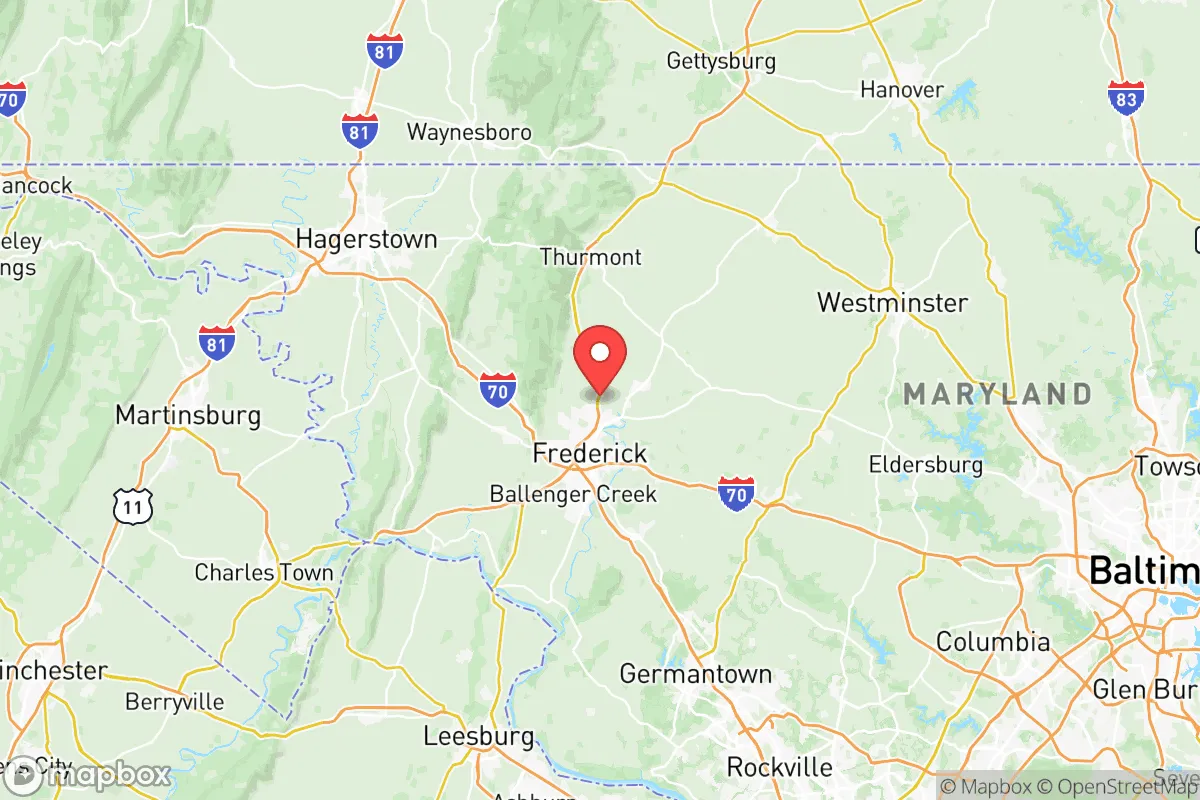
Photo: Wikipedia
Personal Sovereignty in Frederick County
Viable for self-reliance. Generally workable, though some barriers may limit total independence.
What does Personal Sovereignty tell us?
Personal Sovereignty measures your capacity for self-reliance and independence with minimal government friction. Higher scores mean fewer barriers between you and the way you want to live... but it assumes you have the space you need and good neighbors.
What does this tell us?
Personal Sovereignty measures your capacity for self-reliance and independence with minimal government friction. Higher scores mean fewer barriers between you and the way you want to live... but it assumes you have the space you need and good neighbors.
State Policy
Energy independence: Importer (8% of energy produced in-state)
Personal Liberty
Homesteading

Personal Liberty Analysis
Frederick County, Maryland, offers a notably higher degree of personal sovereignty than much of the state, but it is not a libertarian free zone. The county’s rural character, strong agricultural base, and independent-minded population create an environment where self-reliance is respected and government overreach is often met with resistance. However, residents must contend with Maryland’s state-level tax burden and regulatory framework, which can feel intrusive to those accustomed to freer states. For the prepper or survivalist-minded individual, the key is understanding where Frederick County’s local autonomy ends and where Annapolis’s mandates begin.
Tax burden and regulatory posture: how Frederick County compares to surrounding areas
Frederick County’s tax burden is moderate by Maryland standards but heavy compared to states like West Virginia or Pennsylvania. The county’s property tax rate is approximately 1.08% of assessed value, which is lower than Montgomery County’s 0.89% but higher than Washington County’s 0.96%. Income taxes are the real sting: Maryland’s state income tax ranges from 2% to 5.75%, and Frederick County adds a local income tax of 2.96%, bringing the combined top rate to 8.71%. This is a significant drag on disposable income for those trying to stockpile supplies or invest in land. Regulatory posture is mixed. The county government is generally business-friendly, with a streamlined permitting process for agricultural and light industrial uses in unincorporated areas like Thurmont and Emmitsburg. However, the Maryland Department of the Environment (MDE) imposes strict stormwater management and wetland regulations that can complicate homesteading projects. In towns like Brunswick and Middletown, local zoning codes are more restrictive, limiting livestock and accessory structures. The takeaway: if you want minimal regulatory interference, target the rural western part of the county, not the incorporated towns.
Self-defense and gun law specifics: what Frederick County allows and restricts
Maryland is not a gun-friendly state, and Frederick County residents must navigate a web of state-level restrictions. The state requires a Handgun Qualification License (HQL) to purchase a handgun, which involves a background check, fingerprinting, and a four-hour training course. Private firearm sales are prohibited without a licensed dealer transfer. The county itself is more permissive than the state average: the Frederick County Sheriff’s Office, under Sheriff Chuck Jenkins, has a reputation for issuing concealed carry permits liberally within state guidelines. Since the Bruen decision, Maryland has moved to a “shall issue” system, but the process still involves a 30-day wait and a $75 fee. Assault weapons and magazines over 10 rounds are banned statewide, which limits prepper stockpiles. In practice, gun culture is strong in rural areas like Libertytown and Union Bridge, where shooting ranges and private land use for target practice are common. However, discharging a firearm within 100 yards of a dwelling is prohibited, so homesteaders need acreage. For those prioritizing self-defense, Frederick County is better than Montgomery or Prince George’s, but far worse than West Virginia or Pennsylvania. The county’s local ordinances do not add extra restrictions beyond state law, which is a small mercy.
Self-reliance and homesteading viability: lot sizes, zoning, and off-grid feasibility
Frederick County offers genuine homesteading potential, but it varies dramatically by location. In the Agricultural Reserve, which covers roughly 40% of the county, minimum lot sizes are 5 acres for subdivision, and agricultural zoning allows for livestock, poultry, and crop production. Areas like Sabillasville and Rocky Ridge are prime for off-grid living, with large parcels, low population density, and limited code enforcement. Off-grid feasibility is moderate: Maryland requires a septic system permit from the county health department, and solar panels are allowed but must comply with building codes. Rainwater collection is legal for non-potable uses, but potable rainwater systems require a permit and testing. Wood stoves are common and unregulated at the county level, though state air quality rules apply. The biggest hurdle is water: wells are permitted, but drilling costs $5,000–$10,000, and the county requires a minimum yield of 1 gallon per minute. In towns like Walkersville and Mount Airy, zoning is more restrictive, with limits on farm animals and outbuildings. For the serious prepper, the western and northern parts of the county—beyond the suburban sprawl of Frederick City—are where self-reliance is most viable. The county’s Right to Farm ordinance protects agricultural operations from nuisance lawsuits, which is a plus for those raising livestock.
Personal liberties: parental rights, medical autonomy, speech, and property
Frederick County is a mixed bag for personal liberties. Parental rights are relatively strong: the county school board has resisted some state-level mandates on curriculum transparency, and parents have successfully pushed for opt-out policies on certain health surveys. However, Maryland’s state law requires schools to adopt policies on gender identity that can conflict with parental authority, and Frederick County Public Schools have complied. Medical autonomy is limited by state law: Maryland has strict vaccine mandates for school attendance, with only narrow medical exemptions. The county does not have its own health department mandates beyond state requirements. Free speech is generally protected, though the county has faced lawsuits over sign ordinances and public comment restrictions at meetings. Property rights are the strongest area: Frederick County has a moderate property tax rate and does not impose rent control or inclusionary zoning mandates like Montgomery County. Eminent domain is rarely used for private development. The county’s comprehensive plan emphasizes preserving agricultural land, which limits development pressure but also restricts landowners’ ability to subdivide. For those who value property autonomy, the unincorporated areas offer the most freedom, while towns like New Market and Myersville have historic district commissions that can dictate exterior paint colors and fence styles.
Overall, Frederick County offers a moderate-to-high level of personal sovereignty relative to the Washington D.C. suburbs and Baltimore metro area, but it falls short of the freedom found in rural Pennsylvania or West Virginia. The county’s agricultural heritage and independent culture provide a buffer against the worst of state overreach, but Maryland’s tax burden, gun laws, and medical mandates are real constraints. For the prepper or conservative individual, the best strategy is to locate in the western or northern rural areas—Thurmont, Emmitsburg, Sabillasville, or Libertytown—where local enforcement is lax and community norms favor self-reliance. If you can tolerate the state-level restrictions, Frederick County is one of the better options in the Mid-Atlantic for maintaining personal autonomy while staying within commuting distance of employment centers.

* Values derived from national, state, county, city and local statistics and may differ in a specific area. Last updated: 2026-05-12T21:48:14.000Z
Narrative content on this page is AI-generated and may contain mistakes. Verify any details that matter before acting on them.
ReloMaps may earn a commission from affiliate links at no extra cost to you.

