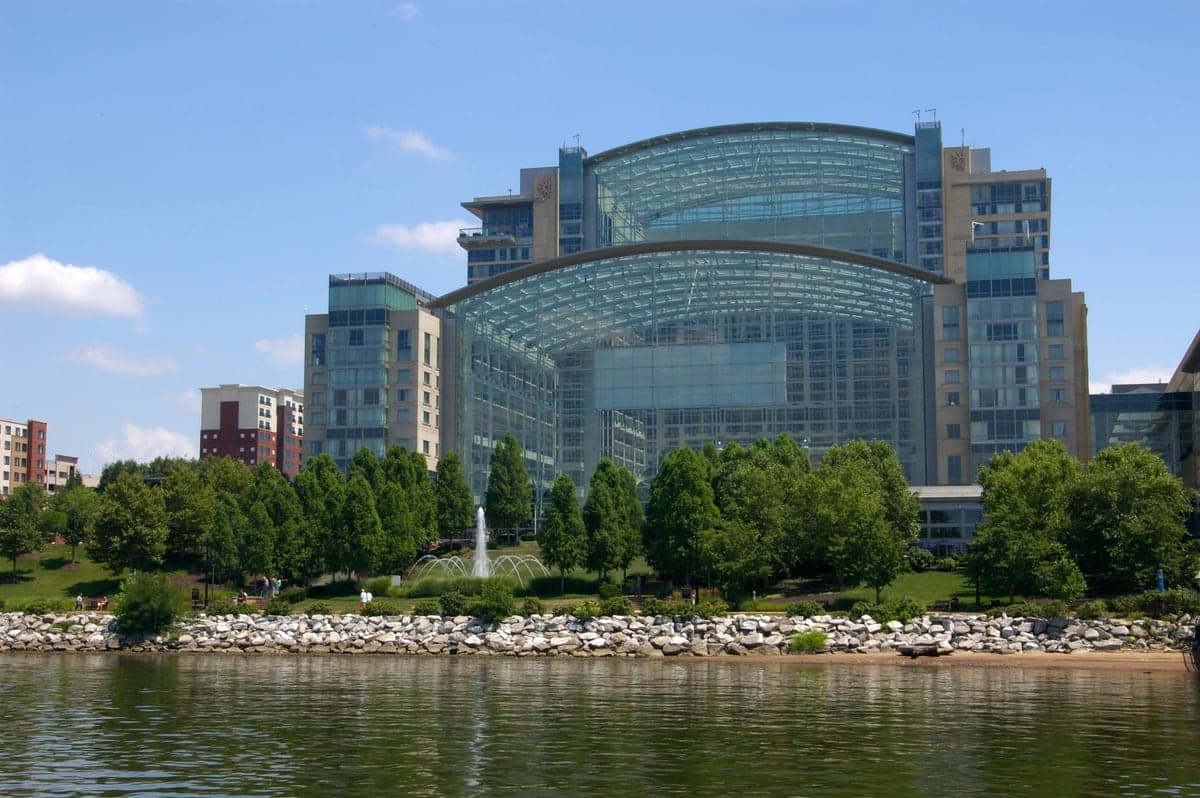
Photo: Wikipedia
Personal Sovereignty in Prince Georges County
Viable for self-reliance. Generally workable, though some barriers may limit total independence.
What does Personal Sovereignty tell us?
Personal Sovereignty measures your capacity for self-reliance and independence with minimal government friction. Higher scores mean fewer barriers between you and the way you want to live... but it assumes you have the space you need and good neighbors.
What does this tell us?
Personal Sovereignty measures your capacity for self-reliance and independence with minimal government friction. Higher scores mean fewer barriers between you and the way you want to live... but it assumes you have the space you need and good neighbors.
State Policy
Energy independence: Importer (8% of energy produced in-state)
Personal Liberty
Homesteading

Personal Liberty Analysis
Prince George’s County, Maryland, presents a complex and largely restrictive environment for personal sovereignty, particularly for those with a survivalist or prepper mindset who prioritize autonomy from government overreach. While the county offers proximity to federal employment and some rural pockets, its regulatory climate, tax burden, and legal framework significantly constrain individual freedoms compared to more liberty-oriented states. For single individuals and parents seeking to maximize self-reliance, the county’s posture on self-defense, property rights, and off-grid living demands careful scrutiny, with notable differences between urban centers like Bowie and more rural areas like Upper Marlboro or Brandywine.
Tax burden and regulatory posture in Prince George’s County
Maryland’s tax burden is among the highest in the nation, and Prince George’s County amplifies this with its own layers. The state income tax ranges from 2% to 5.75%, and the county adds a local income tax of 3.2%, bringing the combined top marginal rate to nearly 9%. Property taxes are also steep: the county’s rate is roughly $1.34 per $100 of assessed value, plus state and district taxes, pushing effective rates above 1.5% in many areas. This is a heavy load for anyone trying to build wealth or maintain a homestead. The regulatory posture is equally burdensome. The county enforces strict building codes, environmental regulations, and zoning laws that limit what property owners can do without permits. For example, in areas like Laurel and Greenbelt, homeowners face hurdles for even minor structural changes, while rural zones in Croom or Aquasco still require county approval for agricultural structures. This creates a climate where government oversight intrudes on daily life, making it difficult to operate independently without navigating a thicket of red tape.
Self-defense and gun law specifics in Prince George’s County
Maryland’s gun laws are among the most restrictive in the nation, and Prince George’s County adds local ordinances that further erode self-defense rights. The state requires a permit to purchase a handgun, a seven-day waiting period, and a background check for all firearm transfers. The county itself has a history of strict enforcement, with local police often taking an aggressive stance on concealed carry. While Maryland is a “may issue” state for concealed carry permits, the Bruen decision has forced a shift toward “shall issue,” but the process remains costly and time-consuming, with required training and a lengthy application review. In practice, this means that in cities like Hyattsville and College Park, carrying a firearm for personal protection is heavily regulated, and even in more rural areas like Clinton or Fort Washington, the legal climate discourages open or concealed carry. For a prepper, this is a critical weakness: the ability to defend one’s home and family is compromised by a system that treats gun ownership as a privilege rather than a right. Magazine capacity limits (10 rounds) and an assault weapons ban further restrict options, making Prince George’s County a poor choice for those prioritizing self-defense autonomy.
Self-reliance and homesteading viability: lot sizes, zoning, and off-grid feasibility
Homesteading and off-grid living face significant barriers in Prince George’s County, though some areas offer more breathing room than others. Minimum lot sizes vary: in the Agricultural Reserve zone, which covers parts of Upper Marlboro, Croom, and Brandywine, lots must be at least 5 acres, with some requiring 20 acres for subdivision. This preserves rural character but also limits density. However, county zoning codes strictly regulate what you can do on that land. Raising livestock, for example, requires permits and adherence to setback rules, and keeping chickens or goats in suburban areas like Bowie or Largo is often prohibited. Off-grid systems like solar panels, rainwater collection, and composting toilets are subject to county health and building codes. Rainwater harvesting is legal but must meet Maryland Department of the Environment standards, and solar installations require permits and inspections. In practice, true off-grid independence is nearly impossible: the county mandates connection to public utilities in most subdivisions, and even in rural zones, you must comply with septic and well regulations that limit self-sufficiency. For a prepper seeking to reduce reliance on the grid, areas like Aquasco or Baden offer more flexibility than denser suburbs, but the regulatory overhead remains high compared to states like Texas or Idaho.
Personal liberties: parental rights, medical autonomy, speech, and property
Prince George’s County’s stance on personal liberties reflects Maryland’s broader progressive tilt, which can conflict with conservative values. Parental rights are constrained by state mandates: Maryland requires school districts to adopt comprehensive sex education curricula, and parents cannot opt out of all components. The county also enforces strict vaccine requirements for school attendance, with limited exemptions. Medical autonomy is similarly limited; the state has a vaccine mandate for healthcare workers and has shown willingness to impose public health orders during emergencies, as seen during COVID-19. Free speech is protected under the First Amendment, but the county has faced controversies over permitting for political rallies and protests, particularly in areas near the University of Maryland in College Park. Property rights are the most concerning for a prepper: the county’s zoning and environmental regulations can restrict land use, and eminent domain has been used for development projects. For example, the Purple Line light rail project involved property acquisitions in areas like Riverdale Park and New Carrollton, displacing homeowners. This creates an environment where government can override individual property decisions for public projects, a red flag for anyone seeking to secure a permanent homestead.
Overall, Prince George’s County ranks low on personal sovereignty compared to other areas in the Mid-Atlantic and nationally. While its rural southern and eastern edges—places like Brandywine, Croom, and Aquasco—offer more land and slightly less regulatory density, the county’s tax burden, gun restrictions, and zoning codes create a system that prioritizes government control over individual autonomy. For a conservative-leaning single individual or parent with a prepper mindset, this is not a liberty-friendly destination. Alternatives like rural Pennsylvania or Virginia’s Shenandoah Valley provide far greater freedom in self-defense, homesteading, and tax burden. If you must live in the DC area for work, Prince George’s County may be tolerable, but it demands constant vigilance against overreach and a willingness to navigate a restrictive legal landscape that undermines self-reliance.

* Values derived from national, state, county, city and local statistics and may differ in a specific area. Last updated: 2026-05-12T13:50:00.000Z
Narrative content on this page is AI-generated and may contain mistakes. Verify any details that matter before acting on them.
ReloMaps may earn a commission from affiliate links at no extra cost to you.

