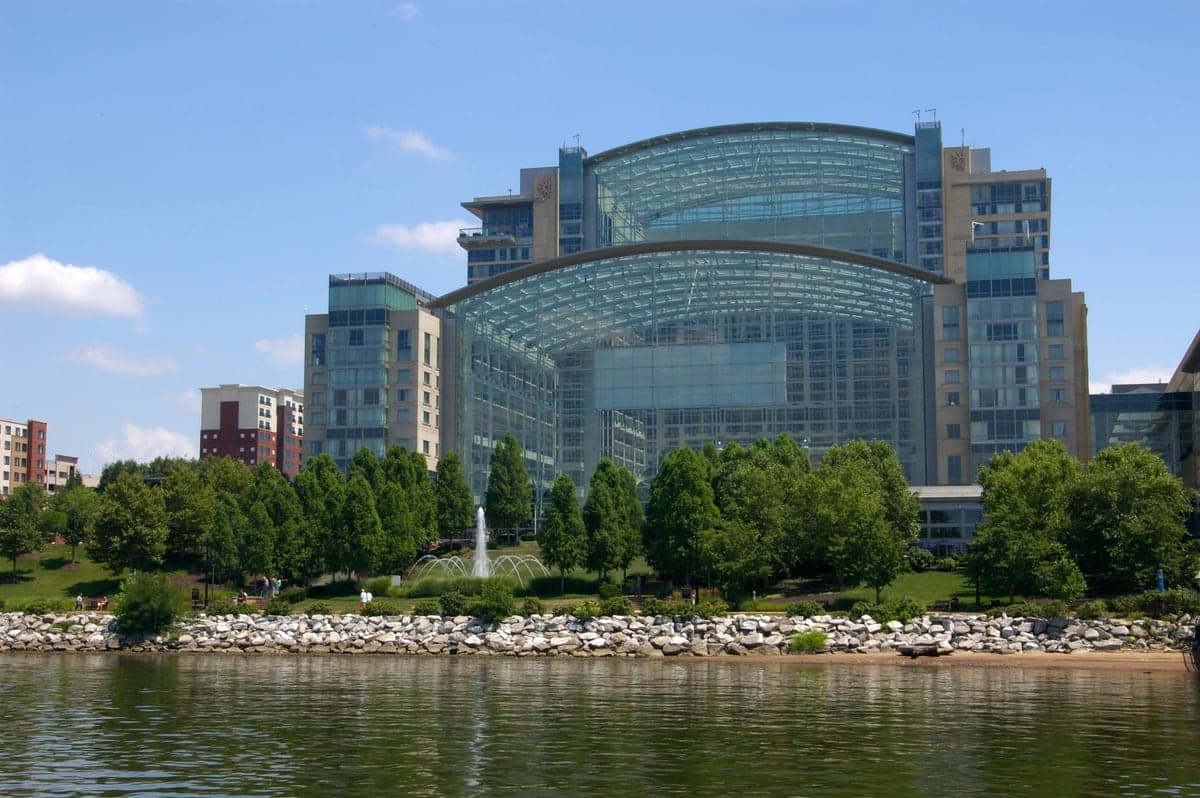
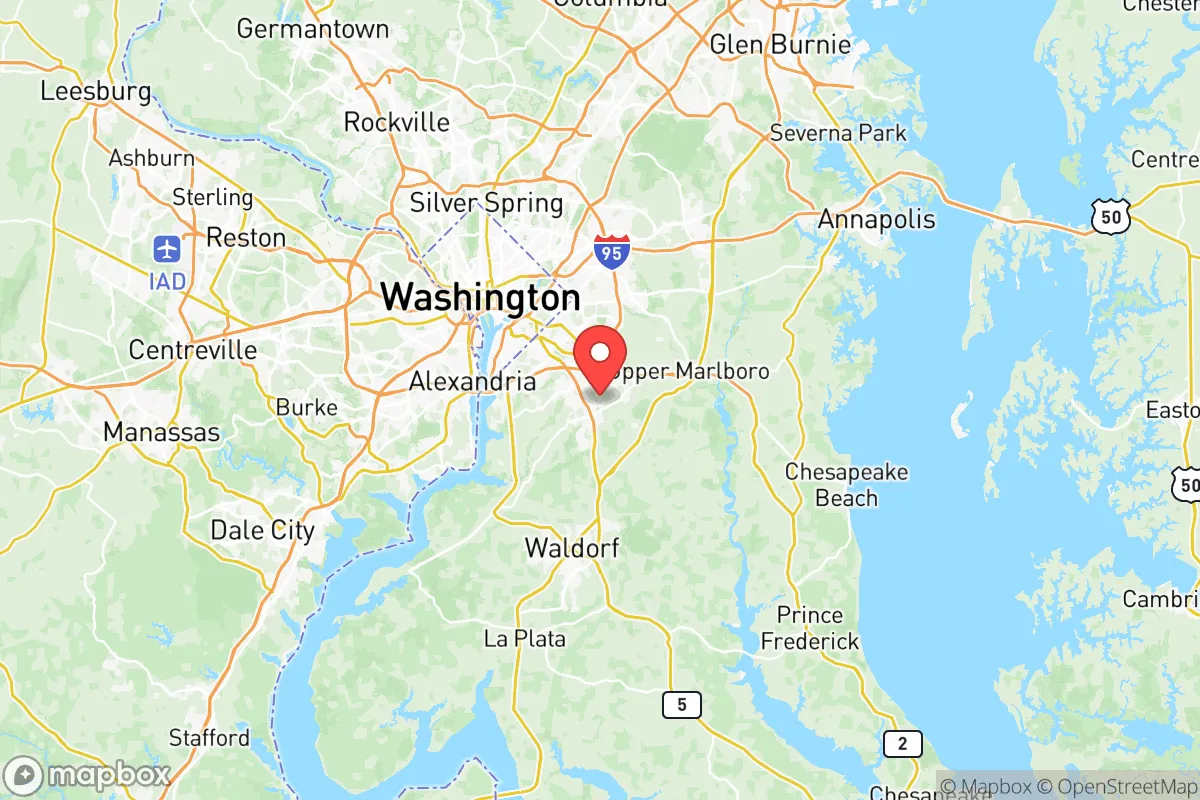
Photo: Wikipedia
Political ClimatePolitical Climate in Prince Georges County
Showing district-level results — no local-only data available.
Local Political AnalysisPolitical Analysis of Prince Georges County
Prince George’s County has been a Democratic stronghold for decades, and that’s not changing anytime soon. The Cook PVI sits at D+17, meaning the county votes about 17 points more Democratic than the national average—identical to Maryland as a whole. But if you’ve lived here as long as I have, you know the political vibe isn’t uniform across the county. Places like Bowie and Upper Marlboro still have a more moderate, family-oriented feel, while College Park and Hyattsville have shifted hard left in recent years, especially on social issues. The trajectory is clear: the progressive wing is gaining ground, and that’s something to keep an eye on if you value personal freedoms and limited government.
How it compares
On paper, Prince George’s and Maryland share the same D+17 rating, but the reality on the ground is different. The state as a whole has a mix of deep-blue urban centers like Baltimore and purple suburbs in places like Anne Arundel County. Here in Prince George’s, the politics are more concentrated. Laurel and Greenbelt have precincts that lean slightly more conservative than the county average, but they’re still solidly blue. Meanwhile, Clinton and Fort Washington are where you’ll find the most moderate voters—folks who might vote Democrat but aren’t thrilled about the party’s shift on things like school policies or tax hikes. The big difference? Prince George’s lacks the rural or exurban pockets that give other parts of Maryland a bit of balance. It’s a county where one-party rule is the norm, and that can lead to policies that feel heavy-handed, like strict zoning laws or mandates that crowd out local businesses.
What this means for residents
For someone like me, who’s watched this place evolve, the biggest concern is how much government reach has expanded. The county council and school board have pushed progressive agendas—think equity-focused curriculum changes in public schools and higher property taxes to fund programs that don’t always show results. If you’re a small business owner in Oxon Hill or Landover, you’ve probably felt the squeeze from new regulations and fees. And for families, the shift in school priorities can feel like your kids are being used as guinea pigs for social experiments. The silver lining? The county’s diversity means there’s still a strong community of people who push back, especially in Mitchellville and Largo, where neighborhood associations often fight against overreach. But the trend is worrying—more mandates, less local control.
Culturally, Prince George’s is unique. It’s one of the wealthiest majority-Black counties in the U.S., and that brings a strong sense of community pride. But the policy direction leans heavily into progressive ideals—like sanctuary city status in some towns and green energy mandates that raise utility costs. If you’re looking for a place where government stays out of your life, this might not be it. The long-term outlook? Unless there’s a realignment, expect more of the same: a county that votes blue, governs left, and leaves moderate voices feeling like they’re shouting into the wind.

State Political ClimatePolitical Climate in Maryland
State Political AnalysisPolitical Environment in the State
Maryland is a deeply blue state with a Cook PVI of D+17, meaning it is one of the most reliably Democratic states in the nation. The dominant coalition is built on the massive, heavily progressive populations of the Washington, D.C. suburbs (Montgomery and Prince George’s counties) and the Baltimore metro area, which together account for a majority of the state’s votes. Over the last 10-20 years, the state has shifted further left as the D.C. suburbs have grown denser and more liberal, while the once-competitive rural and exurban areas have become Republican strongholds but lack the population to counterbalance the urban centers.
Urban vs. rural divide
The political map of Maryland is a tale of two worlds. The western counties—Garrett, Allegany, and Washington—vote reliably Republican, with places like Hagerstown and Cumberland feeling culturally and politically closer to West Virginia or Pennsylvania than to Baltimore. The Eastern Shore, including Salisbury and Easton, is also conservative, though increasingly influenced by wealthy retirees and second-home owners from the D.C. area. The real engine of the state’s blue lean is the I-95 corridor: Bethesda, Silver Spring, Columbia, and Towson are all heavily Democratic, often by margins of 70-80%. Baltimore City itself is a Democratic stronghold, though its population decline has slightly reduced its statewide influence. The divide is stark: you can drive 45 minutes from a Trump rally in Frederick to a progressive town hall in Rockville and feel like you’ve crossed into a different country.
Policy environment
Maryland’s policy environment is aggressively progressive. The state has a graduated income tax with a top rate of 5.75% (plus local piggyback taxes that can push the combined rate over 9%), making it one of the highest-tax states in the country. Property taxes are also high, especially in the D.C. suburbs. The regulatory posture is business-unfriendly, with strict environmental rules, a high minimum wage ($15.00 as of 2024, indexed to inflation), and a strong labor union presence. Education policy is dominated by the teachers’ unions and the Blueprint for Maryland’s Future, a massive funding plan that pours billions into public schools but has done little to close achievement gaps. On healthcare, the state expanded Medicaid early and runs its own exchange. Election laws are among the most liberal: no-excuse mail-in voting, same-day registration, and automatic voter registration are all in place. For a conservative, the policy environment feels like a constant headwind—higher taxes, more regulation, and a government that sees itself as the primary solution to every problem.
Trajectory & freedom
Maryland is becoming less free by the year, especially on issues of personal liberty. The Firearm Safety Act of 2013 banned many semi-automatic rifles and limited magazine capacity to 10 rounds, and in 2024 the state passed a law requiring a permit to purchase any firearm—one of the strictest in the nation. Parental rights have been eroded: the state passed a law in 2023 that allows minors as young as 12 to receive gender-affirming care without parental consent, and the curriculum in many counties (especially Montgomery and Howard) includes comprehensive sex education and critical race theory concepts that many parents find objectionable. Medical autonomy took a hit during COVID, with the state maintaining some of the longest-lasting mask and vaccine mandates in the region. Property rights are constrained by strict zoning and environmental regulations, particularly in the Chesapeake Bay watershed, where new development faces heavy scrutiny. On the tax front, there is no sign of relief—the state’s pension liabilities and infrastructure needs keep pressure on rates. For someone moving here from a freer state, the adjustment is jarring: the government is deeply involved in your daily life, from what you can drive to how you can educate your kids.
Civil unrest & political movements
Maryland has a history of visible political activism, mostly on the left. The 2020 George Floyd protests in Baltimore and Silver Spring were large and occasionally violent, leading to property damage and a lasting tension between police and activists. The state is a sanctuary state, with laws limiting cooperation between local law enforcement and federal immigration authorities, which has become a flashpoint in counties like Harford and Carroll, where sheriffs have pushed back. On the right, grassroots movements are active but outmatched: the “We the People” rallies in Annapolis draw thousands, but they rarely change legislation. Election integrity has been a concern for conservatives, especially after the 2020 and 2022 cycles, where mail-in ballots and same-day registration led to allegations of irregularities, though no major fraud was proven. The most visible flashpoint for a new resident would be the constant culture war in school board meetings, particularly in Frederick County and Howard County, where debates over library books, curriculum, and transgender policies are a regular feature of local news.
Projection
Over the next 5-10 years, Maryland will likely become even more blue. The D.C. suburbs continue to grow, fueled by federal government expansion and tech jobs, while rural and exurban counties are aging and losing population. The state’s high cost of living and tax burden are driving some conservatives to Pennsylvania, Delaware, or Florida, but the net in-migration is still dominated by young, progressive professionals. The Democratic supermajority in the legislature is unlikely to be broken, meaning more gun control, higher taxes, and expanded social programs are on the horizon. A new resident moving in now should expect to see the state’s political culture become more like California or New York—a one-party state where conservative voices are increasingly marginalized, even in local government. The only wildcard is a potential federal downsizing or a major economic downturn, which could slow the growth of the D.C. suburbs and shift the balance slightly, but that’s a long shot.
For a conservative considering a move to Maryland, the bottom line is this: you will be in the minority, and you will pay for it. The state offers excellent schools in certain counties, strong job markets in the D.C. corridor, and beautiful natural areas on the Eastern Shore and in Western Maryland. But you will face high taxes, a regulatory environment that limits your freedom, and a political culture that is openly hostile to traditional values. If you’re willing to be a voice in the wilderness and can afford the cost, places like Frederick, Carroll County, or the Eastern Shore offer like-minded communities. But if you value low taxes, gun rights, and parental control, you’re better off looking elsewhere.
* Values derived from national, state, county, city and local statistics and may differ in a specific area. Last updated: 2026-05-12T13:50:00.000Z
Narrative content on this page is AI-generated and may contain mistakes. Verify any details that matter before acting on them.
ReloMaps may earn a commission from affiliate links at no extra cost to you.

