Photo: Wikipedia
Strategic Assessment of Maryville, TN
Meaningful friction. Expect exposure to either population pressure, blast zones, or natural disaster risk. Consider buying a retreat property.
What does the Strategic Assessment tell us?
Our Strategic Assessment grades tactical survivability of an area. Major population centers, military targets, fallout zones, natural disasters, and border exposure all drive risk — lower exposure means a more defensible position in a crisis.
This is heavily inspired by Joel Skousen's Strategic Relocation book. Highly recommended you checkout the book ($)What does this tell us?
Our Strategic Assessment grades tactical survivability of an area. Major population centers, military targets, fallout zones, natural disasters, and border exposure all drive risk — lower exposure means a more defensible position in a crisis.
This is heavily inspired by Joel Skousen's Strategic Relocation book. Highly recommended you checkout the book ($)Strategic Pillars

Key Distances
Regional Safe Places
Below is our recommended "safe zones" in Tennessee and the surrounding area based on our strategic heuristics. For most people, it's unrealistic to live in a “safe zone” full-time due to work, family or other personal reasons. They tend to be more rural. However, many of these areas are perfect for second homes and retreat properties that double as a vacation home or even a short-term rental.
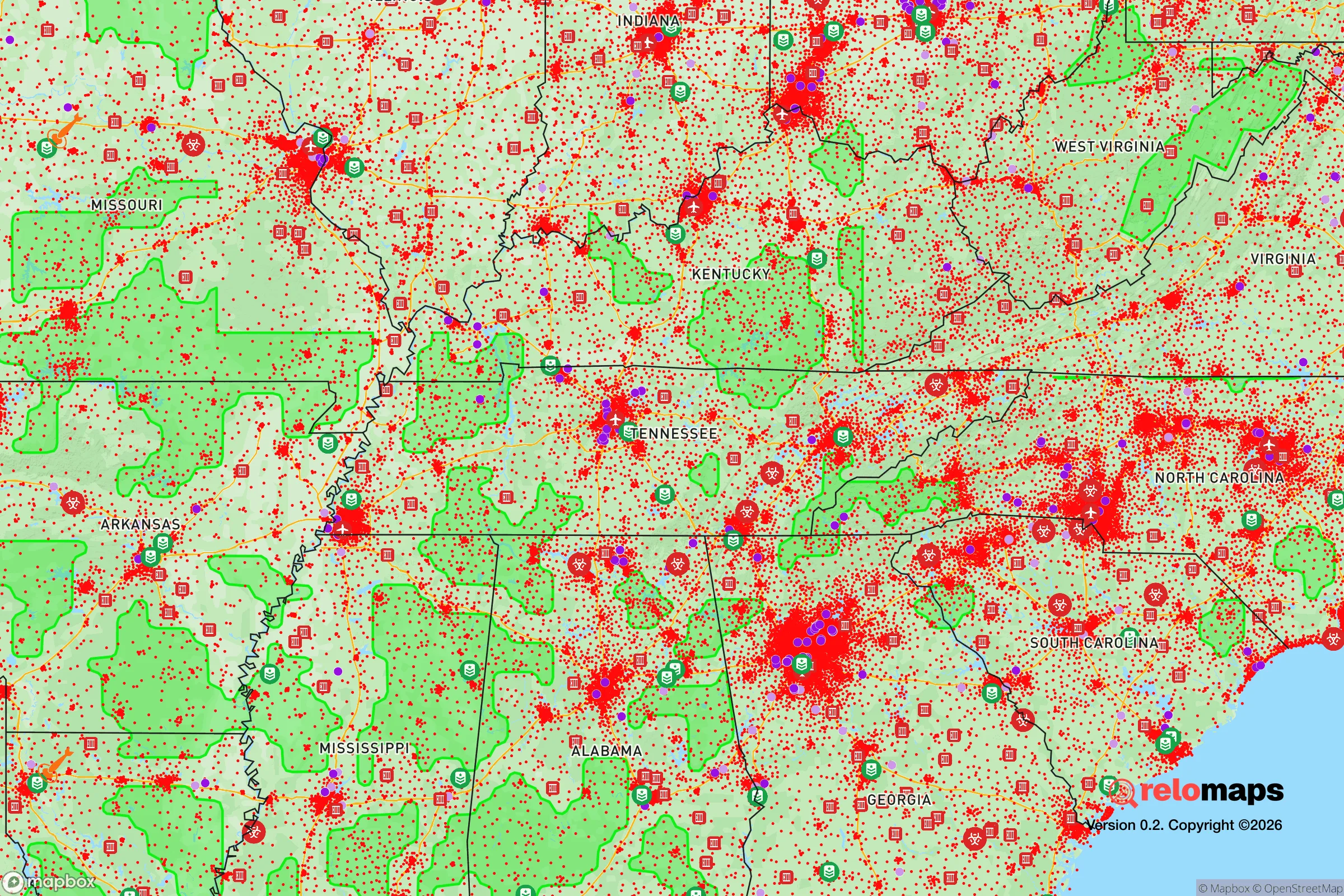
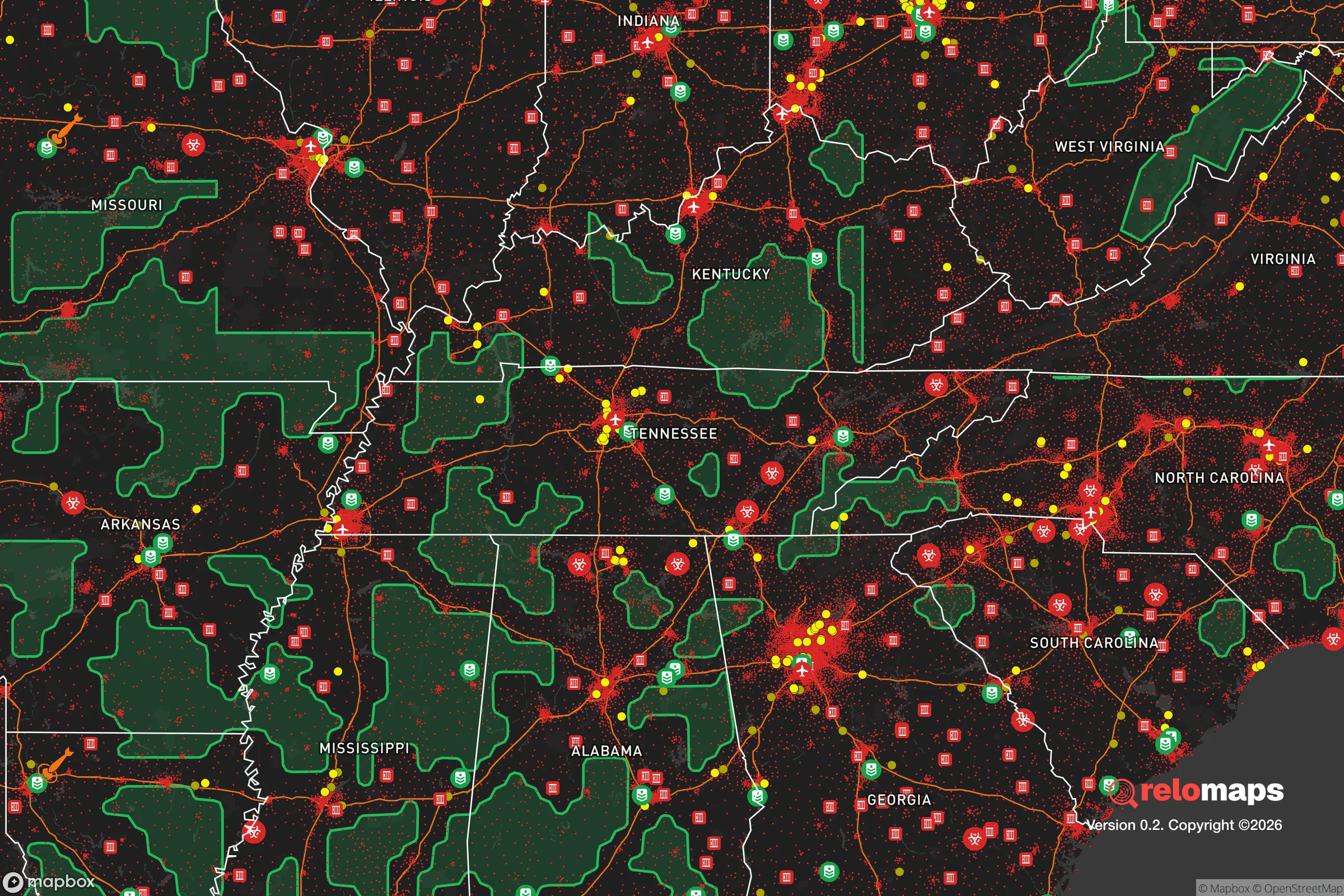


Important Note: For informational purposes only. This does not mean nothing bad ever happens in the green zones. Please use common sense. This is based on public data and modeled with AI. We tried to take a conservative approach but mistakes happen. We update this regularly as new information becomes available.
Solar Generator Recommendations
Backup power matters more here than in safer locations. We've picked three solar generators across budgets and capacity tiers — start with the budget unit if you only need a few essentials, or step up if you want to run a fridge and HVAC for days at a time.

Jackery Portable Power Station Explorer 300
Budget OptionPower on the Go: Weighing only 11 lbs, it's convenient to set up and store with book-sized foldable solar panels

BLUETTI Portable Power Station AC180
Designed for both indoor and outdoor scenarios, AC180 is highly capable as it has a robost capacity and continuous output power.

EF ECOFLOW DELTA Pro Ultra Power Station
Upgraded PickEcoFlow DELTA Pro Ultra is a whole-home energy system designed to grow with your family. Integrated with the Smart Home Panel 2, it scales to meet your evolving energy needs — keeping your home powered, intelligent, and secure through every stage of life.
We earn a commission, at no additional cost to you.
Strategic Assessment Analysis
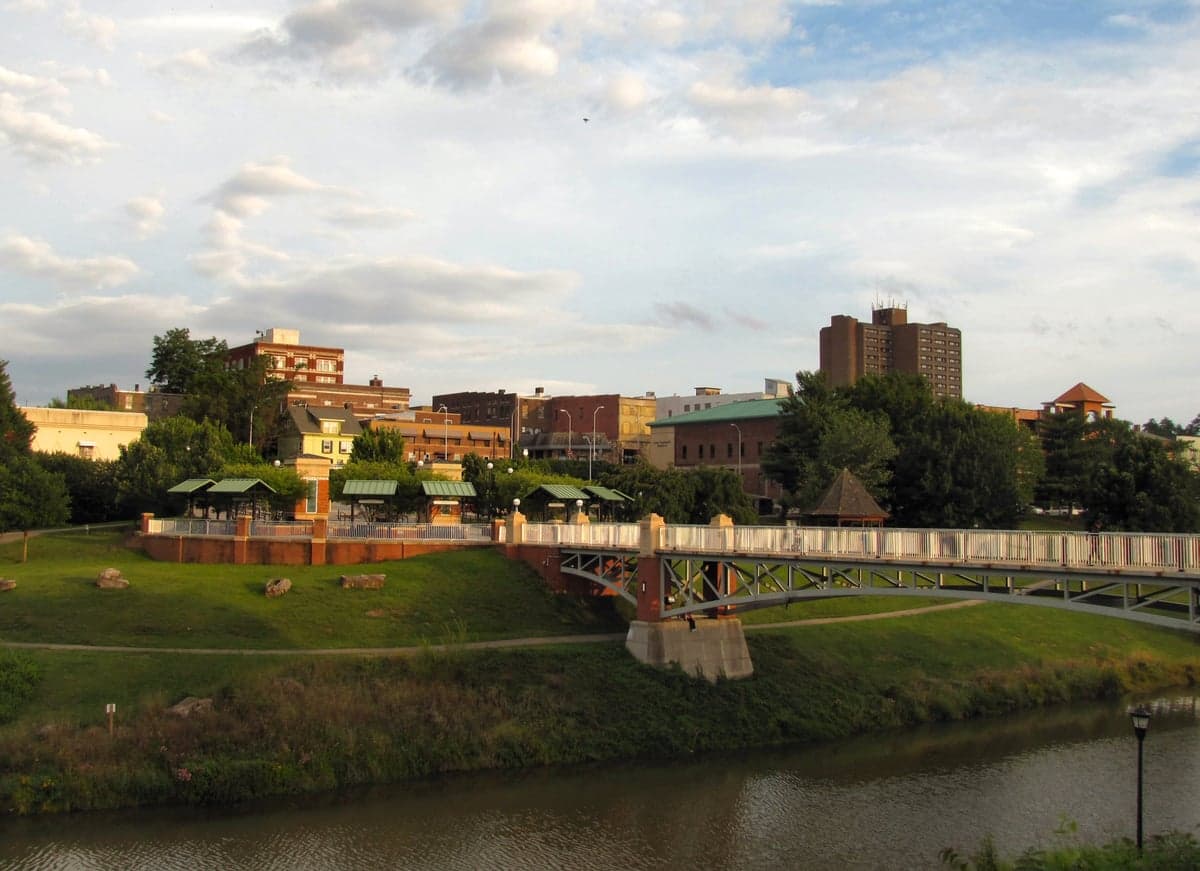
Maryville, Tennessee, offers a compelling mix of geographic insulation and practical self-sufficiency that makes it a serious contender for anyone thinking long-term about resilience. Tucked against the foothills of the Great Smoky Mountains and sitting just south of Knoxville, this town benefits from a position that is close enough to regional infrastructure but far enough from the core chaos of a major metro. For a conservative-leaning relocator who values community stability, resource access, and a lower profile, Maryville checks a surprising number of boxes without the hype of more famous prepper destinations like western Montana or rural Idaho.
Geographic position and natural advantages for long-term stability
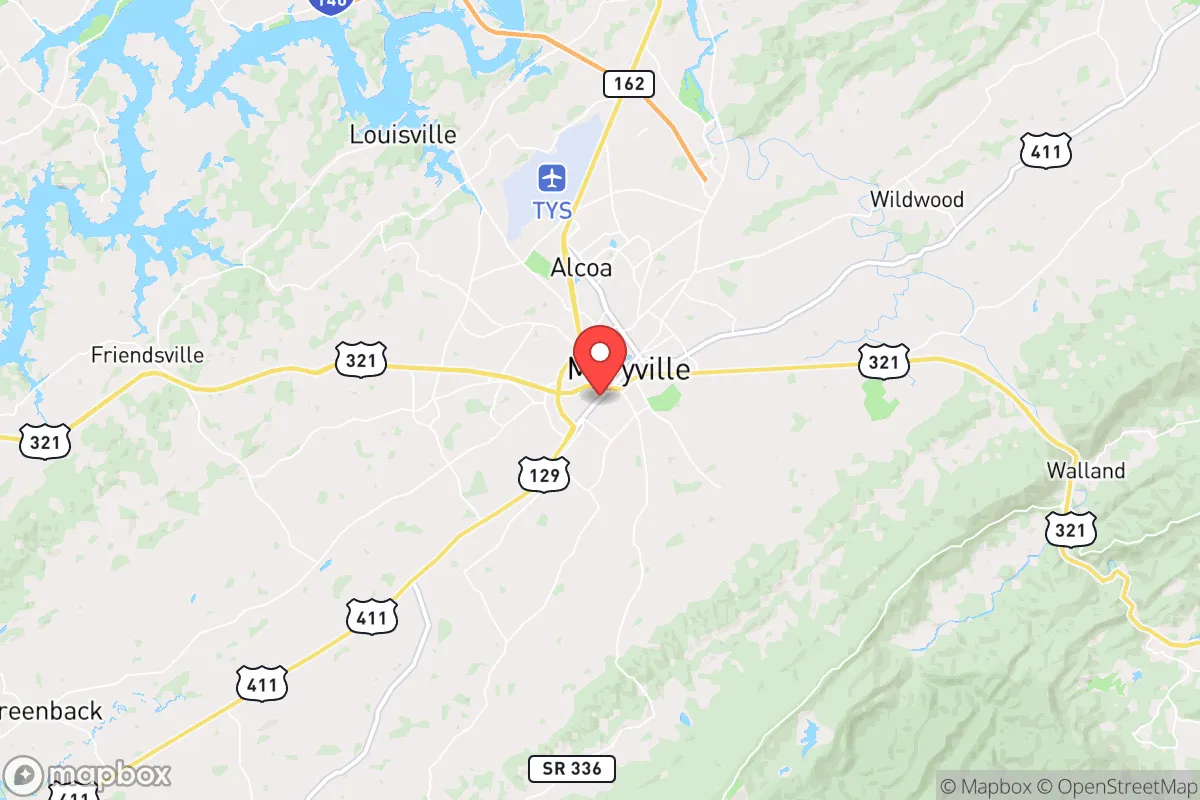
Maryville’s location is its strongest card. It sits in Blount County, which is framed by the Smoky Mountains to the southeast and the Tennessee River Valley to the northwest. This creates a natural buffer zone. The mountains provide a physical barrier against large-scale movement from the east, while the valley offers fertile land and water access. The area is not in a major hurricane zone, is far from active fault lines, and has a temperate climate that supports year-round gardening and livestock. The elevation—around 900 feet—keeps it above the worst flood risks of the Tennessee River, though low-lying areas near the Little River can see localized flooding during heavy rains. For a prepper, this means you can grow food, store water, and move without the extreme weather threats that plague the Gulf Coast or the Plains. The nearby Cherokee National Forest and Great Smoky Mountains National Park also offer vast, undeveloped land for hunting, foraging, and retreat if needed. Maryville’s position also puts it within a two-hour drive of Chattanooga, Asheville, and Knoxville, but the town itself remains a secondary target—not a primary one—in any scenario involving civil unrest or infrastructure collapse.
Risks, exposures, and proximity to fallout-relevant landmarks
No location is perfect, and Maryville has real vulnerabilities that a strategic relocator must weigh. The most obvious is its proximity to Knoxville, about 15 miles north. Knoxville is home to the University of Tennessee, a major medical center, and the Oak Ridge National Laboratory—a key federal research site about 30 miles northwest of Maryville. Oak Ridge is a high-value target in any conflict scenario, and while Maryville is outside the immediate blast radius of a conventional strike, fallout patterns depend on wind direction. Prevailing winds in East Tennessee generally blow from the southwest, which would carry fallout away from Maryville in a worst-case event, but that’s not a guarantee. Additionally, the Tennessee Valley Authority (TVA) operates multiple dams and power plants in the region, including the Watts Bar Nuclear Plant about 50 miles southwest. A catastrophic failure or attack on that facility could contaminate the Tennessee River watershed, which feeds into Maryville’s water supply. The area also has a significant industrial corridor along I-75, including chemical plants and logistics hubs, which could become targets for sabotage or become hazardous during a breakdown of civil order. On the social side, Maryville has seen steady population growth—up about 10% since 2020—which means more people competing for resources in a crisis. The town’s relatively affluent demographic also means that during a panic, the local supply chains for food, fuel, and medicine could empty faster than in a more rural, self-sufficient community.
Practical resilience for a relocator: food, water, energy, and defensibility
For someone serious about self-reliance, Maryville offers a workable baseline but requires deliberate upgrades. The local water supply comes from the Little River and Fort Loudoun Lake, both part of the Tennessee River system. Municipal water is treated and reliable, but a prepper should plan for a private well or rainwater catchment. The area gets about 50 inches of rain annually, so rainwater collection is viable. The soil in Blount County is a mix of clay and loam, which is workable for gardens but not ideal for large-scale farming without amendments. Local farmers markets and co-ops are strong, and there’s a growing network of homesteaders and small-scale livestock operations. For energy, the grid is served by TVA, which is stable but not hardened against EMP or cyberattack. Solar is a good option here—Maryville gets about 200 sunny days per year, which is decent for the Southeast—but tree cover in the foothills can limit panel efficiency. Wood heating is practical, given the surrounding forests, and many homes already have fireplaces or wood stoves. Defensibility is mixed. Maryville itself is a suburban town with a grid street pattern, which is not ideal for perimeter defense. However, the surrounding rural areas—especially toward the mountains—offer properties with long driveways, natural chokepoints, and good visibility. The local law enforcement presence is solid, with the Blount County Sheriff’s Office and Maryville Police Department maintaining a visible patrol, but in a prolonged crisis, you cannot rely on them. The community culture leans heavily conservative and church-oriented, which can be a double-edged sword: it fosters mutual aid among like-minded people but can also mean that outsiders are viewed with suspicion. For a relocator, building relationships early—through local churches, gun clubs, or volunteer fire departments—is essential for long-term security.
The overall strategic picture for Maryville is that it’s a solid B+ location for a conservative prepper who wants a balance of access and insulation. It’s not a remote bunker site, and it’s not a zero-risk zone. But it offers a realistic path to self-sufficiency in a region that is politically aligned with your values, has abundant natural resources, and is far enough from the major flashpoints of the East Coast. The key is to buy land with water access, invest in off-grid energy, and integrate into the local community before the next crisis hits. If you’re looking for a place that won’t make you a target but will let you live a prepared life without feeling like a survivalist hermit, Maryville deserves a serious look.

* Values derived from national, state, county, city and local statistics and may differ in a specific area. Last updated: 2026-05-01T13:26:05.000Z
Narrative content on this page is AI-generated and may contain mistakes. Verify any details that matter before acting on them.
ReloMaps may earn a commission from affiliate links at no extra cost to you.

