Photo: Wikipedia
Political ClimatePolitical Climate in Maryville, TN
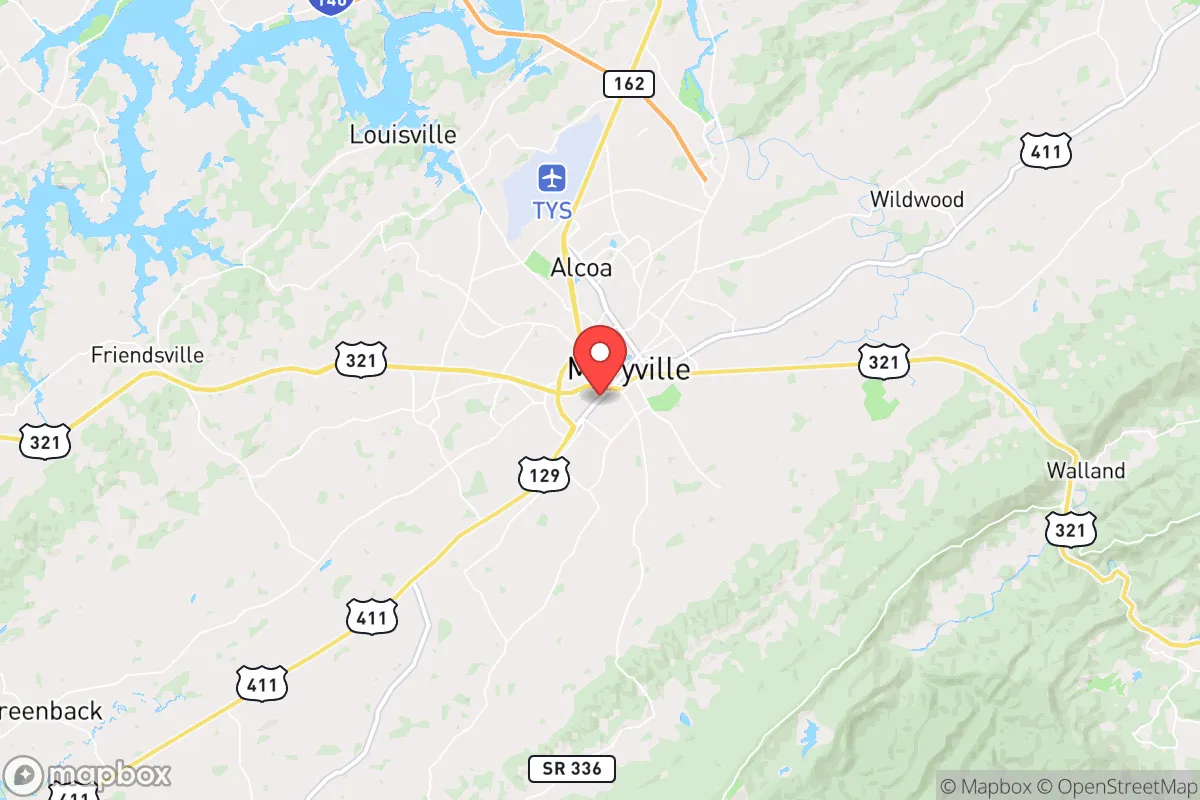
District shown is the primary district for this city’s centroid. Cities may span multiple districts.
Local Political AnalysisPolitical Analysis of Maryville, TN
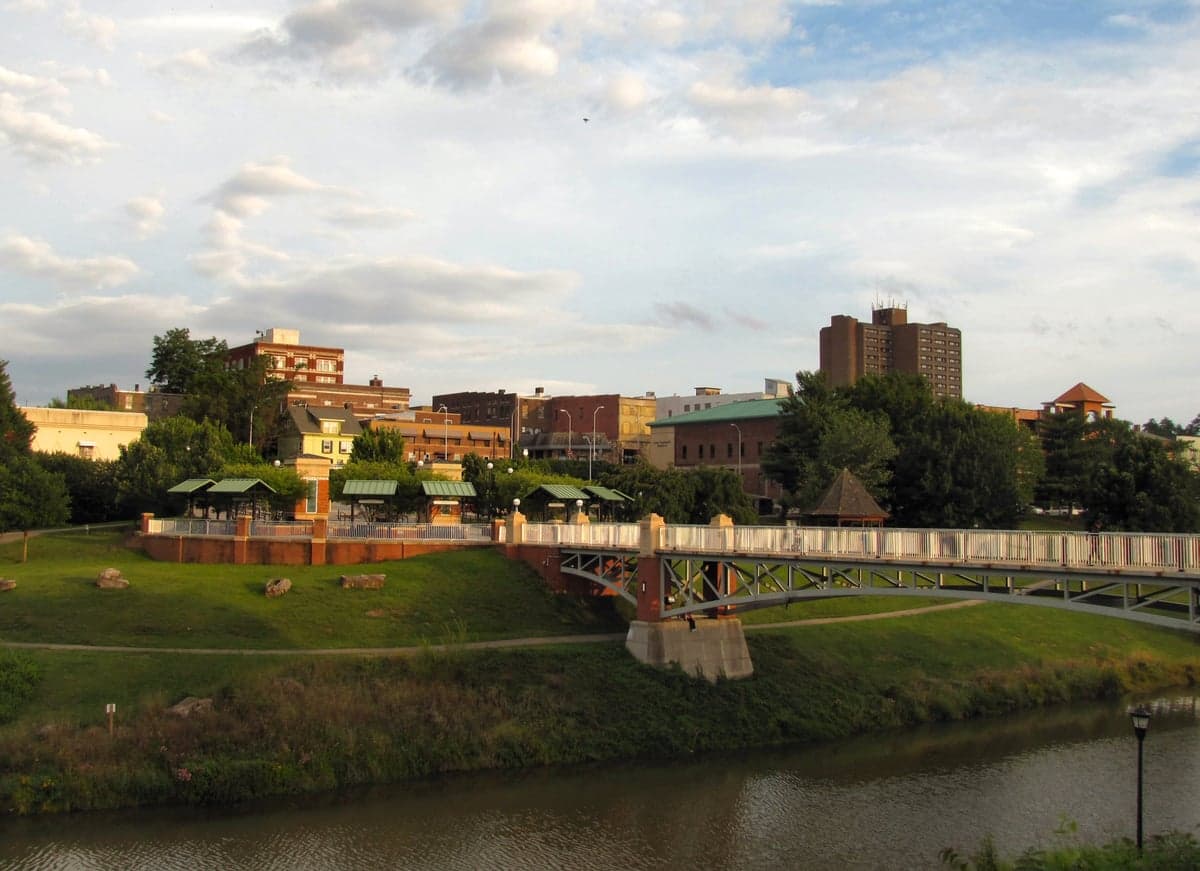
Maryville, Tennessee, is about as solidly conservative as it gets in East Tennessee, and that’s not changing anytime soon. With a Cook Partisan Voting Index of R+17, the area leans heavily Republican, and that’s reflected in local elections, school board decisions, and even the way folks talk at the grocery store. The political trajectory here has been steady for decades—no wild swings, just a consistent preference for limited government, low taxes, and a hands-off approach to personal liberties. If you’re looking for a place where the government stays out of your business and your backyard, this is it.
How it compares
Compared to nearby cities, Maryville stands out as a conservative anchor. Knoxville, just 20 minutes up the road, has a more mixed political vibe—especially around the University of Tennessee campus, where you’ll find younger, more progressive voices. Alcoa, Maryville’s twin city, leans conservative too, but it’s a bit more moderate on economic issues due to its industrial base. Drive a little further to Gatlinburg or Pigeon Forge, and you’ll see a tourism-driven economy that’s still red but more focused on business-friendly policies. The real contrast is with places like Nashville or Chattanooga, where progressive policies have crept in—higher taxes, more regulations, and a bigger government footprint. Maryville residents tend to see those trends as cautionary tales, not models to follow.
What this means for residents
For the people living here, the political climate means a lot of practical freedom. You won’t face the kind of overreach you hear about in other parts of the country—no heavy-handed zoning rules that tell you what you can do with your own property, no aggressive tax hikes to fund programs you didn’t ask for. The local government is generally responsive to residents who want to keep things simple: low crime, good schools, and minimal interference. That said, there’s a growing concern among longtime locals about outside influence. As more people move in from blue states, there’s a quiet worry that some of those progressive ideas—like stricter environmental regulations or more government involvement in local businesses—might start to take root. So far, the community has pushed back hard, but it’s something to keep an eye on.
Culturally, Maryville is a place where traditions matter. You’ll see church parking lots full on Sunday mornings, and the local schools still emphasize things like the Pledge of Allegiance and community service. There’s a strong sense of personal responsibility here—people don’t expect the government to solve their problems. Policy-wise, the area is known for its low property taxes and a business-friendly environment that’s helped companies like DENSO and Clayton Homes thrive. The biggest distinction from more progressive areas is the attitude toward individual rights: Maryville residents generally believe that your life is your own, as long as you’re not hurting anyone else. That’s a rare thing these days, and it’s why so many folks are willing to fight to keep it that way.

State Political ClimatePolitical Climate in Tennessee
State Political AnalysisPolitical Environment in the State
Tennessee has been a reliably red state for decades, with a strong Republican trifecta controlling the governorship and both legislative chambers, but the real story is the deepening shade of that red over the past 10-20 years. The state voted for Donald Trump by a 30-point margin in 2024, up from 26 points in 2020, and the GOP now holds supermajorities in both the House and Senate. This isn't just a partisan lean—it's a deliberate, accelerating shift toward conservative governance that has reshaped everything from tax policy to school choice, driven by a coalition of rural voters, suburban families, and a growing wave of transplants from blue states.
Urban vs. rural divide
The political map of Tennessee is a study in contrasts. The major metros—Nashville (Davidson County), Memphis (Shelby County), and to a lesser extent Chattanooga (Hamilton County)—vote reliably Democratic, with Nashville and Memphis often delivering 60-70% of their votes to Democratic candidates. But these blue islands are surrounded by a sea of deep red. The rural counties of Middle and East Tennessee—places like Lincoln County (south of Nashville), Franklin County (near the Alabama line), and Blount County (south of Knoxville)—routinely vote 75-80% Republican. The real action is in the fast-growing suburban and exurban counties that are flipping redder. Williamson County (south of Nashville) was once a swing area but now votes 65% Republican, while Rutherford County (east of Nashville) has become a GOP stronghold as families flee the city. The 2020 census showed that the state's population growth is concentrated in these red-leaning suburbs, not the blue cities, which only reinforces the conservative trajectory.
Policy environment
Tennessee's policy environment is a model of limited government. There is no state income tax—only a 7% sales tax and property taxes that are among the lowest in the nation. The regulatory posture is aggressively pro-business, with right-to-work laws and minimal zoning restrictions outside of major cities. On education, the state has been a national leader in school choice: the Education Savings Account (ESA) program, expanded in 2023, now allows families in most counties to use state funds for private school tuition, homeschooling, or tutoring. The state also passed a universal school voucher bill in 2024, making Tennessee one of the most expansive choice states in the country. Healthcare policy is more mixed—the state did not expand Medicaid under Obamacare, which keeps costs down for taxpayers but leaves a coverage gap for some low-income adults. Election laws are strict: voter ID is required, early voting is limited to 14 days, and the state purges inactive voters regularly. There is no no-excuse absentee voting; you need a specific reason to vote by mail. This is a state that prioritizes election integrity over convenience.
Trajectory & freedom
Tennessee is moving decisively toward more personal freedom, especially in areas that matter most to conservative families. The Tennessee Firearms Freedom Act (2015) and the Constitutional Carry law (2021) eliminated the need for a permit to carry a handgun openly or concealed, making it one of the most gun-friendly states in the country. On parental rights, the state passed the Parental Bill of Rights (2022), which requires schools to notify parents of any medical or counseling services offered to their children and prohibits instruction on sexual orientation or gender identity in K-3. The Tennessee Heartbeat Law (2023) bans abortion after cardiac activity is detected, roughly six weeks, with no exceptions for rape or incest. Medical autonomy has been strengthened by the Medical Freedom Act (2023), which prohibits employers from mandating COVID-19 vaccines and bars schools from requiring masks. Property rights are protected by strong eminent domain laws and a lack of statewide rent control. The only area where freedom has contracted is in the cities: Nashville and Memphis have imposed local gun restrictions and mask mandates that conflict with state law, but the state legislature has repeatedly preempted these local ordinances, asserting that state law trumps city rules.
Civil unrest & political movements
Tennessee has seen its share of political flashpoints, but they are largely contained to the blue cities. In 2020, Nashville and Memphis experienced significant protests following the George Floyd incident, with some property damage and clashes with police, but the state's rural and suburban areas remained quiet. The most visible organized movement on the right is the Tennessee Stands coalition, which pushes for school choice, gun rights, and anti-abortion legislation. On the left, the Tennessee Justice Project and local chapters of the ACLU have been active in challenging the state's abortion ban and voter ID laws. Immigration politics are relatively muted compared to border states, but there is a growing concern about illegal immigration in the construction and agriculture sectors, particularly in rural counties like Coffee County and Bedford County. There is no sanctuary city policy anywhere in the state—in fact, the legislature passed a law in 2023 requiring local law enforcement to cooperate with ICE. Election integrity controversies have been minimal; the state's 2020 election was widely seen as smooth, and the legislature has since tightened absentee ballot rules and banned private funding of election administration. The most notable recent flashpoint was the expulsion of two Democratic state representatives from the House in 2023 for leading a protest on the floor, which energized the left but was widely supported by the conservative base as a necessary defense of legislative order.
Projection
Over the next 5-10 years, Tennessee will likely become even more conservative. The in-migration pattern is key: the state is gaining roughly 80,000 new residents per year, and surveys show that a majority of these transplants are moving from blue states like California, Illinois, and New York specifically for lower taxes, less regulation, and a more family-friendly culture. These newcomers tend to be conservative-leaning or at least libertarian-leaning, and they are settling in the red suburbs and exurbs, not the blue cities. The demographic shift is also favorable: the state's Hispanic population is growing but remains a small share (6%), and the African American population is concentrated in Memphis and Nashville, which are already blue. The rural white population, which is the most conservative voting bloc, is stable. The only wild card is the continued growth of Nashville's tech and creative sectors, which could bring in more progressive voters, but that effect is likely to be offset by the even faster growth of the surrounding red counties. Expect the GOP supermajority to hold, and expect further legislation on school choice expansion, tax cuts, and Second Amendment protections. The state is on a trajectory to become one of the top five most conservative states in the country within a decade.
For a new resident, the bottom line is this: Tennessee offers a political environment that is stable, predictable, and aligned with conservative values. You won't see your tax dollars funding sanctuary cities or woke curriculum in schools. You will see a state government that actively protects gun rights, parental authority, and religious freedom. The trade-off is that the blue cities—Nashville, Memphis, and to a lesser extent Chattanooga—will continue to be cultural outliers, so if you move to one of those, you'll be living in a progressive bubble within a red state. But if you choose the suburbs or rural areas, you'll find a community that shares your values and a state government that has your back. Just be prepared for the heat and humidity—there's no policy fix for that.
* Values derived from national, state, county, city and local statistics and may differ in a specific area. Last updated: 2026-05-01T13:26:05.000Z
Narrative content on this page is AI-generated and may contain mistakes. Verify any details that matter before acting on them.
ReloMaps may earn a commission from affiliate links at no extra cost to you.

