
Photo by Backroad Packers on Unsplash
Demographics of Mccall, ID
Affluence Level in Mccall, ID
A middle-class area roughly in line with national averages across income, home values, education, and employment.
People of Mccall, ID
The people of McCall, Idaho, are a predominantly white, college-educated population of 3,847, shaped by a century of tourism-driven growth and second-home migration. With 98.1% of residents identifying as white and only 0.3% foreign-born, the city remains one of the most ethnically homogeneous in the state, a reflection of its historic settlement patterns and limited economic diversification. The community is defined by a seasonal rhythm—swelling from 3,800 to over 20,000 during peak summer and winter—and a culture centered on outdoor recreation, small-town governance, and a strong sense of local identity. For those moving in, McCall offers a tight-knit, predominantly conservative social fabric where newcomers are often drawn by lifestyle rather than employment.
How the city was settled and grew
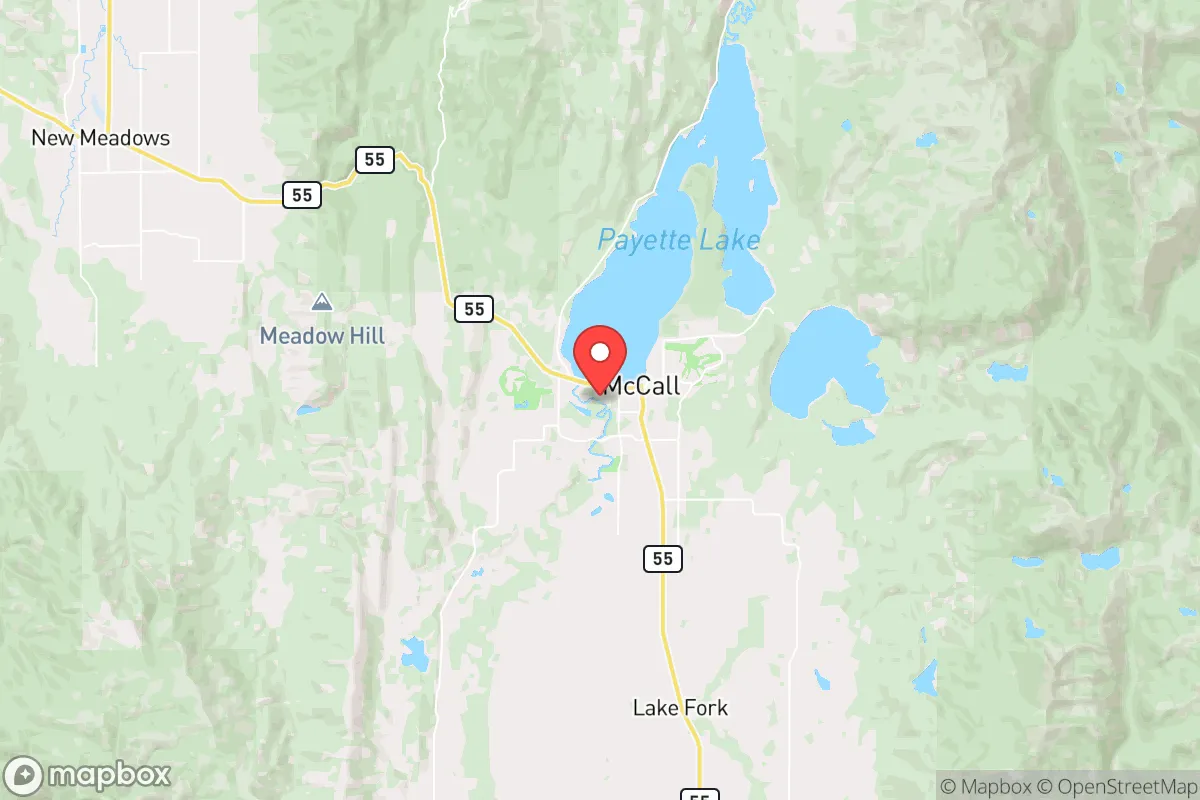
McCall’s original inhabitants were the Shoshone and Bannock peoples, who used the Payette Lake area as a seasonal fishing and hunting ground. The first permanent white settlers arrived in the 1880s, drawn by the promise of timber and mining. The town was officially platted in 1905 by Tom McCall, a rancher and sawmill operator, and the early population was almost entirely of Northern European descent—primarily German, Scandinavian, and British stock. These families built the original core around what is now Downtown McCall, along Lake Street and 3rd Street, where the first hotels, saloons, and general stores served loggers and miners. The West Lake neighborhood, originally a cluster of worker cabins, housed the mill hands and their families. By 1920, the population hovered around 300, and the economy shifted from extraction to recreation as the Payette Lakes became a summer destination for wealthy Boise families. The North Beach area saw the first wave of summer cottages built by these seasonal visitors, establishing a pattern of second-home ownership that persists today.
Modern era (post-1965)
The 1965 Immigration and Nationality Act had virtually no effect on McCall’s demographics, as the city lacked the industrial or agricultural jobs that drew immigrant populations to other parts of Idaho. Instead, the modern era was defined by domestic in-migration, particularly from California and the Pacific Northwest, beginning in the 1970s. The construction of the Brundage Mountain ski area in 1961 and the expansion of the Payette Lake recreation area turned McCall into a year-round resort town. The Brundage Mountain Estates neighborhood, developed in the 1980s, attracted affluent skiers and retirees, while the Shoreline Drive corridor filled with luxury lakefront homes. The 1990s and 2000s saw a wave of second-home buyers and remote workers, drawn by the quality of life and relatively low property taxes. This influx pushed the year-round population from 2,000 in 1990 to 3,847 by 2024, but the racial composition remained static: the Hispanic share grew from 0.5% to 1.9% over the same period, almost entirely in service-industry roles. The Deinhard Lane area, a modest subdivision south of downtown, became the primary landing point for the small number of Hispanic families working in hospitality and construction. No significant Black, Asian, or Indian communities developed, as the city’s high housing costs and lack of ethnic infrastructure discouraged settlement.
The future
McCall’s population is likely to continue growing slowly, driven by remote work and retirement migration from high-cost Western states, but the demographic profile will remain overwhelmingly white and college-educated. The city’s housing market—with a median home price exceeding $700,000—effectively filters for affluent newcomers, reinforcing the existing socioeconomic and racial homogeneity. The small Hispanic population, concentrated in service roles, is expected to plateau rather than expand, as affordable housing becomes scarcer and local employers increasingly rely on commuters from nearby towns like New Meadows and Donnelly. The Meadow Creek subdivision, a recent development of 200+ homes, is attracting families from Boise and California, but these are almost exclusively white professionals. Over the next 10–20 years, McCall will likely become more economically stratified—with a wealthy, mostly white year-round population and a seasonal workforce commuting from lower-cost areas—but no significant racial or ethnic diversification is projected. The city’s character as a homogeneous, recreation-oriented enclave will persist.
For a conservative-leaning individual or family considering a move, McCall offers a stable, safe, and culturally cohesive environment where the population is united by shared values around outdoor life, self-reliance, and community involvement. The trade-off is a high cost of entry and limited ethnic diversity, but for those seeking a predictable, family-oriented mountain town with strong local governance, McCall remains one of the most consistent options in the Intermountain West.

* Values derived from national, state, county, city and local statistics and may differ in a specific area. Last updated: 2026-04-21T10:56:16.000Z
Narrative content on this page is AI-generated and may contain mistakes. Verify any details that matter before acting on them.
ReloMaps may earn a commission from affiliate links at no extra cost to you.

