
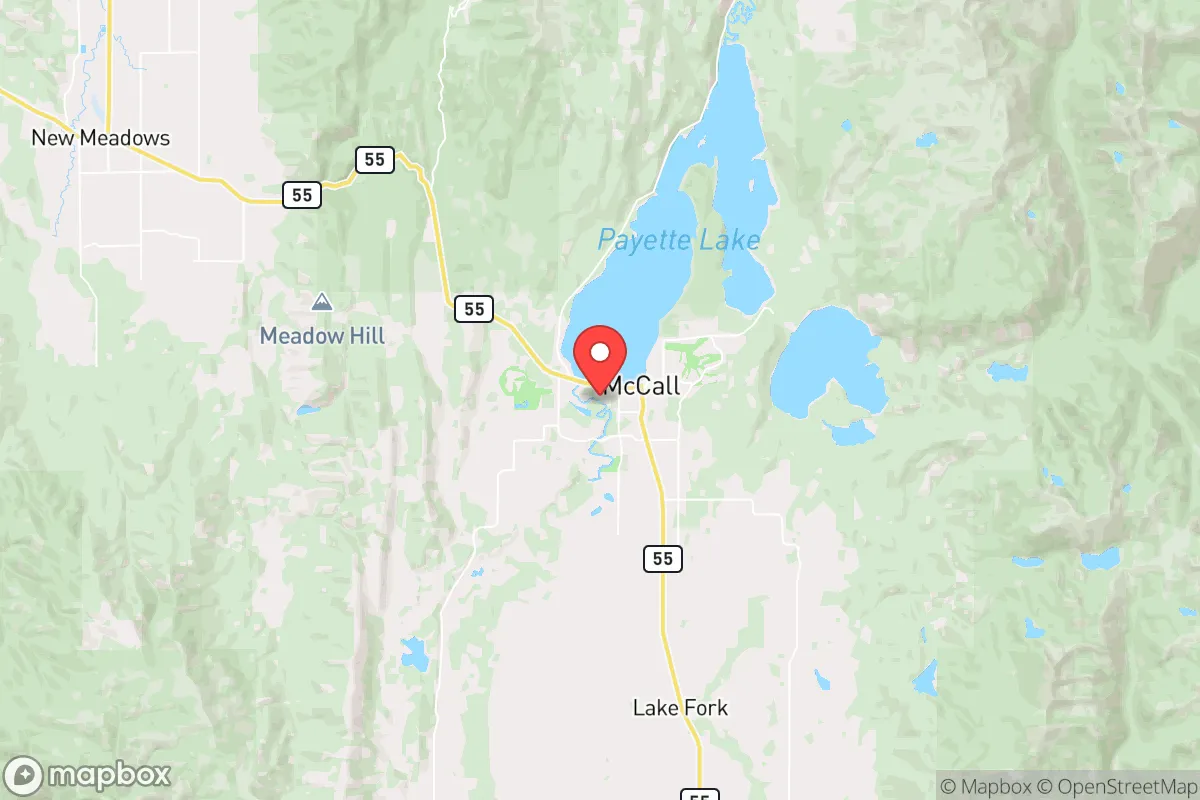
Photo by Backroad Packers on Unsplash
Personal Sovereignty in Mccall, ID
Moderate friction. Expect trade-offs in some aspect of personal liberty and independence.
What does Personal Sovereignty tell us?
Personal Sovereignty measures your capacity for self-reliance and independence with minimal government friction. Higher scores mean fewer barriers between you and the way you want to live... but it assumes you have the space you need and good neighbors.
What does this tell us?
Personal Sovereignty measures your capacity for self-reliance and independence with minimal government friction. Higher scores mean fewer barriers between you and the way you want to live... but it assumes you have the space you need and good neighbors.
State Policy
Energy independence: Importer (25% of energy produced in-state)
Personal Liberty
Homesteading

Personal Liberty Analysis
McCall, Idaho offers one of the strongest personal sovereignty environments in the Intermountain West, combining Idaho’s already robust constitutional protections with the practical isolation of a mountain town. For those concerned with government overreach, federal overreach, and the erosion of individual rights, this valley community—nestled in the Payette National Forest—provides a rare combination of legal autonomy, cultural self-reliance, and geographic buffer. The state’s preemption laws, stand-your-ground statutes, and parental rights framework create a legal baseline that McCall’s local governance largely respects, making it a serious consideration for families and individuals prioritizing maximum personal freedom.
Tax burden and regulatory posture: How Idaho’s low-tax, light-touch environment protects personal autonomy
Idaho’s tax structure is a major pillar of personal sovereignty in McCall. The state levies a flat income tax of 5.8% (as of 2025), with no inheritance tax, no estate tax, and no tax on Social Security benefits. Property taxes in Valley County average around 0.72% of assessed value—well below the national average—and the state’s constitutional limit on property tax growth (the “Idaho Property Tax Relief Act”) prevents runaway assessments that can force people out of their homes. Regulatory posture is equally favorable: Idaho is a right-to-work state, has no state-level occupational licensing for dozens of common trades, and maintains a “Dillon’s Rule” framework that limits county and city authority to what the state explicitly grants. In practice, this means McCall’s city council cannot unilaterally impose burdensome local ordinances on firearms, land use, or business operations that exceed state law. For the prepper-minded, this translates to less bureaucratic friction when building a self-sufficient homestead, running a home-based business, or storing supplies without invasive permitting.
Self-defense and gun law specifics: Stand-your-ground, permitless carry, and what it means for daily life
Idaho’s firearm laws are among the most protective of individual rights in the nation, and McCall residents enjoy the full scope of those protections. The state has constitutional carry (permitless carry) for both open and concealed carry for anyone 18 or older who can legally possess a firearm. No permit, no training, no government permission slip is required. Idaho also has a stand-your-ground law with no duty to retreat in any place where a person has a legal right to be, including public spaces. The state preempts all local firearm ordinances, meaning McCall cannot ban carry in city parks, impose magazine capacity limits, or create its own registration scheme. For those concerned about civil unrest or government overreach, the practical reality is that you can lawfully carry a firearm for self-defense from your front door to the grocery store without bureaucratic interference. Additionally, Idaho has a strong castle doctrine that extends to vehicles and occupied structures, and the state does not maintain a firearm registry. The nearest gun stores and ranges are in McCall itself (e.g., Bear Creek Guns) and in nearby New Meadows, with federal public lands offering unlimited backcountry shooting opportunities.
Self-reliance and homesteading viability: Lot sizes, zoning, and off-grid feasibility in McCall
McCall’s geography and zoning create a mixed picture for full self-reliance, but the potential is real for those willing to work within constraints. Inside city limits, standard residential lots range from 0.25 to 0.5 acres, with some larger parcels in the older neighborhoods near Payette Lake. The city’s zoning code allows for backyard chickens, small-scale gardening, and rainwater collection without special permits, but does restrict livestock (no goats, pigs, or horses within city limits). For serious homesteading, the real opportunity lies in the unincorporated areas of Valley County—places like Donnelly, Cascade, or the rural stretches along Warren Wagon Road. There, minimum lot sizes are typically 1 to 5 acres in agricultural-residential zones, with no county-level restrictions on livestock, beekeeping, or food storage. Off-grid feasibility is high: Idaho has no state law prohibiting solar panels, rainwater catchment, or composting toilets, though Valley County does require a septic system permit for any dwelling. The county’s building code is minimal (based on the 2018 IRC with local amendments), and there is no county-wide ban on tiny homes, shipping container structures, or yurts, provided they meet basic safety standards. For those seeking to minimize reliance on municipal utilities, the Payette National Forest surrounds McCall, offering abundant firewood (with a permit), wild game, and foraging opportunities. The biggest constraint is water rights: new wells in Valley County require a permit from the Idaho Department of Water Resources, and some areas near the lake have groundwater restrictions. Overall, McCall is not a free-for-all, but it is far more permissive than most Western resort towns for those serious about self-sufficiency.
Personal liberties: Parental rights, medical autonomy, speech, and property protections
Idaho has become a national leader in protecting parental rights and medical autonomy, which directly impacts the sovereignty of families in McCall. The state’s Parental Rights in Education Act (2023) requires schools to obtain parental consent before administering any mental health or medical survey, and prohibits classroom instruction on gender identity or sexual orientation in grades K-3. Parents have the legal right to opt their children out of any curriculum or activity they find objectionable, and the state’s “Parents’ Bill of Rights” (Idaho Code § 33-5201) explicitly affirms that “the liberty of parents to direct the upbringing, education, and care of their children is a fundamental right.” On medical autonomy, Idaho has banned all forms of gender transition procedures for minors (2023), and the state’s Medical Freedom Act (2021) prohibits employers and government entities from mandating COVID-19 or any future vaccines as a condition of employment or service. For speech and property, Idaho has a strong anti-SLAPP statute that protects citizens from frivolous lawsuits intended to silence criticism, and the state’s Property Rights Protection Act (2021) requires government agencies to compensate landowners for any regulatory taking that reduces property value by more than 20%. In McCall, this legal framework means a parent can homeschool, choose alternative medical treatments, speak freely on controversial topics, and develop their land without fear of capricious government interference. The local culture reinforces this: McCall’s year-round population of roughly 3,500 is heavily tilted toward independent-minded retirees, remote workers, and outdoor professionals who value privacy and non-interference.
In the broader context of personal sovereignty, McCall ranks among the top small towns in the United States for those prioritizing freedom from government overreach. Compared to similar mountain towns in Colorado (where state-level gun control and land-use restrictions are tightening) or Montana (where property taxes have risen sharply), Idaho’s combination of constitutional carry, parental rights, low taxes, and minimal zoning creates a uniquely durable environment for self-reliant living. The trade-off is isolation—McCall is 100 miles from Boise, with limited healthcare infrastructure and harsh winters—but for those who view that isolation as a buffer against federal overreach and cultural decay, it is a feature, not a bug. The town’s proximity to the Payette National Forest and the Frank Church River of No Return Wilderness means that even if the grid fails or supply chains collapse, the land itself provides a fallback. For the survivalist or prepper, McCall is not a compromise—it is a deliberate choice to live under a legal and cultural framework that respects individual sovereignty as the highest good.

* Values derived from national, state, county, city and local statistics and may differ in a specific area. Last updated: 2026-04-21T10:56:16.000Z
Narrative content on this page is AI-generated and may contain mistakes. Verify any details that matter before acting on them.
ReloMaps may earn a commission from affiliate links at no extra cost to you.

