
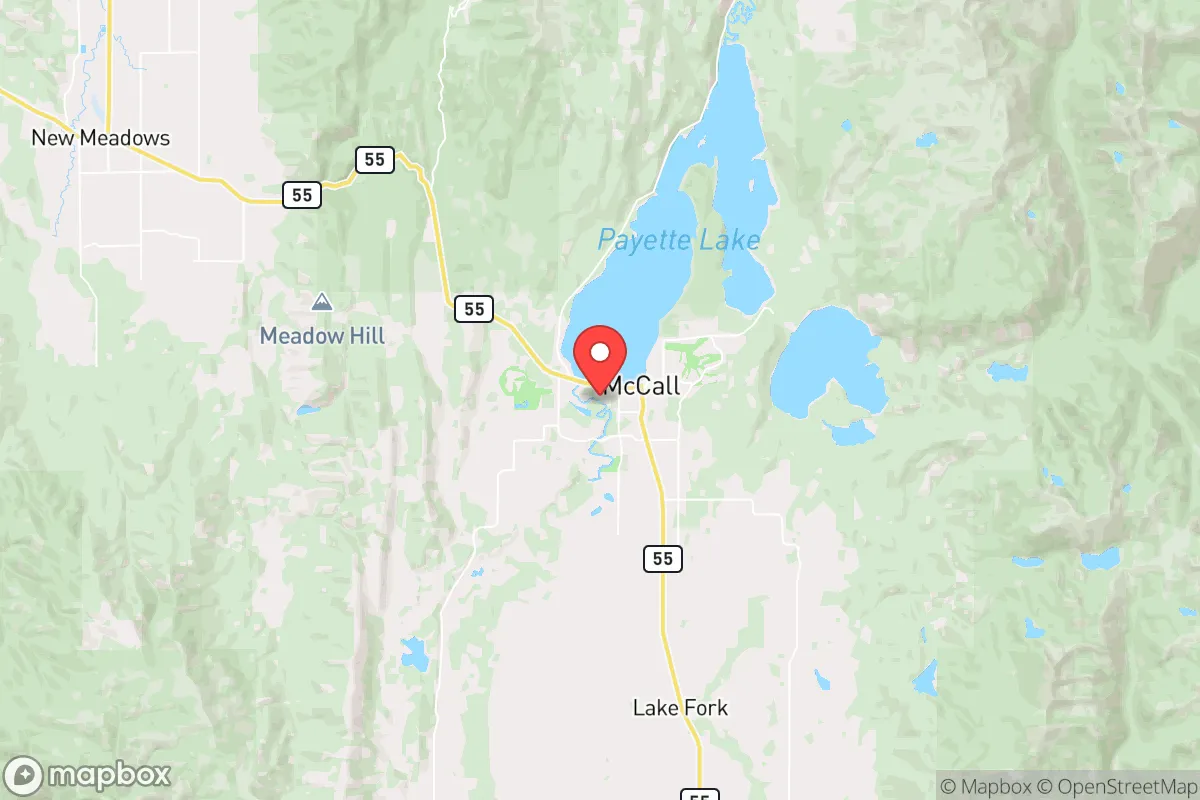
Photo by Backroad Packers on Unsplash
Political ClimatePolitical Climate in Mccall, ID
District shown is the primary district for this city’s centroid. Cities may span multiple districts.
Local Political AnalysisPolitical Analysis of Mccall, ID
McCall leans heavily conservative, with a Cook PVI of R+22 that puts it well to the right of the national average. That number tells you the area has been reliably red for a long time, but it doesn't capture the subtle shifts happening on the ground. The real story is that while the valley floor still votes like it always has, the newcomers—especially those buying second homes or remote-working from Boise—are starting to nudge the local culture in ways that feel like a slow creep toward the kind of progressive policies folks moved here to escape.
How it compares
Drive 30 minutes south to Cascade, and you'll find a similar conservative bent, though it's more working-class and less polished than McCall. Head east toward Donnelly, and the vibe gets a little more libertarian—fewer HOA rules, more folks living off-grid. The real contrast is with Boise, about 100 miles south, which has swung hard left in recent years, with a mayor pushing bike lanes and density over personal car freedom. McCall's R+22 rating puts it in the same league as Idaho Falls or Coeur d'Alene, but those towns are more uniformly conservative. Here, you get a mix of old-timers who remember when the lake was just for fishing and new arrivals who want to turn it into a progressive paradise. The county commission is still solidly Republican, but the school board races have gotten tighter, and that's where you see the friction.
What this means for residents
For the average McCall resident, the political climate means you can still live your life without a lot of government interference. Property taxes are low, and there's no state income tax, which is a big draw for folks tired of being nickel-and-dimed by blue states. But there are warning signs. The city council has flirted with short-term rental regulations that feel like a backdoor way to control property rights, and there's been chatter about "climate action plans" that would inevitably lead to higher energy costs. The real concern is that as more people move here from places like California or Oregon, they bring their voting habits with them. If you value personal freedom—the right to build a shed without a permit, drive a gas-powered boat, or send your kids to a school that doesn't push critical theory—you need to keep an eye on local elections. The R+22 rating won't hold forever if the transplants keep coming.
Culturally, McCall still feels like a mountain town where people wave at each other and leave their doors unlocked. The Fourth of July parade is a big deal, and the local churches are well-attended. But there's a growing divide between the "old guard" who hunt and fish and the "new guard" who hike and yoga. The biggest policy distinction is that McCall has resisted the kind of zoning overreach you see in resort towns like Sun Valley or Park City. For now, you can still build a cabin on a half-acre lot without jumping through hoops. But the pressure is mounting, and if the progressive wave hits Valley County the way it hit Blaine County, the character of this place will change fast. Keep your ear to the ground and vote in every local election—that's the only way to keep McCall from becoming just another over-regulated tourist trap.

State Political ClimatePolitical Climate in Idaho
State Political AnalysisPolitical Environment in the State
Idaho has been a reliably red state for decades, but the political climate has shifted significantly in the last 10-20 years. The state’s dominant coalition is a mix of traditional Western libertarians, social conservatives, and a growing wave of out-of-state transplants, many from California and the Pacific Northwest, who are fleeing progressive policies. While the state remains solidly Republican at the statewide level—with every statewide elected office held by a Republican and a supermajority in the legislature—the internal dynamics are increasingly defined by a tension between the old-guard, limited-government conservatives and a newer, more populist, culturally conservative faction. The overall trajectory is toward a more aggressively conservative policy environment, but with growing pains as the state’s rapid growth reshapes its political geography.
Urban vs. rural divide
The political map of Idaho is starkly divided between its few urban centers and the vast rural expanse. The Treasure Valley, anchored by Boise, Meridian, and Nampa, is the state’s population and economic engine, but it’s also the epicenter of political tension. Boise itself has become a blue island in a red sea, with Ada County—home to Boise and its suburbs—flipping from reliably red to a swing county in recent cycles. In 2020, Joe Biden won Ada County by a narrow margin, a shock to many longtime residents. The surrounding suburbs like Meridian and Eagle remain conservative, but they are increasingly influenced by moderate, business-oriented Republicans. Meanwhile, the rural counties—like Bonner County in the north, Lemhi County in the central mountains, and Madison County (home to Rexburg and BYU-Idaho)—vote overwhelmingly Republican, often by margins of 70-80%. The northern panhandle, including Coeur d’Alene and Post Falls, is a fascinating battleground: historically more moderate and even union-friendly, it has seen a massive influx of conservative transplants from California and Washington, pushing the region sharply rightward. Kootenai County, which includes Coeur d’Alene, voted for Trump by a 20-point margin in 2024, up from 15 points in 2020. The urban-rural divide is not just about population density; it’s a cultural chasm between the libertarian-leaning ranchers and farmers and the more socially conservative, often religious, suburbanites.
Policy environment
Idaho’s policy environment is a textbook example of a low-tax, low-regulation state, but with a strong social conservative bent. There is no state income tax on corporate or personal income—a major draw for relocators. The sales tax is a flat 6%, and property taxes are relatively low, though they vary by county. The regulatory posture is aggressively pro-business, with minimal permitting hurdles for development, especially in rural areas. Education policy is a flashpoint: the state has a robust school choice movement, with a new Education Savings Account (ESA) program passed in 2023 that allows parents to use public funds for private school tuition, homeschooling, or other educational expenses. This is a huge win for parental rights. Healthcare policy is more mixed; Idaho has not expanded Medicaid under the Affordable Care Act, but voters passed a ballot initiative in 2018 to do so, which the legislature has since tried to undermine with work requirements. Election laws have tightened: voter ID requirements are strict, and the state passed a law in 2023 banning ranked-choice voting and limiting ballot drop boxes. The overall policy environment is one of maximum personal freedom in economic matters, but with a clear cultural agenda on issues like abortion (a near-total ban is in effect) and transgender rights (bathroom bills and bans on gender-affirming care for minors).
Trajectory & freedom
Idaho is becoming more free in many respects, but the definition of “freedom” is being contested. On the positive side for conservatives, the state has aggressively expanded Second Amendment rights: in 2023, Idaho passed a permitless carry law, allowing any adult who can legally possess a firearm to carry it concealed without a permit. Property rights have been strengthened with a new law limiting the use of eminent domain for private economic development. Parental rights were bolstered by the “Parents’ Bill of Rights” (HB 93), which requires schools to notify parents of any curriculum involving sexuality or gender identity and prohibits schools from keeping a student’s gender identity secret from parents. On the concerning side, the state has seen a rise in government overreach in the name of public health: during the COVID-19 pandemic, the governor’s emergency powers were used to impose lockdowns and mask mandates, which sparked a fierce backlash and led to the passage of the “Idaho Freedom Act” in 2021, which severely limits the governor’s ability to issue emergency orders without legislative approval. Medical autonomy is a mixed bag: the state protects medical freedom for COVID-19 vaccine choice, but has banned nearly all abortions and restricted gender-affirming care. The trajectory is toward a more culturally conservative, low-tax state, but with a growing tension between the libertarian “leave me alone” ethos and the socially conservative “we know what’s best” impulse.
Civil unrest & political movements
Idaho has a long history of anti-government and militia movements, dating back to the Ruby Ridge standoff in 1992. Today, the state is a hotbed for organized conservative activism. The Idaho Freedom Foundation (IFF) is a powerful, well-funded group that pushes for school choice, tax cuts, and limited government, and it has significant influence in the legislature. On the ground, you’ll see “Let’s Go Brandon” flags and “Don’t Tread on Me” decals everywhere. There have been large protests against COVID-19 mandates, including a 2021 rally at the Statehouse that drew thousands. Immigration politics are a flashpoint: while Idaho is not a border state, there is a growing movement to declare the state a “sanctuary for the unborn” and to resist any federal immigration enforcement that is perceived as overreach. In 2024, a bill was introduced to allow local law enforcement to enforce federal immigration laws, though it didn’t pass. Election integrity is a major concern for many residents; the state has implemented voter ID and banned ballot harvesting, but there is still a vocal minority pushing for hand-counting of ballots. You won’t see widespread civil unrest like in Portland or Seattle, but the political temperature is high, and you’ll hear passionate debates at coffee shops and town halls, especially in the Treasure Valley.
Projection
Over the next 5-10 years, Idaho will likely become even more conservative, but with a more populist, culturally focused flavor. The demographic shift is key: the state is growing faster than almost any other, with most newcomers coming from California, Washington, and Oregon. These are not progressive refugees; they are conservatives and libertarians fleeing high taxes, crime, and left-wing policies. This influx is supercharging the conservative base, but it’s also creating a more suburban, less rural Republican party. Expect continued fights over education (school choice expansion, curriculum battles), property rights (growth management vs. development), and the role of government in personal health decisions. The biggest wildcard is the urban-rural divide: as Boise and its suburbs grow, they may become more moderate, while the rural areas dig in. A new resident moving in now should expect a state that is fiercely independent, culturally conservative, and increasingly assertive in pushing back against federal overreach. The libertarian streak is strong, but it’s being tested by a desire for cultural uniformity.
Bottom line for a new resident: If you’re moving to Idaho for freedom from government overreach, you’ll find a state that largely delivers on that promise—low taxes, strong gun rights, and parental control over education. But you’ll also find a state that is not shy about using government power to enforce a specific cultural vision, especially on social issues. The key is to pick your location carefully: the rural counties offer maximum personal liberty and minimal government interference, while the Treasure Valley suburbs offer more amenities but also more political friction. Either way, you’ll be in a state that is actively shaping the future of American conservatism.
* Values derived from national, state, county, city and local statistics and may differ in a specific area. Last updated: 2026-04-21T10:56:16.000Z
Narrative content on this page is AI-generated and may contain mistakes. Verify any details that matter before acting on them.
ReloMaps may earn a commission from affiliate links at no extra cost to you.

