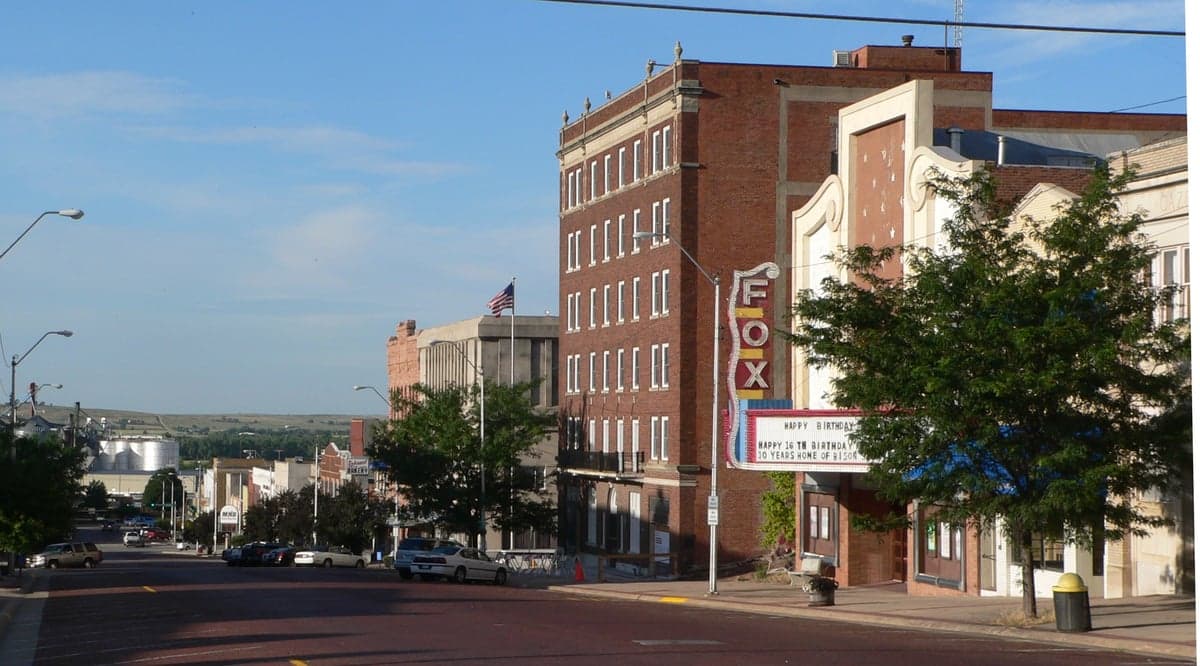
Photo: Wikipedia
Strategic Assessment of Mccook, NE
Strong survivability profile. Good buffer from population centers, with manageable environmental and tactical risks.
What does the Strategic Assessment tell us?
Our Strategic Assessment grades tactical survivability of an area. Major population centers, military targets, fallout zones, natural disasters, and border exposure all drive risk — lower exposure means a more defensible position in a crisis.
This is heavily inspired by Joel Skousen's Strategic Relocation book. Highly recommended you checkout the book ($)What does this tell us?
Our Strategic Assessment grades tactical survivability of an area. Major population centers, military targets, fallout zones, natural disasters, and border exposure all drive risk — lower exposure means a more defensible position in a crisis.
This is heavily inspired by Joel Skousen's Strategic Relocation book. Highly recommended you checkout the book ($)Strategic Pillars

Key Distances
Regional Safe Places
Below is our recommended "safe zones" in Nebraska and the surrounding area based on our strategic heuristics. For most people, it's unrealistic to live in a “safe zone” full-time due to work, family or other personal reasons. They tend to be more rural. However, many of these areas are perfect for second homes and retreat properties that double as a vacation home or even a short-term rental.
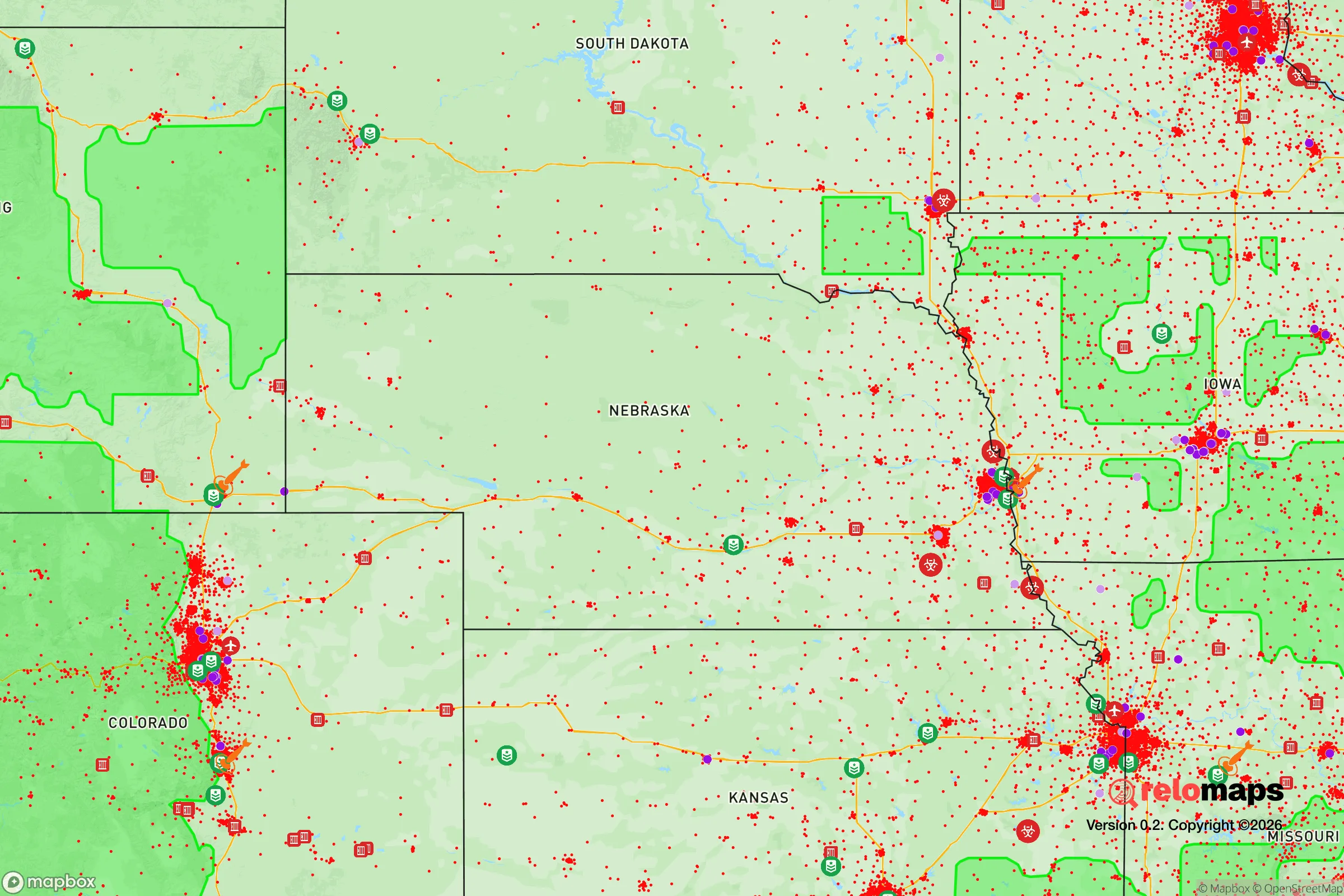
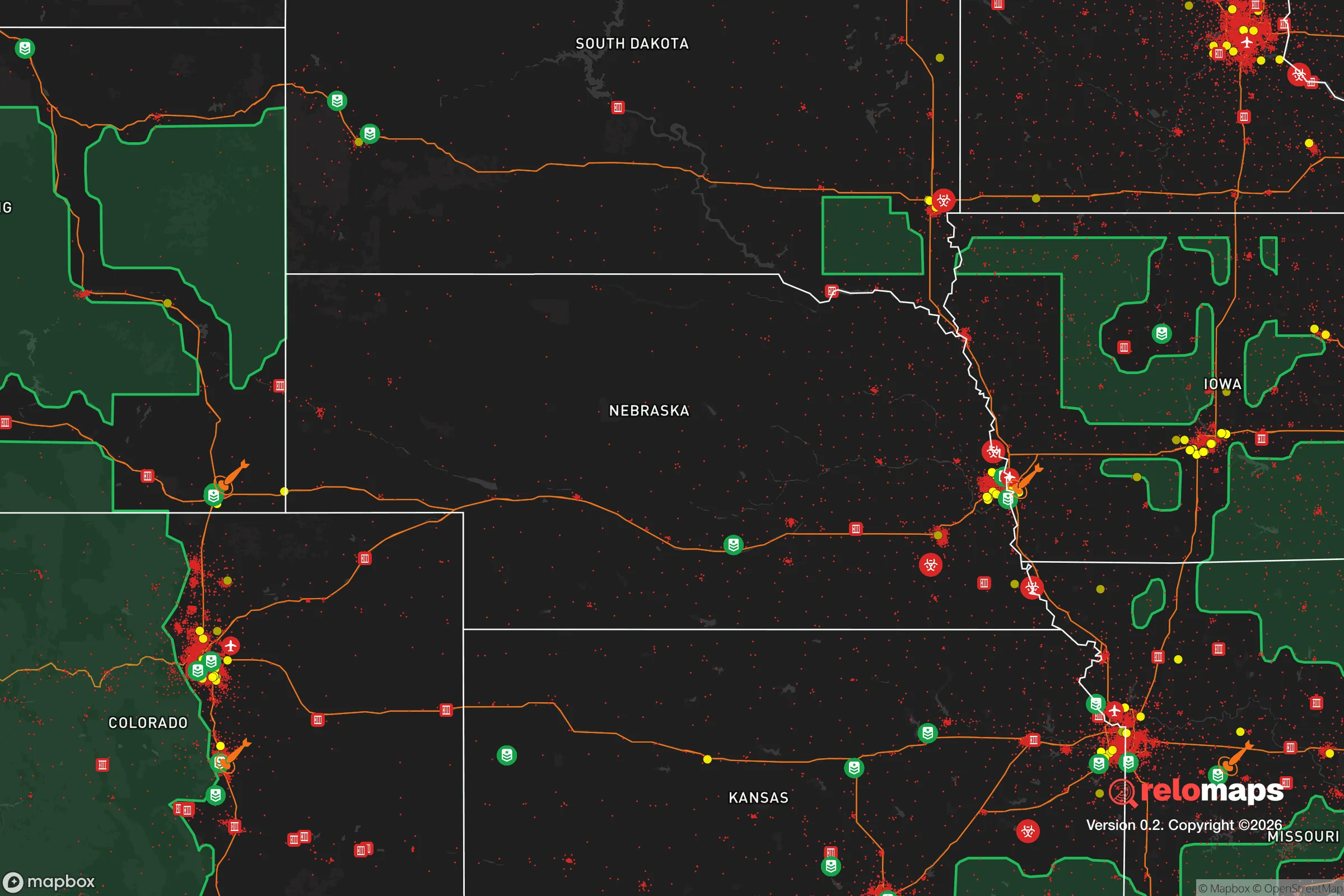


Important Note: For informational purposes only. This does not mean nothing bad ever happens in the green zones. Please use common sense. This is based on public data and modeled with AI. We tried to take a conservative approach but mistakes happen. We update this regularly as new information becomes available.
Solar Generator Recommendations
Backup power matters more here than in safer locations. We've picked three solar generators across budgets and capacity tiers — start with the budget unit if you only need a few essentials, or step up if you want to run a fridge and HVAC for days at a time.

Jackery Portable Power Station Explorer 300
Budget OptionPower on the Go: Weighing only 11 lbs, it's convenient to set up and store with book-sized foldable solar panels

BLUETTI Portable Power Station AC180
Designed for both indoor and outdoor scenarios, AC180 is highly capable as it has a robost capacity and continuous output power.

EF ECOFLOW DELTA Pro Ultra Power Station
Upgraded PickEcoFlow DELTA Pro Ultra is a whole-home energy system designed to grow with your family. Integrated with the Smart Home Panel 2, it scales to meet your evolving energy needs — keeping your home powered, intelligent, and secure through every stage of life.
We earn a commission, at no additional cost to you.
Strategic Assessment Analysis
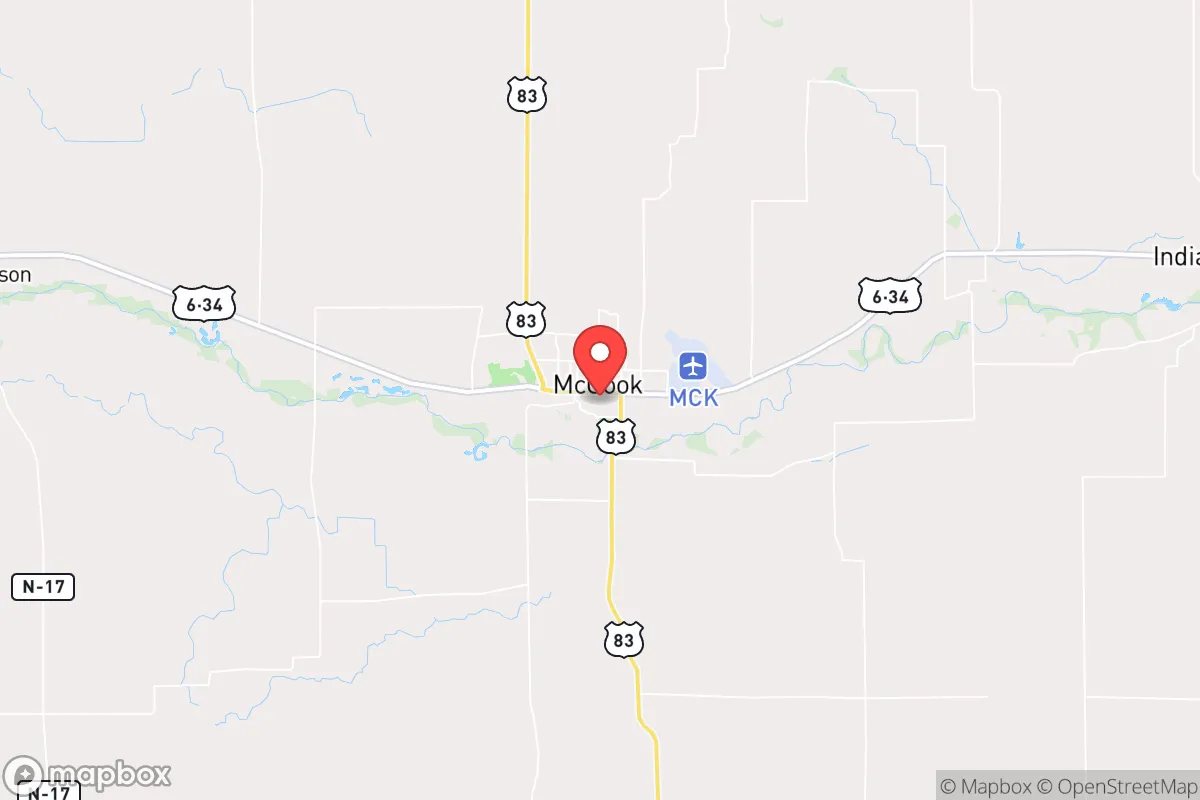
McCook, Nebraska, sits in the southwestern corner of the state, roughly 200 miles from Denver and 150 from North Platte, offering a strategic blend of isolation and accessibility that appeals to those prioritizing long-term resilience. Its location along the Republican River and near the intersection of U.S. Highways 6 and 83 provides a natural buffer from the chaos of larger metropolitan areas while still allowing for supply runs or evacuation if needed. For a relocator with a prepper mindset, McCook’s low population density—around 7,500 residents in the city and roughly 5 people per square mile in Red Willow County—means fewer eyes on your operations and a reduced risk of being caught in mass casualty events tied to urban unrest. The area’s agricultural backbone, with grain elevators and irrigation-fed cropland, offers a tangible food security advantage that many suburban or coastal retreats simply cannot match.
Geographic position and natural advantages for long-term survival
McCook’s position in the Great Plains provides several hard-to-replicate natural advantages for those serious about self-sufficiency. The Republican River valley offers a reliable surface water source, which is critical if municipal systems fail or become contaminated during a disaster. The surrounding terrain is flat to gently rolling, with deep, fertile loam soils that support corn, soybeans, and alfalfa—meaning a relocator with even modest acreage can establish a productive garden or small farm within a single growing season. The area’s semi-arid climate, with about 20 inches of annual precipitation, reduces the risk of flooding compared to wetter regions, while the high plains wind is a consistent resource for off-grid wind turbines or passive ventilation. Groundwater from the Ogallala Aquifer is accessible via wells, though depths vary from 100 to 300 feet, so drilling costs should be factored into any prepper budget. The lack of major mountain ranges or dense forests also means clear lines of sight for security and fewer natural obstacles for travel or resupply.
Risks, exposures, and proximity to fallout-relevant landmarks
McCook’s primary risk exposure comes from its proximity to the Union Pacific rail line running through town, which carries hazardous materials including crude oil and anhydrous ammonia—a derailment or attack could create a localized chemical hazard. The city is roughly 120 miles from the U.S. Strategic Command (STRATCOM) headquarters at Offutt Air Force Base near Omaha, a high-value target in any conflict scenario, but the prevailing westerly winds would carry fallout eastward, away from McCook. The nearest nuclear power plant is the Fort Calhoun station near Omaha, about 200 miles east, which is old and has a history of flooding concerns, but again, prevailing winds mitigate direct fallout risk. Tornadoes are a real seasonal threat—Red Willow County averages 5-7 tornado warnings per year—so a reinforced storm shelter or basement is non-negotiable for any serious prepper. The area’s low population density means fewer targets for civil unrest, but the town’s reliance on a single hospital (Community Hospital) and a single police force (Red Willow County Sheriff’s Office) means medical and security resources could be overwhelmed quickly if a mass casualty event occurs regionally. The nearest major military installation is the Nebraska Army National Guard’s Camp Ashland, about 200 miles east, so don’t expect rapid federal response in a crisis.
Practical resilience for a relocator: food, water, energy, and defensibility
For a relocator focused on practical resilience, McCook offers a strong foundation but requires deliberate preparation. Food security is the standout advantage: the town sits in the heart of Nebraska’s irrigated cropland, with local farmers’ markets, co-ops like the McCook Farmers Market, and direct relationships with producers possible for bulk grain, meat, and dairy. The Republican River and nearby Medicine Creek Reservoir (about 15 miles north) provide fishing and a backup water source, but any serious prepper should install a deep-well hand pump or solar-powered pump for redundancy. Energy resilience is moderate—the area has good wind potential, but grid reliability is average for rural Nebraska, with occasional outages during winter storms. Solar panels paired with battery storage are viable, as the region gets about 220 sunny days per year. Defensibility is mixed: the flat terrain offers clear sightlines but limited natural cover, so a rural property with a long driveway, perimeter fencing, and a good view of approach roads is ideal. The town’s small size means most residents know each other, which can be a double-edged sword—community trust is high, but outsiders are noticed quickly, so blending in requires a low-key approach. The local gun culture is strong, with several gun shops and a shooting range, and Nebraska is a constitutional carry state, so firearms and training are accessible without bureaucratic hurdles. For water, the city’s municipal supply comes from wells drawing from the Ogallala, but a private well with a hand pump is the gold standard for off-grid independence.
The overall strategic picture for a conservative prepper
McCook presents a compelling but not perfect strategic option for a conservative-leaning relocator concerned about national instability. Its isolation from major population centers—Denver, Omaha, and Kansas City are all 3-4 hours away—reduces exposure to urban unrest, mass casualty events, and fallout from high-value targets. The agricultural base and water access provide a genuine food and water security advantage that few suburban or exurban retreats can offer. However, the flat terrain and reliance on a single hospital and police force mean that a serious prepper must invest in medical training, security infrastructure, and community relationships to compensate for the area’s vulnerabilities. The political climate in Red Willow County is reliably conservative—Trump won the county by over 40 points in 2020—which aligns with the values of many in this audience, but it also means the area is not a haven for ideological diversity, so newcomers should be prepared for a culturally homogeneous environment. For a single individual or family willing to put in the work on water, energy, and security, McCook offers a low-cost, low-profile base of operations with a solid foundation for long-term survival. Just don’t expect it to be a bunker—it’s a working farm town that rewards preparation and community integration, not isolation. If you’re looking for a place to ride out a decade of decline with a garden, a well, and good neighbors, McCook is worth a serious look.

* Values derived from national, state, county, city and local statistics and may differ in a specific area. Last updated: 2026-04-19T10:08:43.000Z
Narrative content on this page is AI-generated and may contain mistakes. Verify any details that matter before acting on them.
ReloMaps may earn a commission from affiliate links at no extra cost to you.

