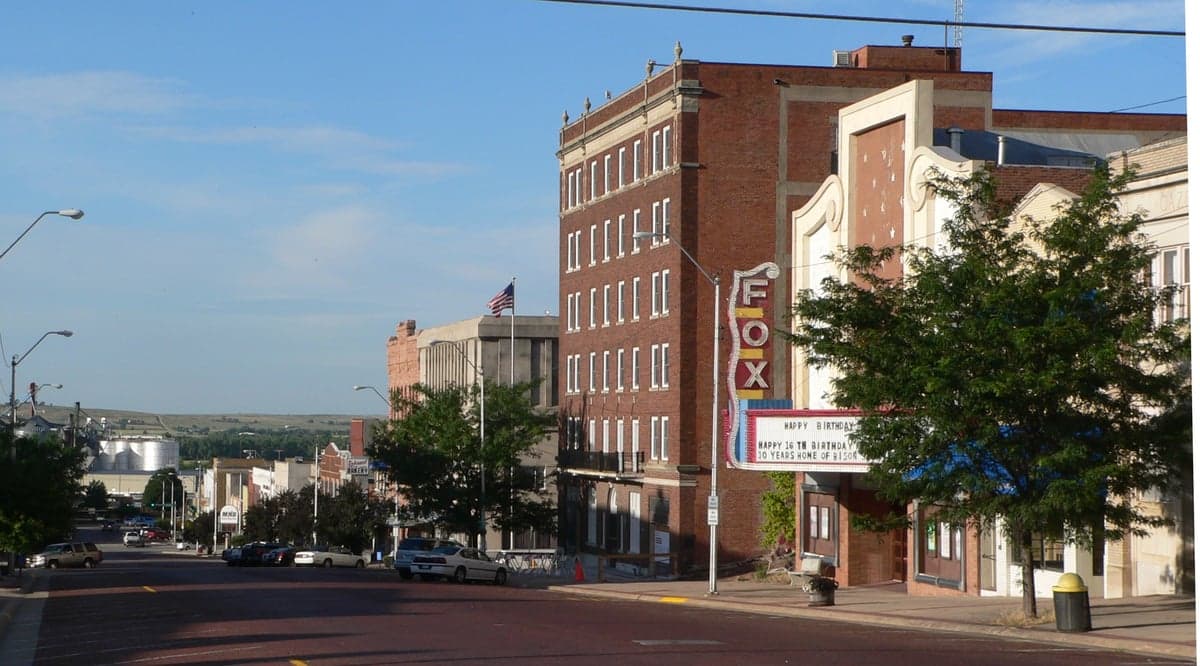
Photo: Wikipedia
Political ClimatePolitical Climate in Mccook, NE
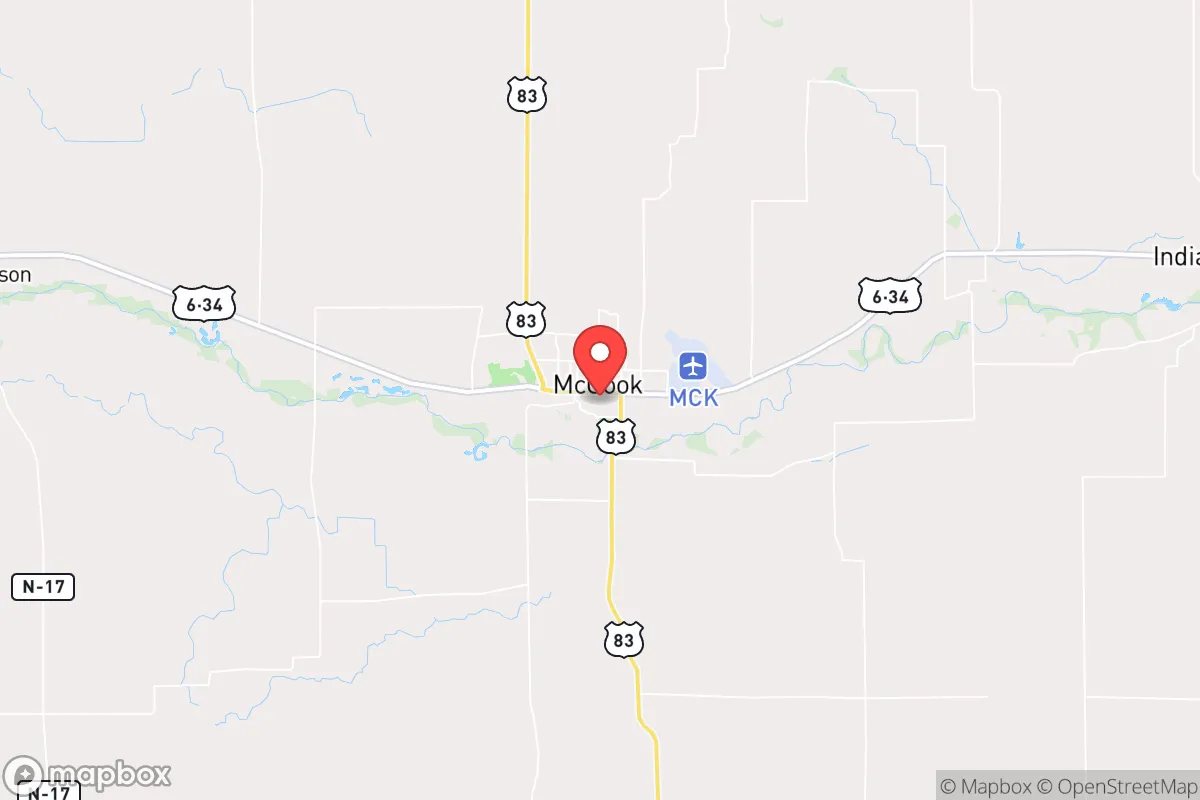
District shown is the primary district for this city’s centroid. Cities may span multiple districts.
Local Political AnalysisPolitical Analysis of Mccook, NE
McCook, Nebraska, is about as solidly conservative as it gets, and that’s not changing anytime soon. With a Cook PVI of R+27, this town votes Republican by a margin that puts it in the top tier of red districts nationwide. If you’ve been around here for a while, you know the political lean hasn’t just held steady—it’s actually hardened over the past decade, as folks have watched neighboring towns like North Platte and Kearney drift slightly more moderate. McCook hasn’t budged. The last time this county went blue in a presidential race was back in 1964, and even then it was a squeaker. The trajectory is clear: McCook is getting redder, not bluer.
How it compares
When you stack McCook up against the rest of Nebraska, it’s a different world. Lincoln and Omaha are their own beasts—blue islands in a red sea, with progressive policies on taxes, zoning, and social issues that would never fly here. Even Grand Island, which used to be reliably conservative, has seen a slow shift leftward as its population diversifies. But McCook? We’re surrounded by small towns like Culbertson, Trenton, and Benkelman that share our values, but McCook is the anchor. The R+27 rating isn’t just a number; it means Republicans win here by margins that make statewide races look competitive. In 2024, the county voted over 75% for the GOP presidential candidate, while the state as a whole hovered around 60%. That gap tells you everything about how insulated this area is from the coastal trends creeping into other parts of Nebraska.
What this means for residents
For the people who live here, the political climate translates directly into daily life. You don’t see the kind of government overreach that plagues bigger cities—no heavy-handed mask mandates that lasted years, no zoning boards telling you what you can do with your own property, no school boards pushing curriculum that contradicts what parents want. The local government in Red Willow County keeps its nose out of personal freedoms, and that’s how folks like it. Property taxes are a perennial gripe, sure, but they’re still lower than in Douglas or Lancaster counties. And when it comes to rights like gun ownership or religious expression, there’s no debate—they’re protected, plain and simple. The downside? If you’re hoping for any shift toward progressive ideology, you’ll be waiting a long time. The county commission, the school board, and the city council are all dominated by conservatives who see any hint of leftward drift as a threat to the way of life here.
One thing that sets McCook apart culturally is the deep-rooted sense of self-reliance. You won’t find the kind of activist groups or protest movements that pop up in Lincoln or Omaha. Instead, you’ve got a community that handles its own problems—church food pantries, volunteer fire departments, neighbor helping neighbor. The policy distinctions are subtle but real: McCook has resisted state-level pushes for things like red flag laws or expanded Medicaid, and local leaders have been vocal about keeping federal dollars out of local decisions. Looking ahead, the biggest concern among longtime residents is that the state’s growing urban population might try to impose its will on rural areas like this one. But for now, McCook remains a place where personal freedom isn’t just a talking point—it’s how things have always been, and how they’ll stay.

State Political ClimatePolitical Climate in Nebraska
State Political AnalysisPolitical Environment in the State
Nebraska has long been a reliably conservative state, with a strong Republican lean that has only deepened in recent cycles. The state hasn’t voted for a Democratic presidential candidate since Lyndon B. Johnson in 1964, and in 2024, Donald Trump carried it by a comfortable 19-point margin. However, the political picture is more nuanced than a simple red-state label, with a distinct urban-rural split and a growing tension between the state’s traditional libertarian-conservative roots and the progressive influence of its largest city, Omaha. Over the past 10-20 years, the state has shifted rightward in rural areas while the Omaha metro has become a competitive battleground, creating a dynamic where statewide policy remains solidly conservative but local control varies significantly.
Urban vs. rural divide
The political map of Nebraska is a textbook example of the urban-rural divide. The vast, sparsely populated western and central regions—places like Scottsbluff, North Platte, and Grand Island—vote overwhelmingly Republican, often by margins of 70% or more. These areas are the backbone of the state’s conservative coalition, driven by agriculture, energy, and a deep distrust of federal overreach. In contrast, the state’s two major population centers tell a different story. Omaha (Douglas County) is the state’s political battleground, with its suburban and urban precincts often splitting tickets. The city’s 2nd Congressional District, which includes Omaha proper and its western suburbs, has voted for Democrats in three of the last four presidential elections, earning it the nickname “the Blue Dot.” This is where you’ll find the state’s most progressive activism, including strong support for abortion rights and public-sector unions. Lincoln (Lancaster County), home to the University of Nebraska, is a lighter shade of blue, with a growing Democratic presence driven by younger voters and academics. The suburbs of Omaha, like Elkhorn and Papillion, remain reliably Republican, but they are trending slightly more moderate on social issues. The key takeaway: if you live outside the I-80 corridor between Omaha and Lincoln, you’re in deep red territory. If you’re in Omaha proper, you’re in a blue island.
Policy environment
Nebraska’s policy environment is a mixed bag for conservatives. On the plus side, the state has a unicameral, nonpartisan legislature, which historically has produced more pragmatic, less ideological governance. However, in recent years, partisan divisions have become more pronounced. The state has no income tax on Social Security benefits and a relatively low top individual income tax rate of 5.84%, which is being phased down to 3.99% by 2027 under LB 754. Property taxes are a major pain point, among the highest in the nation relative to home values, and efforts to cap them have been a perennial legislative battle. On education, Nebraska has a robust school choice movement, with the passage of LB 753 in 2023 creating a tax-credit scholarship program for private school tuition. However, the state’s public schools remain heavily unionized, and the teachers’ union is a powerful force in Lincoln. Healthcare policy is a flashpoint: Nebraska expanded Medicaid under the Affordable Care Act in 2020, but the state has resisted further federal overreach, including rejecting the creation of a state-based health insurance exchange. Election laws are generally secure, with voter ID requirements passed in 2022 (LB 535) and a ban on ballot harvesting. The state also has a unique “winner-take-all” system for its electoral college votes, though there have been repeated attempts to switch to a district-based system, which would give Omaha’s 2nd District a separate electoral vote.
Trajectory & freedom
On the freedom front, Nebraska is moving in a positive direction, but there are warning signs. The state has seen a significant expansion of Second Amendment rights with the passage of constitutional carry (LB 77) in 2023, allowing law-abiding citizens to carry concealed firearms without a permit. This was a major win for personal liberty. On parental rights, the state passed LB 1084 in 2023, which prohibits instruction on sexual orientation and gender identity in grades K-3, and requires schools to notify parents of any changes in a child’s mental or physical health. This has been a rallying point for conservative families. However, the state’s medical autonomy is under threat. In 2024, a ballot initiative to protect abortion rights up to fetal viability failed, but the issue remains alive, and a new initiative is likely for 2026. The state also has a history of government overreach in the name of public health, including a controversial 2020 executive order that shut down businesses and churches during the pandemic, which many conservatives saw as a violation of religious liberty. Property rights are generally strong, with no statewide rent control and limited zoning restrictions outside of Omaha and Lincoln. The biggest concern for freedom-minded residents is the growing influence of Omaha’s progressive city council, which has pushed for “inclusive” zoning and anti-discrimination ordinances that some see as infringing on private business rights.
Civil unrest & political movements
Nebraska has not seen the level of civil unrest seen in coastal states, but there have been notable flashpoints. The 2020 George Floyd protests in Omaha were significant, with several nights of clashes between demonstrators and police, and the toppling of a statue of Christopher Columbus. This event galvanized both the progressive and conservative movements in the state. On the right, the Nebraska Republican Party has become more populist and anti-establishment, with the rise of the “Nebraska Freedom Coalition” pushing for school choice, tax cuts, and election integrity. On the left, the “Omaha for All” coalition has been active in pushing for sanctuary city policies, though these have been consistently blocked by the state legislature. Immigration politics are a hot-button issue, particularly in rural areas like Lexington and South Sioux City, where meatpacking plants have drawn a large immigrant workforce. The state has passed several laws targeting illegal immigration, including a 2022 law requiring law enforcement to cooperate with federal immigration authorities. Election integrity remains a concern for many conservatives, with the 2020 election in Omaha’s 2nd District being marred by allegations of ballot harvesting and irregularities, though no major fraud was proven. The “Blue Dot” has become a symbol of the state’s political divide, with some rural legislators even floating the idea of splitting the state into two separate states—a non-starter, but a sign of the frustration.
Projection
Looking ahead 5-10 years, Nebraska is likely to remain a solidly Republican state at the statewide level, but the urban-rural divide will deepen. The Omaha metro is growing faster than the rest of the state, driven by tech and insurance jobs, and this will continue to pull the 2nd District to the left. However, the rural areas are also growing more conservative, and the state legislature is likely to remain under Republican supermajority control. The biggest wildcard is in-migration: Nebraska is seeing an influx of remote workers and retirees from blue states like California and Illinois, drawn by lower taxes and housing costs. These newcomers tend to be more moderate or libertarian, and they could shift the suburbs of Omaha and Lincoln toward a more “live and let live” conservatism, rather than the social-issue-focused conservatism of the rural areas. The state’s tax reform trajectory is positive, with the income tax rate set to drop further, but property tax relief will remain a key issue. On social issues, expect continued battles over abortion, transgender rights, and school curriculum, with the legislature likely to pass further restrictions. The biggest threat to freedom is the potential for Omaha’s progressive policies to spill over into state law, particularly if Democrats ever win control of the governor’s mansion—a long shot, but not impossible given demographic trends.
Bottom line for a new resident: If you’re a conservative looking for a state that respects your gun rights, keeps taxes low, and pushes back on federal overreach, Nebraska is a solid choice. Just be aware that if you move to Omaha, you’ll be living in a blue island with its own set of local politics. Stick to the suburbs or rural areas, and you’ll find a community that shares your values. The state is trending in the right direction on most freedom metrics, but you’ll need to stay engaged to keep it that way—especially on property taxes and the growing influence of Omaha’s progressive machine.
* Values derived from national, state, county, city and local statistics and may differ in a specific area. Last updated: 2026-04-19T10:08:43.000Z
Narrative content on this page is AI-generated and may contain mistakes. Verify any details that matter before acting on them.
ReloMaps may earn a commission from affiliate links at no extra cost to you.

