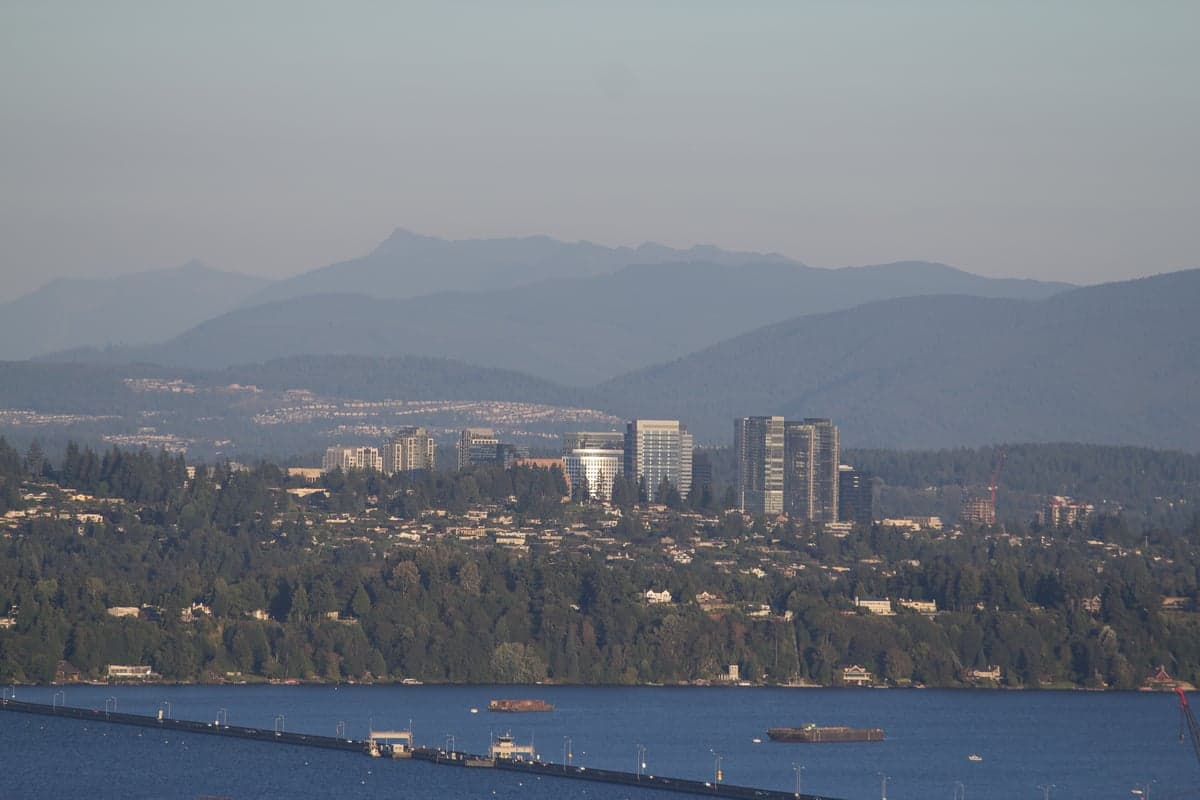
Photo: Wikipedia
Personal Sovereignty in Medina, WA
Viable for self-reliance. Generally workable, though some barriers may limit total independence.
What does Personal Sovereignty tell us?
Personal Sovereignty measures your capacity for self-reliance and independence with minimal government friction. Higher scores mean fewer barriers between you and the way you want to live... but it assumes you have the space you need and good neighbors.
What does this tell us?
Personal Sovereignty measures your capacity for self-reliance and independence with minimal government friction. Higher scores mean fewer barriers between you and the way you want to live... but it assumes you have the space you need and good neighbors.
State Policy
Energy independence: Importer (55% of energy produced in-state)
Personal Liberty
Homesteading

Personal Liberty Analysis
Medina, Washington, presents a complex sovereignty picture for the liberty-minded individual. While its postcard-perfect streets and waterfront estates suggest a haven of private wealth and seclusion, the reality is that personal autonomy here is heavily circumscribed by Washington State’s aggressive regulatory apparatus, high tax burden, and progressive social policies. For the survivalist or prepper seeking true self-determination, Medina offers financial privacy and a low-crime environment, but it sits squarely within a state government that views individual gun rights, parental authority, and property use as privileges to be managed rather than rights to be protected. The net effect is a trade-off: maximum personal security within your gated compound, but minimal insulation from state overreach the moment you step outside it.
Tax burden and regulatory posture: How Washington’s system impacts your autonomy
Washington State’s tax structure is a double-edged sword for the sovereignty-minded. The absence of a state income tax is a genuine advantage—Medina residents keep every dollar of their earnings, retirement income, and capital gains, which is a significant win for financial independence. However, the state aggressively recoups revenue through other means. Property taxes in King County are among the highest in the nation, and Medina’s prime real estate valuations mean you’ll be paying a substantial annual sum to a county government that consistently votes for expansive public programs. The state’s capital gains tax, enacted in 2021 and targeting gains over $250,000, is a direct infringement on wealth accumulation and is currently being litigated. Furthermore, Washington’s regulatory posture is hostile to personal projects. Building permits, land-use changes, and even minor home improvements require extensive county and city approvals. For the prepper looking to install a backup generator, build a root cellar, or construct a privacy fence, expect a permitting process that can take months and involve multiple inspections. The state’s energy code is among the strictest in the country, effectively mandating certain construction methods and materials that limit self-built or unconventional structures. In short, Medina’s financial privacy is real, but the state’s regulatory grip on your property and wallet is tight.
Self-defense and gun law specifics: Navigating Washington’s restrictive firearm environment
For the individual who views the Second Amendment as a cornerstone of personal sovereignty, Medina is a difficult place to live. Washington State has enacted some of the most restrictive gun laws in the nation over the past five years. The 2023 ban on “assault weapons” (defined broadly to include many common semi-automatic rifles) and the prohibition on magazines holding more than ten rounds directly impact the prepper’s ability to maintain a versatile defensive arsenal. The state also requires a 10-day waiting period for all firearm purchases, a mandatory background check for private sales, and a permit-to-purchase system for semi-automatic rifles. Open carry is legal but practically discouraged, and concealed carry requires a permit that is shall-issue but subject to local processing delays. The political climate in King County is overwhelmingly anti-gun, meaning that even lawful gun owners face social stigma and potential scrutiny from local law enforcement. For the survivalist, this means your defensive capabilities are legally limited to handguns and low-capacity shotguns or bolt-action rifles. The ability to stockpile ammunition is also curtailed by the magazine capacity law, as many common calibers are sold in boxes that exceed the legal limit. Self-defense in Medina is a matter of legal compliance first, tactical readiness second—a frustrating reality for those who believe the right to keep and bear arms shall not be infringed.
Self-reliance and homesteading viability: Lot sizes, zoning, and off-grid feasibility
Medina’s zoning and lot characteristics are fundamentally at odds with a self-reliant lifestyle. The city is a dense, affluent suburb with lot sizes typically ranging from a quarter-acre to one acre, though some waterfront estates sit on larger parcels. The zoning code is strict: single-family residential, with no allowance for agricultural uses, livestock, or commercial activity. Keeping chickens, bees, or a substantial vegetable garden is technically possible but subject to homeowner association covenants and city nuisance ordinances that can shut down such projects. Off-grid living is essentially illegal. The city requires connection to municipal water and sewer systems, and solar panels must be grid-tied with utility approval. Rainwater collection is permitted but regulated, and composting toilets are not allowed as a primary sanitation method. For the prepper seeking to establish a self-sufficient homestead with backup power, water storage, and food production, Medina is a non-starter. The regulatory environment is designed to maintain a manicured, high-value aesthetic, not to support individual resilience. If self-reliance is your priority, you would need to look to rural areas of eastern Washington or neighboring Idaho, where lot sizes are larger, zoning is more permissive, and off-grid systems are legally viable.
Personal liberties: Parental rights, medical autonomy, speech, and property
Washington State’s progressive governance has eroded several key personal liberties that matter to conservative-leaning individuals. On parental rights, the state has enacted laws that allow minors to consent to certain medical procedures—including reproductive health care and gender-affirming treatments—without parental notification. This directly undermines the authority of parents to make medical decisions for their children. In schools, the state mandates comprehensive sexual health education that includes LGBTQ+ content, and parents have limited ability to opt their children out of specific lessons. Medical autonomy is also constrained: Washington has a strict vaccine mandate for school attendance, and during the pandemic, the state imposed some of the longest-lasting emergency orders in the country, including mask mandates and business closures. For the individual who values bodily autonomy and the right to refuse medical interventions, this is a significant concern. Free speech is protected under the First Amendment, but the state’s political culture is heavily left-leaning, and expressing conservative views—especially on immigration, gun rights, or COVID-19 policies—can lead to social ostracism or professional repercussions. Property rights are strong in theory, but in practice, the state’s environmental regulations, shoreline management act, and growth management act give the government broad authority to restrict how you use your land. The state also has a high estate tax, which can take a significant portion of your property when passed to heirs. For the sovereignty-minded individual, Medina offers financial privacy and physical security, but the state’s legal framework consistently prioritizes collective mandates over individual choice.
In the broader landscape of personal sovereignty, Medina ranks as a low-autonomy environment for the survivalist or prepper. Its advantages—no income tax, low crime, and high property values—are real but are overshadowed by Washington State’s aggressive taxation, restrictive gun laws, hostile regulatory climate, and progressive social policies that limit parental rights and medical freedom. Compared to states like Idaho, Montana, or Texas, where property rights are stronger, gun laws are more permissive, and parental authority is respected, Medina is a place where you can live comfortably but not freely. For the individual who prioritizes self-determination and minimal government interference, this is a location to enjoy for its wealth and security, but not a place to build a long-term strategy for personal sovereignty. If you choose to live here, do so with the understanding that your autonomy is conditional—and that the state’s reach into your life is both deep and persistent.

* Values derived from national, state, county, city and local statistics and may differ in a specific area. Last updated: 2026-04-27T14:12:45.000Z
Narrative content on this page is AI-generated and may contain mistakes. Verify any details that matter before acting on them.
ReloMaps may earn a commission from affiliate links at no extra cost to you.

