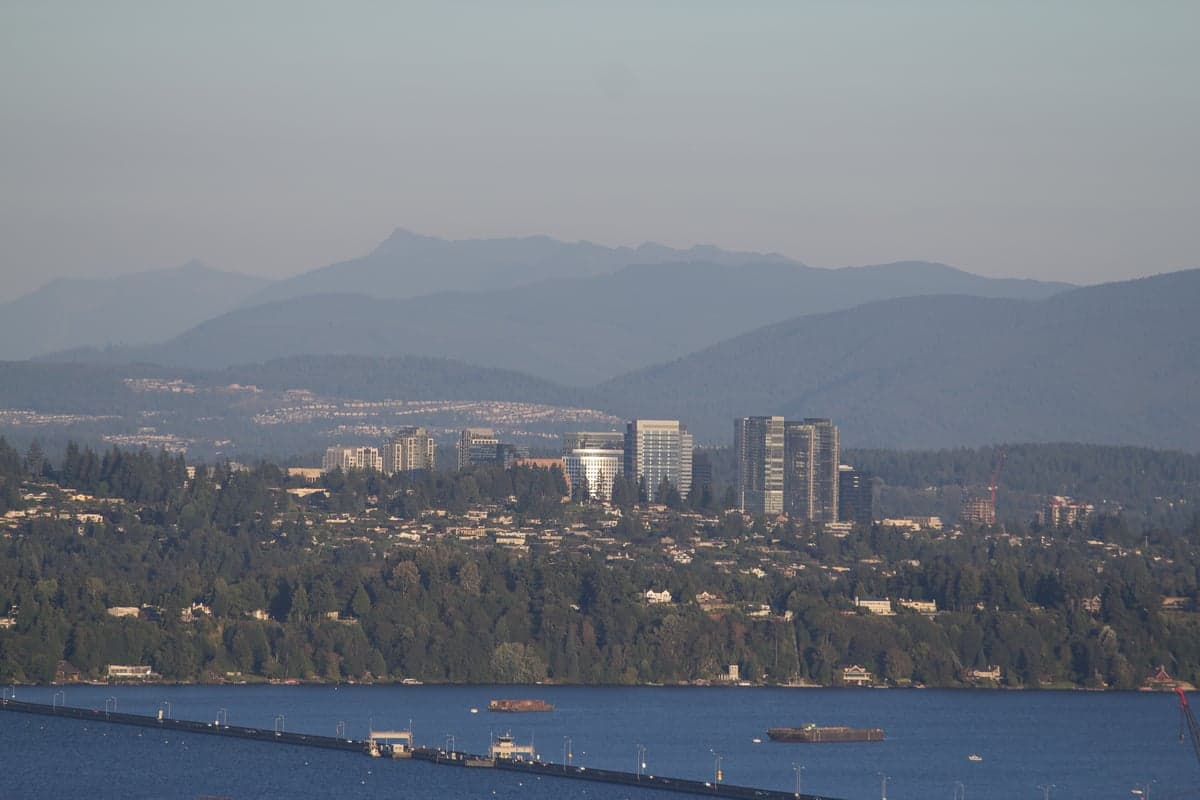
Photo: Wikipedia
Political ClimatePolitical Climate in Medina, WA
District shown is the primary district for this city’s centroid. Cities may span multiple districts.
Local Political AnalysisPolitical Analysis of Medina, WA
Medina, Washington, is about as blue as it gets in the state, with a Cook PVI of D+15, meaning it votes roughly 15 points more Democratic than the national average. But if you’ve lived here as long as I have, you know that wasn’t always the case. This town used to be a quiet, old-money enclave where folks kept their politics to themselves and valued low taxes and personal privacy above all else. Over the last decade, though, the political lean has shifted hard left, driven by an influx of tech money from nearby Bellevue and Redmond. The local elections are now dominated by candidates who talk a big game about “equity” and “sustainability,” but what that really means is more regulations, higher property taxes, and a creeping sense that the government knows what’s best for you.
How it compares
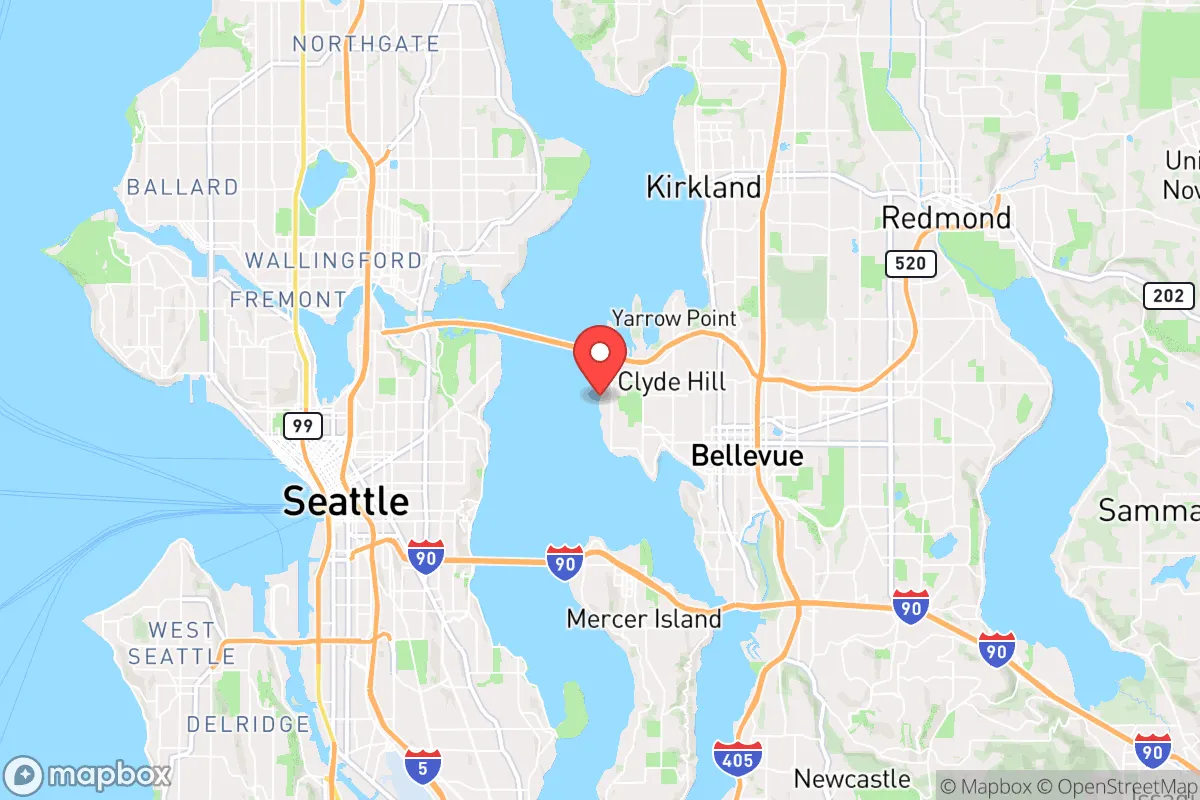
To really understand Medina’s shift, you have to look at the towns around it. Drive five miles east to Clyde Hill, and you’ll find a similar D+12 vibe—lots of Teslas and yard signs for progressive school board candidates. But head south to Newcastle or west to Mercer Island, and you’re still in deep-blue territory, just with a slightly more moderate flavor. The real contrast is north of the 520 bridge, in places like Kirkland or Redmond proper, where the politics are equally left-leaning but the culture feels more “tech-bro progressive” than Medina’s old-guard, country-club conservatism. Even Bellevue, just a few minutes away, has a more balanced mix—its City Council still has a few fiscal conservatives who push back on the worst spending proposals. Medina, though? It’s become a one-party town, and that’s concerning for anyone who values a real debate on taxes, property rights, or school choice.
What this means for residents
For the average homeowner in Medina, the political climate translates directly into your wallet and your daily life. Property taxes have climbed steadily as the city and county fund new “affordable housing” mandates and climate action plans. You’ll also see more restrictions on what you can do with your own land—tighter tree ordinances, limits on home expansions, and a general attitude that your property is a public resource to be managed. The school board, which used to focus on academics and fiscal responsibility, now spends more time on DEI training and social-emotional learning than on math scores. If you’re a conservative or even a moderate who believes in limited government, you’ll feel increasingly out of step at neighborhood gatherings and PTA meetings. The social pressure to conform to progressive orthodoxy is real, and it’s one reason some long-time families have quietly moved to places like Sammamish or Issaquah, where the politics are still left-leaning but the culture is less intense.
The cultural and policy distinctions here are subtle but telling. Medina still has its private clubs and gated estates, so the outward appearance of old-money discretion remains. But the policy direction is unmistakably progressive: the city has embraced “Vision Zero” traffic schemes that slow down every street, banned natural gas in new construction, and pushed for more density in single-family neighborhoods. The local police department, once a point of pride, now faces calls to “reimagine” its role. If you value personal freedom—the right to drive a gas car, build a fence without a permit, or send your kid to a school that teaches traditional values—Medina is becoming a harder place to call home. The trajectory is clear: more government, less liberty. I’d say enjoy the lake views while you can, but keep an eye on the ballot measures.

State Political ClimatePolitical Climate in Washington
State Political AnalysisPolitical Environment in the State
Washington State has shifted from a purple swing state to a solidly blue stronghold over the past two decades, driven overwhelmingly by the explosive growth of the Seattle metro area. While the state hasn’t voted Republican in a presidential race since 1984, the real story is the accelerating leftward lurch in state policy since 2010, fueled by massive in-migration to King County and a shrinking rural population. For a conservative considering a move, the state’s political climate is a tale of two Washingtons—one urban, one rural—with the urban faction holding all the power.
Urban vs. rural divide
The political map of Washington is a textbook case of geographic polarization. The entire state’s electoral power is concentrated in the I-5 corridor from Olympia through Tacoma, Seattle, and up to Everett. King County alone casts about 30% of the state’s vote and delivers margins of 70-80% for Democrats. Seattle and its inner suburbs like Bellevue and Redmond are the engine of progressive policy, while Tacoma and Olympia follow suit with smaller but still solidly blue populations. Meanwhile, the rest of the state—eastern Washington, the Olympic Peninsula, and the rural Cascade foothills—votes overwhelmingly Republican. Spokane County, the state’s second-largest, has trended redder in recent cycles, voting +12 for Trump in 2024. Yakima and Wenatchee are reliably conservative, but their populations are too small to counterbalance the Seattle metro. The divide isn’t just political—it’s cultural. A resident of Spokane Valley has almost nothing in common politically with someone from Capitol Hill in Seattle.
Policy environment
Washington’s policy environment is aggressively progressive, with a tax structure that uniquely burdens the middle class. The state has no income tax, but it has the highest state sales tax in the nation (10.4% in Seattle, 8.9% statewide average), and a capital gains tax on profits over $250,000 that was passed in 2021 and upheld by the state Supreme Court in 2023. Property taxes are moderate but rising fast. Regulatory posture is heavy: the state has a cap-and-trade program (Climate Commitment Act) that adds hidden costs to gas and energy, and a long-term care payroll tax (WA Cares) that took effect in 2023, forcing workers to pay 0.58% of wages for a government-run benefit program. Education policy is dominated by teachers’ unions, with no school choice—no vouchers, no charter schools (only a small pilot program), and a strong anti-homeschooling regulatory environment. Healthcare is heavily regulated, with a state-based insurance exchange and strict mandates. Election laws are among the most liberal: universal mail-in voting since 2011, same-day registration, and no voter ID requirement beyond a signature check. For a conservative, the policy environment feels like a slow-motion erosion of personal choice and fiscal freedom.
Trajectory & freedom
Over the past five years, Washington has become decidedly less free across multiple dimensions. On gun rights, the legislature passed a ban on “assault weapons” (HB 1240) in 2023, a 10-round magazine capacity limit, and a waiting period for all firearm purchases. These laws were upheld by a federal judge in 2024, though appeals continue. On parental rights, the state passed a “shield law” in 2023 that blocks out-of-state subpoenas related to gender-affirming care, and schools are required to keep a student’s gender identity confidential from parents if the student requests it—a direct blow to parental authority. On medical autonomy, the state expanded physician-assisted suicide (Death with Dignity Act) and removed parental consent requirements for minors seeking abortion. Property rights have been weakened by the Growth Management Act, which forces dense development and limits rural building. The cap-and-trade program effectively acts as a hidden gas tax, raising fuel prices by 40-50 cents per gallon. The trajectory is clear: more regulation, less individual choice, and a government that increasingly sees itself as a parent to its citizens.
Civil unrest & political movements
Washington has been a flashpoint for political unrest. The CHAZ/CHOP occupation in Seattle during summer 2020—where six blocks were declared a police-free autonomous zone—was a national symbol of progressive overreach. The city council’s subsequent defund-the-police push led to a 30% reduction in officer staffing, which correlated with a 40% spike in property crime in 2021-2022. On the right, the Washington State Republican Party has seen a grassroots surge, with precinct committee officer positions being filled by activists for the first time in decades. The “San Juan County secession” movement—where rural areas of the county tried to break away from the liberal San Juan Islands—failed but highlighted the frustration. Immigration politics are tense: Washington is a sanctuary state (since 2019), and King County has a policy of non-cooperation with ICE. Election integrity is a live issue: the 2020 and 2022 elections saw ballot harvesting controversies, with Republican observers raising concerns about signature verification and drop-box security. A new resident will notice the Seattle City Council meetings are often dominated by activists pushing for rent control, police abolition, and homeless encampment legalization—a far cry from the quiet rural life of Colville or Pomeroy.
Projection
Over the next 5-10 years, Washington will likely become more progressive, not less. Demographic trends are clear: King County is growing, rural counties are shrinking, and the state’s in-migration is overwhelmingly from California and other blue states. The 2024 election saw Democrats hold the governor’s mansion and both legislative chambers, and the state Supreme Court is now 7-2 liberal. Expect a state income tax to be proposed again (it failed in 2023 but will return), more gun control, and a single-payer healthcare push. The cap-and-trade program will only get more expensive. The one wild card is the eastern Washington population—if Spokane and the Tri-Cities continue to grow, they could slow the leftward drift, but they’ll never overcome Seattle’s dominance. For a conservative moving in now, expect to be a permanent political minority, with state policy increasingly hostile to your values.
Bottom line for a new resident: If you’re moving to Washington, you’re moving to a state where your vote for statewide office will likely never matter. The practical takeaway is to choose your county carefully—Spokane County or Yakima County offer a conservative local environment, but you’ll still pay Seattle’s taxes and live under Seattle’s laws. The state’s natural beauty is unmatched, but the political climate is a slow, steady march toward progressive control. If you value personal freedom, low taxes, and local control, Washington is not your friend—it’s a beautiful place to visit, but a frustrating place to live if you lean right.
* Values derived from national, state, county, city and local statistics and may differ in a specific area. Last updated: 2026-04-27T14:12:45.000Z
Narrative content on this page is AI-generated and may contain mistakes. Verify any details that matter before acting on them.
ReloMaps may earn a commission from affiliate links at no extra cost to you.

