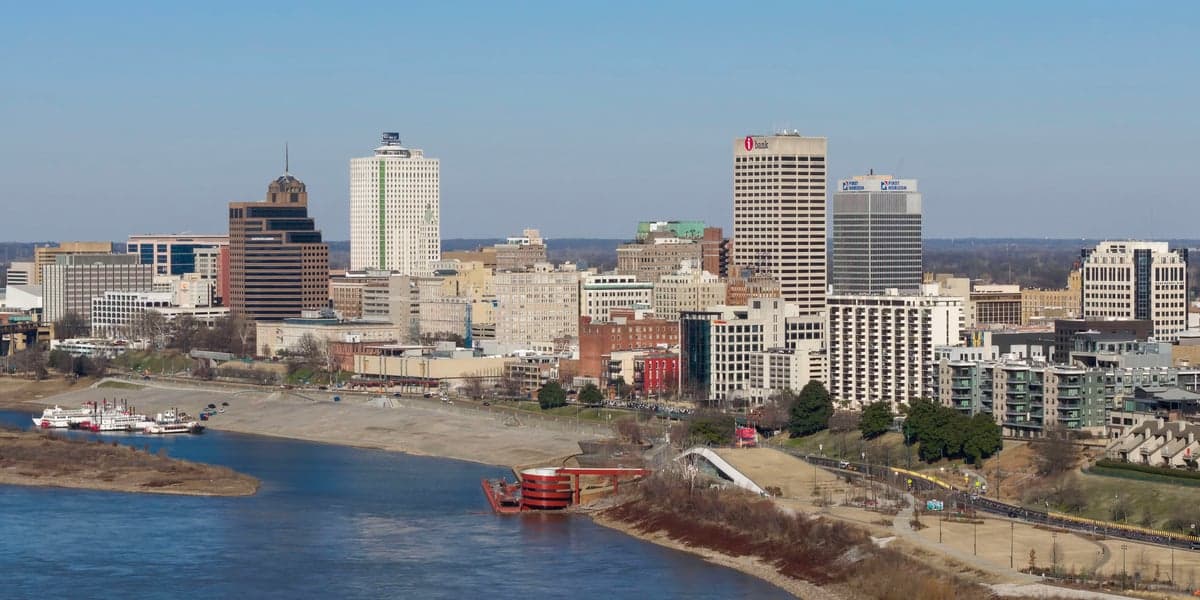
Photo: Wikipedia
Strategic Assessment of Memphis, TN
Multiple tactical vulnerabilities. Population density, target proximity, or disaster risk are likely compounding. A retreat property and exit planning is required.
What does the Strategic Assessment tell us?
Our Strategic Assessment grades tactical survivability of an area. Major population centers, military targets, fallout zones, natural disasters, and border exposure all drive risk — lower exposure means a more defensible position in a crisis.
This is heavily inspired by Joel Skousen's Strategic Relocation book. Highly recommended you checkout the book ($)What does this tell us?
Our Strategic Assessment grades tactical survivability of an area. Major population centers, military targets, fallout zones, natural disasters, and border exposure all drive risk — lower exposure means a more defensible position in a crisis.
This is heavily inspired by Joel Skousen's Strategic Relocation book. Highly recommended you checkout the book ($)Strategic Pillars

Key Distances
Regional Safe Places
Below is our recommended "safe zones" in Tennessee and the surrounding area based on our strategic heuristics. For most people, it's unrealistic to live in a “safe zone” full-time due to work, family or other personal reasons. They tend to be more rural. However, many of these areas are perfect for second homes and retreat properties that double as a vacation home or even a short-term rental.
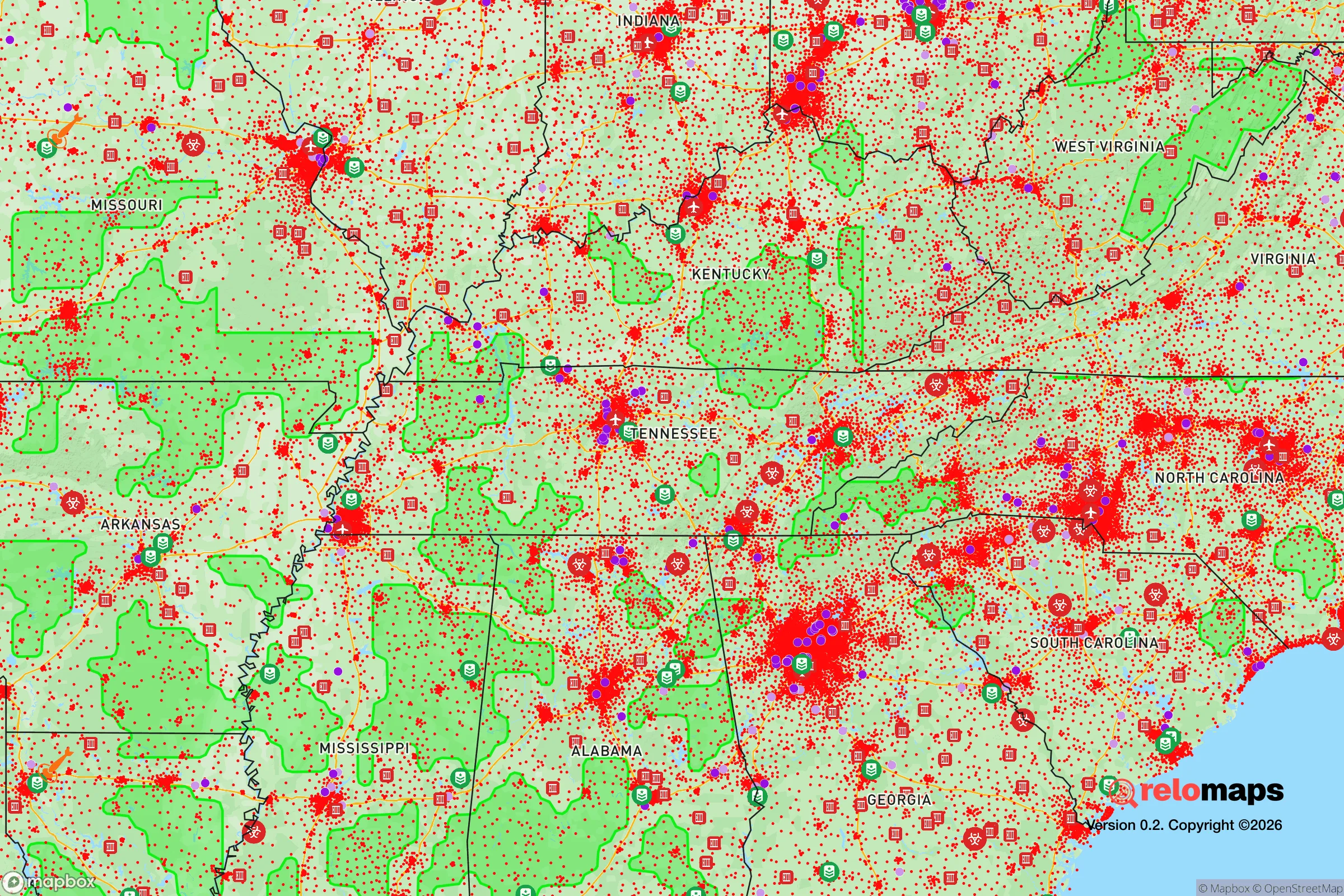
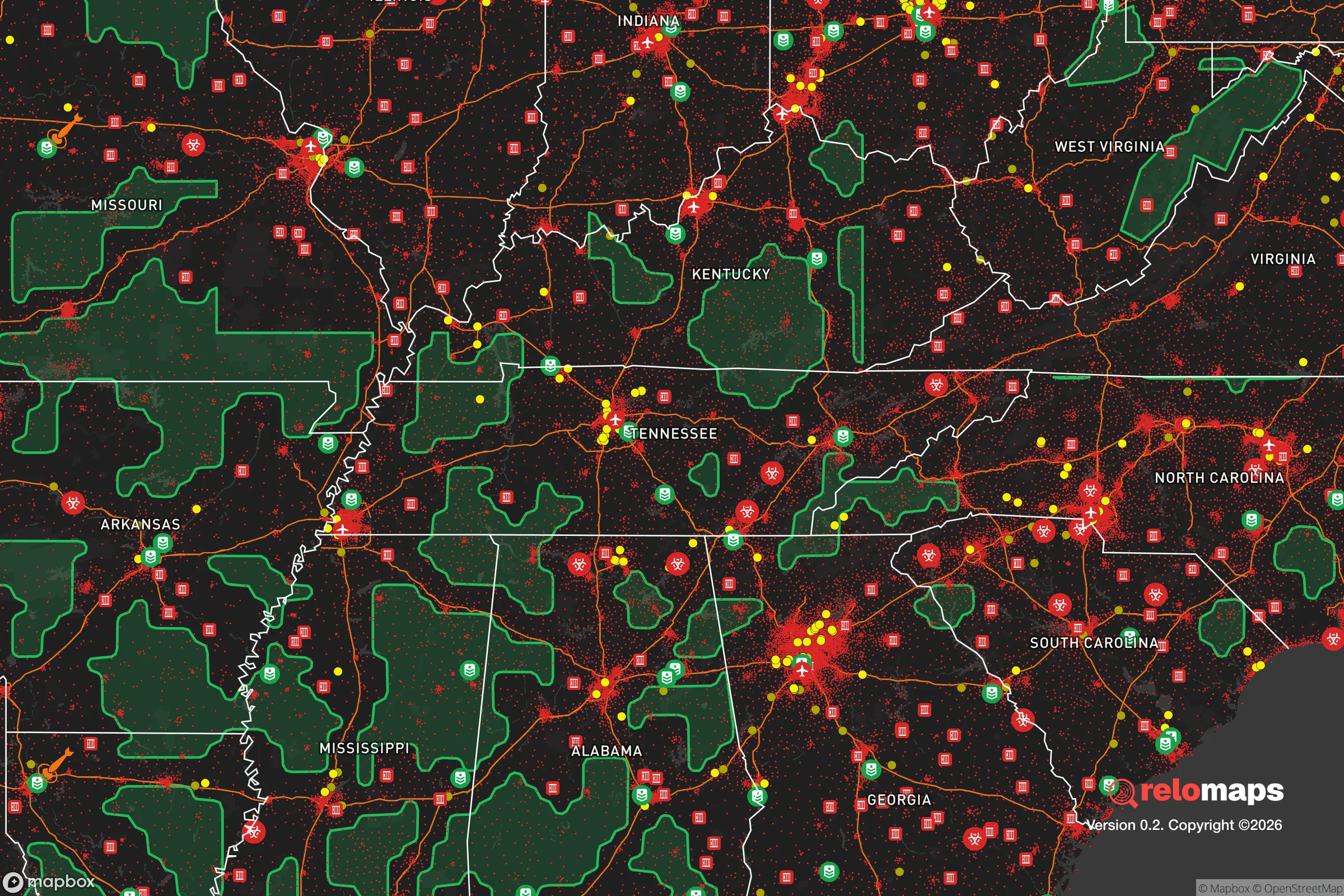


Important Note: For informational purposes only. This does not mean nothing bad ever happens in the green zones. Please use common sense. This is based on public data and modeled with AI. We tried to take a conservative approach but mistakes happen. We update this regularly as new information becomes available.
Solar Generator Recommendations
Backup power matters more here than in safer locations. We've picked three solar generators across budgets and capacity tiers — start with the budget unit if you only need a few essentials, or step up if you want to run a fridge and HVAC for days at a time.

Jackery Portable Power Station Explorer 300
Budget OptionPower on the Go: Weighing only 11 lbs, it's convenient to set up and store with book-sized foldable solar panels

BLUETTI Portable Power Station AC180
Designed for both indoor and outdoor scenarios, AC180 is highly capable as it has a robost capacity and continuous output power.

EF ECOFLOW DELTA Pro Ultra Power Station
Upgraded PickEcoFlow DELTA Pro Ultra is a whole-home energy system designed to grow with your family. Integrated with the Smart Home Panel 2, it scales to meet your evolving energy needs — keeping your home powered, intelligent, and secure through every stage of life.
We earn a commission, at no additional cost to you.
Strategic Assessment Analysis
Memphis, Tennessee, sits at a strategic crossroads that offers both genuine resilience advantages and significant exposure risks for those prioritizing preparedness. Its location along the Mississippi River and at the junction of major interstate corridors (I-40, I-55, I-240) provides unmatched logistical access for supply movement and evacuation, but the same factors make it a potential chokepoint during crisis scenarios. For a conservative-leaning relocator focused on self-sufficiency and avoiding urban collapse, Memphis presents a mixed picture: the city itself carries heavy baggage, but the surrounding region—particularly Shelby County’s rural edges and adjacent counties in Mississippi and Arkansas—offers practical options if you know where to look.
Geographic position and natural advantages for long-term survival
Memphis sits on the fourth Chickasaw Bluff, a natural elevation rising roughly 50 to 80 feet above the Mississippi River floodplain. This high ground provides a degree of natural defensibility and reduces flood risk compared to the low-lying areas across the river in Arkansas. The region’s climate is humid subtropical, with a growing season of about 230 days—long enough to support substantial food production. The alluvial soil of the Mississippi Delta is among the most fertile in the world, meaning that with proper seed stock and knowledge, a relocator could achieve significant agricultural self-sufficiency within a few seasons. Water access is a major plus: the Memphis Sand Aquifer, one of the largest and cleanest groundwater sources in the United States, lies beneath the city and surrounding counties. It supplies water that requires minimal treatment, a critical advantage if municipal systems fail. The area also has abundant surface water from the Mississippi, Wolf, and Loosahatchie rivers, though treatment would be necessary. For a prepper, the natural resource base here is genuinely strong—good dirt, reliable water, and a climate that doesn’t force you into a six-month winter survival scenario.
Risks, exposures, and proximity to fallout-relevant landmarks
The downsides are substantial and must be weighed honestly. Memphis itself is a major urban center with a population of roughly 630,000 and a metro area exceeding 1.3 million. In a mass casualty event, civil unrest, or grid-down scenario, that population density becomes a liability. The city has a history of violent crime—Memphis consistently ranks among the highest in the nation for per-capita murder rates—and during a crisis, the breakdown of law enforcement could turn the city into a no-go zone. Proximity to critical infrastructure is a double-edged sword. Memphis is a major transportation and logistics hub: FedEx’s global superhub at Memphis International Airport processes millions of packages daily, and the city is a key rail and barge node. In a national emergency, this makes Memphis a target for both physical disruption and potential secondary effects like supply chain collapse. The city is also within 200 miles of several potential fallout-relevant landmarks: the Tennessee Valley Authority’s nuclear plants (Watts Bar and Sequoyah, about 200 miles east), the Fort Campbell Army base (about 180 miles north), and the Memphis Defense Depot (a former military supply facility). While none are immediate blast zones, any nuclear incident or attack on these sites could send fallout patterns across the region depending on wind direction. The New Madrid Seismic Zone, located about 50 miles to the north, poses a real earthquake risk—a major quake could collapse bridges, rupture gas lines, and disrupt the very infrastructure that makes Memphis a logistics hub. For a relocator, the city core is a hard pass; the rural periphery is where the calculus shifts.
Practical resilience for a relocator: food, water, energy, and defensibility
For someone willing to settle outside the urban core—think Fayette County to the east, Tipton County to the north, or DeSoto County, Mississippi, to the south—the practical resilience picture improves markedly. These areas offer lower population density, cheaper land (often under $5,000 per acre for raw acreage), and more conservative communities that tend to be self-reliant and armed. Food production is viable: the long growing season supports corn, beans, squash, tomatoes, and livestock grazing. Local farmers’ markets and co-ops exist, but a serious prepper should plan to establish their own garden and possibly small livestock within the first year. Water is the standout advantage. The Memphis Sand Aquifer is shallow enough that private wells are common and affordable to drill (typically $3,000–$6,000 for a residential well). Even if municipal water fails, a well with a hand pump or solar-powered pump provides a reliable independent water source. Energy resilience is moderate: the region gets good sun for solar (about 4.5 peak sun hours per day on average), and wind is less reliable. Propane and wood are practical heating backups, given the mild winters (average January lows around 30°F). Defensibility depends on your specific property. The terrain is mostly flat to gently rolling, with wooded areas in the eastern parts of Shelby and Fayette counties. A property with a creek or pond, set back from main roads, offers natural security. The local culture is generally gun-friendly—Tennessee has permitless carry and strong castle doctrine laws—so you won’t stand out as an outlier for being armed. However, be aware that Memphis’s crime problems spill into the suburbs; property crime rates in Shelby County are above national averages, so physical security measures (fencing, cameras, reinforced doors) are not paranoid but prudent.
The overall strategic picture for Memphis is one of cautious opportunity for the prepared relocator. The city itself is a liability—too dense, too crime-ridden, too dependent on fragile infrastructure, and too close to potential fallout vectors. But the surrounding region offers genuine advantages: abundant clean water, fertile soil, a long growing season, and a culture that doesn’t look sideways at self-reliance. If you’re willing to live 30 to 45 minutes outside the urban core, you can secure affordable land, drill a well, plant a garden, and establish a defensible position that leverages the area’s natural strengths while avoiding its urban weaknesses. The key is to treat Memphis as a resource node—a place to source supplies, trade, or gather intelligence—not as a home base. For a conservative-minded individual or family looking to ride out national instability, the Memphis periphery is a viable option, but only if you enter with eyes open and a plan that assumes the city itself will be a liability in any serious crisis.

* Values derived from national, state, county, city and local statistics and may differ in a specific area. Last updated: 2026-04-15T23:51:13.000Z
Narrative content on this page is AI-generated and may contain mistakes. Verify any details that matter before acting on them.
ReloMaps may earn a commission from affiliate links at no extra cost to you.

