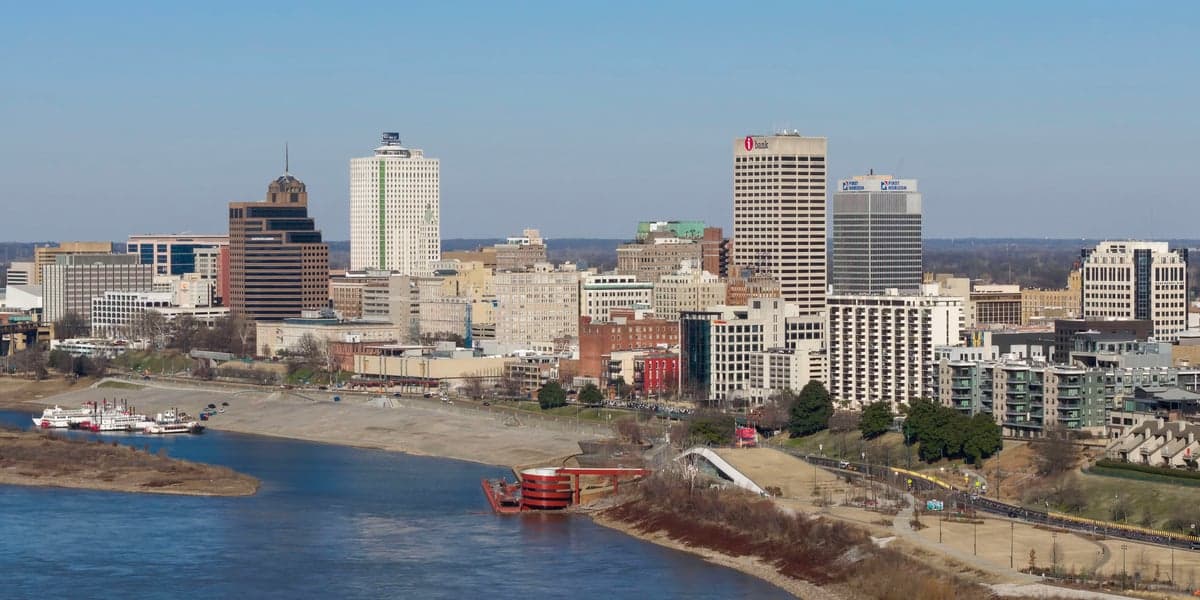
Photo: Wikipedia
Political ClimatePolitical Climate in Memphis, TN
District shown is the primary district for this city’s centroid. Cities may span multiple districts.
Local Political AnalysisPolitical Analysis of Memphis, TN
Memphis is a deep blue island in a sea of red, and that’s not changing anytime soon. The city’s Cook PVI of D+23 tells you everything you need to know: it’s one of the most reliably Democratic major cities in the South, and the local politics reflect that. Over the last decade, the shift has been away from the old-school, moderate Democratic machine and toward a younger, more progressive crowd that’s pushing hard on things like defunding the police, sanctuary city policies, and higher taxes. If you’re a conservative or even a moderate who values limited government, you’ll feel the weight of that majority in everything from city council votes to school board decisions.
How it compares
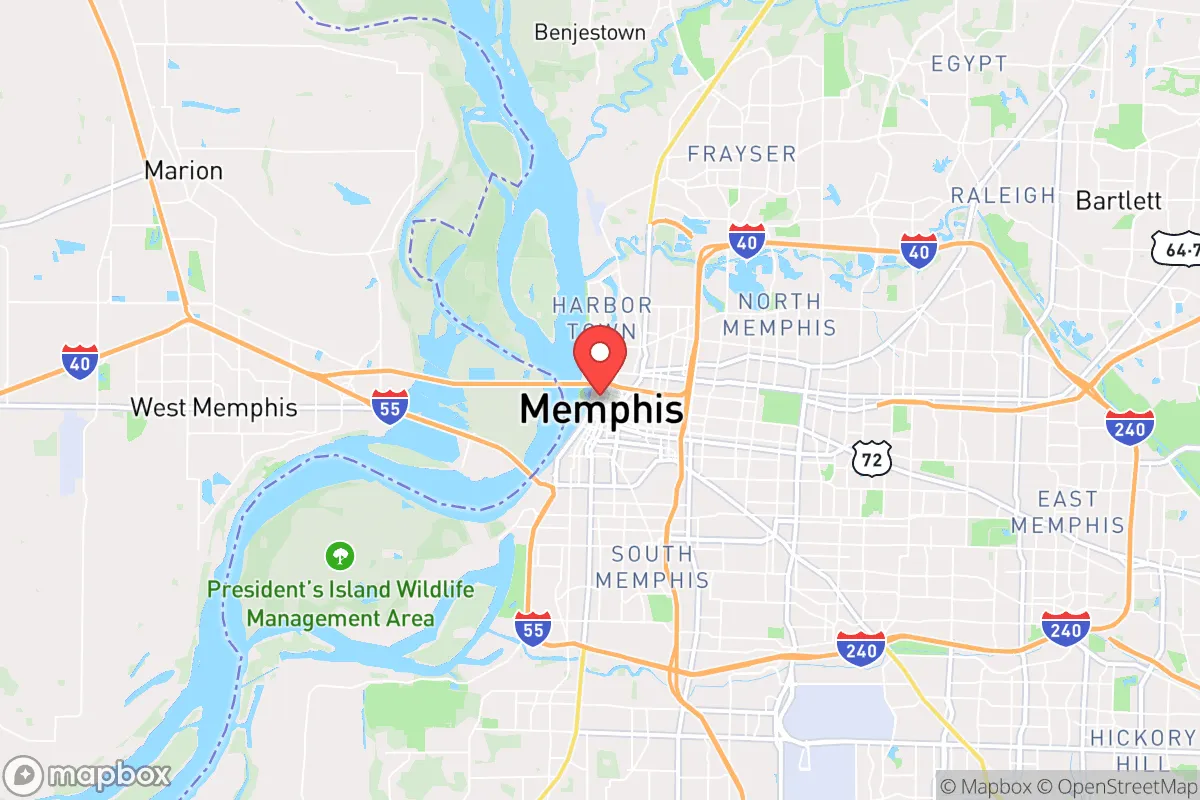
Drive 20 minutes east to Collierville or Germantown, and you’re in a completely different political world. Those suburbs vote reliably Republican, with Collierville going about 60% for Trump in 2020. Bartlett and Arlington lean the same way. But Memphis itself? It’s the anchor that drags the whole county blue. Shelby County as a whole is D+17, but that’s only because the suburbs pull it back from the city’s D+23. The contrast is stark: you can live in a place where property taxes are reasonable and the sheriff actually enforces the law, or you can live inside the 240 loop where the city council is more worried about renaming parks than cutting crime. The divide isn’t just political—it’s cultural. People in the suburbs talk about Memphis like it’s a different country, and honestly, it feels that way sometimes.
What this means for residents
If you live inside Memphis city limits, you’re dealing with the consequences of one-party rule. The city council and mayor’s office have been solidly Democratic for decades, and the result is a government that feels less accountable to the average taxpayer. Property taxes have gone up repeatedly, even as services like police response times and road maintenance have gotten worse. The push for progressive policies—like the 2020 movement to cut the police budget by $20 million—has real, daily effects. Crime is up, and the political response is often to blame the state or the NRA rather than address the root causes. For a conservative, it’s frustrating because your vote feels like it doesn’t matter. The primary elections are where the real decisions are made, and those are dominated by the most progressive voices. If you value personal freedom—like the right to keep and bear arms without extra fees or restrictions, or the right to send your kid to a school that doesn’t push a political agenda—Memphis is a tough place to live.
The cultural and policy distinctions here are hard to ignore. Memphis was one of the first cities in the South to remove Confederate statues, and it’s been a leader in what some call “racial equity” initiatives that often translate into race-based hiring quotas and spending priorities. The city also has a strong union presence, especially in the schools and municipal services, which drives up costs and makes reform nearly impossible. On the plus side, the low cost of living and the vibrant music and food scene are real draws. But for a conservative, the trade-off is steep: you’re subsidizing a government that often seems hostile to your values. If you’re thinking of moving here, I’d strongly recommend looking at the suburbs or even across the state line into Mississippi, where DeSoto County is solidly red and the taxes are lower. Memphis itself? It’s a great place to visit for barbecue and blues, but living here as a conservative means picking your battles every single day.

State Political ClimatePolitical Climate in Tennessee
State Political AnalysisPolitical Environment in the State
Tennessee has been a reliably red state for decades, but the real story is how much further right it has shifted over the past 10-20 years. The state’s overall partisan lean is now solidly Republican, with a +14-point margin in the 2024 presidential election, and the state legislature holds a supermajority that has aggressively pushed a conservative policy agenda. This trajectory is driven by a combination of out-migration from deep-blue cities in other states, a growing exurban and rural population that votes overwhelmingly Republican, and a political culture that has become more culturally conservative, not less, over time.
Urban vs. rural divide
The political map of Tennessee is a textbook case of the urban-rural split. The state’s major metros—Nashville (Davidson County) and Memphis (Shelby County)—are deep blue islands in a sea of red. Nashville has become a progressive stronghold, with a Democratic mayor and a city council that has pushed for sanctuary city policies and defunded police rhetoric, though actual defunding never fully materialized. Memphis is even more reliably Democratic, driven by a large African American population and a strong union presence. However, the real action is in the suburbs and exurbs. Williamson County (south of Nashville) and Rutherford County (southeast of Nashville) have flipped from purple to deep red over the last decade, fueled by families fleeing Nashville’s rising crime and progressive school policies. Knoxville and Chattanooga are more moderate but still lean Republican, with their downtowns trending left while the surrounding counties—like Blount County and Hamilton County’s rural precincts—vote heavily red. The rural counties in Middle and East Tennessee, like Putnam County (Cookeville) and Washington County (Johnson City), are reliably Republican, often voting +30 to +40 points for the GOP. The only real exception is Shelby County, which is so blue that it can occasionally swing a statewide race, but that’s becoming less common as the rest of the state grows faster.
Policy environment
Tennessee’s policy environment is a conservative’s dream, at least on paper. There is no state income tax—only a flat 7% sales tax on most goods, which is high but predictable. The regulatory posture is business-friendly, with right-to-work laws and minimal zoning restrictions outside of major cities. Education policy has been a flashpoint: the state passed a universal school voucher program in 2023 (the Education Freedom Scholarship Act), allowing families to use public funds for private or homeschool expenses. This was a huge win for school choice advocates. On healthcare, Tennessee did not expand Medicaid under the Affordable Care Act, and the state has a strict abortion ban (trigger law) that went into effect after Dobbs, with no exceptions for rape or incest. Election laws have tightened: voter ID requirements are strict, and the state purged inactive voters from rolls in 2024, which was controversial but defended as cleaning up the rolls. The state also passed a law in 2023 banning transgender athletes from female sports and restricting gender-affirming care for minors. For a conservative, this is a state that is actively pushing back against progressive overreach.
Trajectory & freedom
Tennessee is becoming more free in many respects, but there are warning signs. On the plus side, the state expanded gun rights significantly: permitless carry (constitutional carry) was signed into law in 2021, and the state preempted local gun ordinances, meaning cities like Nashville cannot pass their own restrictions. Parental rights were strengthened with a 2023 law requiring schools to notify parents of any changes to a student’s mental or physical health, effectively banning secret gender transitions at school. Property rights were bolstered by a 2024 law limiting the use of eminent domain for private economic development. However, there are concerning trends. The state’s COVID-era emergency powers were used to shut down businesses and churches, and while the legislature later curbed the governor’s emergency authority, the memory of those lockdowns still stings. Additionally, the state’s sales tax on groceries was finally reduced in 2024, but it’s still higher than many red states. The biggest red flag for freedom-minded residents is the growing influence of corporate interests in Nashville, which has led to cronyism and tax breaks for big developers. The state is also seeing a rise in HOA and zoning restrictions in fast-growing suburbs, which can feel like a loss of property rights at the local level.
Civil unrest & political movements
Tennessee has seen its share of political flashpoints. The 2023 Nashville school shooting at The Covenant School sparked massive protests from both gun control advocates and Second Amendment supporters, with the state legislature responding by passing a law to allow armed teachers in schools. The 2020 protests in Nashville and Memphis over George Floyd’s death saw some property damage and looting, but nothing on the scale of Portland or Seattle. More recently, the immigration debate has heated up: the state passed a law in 2024 requiring local law enforcement to cooperate with ICE, and there have been protests from immigrant rights groups in Nashville. The election integrity issue is alive and well: the state’s 2023 law requiring hand-counted audits of election results was praised by conservatives but criticized by Democrats as unnecessary. There is also a growing nullification movement in rural counties, with several passing resolutions declaring themselves “Second Amendment sanctuaries” and refusing to enforce federal gun laws. The most visible political movement right now is the school choice coalition, which is well-organized and has successfully lobbied for the voucher program. On the left, the Tennessee Justice Center and ACLU of Tennessee are active, but they are fighting an uphill battle in a supermajority legislature.
Projection
Over the next 5-10 years, Tennessee is likely to become even more conservative, but with a twist. The in-migration from California, Illinois, and New York is bringing people who are fleeing blue states, but they are also bringing their high expectations for services and infrastructure. This could create a tension between the state’s low-tax, small-government ethos and the demand for better roads, schools, and healthcare in fast-growing areas like Williamson County and Rutherford County. The demographic shift is also changing the political map: the Nashville suburbs are growing so fast that they could eventually become more moderate, but for now, they are still voting red. The rural areas are losing population, which means the state’s political center of gravity is shifting to the exurbs. Expect more fights over school funding, property taxes, and land use as the state grows. The biggest wildcard is the 2026 gubernatorial election: if a moderate Republican wins, the state could see a slight softening on some issues, but if a hardline conservative wins, expect more preemption of local control and further restrictions on abortion and transgender rights. For a new resident, the next decade will feel like a continuation of the current trend, but with more growing pains.
For a conservative moving to Tennessee, the bottom line is this: you’re getting a state that is actively fighting the culture war on your side, with low taxes, strong gun rights, and a legislature that listens to parents. But don’t expect a libertarian paradise—the state still has high sales taxes, a growing bureaucracy in Nashville, and local governments that can be just as overbearing as any blue state. The key is to pick your location carefully: stick to the exurbs or rural counties if you want maximum freedom, and avoid the city limits of Nashville and Memphis if you want to avoid progressive policies. Tennessee is a great place to raise a family or start a business, but it’s not a place to be passive—you’ll need to stay engaged in local politics to keep it that way.
* Values derived from national, state, county, city and local statistics and may differ in a specific area. Last updated: 2026-04-15T23:51:13.000Z
Narrative content on this page is AI-generated and may contain mistakes. Verify any details that matter before acting on them.
ReloMaps may earn a commission from affiliate links at no extra cost to you.

