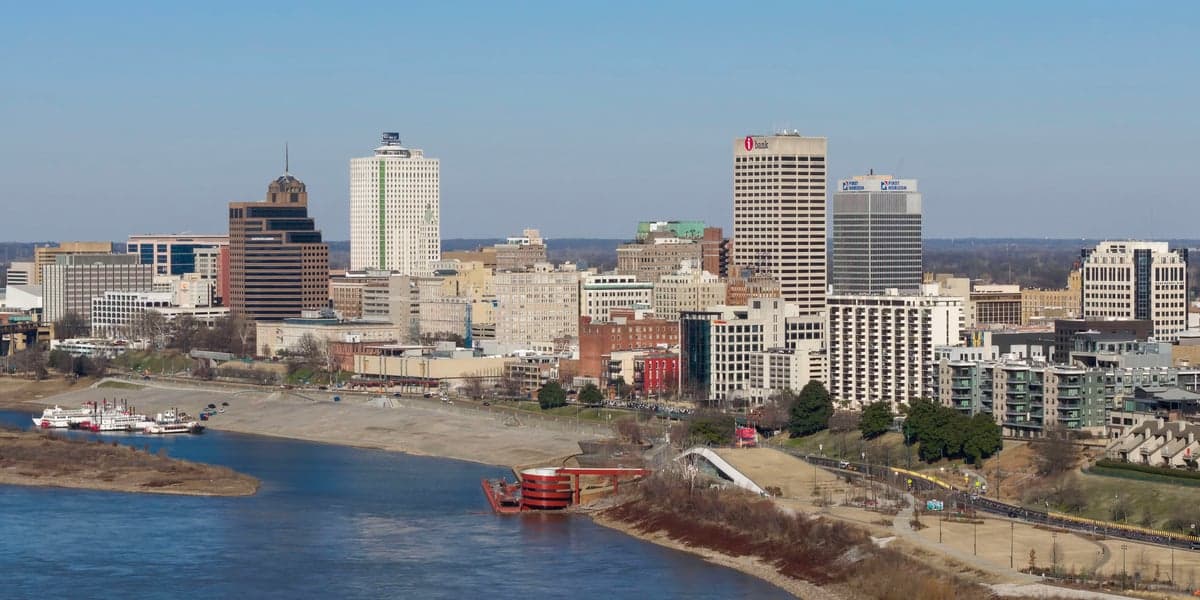
Photo: Wikipedia
Quality of Life in Memphis, TN
A high quality of life with strong walkability, manageable living costs, healthy neighborhood signals, and solid amenity access.
What does Quality of Life tell us?
Quality of Life blends cost of living, nearby amenities, socioeconomic signals, and neighborhood character. City-level scores represent the whole municipality; individual neighborhoods can differ.
What does this tell us?
Quality of Life blends cost of living, nearby amenities, socioeconomic signals, and neighborhood character. City-level scores represent the whole municipality; individual neighborhoods can differ.
Cost of Living
20% below national average
The Real Cost of Living in Memphis, TN for 2026
| Tier | Individual | Family (4) |
|---|---|---|
| Survival | $18k | $34k |
| Comfortable | $31k | $45k |
| Luxury | $93k+ | $143k+ |
| Elite (Top 5%) | $137k+ | $212k+ |
114%
The Area Signal
A metric tracking the socioeconomic signals of the area.


Hobbies
Explore the areaGroceries
0 within 10 miles
Gas
0 within 10 miles
Hospital
3 within 20 miles
Airport
BNA — Nashville International
Post Office
USPS — Memphis, TN
Critical Amenities
Quality-of-Life Analysis
Memphis, Tennessee, presents a distinctive quality-of-life profile defined by deep cultural roots and a cost of living far below the national average, attracting a mix of young professionals, artists, and families seeking affordability without sacrificing urban energy. The city’s population is notably diverse, with a strong African American majority and a growing Hispanic community, while the broader metro area draws residents from across the Mid-South for its employment base in logistics, healthcare, and education. With a cost-of-living index of 80 (where 100 equals the U.S. average), Memphis offers a financial landscape that contrasts sharply with pricier Sun Belt peers like Nashville or Atlanta, making it a practical choice for those prioritizing economic breathing room.
Cost of living, housing affordability, and how Memphis compares to nearby cities
Memphis stands out as one of the most affordable major cities in the United States, with a cost-of-living index of 80 that is 20% below the national benchmark. The median home value sits at $157,100, less than half the national median of roughly $350,000, and significantly undercutting nearby Nashville’s median of approximately $420,000. Renters also benefit: the median rent of $1,123 is about $400 less than the national median and roughly $600 cheaper than in Nashville. The average commute of 21.3 minutes is notably shorter than the national average of 26 minutes, reducing daily transportation costs and time spent in traffic. Compared to other regional hubs like Little Rock (COL index 88) or Jackson, Mississippi (COL index 84), Memphis still offers a lower overall cost burden, particularly in housing, though property taxes in Shelby County are higher than in surrounding rural areas.
Everyday life: amenities, schools, and the rhythm of the city
Daily life in Memphis is shaped by a mix of world-class cultural institutions and persistent infrastructure challenges. The city is home to iconic attractions like Graceland, the National Civil Rights Museum at the Lorraine Motel, and Beale Street’s live music scene, which anchor a vibrant tourism and entertainment economy. For families, the public school system—Shelby County Schools—has a graduation rate around 78%, below the state average, though several magnet schools like White Station High School and optional programs offer higher-performing alternatives. Private and charter school options are expanding, particularly in East Memphis and Germantown. The city’s park system, including the 4,500-acre Shelby Farms Park, provides extensive green space, while the Memphis Zoo and the Mississippi Riverfront offer recreational anchors. The rhythm of life leans toward a slower, more community-oriented pace than in faster-growing Southern cities, with a strong emphasis on local food (barbecue, soul food) and neighborhood festivals. However, residents regularly contend with high rates of property crime and occasional flooding in low-lying areas near the river.
Memphis is best suited for individuals and families who value cultural richness, affordability, and a slower urban pace over top-tier public schools or low crime rates. Young professionals in logistics, healthcare, or education will find ample job opportunities at major employers like FedEx, St. Jude Children’s Research Hospital, and the University of Tennessee Health Science Center. Retirees on fixed incomes can stretch their savings significantly here, while artists and entrepreneurs benefit from low barriers to entry for housing and small business. Those who thrive in Memphis are typically resourceful, community-minded, and comfortable navigating a city with stark contrasts—where world-class music and food coexist with systemic poverty and underfunded public services. For anyone seeking a low-cost urban base with genuine character, Memphis offers a compelling, if imperfect, quality of life.

Crime in Memphis, TN
Significantly higher crime rates than 95% of comparable U.S. locations.
Violent CrimeViolent Crime Analysis
Property CrimeProperty Crime Analysis
Crime Analysis
Memphis, Tennessee, has one of the highest violent crime rates in the United States, with a violent crime rate of 1,849.1 incidents per 100,000 residents and a property crime rate of 5,027.8 per 100,000. These figures place the city far above both the Tennessee state average and the national median, making public safety a primary concern for anyone considering relocation. The city's crime challenges are deeply tied to its status as a large metro area with a justice system that has, in recent years, been influenced by progressive prosecutors and judges, a factor that directly correlates with higher recidivism and reduced consequences for repeat offenders.
Crime in context
Memphis's violent crime rate is roughly 4.5 times the national average, while its property crime rate is about 2.5 times higher than the U.S. median. For comparison, the national violent crime rate in 2024 was approximately 380 per 100,000, and the Tennessee state rate was around 630 per 100,000. The city's property crime rate also exceeds the state average of roughly 2,800 per 100,000. These disparities are not random; they reflect a systemic issue where progressive district attorneys and judges in Shelby County have implemented policies such as cash bail reform, reduced sentencing for violent offenders, and diversion programs that prioritize rehabilitation over incarceration. While intended to reduce mass incarceration, these policies have resulted in more convicted criminals returning to the streets quickly, often re-offending and undermining public safety.
What residents experience
Daily life for Memphis residents involves a heightened awareness of personal security. Carjackings, armed robberies, and home invasions are common enough to shape routines—many avoid driving alone at night, use delivery services instead of visiting stores, and install comprehensive security systems. Property crime, including theft from vehicles and burglary, is pervasive across many neighborhoods. The city's homicide rate, consistently among the highest in the nation, creates a persistent atmosphere of risk. Residents report that the justice system's leniency—such as low bond amounts for repeat offenders and plea deals that reduce felony charges—directly contributes to a sense that crime has few consequences. This perception is supported by data showing that Shelby County's recidivism rate exceeds 50% within three years of release.
Neighborhood-level variation is significant, however. Areas like East Memphis, Germantown, and Collierville (which is technically a separate city but part of the metro) have substantially lower crime rates, often comparable to national averages. In contrast, neighborhoods such as Frayser, Raleigh, and parts of South Memphis experience violent crime rates that can be double or triple the citywide figure. Even within safer enclaves, proximity to high-crime corridors means that property crime—especially vehicle break-ins and package theft—remains a concern. Prospective residents should research specific zip codes and consult local crime maps, as the difference between a block in Midtown and one in Cordova can be stark. Ultimately, Memphis offers affordable housing and cultural richness, but the trade-off is a public safety environment heavily shaped by progressive judicial policies that prioritize offender rehabilitation over victim protection and community security.
* Values derived from national, state, county, city and local statistics and may differ in a specific area. Last updated: 2026-04-15T23:51:13.000Z
Narrative content on this page is AI-generated and may contain mistakes. Verify any details that matter before acting on them.
ReloMaps may earn a commission from affiliate links at no extra cost to you.

