Photo: Wikipedia
Personal Sovereignty in Menomonee Falls, WI
Moderate friction. Expect trade-offs in some aspect of personal liberty and independence.
What does Personal Sovereignty tell us?
Personal Sovereignty measures your capacity for self-reliance and independence with minimal government friction. Higher scores mean fewer barriers between you and the way you want to live... but it assumes you have the space you need and good neighbors.
What does this tell us?
Personal Sovereignty measures your capacity for self-reliance and independence with minimal government friction. Higher scores mean fewer barriers between you and the way you want to live... but it assumes you have the space you need and good neighbors.
State Policy
Energy independence: Importer (15% of energy produced in-state)
Personal Liberty
Homesteading

Personal Liberty Analysis
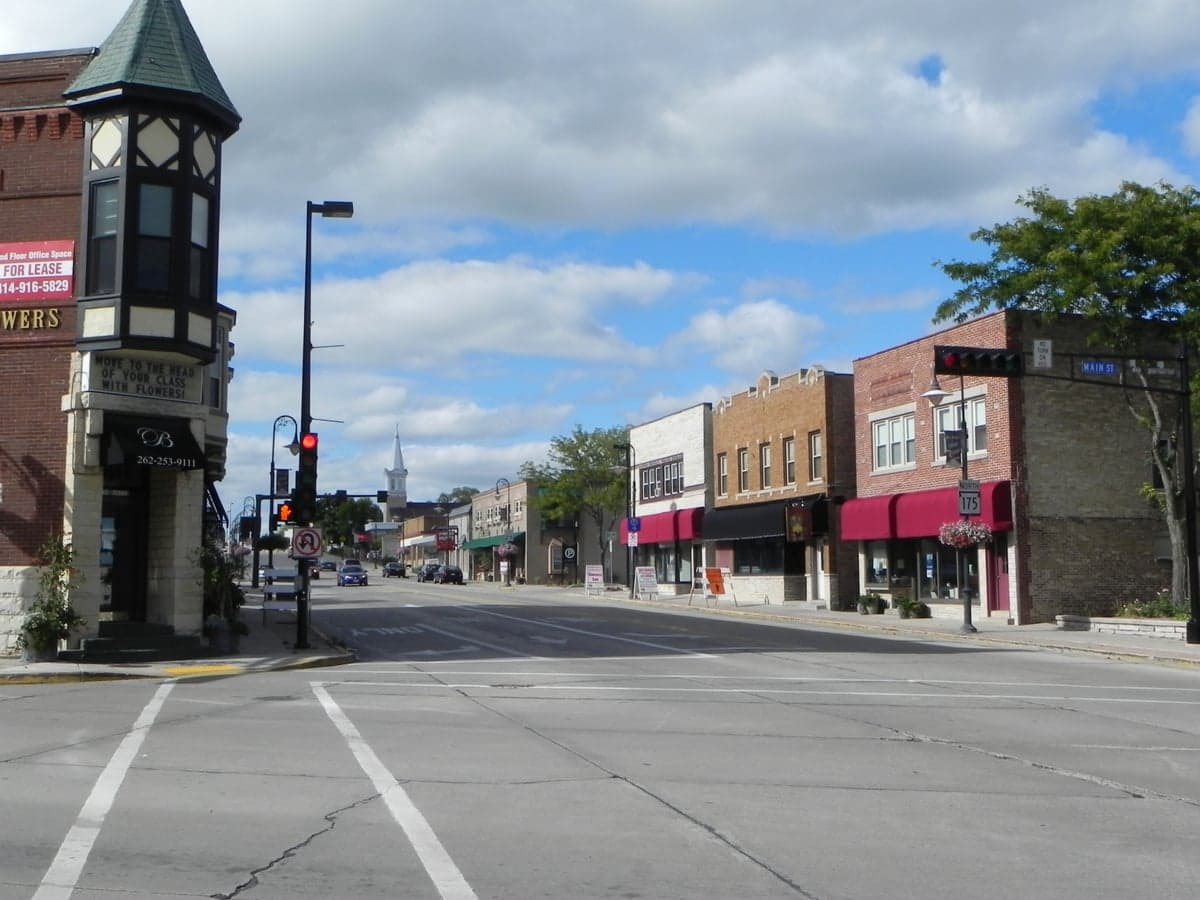
Menomonee Falls, Wisconsin offers a notably higher degree of personal sovereignty than many suburban enclaves in the Midwest, largely due to Wisconsin’s status as a right-to-work state with a preemption law that prevents local governments from enacting gun control ordinances stricter than state law. For the strategic relocation researcher with a conservative, survivalist mindset, this village of roughly 38,000 residents in Waukesha County provides a legal and cultural environment where self-reliance is not just tolerated but expected. The key question is whether this autonomy extends to the practical domains that matter most: tax burden, self-defense law, homesteading feasibility, and protection of parental and property rights. The answer is a qualified yes, though with important caveats regarding local zoning and state-level fiscal trends.
Tax burden and regulatory posture for self-reliant individuals
Wisconsin’s overall tax climate is middling—the Tax Foundation ranks it 23rd for business and 31st for individual taxes in 2025—but Menomonee Falls benefits from being in Waukesha County, which has the lowest effective property tax rate in the Milwaukee metro area at roughly 1.8% of assessed value. For a $350,000 home, that translates to about $6,300 annually, which is manageable for a household prioritizing financial independence. The village itself has a relatively lean municipal budget, with no local income tax and a sales tax that matches the state’s 5% rate (plus a 0.5% county sales tax). More importantly, Wisconsin’s regulatory posture is favorable for small-scale enterprise: there are no state-level occupational licensing requirements for many trades, and the state’s right-to-work law (enacted in 2015) means no forced union dues for private-sector employees. However, the state’s income tax brackets—ranging from 3.5% to 7.65%—can bite higher earners, and the property tax burden on land-intensive homesteads is real. For a prepper or survivalist, the key takeaway is that Menomonee Falls offers a lower regulatory ceiling than Illinois or Minnesota, but it is not a tax haven like Texas or Florida. The village’s zoning code, discussed below, is the bigger constraint on autonomy.
Self-defense and gun law specifics in Wisconsin
Wisconsin is a shall-issue state for concealed carry, meaning permits are issued to any law-abiding adult who completes a training course and passes a background check—no subjective “good cause” requirement. Menomonee Falls itself has no local ordinances restricting firearm possession beyond state law, thanks to Wisconsin’s strong preemption statute (Wis. Stat. § 66.0409), which explicitly prohibits local governments from regulating the sale, purchase, or carrying of firearms. This means you can legally open carry without a permit (though local police may stop you for a “suspicious person” call), and concealed carry with a permit is straightforward. Stand-your-ground laws are in effect: Wisconsin does not impose a duty to retreat before using deadly force in any place you are lawfully present. Castle doctrine protections extend to your home, vehicle, and workplace. Magazine capacity is unrestricted, and there is no state-level assault weapons ban. For the survivalist, this is a solid legal foundation. The only notable limitation is that Wisconsin does not recognize permits from all states—check reciprocity maps—and the state’s background check requirement for private sales (through a federally licensed dealer) is a minor friction point. Overall, Menomonee Falls ranks as a strong green zone for Second Amendment rights within the upper Midwest.
Self-reliance and homesteading viability: lot sizes, zoning, and off-grid feasibility
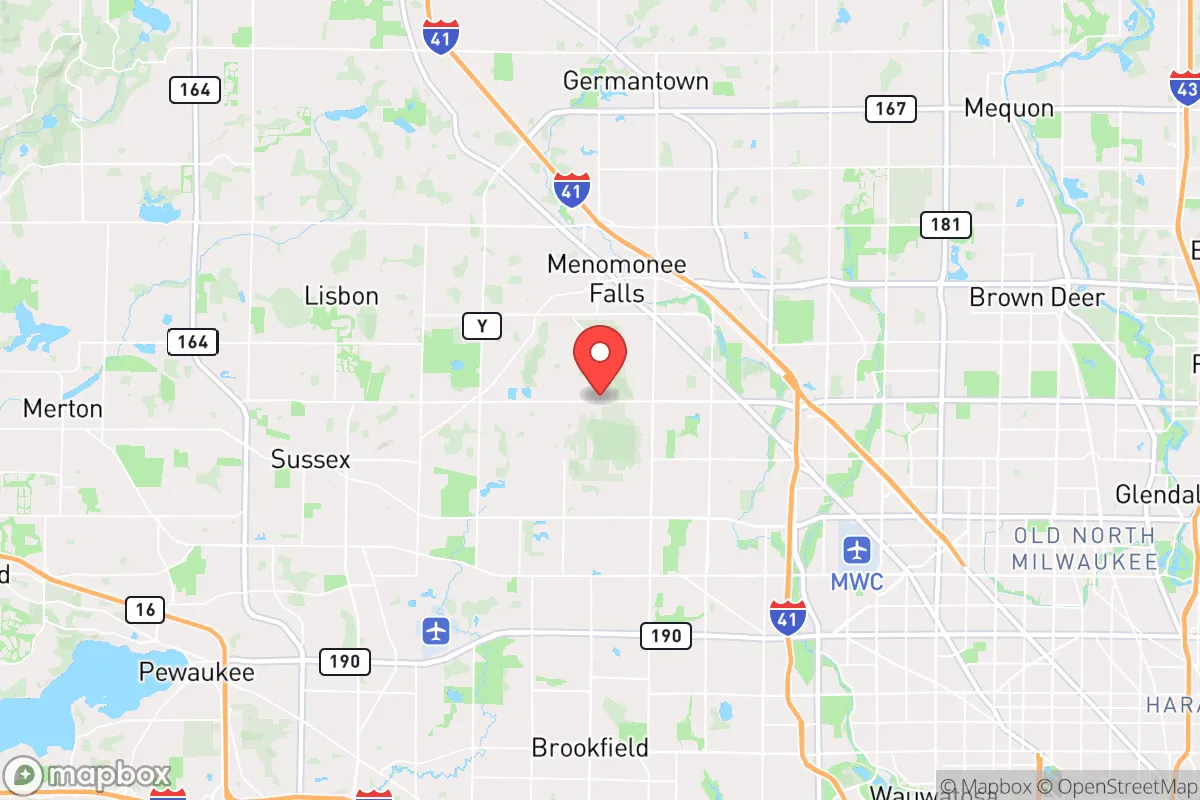
This is where Menomonee Falls presents a mixed picture for the homesteader. The village’s zoning code is largely suburban, with most residential lots in the R-1 district requiring a minimum of 10,000 square feet (roughly a quarter-acre). While this is more generous than the postage-stamp lots of Milwaukee proper, it is far from the acreage needed for serious self-sufficiency. The village does have an Agricultural (A) zoning district, but it is limited to the northern fringe of the community, where you can find parcels of 2 to 5 acres. Even there, the code restricts livestock to “customary farm animals” and requires a minimum of 5 acres for horses or cattle. Chickens are allowed on lots as small as 10,000 square feet, but only with a permit and a limit of six hens (no roosters). Off-grid living is effectively illegal: the village requires connection to municipal water and sewer for any habitable structure, and there are no provisions for solar-only or wind-only power systems without a grid-tie agreement. Rainwater collection is permitted for non-potable uses, but the state’s Department of Natural Resources regulates well drilling strictly. For a serious prepper wanting to build a self-reliant homestead with livestock, gardens, and independent utilities, Menomonee Falls is too restrictive. The better bet is to look at rural Waukesha County towns like Lisbon or Merton, where 5- to 10-acre parcels are common and zoning is looser. Within the village limits, you can have a large garden and a few chickens, but don’t expect to go off-grid or keep goats.
Personal liberties: parental rights, medical autonomy, speech, and property
Wisconsin has been a battleground for parental rights, and the current legal landscape is favorable. The state’s 2023 Act 1 requires school districts to notify parents of any changes to a student’s “health, social, or emotional well-being,” effectively giving parents veto power over gender-related accommodations. Menomonee Falls School District has complied with this law, and the school board is conservative-leaning, with a majority elected on a platform of transparency and parental control. Medical autonomy is more constrained: Wisconsin has a vaccine mandate for school attendance (with medical and religious exemptions), and the state’s COVID-era emergency powers were controversial but have since been rolled back. The state does not have a right-to-try law for terminally ill patients, though federal law provides some protections. Free speech is robustly protected under the Wisconsin Constitution, which has its own free speech clause interpreted as at least as protective as the First Amendment. Property rights are strong: Wisconsin is a “measurement-based” state for eminent domain, meaning the government must prove a public use, and the state’s 2017 property rights law requires compensation for regulatory takings that reduce property value by more than 50%. For the survivalist, the most relevant liberty is the ability to store firearms and ammunition without state interference, and to engage in private transactions (like bartering) without sales tax on items under $1,000. The village does not have a business license requirement for home-based enterprises, so you can sell eggs, honey, or handcrafted goods from your property without bureaucratic hassle.
In the broader context of the United States, Menomonee Falls offers a solid B+ for personal sovereignty. It is not a libertarian paradise—the zoning code and utility requirements are real constraints on homesteading, and the state income tax is a drag on wealth accumulation. But for the conservative individual or family who values gun rights, parental control in education, and a low-crime environment (Waukesha County’s violent crime rate is 1.2 per 1,000, less than half the national average), this village provides a stable, legally permissive base. The surrounding region of southeastern Wisconsin offers rural escape valves for those who outgrow the village’s limits, and the state’s political balance—with a Republican legislature and a Democratic governor—creates a dynamic tension that has, so far, preserved most core liberties. For the strategic relocator with a survivalist mindset, Menomonee Falls is worth a serious look, but only if you are willing to work within the suburban framework rather than against it.

* Values derived from national, state, county, city and local statistics and may differ in a specific area. Last updated: 2026-04-21T10:23:48.000Z
Narrative content on this page is AI-generated and may contain mistakes. Verify any details that matter before acting on them.
ReloMaps may earn a commission from affiliate links at no extra cost to you.

