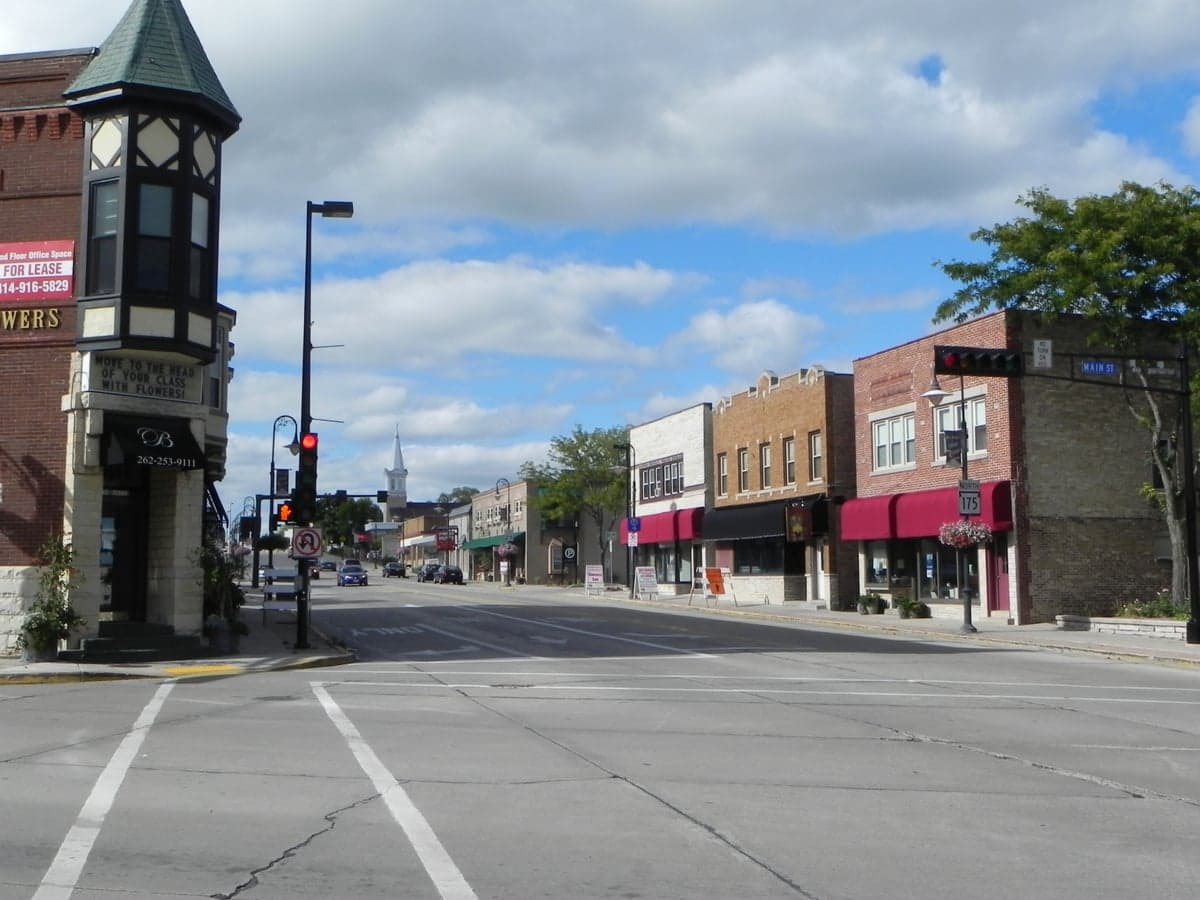
Photo: Wikipedia
Strategic Assessment of Menomonee Falls, WI
Meaningful friction. Expect exposure to either population pressure, blast zones, or natural disaster risk. Consider buying a retreat property.
What does the Strategic Assessment tell us?
Our Strategic Assessment grades tactical survivability of an area. Major population centers, military targets, fallout zones, natural disasters, and border exposure all drive risk — lower exposure means a more defensible position in a crisis.
This is heavily inspired by Joel Skousen's Strategic Relocation book. Highly recommended you checkout the book ($)What does this tell us?
Our Strategic Assessment grades tactical survivability of an area. Major population centers, military targets, fallout zones, natural disasters, and border exposure all drive risk — lower exposure means a more defensible position in a crisis.
This is heavily inspired by Joel Skousen's Strategic Relocation book. Highly recommended you checkout the book ($)Strategic Pillars

Key Distances
Regional Safe Places
Below is our recommended "safe zones" in Wisconsin and the surrounding area based on our strategic heuristics. For most people, it's unrealistic to live in a “safe zone” full-time due to work, family or other personal reasons. They tend to be more rural. However, many of these areas are perfect for second homes and retreat properties that double as a vacation home or even a short-term rental.
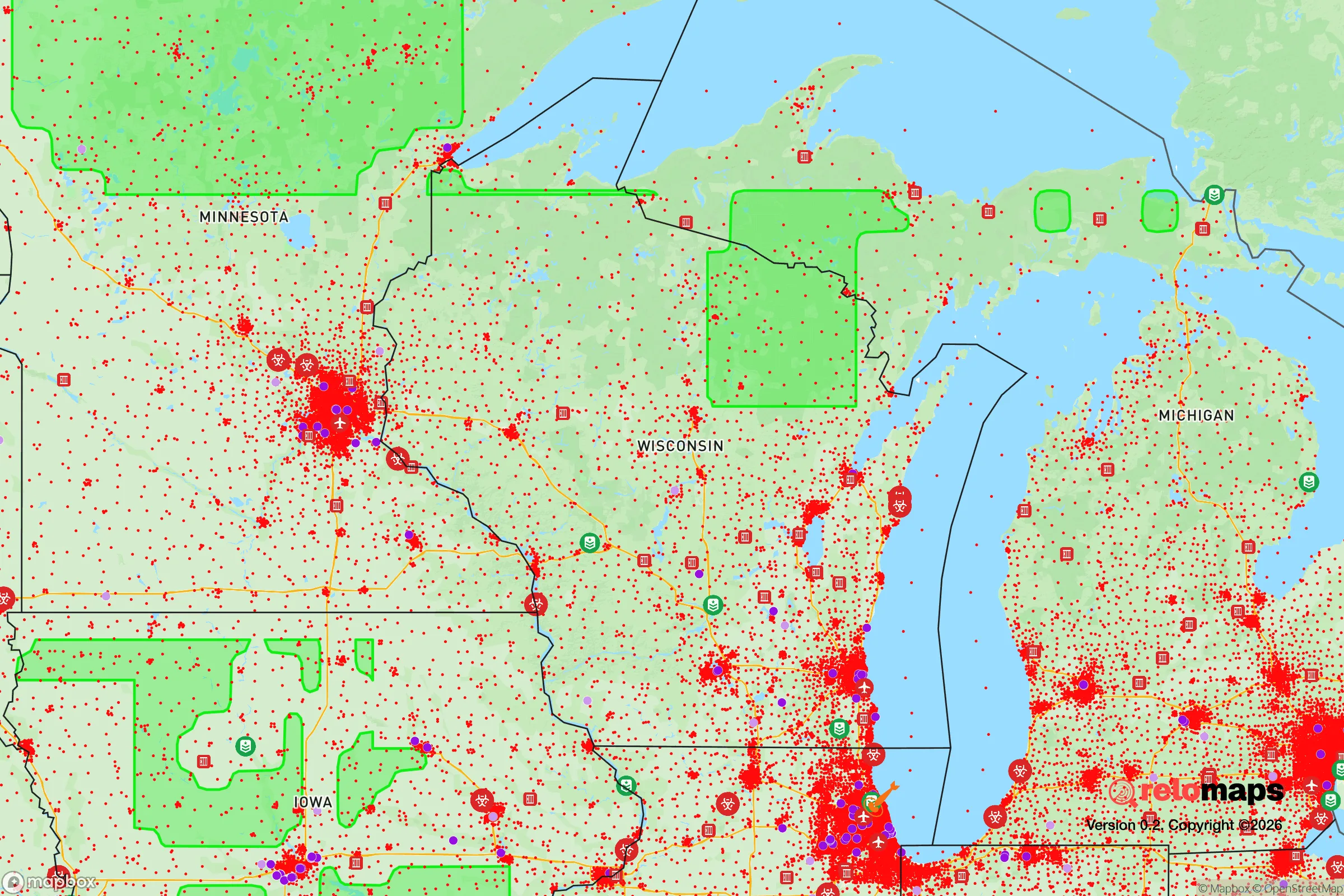
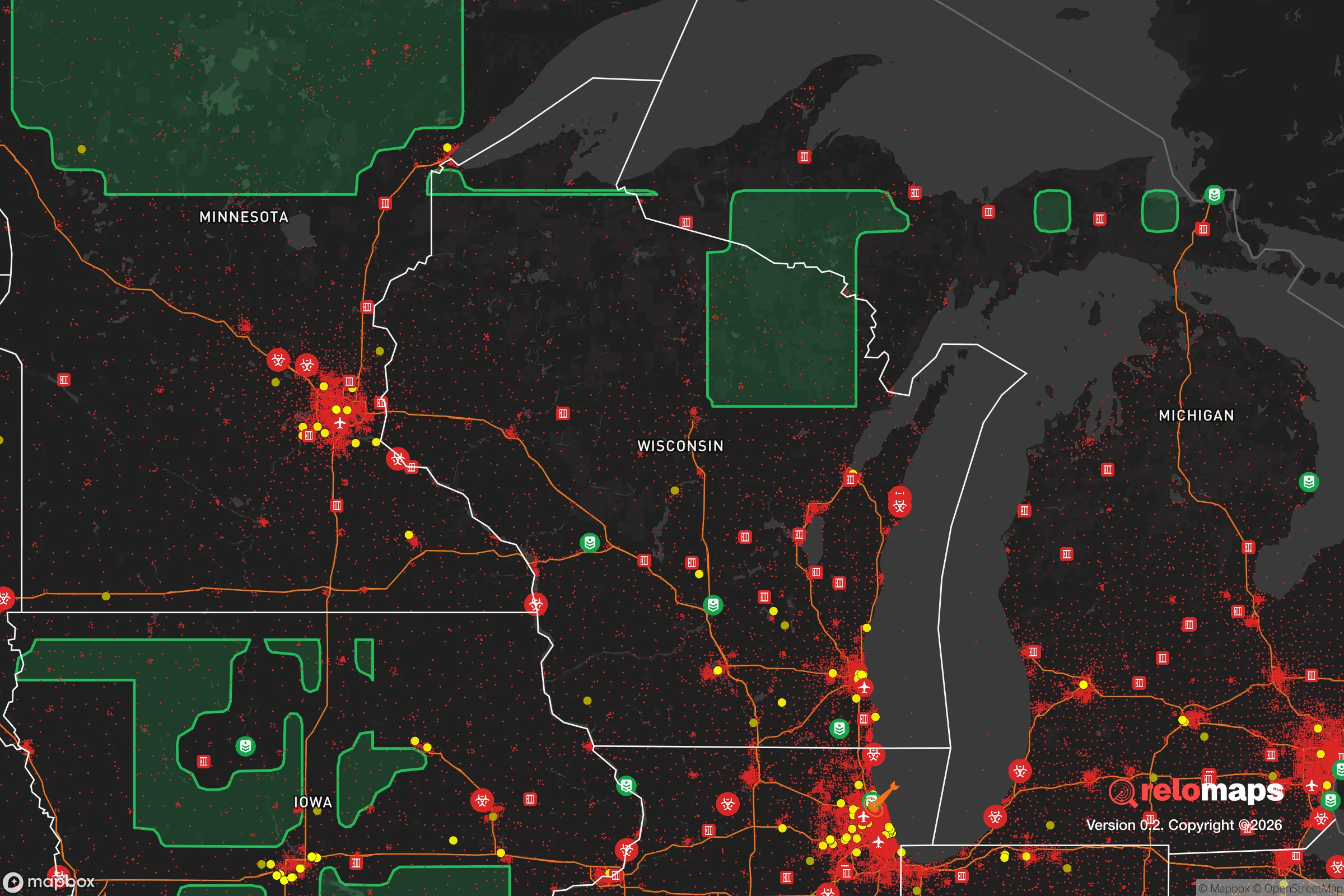


Important Note: For informational purposes only. This does not mean nothing bad ever happens in the green zones. Please use common sense. This is based on public data and modeled with AI. We tried to take a conservative approach but mistakes happen. We update this regularly as new information becomes available.
Solar Generator Recommendations
Backup power matters more here than in safer locations. We've picked three solar generators across budgets and capacity tiers — start with the budget unit if you only need a few essentials, or step up if you want to run a fridge and HVAC for days at a time.

Jackery Portable Power Station Explorer 300
Budget OptionPower on the Go: Weighing only 11 lbs, it's convenient to set up and store with book-sized foldable solar panels

BLUETTI Portable Power Station AC180
Designed for both indoor and outdoor scenarios, AC180 is highly capable as it has a robost capacity and continuous output power.

EF ECOFLOW DELTA Pro Ultra Power Station
Upgraded PickEcoFlow DELTA Pro Ultra is a whole-home energy system designed to grow with your family. Integrated with the Smart Home Panel 2, it scales to meet your evolving energy needs — keeping your home powered, intelligent, and secure through every stage of life.
We earn a commission, at no additional cost to you.
Strategic Assessment Analysis
Menomonee Falls, Wisconsin, offers a surprisingly resilient strategic position for those prioritizing preparedness, sitting far enough from Milwaukee’s urban core to avoid the immediate fallout of civic unrest while remaining close enough to leverage its resources. The village’s location along the Menomonee River and its mix of suburban and semi-rural terrain provide natural buffers against mass casualty events and supply chain disruptions. For a conservative-leaning relocator focused on self-sufficiency and community stability, this area presents a viable balance of access and isolation, though proximity to certain regional risks demands careful consideration.
Geographic position and natural advantages for long-term security
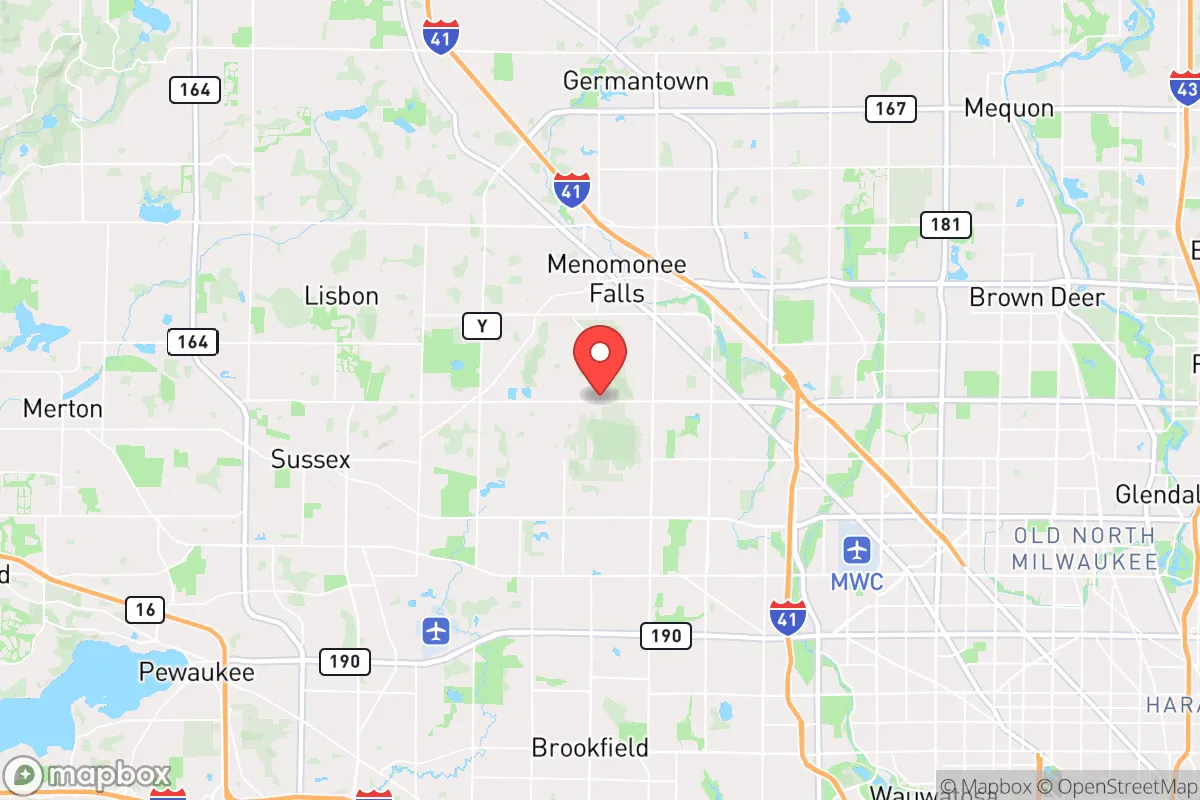
Menomonee Falls sits roughly 20 miles northwest of downtown Milwaukee, placing it outside the likely blast radius or immediate chaos zone of a major urban disaster while still within a reasonable distance for pre-disaster supply runs or medical access. The village is anchored by the Menomonee River, which provides a natural water source for filtration and irrigation, a critical asset for any long-term survival scenario. The surrounding landscape—rolling hills, wooded lots, and agricultural land—offers multiple escape routes via county highways and back roads, reducing the risk of being trapped by a single blocked artery. The area’s position in Waukesha County, which leans heavily conservative, also means local governance tends to align with Second Amendment rights and minimal bureaucratic interference, a practical advantage for those stockpiling supplies or maintaining defensive capabilities. The region’s four-season climate, while harsh in winter, naturally limits population movement and reduces the likelihood of sustained civil unrest during cold months, giving residents a seasonal buffer to fortify positions.
Risks, exposures, and proximity to fallout-relevant landmarks
The primary strategic weakness of Menomonee Falls is its proximity to Milwaukee, a city with a history of civil unrest and a high concentration of potential targets, including the Port of Milwaukee, Mitchell International Airport, and major rail yards. A mass casualty event or coordinated attack on these infrastructure nodes could trigger a refugee flow northwest along Highway 45 and Interstate 41, directly through the village. The Menomonee Falls area also sits within 30 miles of the Point Beach Nuclear Plant in Two Rivers, a potential fallout risk in the event of a catastrophic failure or sabotage. While prevailing winds typically carry fallout eastward, a shift could deposit contamination across the region. Additionally, the village’s reliance on the Milwaukee Metropolitan Sewerage District for water treatment creates a single point of failure; a prolonged grid outage or contamination event would compromise sanitation. The presence of several large retail distribution centers along Highway 45—including Amazon and Walmart facilities—makes the area a potential looting target during supply chain collapses, as these warehouses would be obvious sources of food and goods for desperate populations.
Practical resilience for a relocator: food, water, energy, and defensibility
For a relocator serious about self-sufficiency, Menomonee Falls offers a mixed bag. The village’s zoning allows for backyard gardens and small livestock in most residential areas, and the surrounding farmland provides opportunities for direct-to-consumer meat and produce purchases from local Amish and Mennonite communities in nearby Washington and Dodge counties. The Menomonee River is fishable and can be used for non-potable water, but purification systems are essential given agricultural runoff and upstream development. Energy resilience is a weak point: the area is served by We Energies, which relies on a centralized grid vulnerable to cyberattacks or physical sabotage. Solar adoption is growing but still limited by homeowner association restrictions in some subdivisions; those seeking off-grid capability should target properties outside village limits in the Town of Menomonee Falls, where building codes are looser. Defensibility varies by neighborhood. The older, denser sections near Main Street offer limited retreat options, while the northern and western fringes—particularly near Holy Hill Road and County Line Road—feature larger lots with tree cover and natural chokepoints. The local police department is well-funded and responsive, but during a widespread event, response times would stretch thin, making neighborhood watch networks and personal preparedness the real backbone of security. The Waukesha County Sheriff’s Office maintains a strong presence, and the county’s emergency management system runs regular drills for active shooter and natural disaster scenarios, a sign of institutional readiness that many urban counties lack.
Overall, Menomonee Falls represents a pragmatic middle ground for the conservative prepper: close enough to urban resources to be useful, far enough to avoid the worst of a collapse, and embedded in a county that values self-reliance and limited government. The village’s real vulnerability is its position along major evacuation corridors and its dependence on regional infrastructure, but these can be mitigated with proper planning—multiple water sources, off-grid energy, and a solid community network. For a single individual or family willing to invest in hardening their property and building local relationships, this area offers a defensible base with access to farmland, water, and a like-minded population. The key is to avoid complacency: the Falls is not a remote bunker, but a strategic outpost that requires active management to remain secure in an unstable world.

* Values derived from national, state, county, city and local statistics and may differ in a specific area. Last updated: 2026-04-21T10:23:48.000Z
Narrative content on this page is AI-generated and may contain mistakes. Verify any details that matter before acting on them.
ReloMaps may earn a commission from affiliate links at no extra cost to you.

