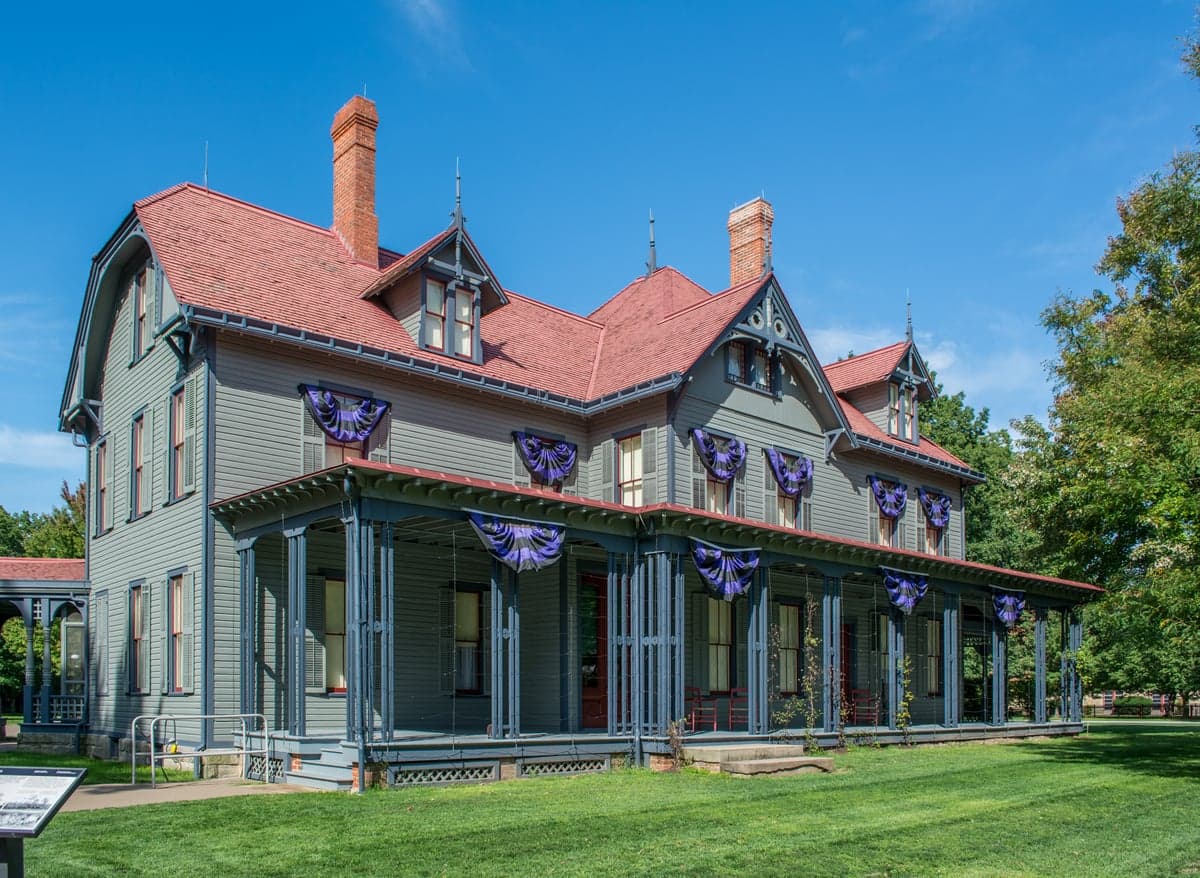
Photo: Wikipedia
Demographics of Mentor, OH
Affluence Level in Mentor, OH
An upper-middle-class area. Household wealth, education levels, and homeownership run ahead of national benchmarks.
People of Mentor, OH
The people of Mentor, Ohio today number 47,215, forming a predominantly white (88.8%) and notably stable community where foreign-born residents make up just 1.6% of the population. The city is characterized by its strong family-oriented character, a college-educated rate of 35.6%, and a demographic profile that has remained remarkably consistent over recent decades. Mentor’s identity is that of a prosperous Lake Erie suburb where long-established families and newer arrivals alike are drawn to its strong schools, lakefront access, and relative affordability compared to Cleveland’s inner-ring suburbs.
How the city was settled and grew
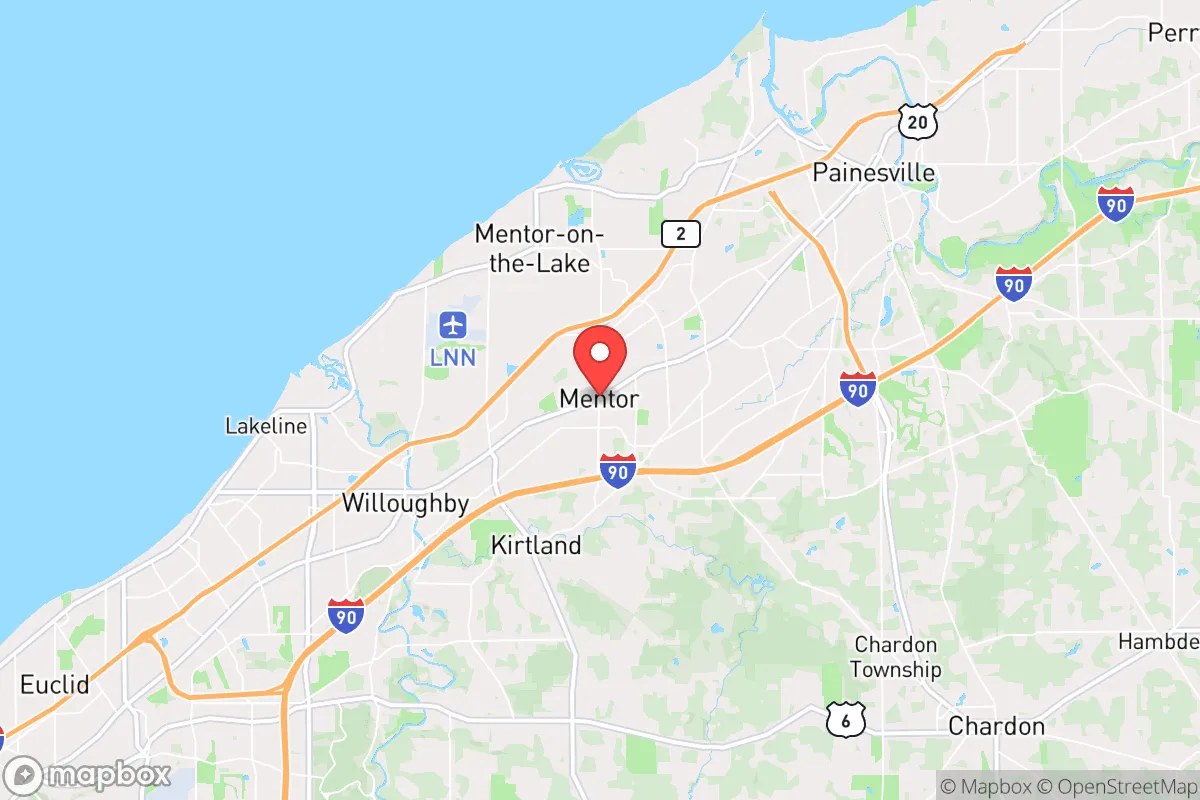
Mentor’s original population was shaped by New England migration in the early 19th century. The area was part of the Connecticut Western Reserve, and the first permanent settlers arrived from Connecticut and Massachusetts around 1797, drawn by the promise of fertile land along the Lake Erie shoreline. These early families—names like the McIlrath and the Tuttle families—established a farming and small-mill economy. The community remained rural through the 1800s, with its population concentrated in what is now the Mentor Avenue (U.S. 20) corridor, where the original village center formed around the intersection of Mentor Avenue and Center Street. The arrival of the Lake Shore and Michigan Southern Railway in the 1850s spurred modest growth, but Mentor remained a small farming village until the early 20th century. The first significant non-Yankee wave came with Italian and Polish immigrants who arrived between 1900 and 1920 to work in the region’s growing industrial sector, settling primarily in the Mentor-on-the-Lake area and along the lakefront, where they found work in fishing, shipping, and small manufacturing.
Modern era (post-1965)
The post-1965 period transformed Mentor from a small town into a substantial suburb. The completion of Interstate 90 in the 1970s made Mentor accessible to Cleveland commuters, and the city’s population surged from roughly 25,000 in 1970 to over 47,000 by 2000. This wave was overwhelmingly domestic in-migration—white families from Cleveland and its inner-ring suburbs seeking newer housing, larger lots, and the highly regarded Mentor Public Schools. The Headlands Beach area and the Mentor Highlands subdivision absorbed much of this growth, with ranch-style and colonial homes built on former farmland. The city’s foreign-born population remained minimal throughout this period, and the racial composition shifted only slightly. The 1.7% Black population and 2.6% Hispanic population are concentrated in no single neighborhood but are dispersed, with small clusters in the Mentor Avenue corridor near the city’s commercial core. The 1.6% Indian-subcontinent population and 1.5% East/Southeast Asian population are more recent arrivals, many drawn by professional opportunities at nearby employers like Avery Dennison and Lake Health, and they tend to settle in the newer subdivisions near Mentor Avenue east of State Route 615 and around the Mentor Civic Center area.
The future
Mentor’s population is projected to remain stable or grow modestly, with no major demographic disruption on the horizon. The city is not homogenizing into a single bloc, nor is it tribalizing into distinct ethnic enclaves; rather, it is maintaining its character as a predominantly white, middle-to-upper-middle-class suburb with small, stable minority communities. The foreign-born share (1.6%) is unlikely to rise significantly given the city’s limited rental housing stock and high home prices relative to neighboring communities like Painesville. The Indian-subcontinent and East/Southeast Asian populations are growing slowly, primarily through professional in-migration, but they remain small and are assimilating into existing neighborhoods rather than forming concentrated enclaves. The Hispanic and Black populations are also stable, with no evidence of rapid growth or decline. The biggest demographic shift in the next decade will likely be aging: Mentor’s median age is above the national average, and the city will need to attract younger families to replace retiring empty-nesters. The Mentor Avenue corridor and the Mentor-on-the-Lake area are the most likely to see modest infill development and some demographic turnover as older homes turn over.
For someone moving in now, Mentor is a stable, low-risk choice: a predominantly white, family-oriented suburb with excellent schools, low crime, and a population that is neither rapidly diversifying nor shrinking. The city’s demographic future is one of continuity rather than transformation, making it a predictable environment for conservative-leaning families seeking long-term stability.

* Values derived from national, state, county, city and local statistics and may differ in a specific area. Last updated: 2026-04-19T21:40:18.000Z
Narrative content on this page is AI-generated and may contain mistakes. Verify any details that matter before acting on them.
ReloMaps may earn a commission from affiliate links at no extra cost to you.

