
Photo: Wikipedia
Political ClimatePolitical Climate in Mentor, OH
District shown is the primary district for this city’s centroid. Cities may span multiple districts.
Local Political AnalysisPolitical Analysis of Mentor, OH
Mentor, Ohio, has long been a solidly conservative community, and the numbers back that up with a Cook PVI of R+9. For decades, this was a place where folks minded their own business, worked hard, and expected the government to stay out of their lives. You could feel it in the local elections, the school board meetings, and the general attitude around town. But like a lot of places in the Rust Belt, there's been a noticeable shift in the last few years, and it's not all for the better. The old-school, live-and-let-live conservatism is still the backbone, but you're starting to see some progressive ideas creep in, especially from folks moving up from Cleveland or the more liberal eastern suburbs like Willoughby and Painesville.
How it compares
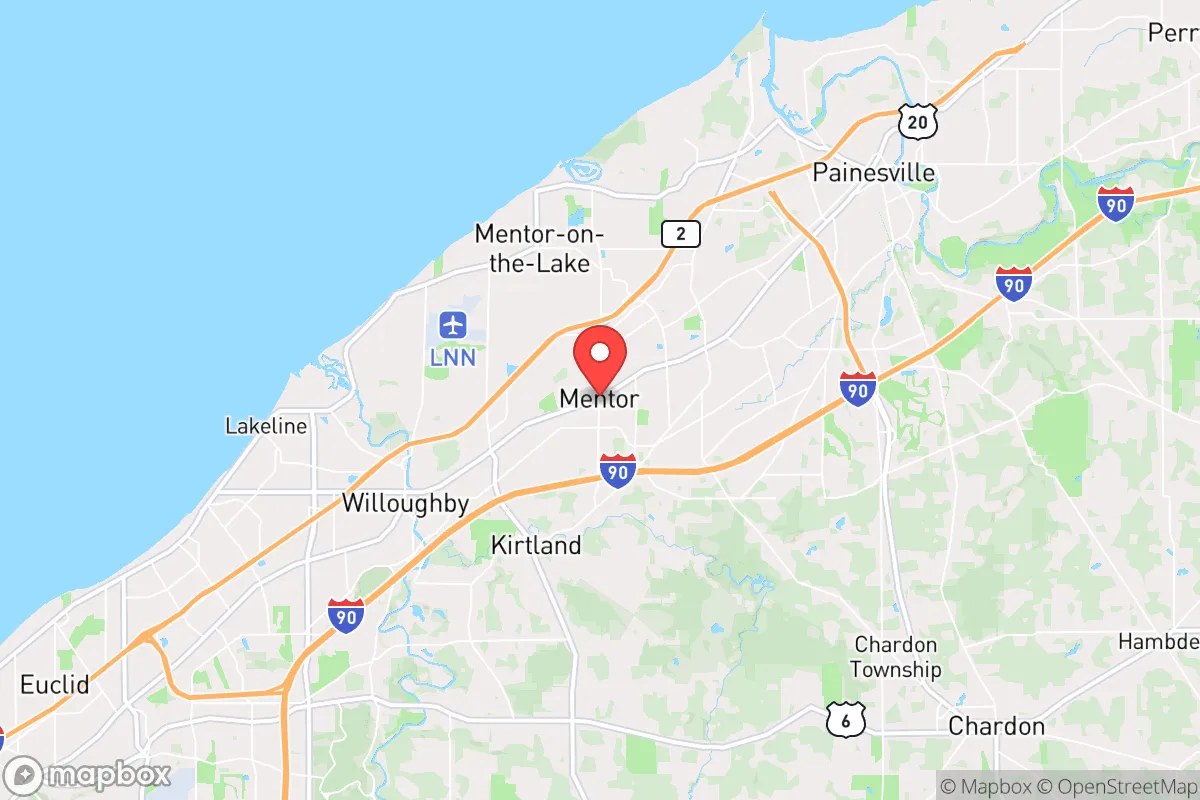
Compared to its neighbors, Mentor is a bit of a conservative island in a sea of blue. Drive ten minutes west into Willoughby or fifteen minutes south into Kirtland, and you'll find a similar vibe, but head east into Painesville or south into Concord Township, and the politics get noticeably more mixed. The real contrast is with Cleveland proper, which is a deep blue stronghold. That's where a lot of the progressive policy ideas—like higher taxes, more regulations on small businesses, and a focus on social issues over fiscal responsibility—get their start. Mentor has traditionally been a place that resisted that, but the pressure is there. The city council and school board races are where you really see the fight, with some candidates pushing for more "equity" initiatives in schools or zoning changes that favor dense, government-subsidized housing over single-family homes. It's a quiet battle, but it's real.
What this means for residents
For a long-time resident, the biggest concern is that the government overreach you used to only see in Cleveland is starting to knock on Mentor's door. The most obvious example is the push for more restrictive zoning and land-use regulations. There's been talk of "missing middle" housing policies that would allow developers to build apartment complexes in areas zoned for single-family homes, which would change the character of the neighborhoods and put more strain on already crowded schools and roads. Then there's the school board, where you've seen a few members push for curriculum changes that sound a lot like the stuff you'd hear in the city—critical race theory-adjacent lessons and a focus on "social-emotional learning" over the basics. It's not a full takeover, but it's a slow erosion. The property taxes are already high in Lake County, and any new progressive spending just makes that worse. The local government's response to the 2020 lockdowns was a red flag for a lot of people, too—some businesses were shut down while big-box stores stayed open, which felt less about public health and more about control.
Looking ahead, the next five to ten years will be telling. The older, more conservative generation is still the majority, but the younger families moving in are often from more liberal areas and bring different expectations. If the city council and school board stay in the hands of people who believe in limited government and personal responsibility, Mentor will remain a good place to raise a family. But if the progressive push gains more traction, you could see a repeat of what happened in places like Shaker Heights or Cleveland Heights—higher taxes, more bureaucracy, and a slow decline in the quality of life that made people move here in the first place. For now, it's still a solid conservative town, but you have to keep an eye on it. The fight for Mentor's soul is happening in the local elections, and it's one worth paying attention to.

State Political ClimatePolitical Climate in Ohio
State Political AnalysisPolitical Environment in the State
Ohio has long been the quintessential swing state, but over the last decade it has shifted decisively to the right, voting for Donald Trump by 8 points in both 2016 and 2020 and by a similar margin in 2024. The state’s political center of gravity is now solidly Republican, driven by a coalition of rural conservatives, working-class voters in the Rust Belt, and a growing exurban population fleeing high-tax states. This isn’t your father’s Ohio—the old moderate Republicanism of the Taft era is dead, replaced by a populist, America First conservatism that has reshaped the state’s entire political landscape.
Urban vs. rural divide
The political map of Ohio is a study in stark contrasts. The three major metros—Cleveland, Columbus, and Cincinnati—are blue islands in a red sea. Cuyahoga County (Cleveland) and Franklin County (Columbus) are the Democratic strongholds, delivering massive margins for the party, while Hamilton County (Cincinnati) has become a competitive battleground, trending left as the city gentrifies. But outside these urban cores, the story is entirely different. The rural counties of western and southeastern Ohio—places like Mercer, Shelby, and Washington counties—routinely vote 70-80% Republican. The real action, though, is in the exurbs and small cities that have flipped hard red. Delaware County, just north of Columbus, was once a swing county; now it’s reliably Republican by 20 points. Butler County, north of Cincinnati, is a conservative stronghold that has only gotten redder as families flee the city. The Mahoning Valley (Youngstown area) is a fascinating case—historically a Democratic stronghold due to union steelworkers, it flipped hard for Trump in 2016 and hasn’t looked back, driven by cultural and economic populism.
Policy environment
Ohio’s policy environment is a mixed bag for conservatives, but the trend is positive. The state has a flat income tax of 3.5% as of 2025, down from a progressive top rate of nearly 5% a decade ago, with further cuts on the table. Property taxes are moderate, though they vary wildly by district—expect higher rates in the blue metros and lower rates in rural areas. The regulatory climate has improved under Governor Mike DeWine and the Republican legislature, with right-to-work still not passed (unions remain powerful in the old industrial belt), but tort reform and occupational licensing reductions have made the state more business-friendly. On education, Ohio has a robust school choice system, including EdChoice vouchers that allow families to use public funds for private or religious schools—a major win for parental rights. The state also passed a constitutional amendment in 2023 enshrining abortion access, which was a bitter loss for conservatives, but the legislature has since passed a parental notification law and a ban on late-term abortions that the courts are still sorting out. Election laws have tightened: voter ID is now required, drop boxes are limited, and early voting windows have been standardized—all moves that conservatives see as protecting election integrity.
Trajectory & freedom
On the freedom front, Ohio is a state of two trajectories. Gun rights have expanded significantly: in 2022, the state passed constitutional carry (permitless carry for adults 21+), and “stand your ground” laws are firmly in place. The state also preempts local gun ordinances, so cities like Columbus and Cleveland can’t enact their own bans. Parental rights got a boost with the Parents’ Bill of Rights passed in 2024, requiring schools to notify parents of any changes to a child’s health or well-being—a direct response to the transgender activism in schools. On the downside, the 2023 abortion amendment was a major setback for the pro-life movement, and the state’s medical autonomy took a hit during COVID when DeWine imposed some of the nation’s strictest lockdowns and mask mandates, though those are now history. Property rights are strong—Ohio is a “right to farm” state with protections against nuisance lawsuits, and there’s no state income tax on agricultural land. But watch out for eminent domain abuse in the name of “economic development,” which has been a flashpoint in places like Lordstown and Springfield.
Civil unrest & political movements
Ohio has seen its share of political turbulence. The 2020 protests in Columbus and Cleveland over George Floyd’s death were large but mostly peaceful, though there were instances of looting and property damage that soured many suburbanites on the “defund the police” movement. The anti-lockdown protests at the Statehouse in 2020 were massive and vocal, with armed citizens openly carrying and demanding the state reopen—a movement that energized the grassroots right. More recently, the immigration issue has flared up in Springfield, where a surge of Haitian migrants has strained local resources and sparked heated town halls. The state has no sanctuary cities—in fact, Ohio law requires local law enforcement to cooperate with ICE. Election integrity remains a hot-button issue: the 2020 and 2024 elections were certified without major controversy, but many conservatives remain skeptical of the electronic voting machines used in Cuyahoga and Franklin counties. The “Ohio Sovereignty” movement has gained some traction, with local groups pushing for nullification of federal gun laws and vaccine mandates, though it remains fringe.
Projection
Over the next 5-10 years, Ohio is likely to become more Republican, not less. The in-migration pattern is clear: people are leaving the blue metros of the coasts and moving to the Columbus exurbs (Delaware, Union, and Madison counties) and the Cincinnati suburbs (Warren and Butler counties). These are families and remote workers who want lower taxes, better schools, and more personal freedom. The Democratic base is shrinking as the unionized manufacturing workforce ages out and is replaced by younger, more conservative-leaning service workers. The 2026 gubernatorial race will be a bellwether—if a Trump-endorsed candidate wins the primary, expect the state to double down on its red turn. The wild card is the 2023 abortion amendment, which energized the left and could keep the state competitive in statewide races for governor and Senate, but the legislature will remain safely Republican due to gerrymandered districts. A new resident moving in now should expect a state that is culturally conservative, tax-friendly, and increasingly skeptical of federal overreach, but with persistent blue pockets in the cities that will keep the political fights lively.
Bottom line for a new resident: If you’re a conservative looking for a state where your values are reflected in the law, Ohio is a solid bet. You’ll find low taxes, strong gun rights, school choice, and a growing community of like-minded transplants. Just be prepared for the occasional blue-city policy battle and the lingering effects of the 2023 abortion amendment. Pick a county like Delaware, Warren, or Butler for a reliably conservative lifestyle, and you’ll feel right at home.
* Values derived from national, state, county, city and local statistics and may differ in a specific area. Last updated: 2026-04-19T21:40:18.000Z
Narrative content on this page is AI-generated and may contain mistakes. Verify any details that matter before acting on them.
ReloMaps may earn a commission from affiliate links at no extra cost to you.

