
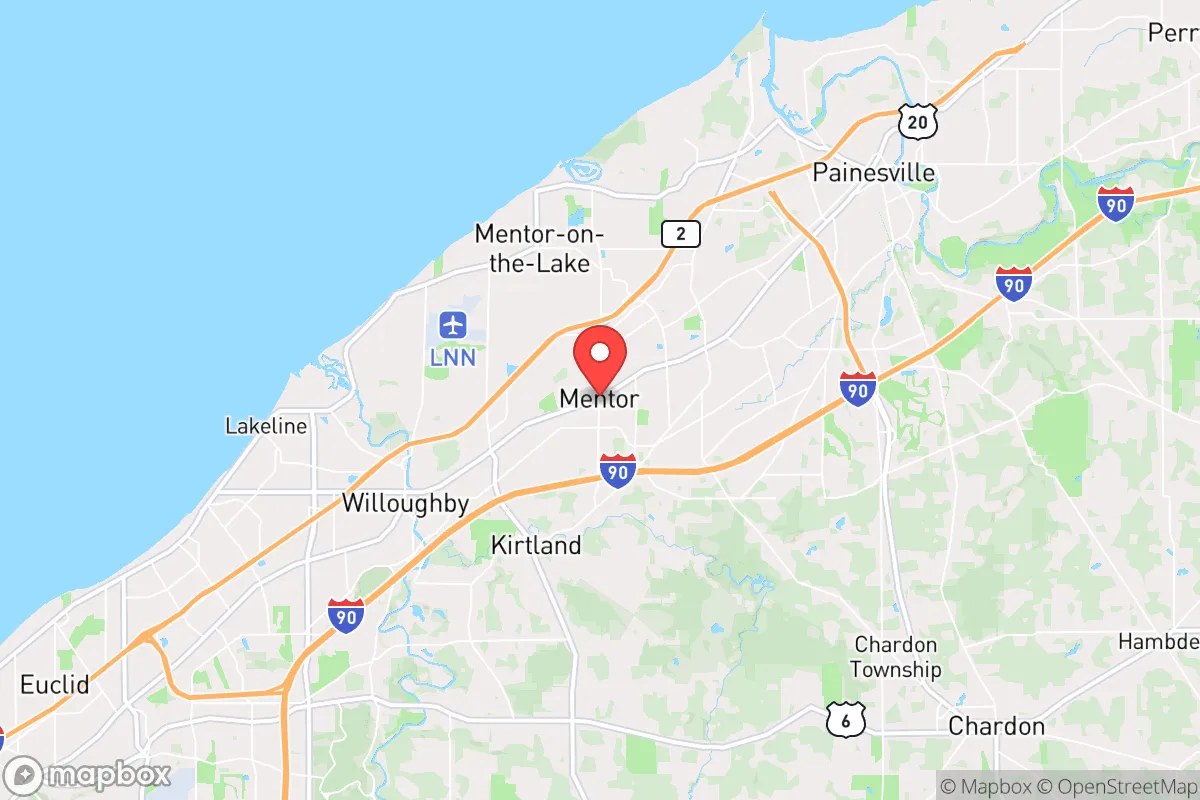
Photo: Wikipedia
Personal Sovereignty in Mentor, OH
Viable for self-reliance. Generally workable, though some barriers may limit total independence.
What does Personal Sovereignty tell us?
Personal Sovereignty measures your capacity for self-reliance and independence with minimal government friction. Higher scores mean fewer barriers between you and the way you want to live... but it assumes you have the space you need and good neighbors.
What does this tell us?
Personal Sovereignty measures your capacity for self-reliance and independence with minimal government friction. Higher scores mean fewer barriers between you and the way you want to live... but it assumes you have the space you need and good neighbors.
State Policy
Energy independence: Importer (40% of energy produced in-state)
Personal Liberty
Homesteading

Personal Liberty Analysis
Mentor, Ohio offers a notably higher degree of personal sovereignty than many suburban communities in the Great Lakes region, largely due to Ohio’s status as a “Second Amendment Sanctuary” state and its relatively restrained local governance structure. While no city is a libertarian utopia, Mentor’s legal environment leans toward individual autonomy, particularly in areas of self-defense, property rights, and parental control. For a single individual or family operating from a survivalist or prepper mindset, the key question is whether local ordinances and state preemption laws create enough buffer against federal overreach and municipal overregulation. The answer, based on current statutes and local enforcement patterns, is cautiously favorable — but with specific caveats around zoning and tax structure that require strategic navigation.
Tax burden and regulatory posture: How Ohio’s state-level policies protect personal finances
Ohio’s tax environment is moderate but not low, and Mentor sits within Lake County, which imposes a 1.5% local income tax on residents — a significant bite for anyone earning a wage. However, the state’s overall regulatory posture is more favorable to individual autonomy than neighboring states like Michigan or Pennsylvania. Ohio has a flat state income tax rate of 3.5% (as of 2025), and there is no state-level estate tax, which matters for those building generational wealth or maintaining a homestead. Property taxes in Lake County average around 2.1% of assessed value, which is high by national standards but typical for Northeast Ohio. The critical advantage for preppers and self-reliant individuals is Ohio’s strong preemption laws: cities like Mentor cannot enact their own gun bans, rental restrictions, or energy mandates that exceed state law. This means Mentor’s city council cannot unilaterally impose a ban on natural gas hookups, restrict firearm storage, or create rent control — all common overreaches in blue-state suburbs. The regulatory climate is best described as “hands-off at the local level, but watchful at the state level,” which gives residents room to operate without constant municipal interference.
Self-defense and gun law specifics: What Ohio’s permitless carry means for Mentor residents
Ohio became a permitless carry state in June 2022, meaning any law-abiding adult 21 or older can carry a concealed firearm without a license or training requirement. This is a foundational sovereignty issue for the prepper community, and Mentor fully complies with state preemption — the city has no local ordinances that restrict magazine capacity, ban specific firearm types, or require registration. Open carry is legal without a permit, and the state’s “stand your ground” law, enacted in 2021, removes any duty to retreat before using deadly force in self-defense. For those concerned about government overreach, Ohio also has a “Second Amendment Preservation Act” on the books (though it’s largely symbolic), and local law enforcement in Lake County is generally pro-Second Amendment. The practical reality: you can keep a rifle in your truck, carry a pistol while hiking the Mentor Lagoons Nature Preserve, and store firearms in your home without state-mandated safe storage laws. The only notable restriction is that private property owners — including businesses — can prohibit firearms on their premises, so situational awareness is still required. For a survivalist, Mentor’s legal framework provides a solid baseline for self-defense autonomy, with no signs of local pushback against state preemption.
Self-reliance and homesteading viability: Lot sizes, zoning, and off-grid feasibility in Mentor
This is where Mentor’s suburban character creates friction for the serious prepper. The city is largely built out with standard residential lots averaging 0.25 to 0.5 acres in older neighborhoods, though some newer subdivisions offer 1-acre parcels. Zoning codes are typical for a Northeast Ohio suburb: chickens are allowed with a permit (hens only, no roosters), but livestock like goats, pigs, or cattle are prohibited on lots under 2 acres. Gardening is unrestricted, and many residents maintain substantial vegetable plots, but the city’s code enforcement does limit “unsightly” structures — meaning a shipping container bunker or a large rainwater collection system visible from the street could draw complaints. Off-grid living is legally challenging: Mentor requires connection to municipal water and sewer for any habitable structure, so solar panels and well water are permissible as supplements but not as primary systems. Rainwater harvesting for irrigation is allowed, but potable use requires a permit that is rarely granted. For those seeking true homesteading autonomy, the rural townships east of Mentor — like Concord Township or Leroy Township — offer 2- to 5-acre parcels with far fewer restrictions. Within Mentor itself, the best strategy is to buy a property with a large backyard, install raised garden beds, and keep a low profile with any off-grid modifications. The city’s zoning is not hostile to self-reliance, but it is designed for a conventional suburban lifestyle, not a full-scale homestead.
Personal liberties: Parental rights, medical autonomy, speech, and property protections
Ohio has been a battleground for parental rights, and the current legal climate is favorable for families seeking to opt out of public school mandates or medical requirements. The state’s “Parents’ Bill of Rights” (enacted in 2023) requires schools to notify parents of any changes to a student’s health or well-being, and it explicitly protects the right to direct a child’s education and medical care. Mentor Public Schools, while well-regarded, operates under state law, so parents can request exemptions from curriculum materials or health screenings without fear of legal retaliation. Medical autonomy is more complex: Ohio has no state-level vaccine mandate for adults, and the state’s emergency powers were curtailed after 2020, meaning the governor cannot unilaterally impose lockdowns or mask mandates without legislative approval. However, hospitals and private employers can still require vaccines as a condition of service or employment, so medical sovereignty is not absolute. Free speech protections are robust under Ohio’s constitution, and Mentor has no local hate speech ordinances or “misinformation” enforcement — you can express political views, including criticism of government officials, without legal consequence. Property rights are well-protected: Ohio’s eminent domain laws require “public use” (not just economic development), and Mentor has not engaged in aggressive land seizures. The city’s rental inspection program is minimal, and there are no rent control ordinances. For a conservative-leaning individual, the overall liberty environment in Mentor is strong on paper, but the practical reality depends on avoiding conflicts with neighbors who might call code enforcement over a political sign or a backyard chicken coop.
In the broader context of personal sovereignty, Mentor ranks favorably among Ohio’s larger suburbs but falls short of the rural autonomy found in places like Ashtabula County or southern Ohio. The city’s tax burden is moderate, its gun laws are among the most permissive in the Midwest, and its zoning allows for a reasonable degree of self-reliance without outright hostility. The primary trade-off is that Mentor is still a suburb with HOA-style expectations in many neighborhoods, meaning a prepper who wants to build a bunker, keep livestock, or go fully off-grid will need to look east to the townships. For the single individual or family who wants a safe, legally permissive base with good schools and proximity to Lake Erie, Mentor offers a solid foundation for personal sovereignty — provided you understand where the city’s boundaries end and your own autonomy begins. The key is to buy a property with enough land to operate under the radar, stay informed on state preemption laws, and maintain good relations with neighbors who might otherwise invite government scrutiny. In a country where federal overreach is a growing concern, Mentor provides a workable middle ground between total suburban compliance and rural independence.

* Values derived from national, state, county, city and local statistics and may differ in a specific area. Last updated: 2026-04-19T21:40:18.000Z
Narrative content on this page is AI-generated and may contain mistakes. Verify any details that matter before acting on them.
ReloMaps may earn a commission from affiliate links at no extra cost to you.

