Photo: Wikipedia
Quality of Life in Oakland County
A livable area that tracks near national norms for affordability, walkability, and neighborhood health.
What does Quality of Life tell us?
Quality of Life measures an area by evaluating factors like cost of living, nearby amenities, country club access, airport proximity, socioeconomic signals and neighborhood character. For large states, this is a general average — quality of life can vary dramatically between metro areas, suburbs, and rural communities within the same state.
What does this tell us?
Quality of Life measures an area by evaluating factors like cost of living, nearby amenities, country club access, airport proximity, socioeconomic signals and neighborhood character. For large states, this is a general average — quality of life can vary dramatically between metro areas, suburbs, and rural communities within the same state.
Cost of Living
14% above national average
104%
The Real Cost of Living in Oakland County for 2026
| Tier | Individual | Family (4) |
|---|---|---|
| Survival | $21k | $40k |
| Comfortable | $62k | $92k |
| Luxury | $172k+ | $267k+ |
| Elite (Top 5%) | $211k+ | $326k+ |
Quality-of-Life Analysis
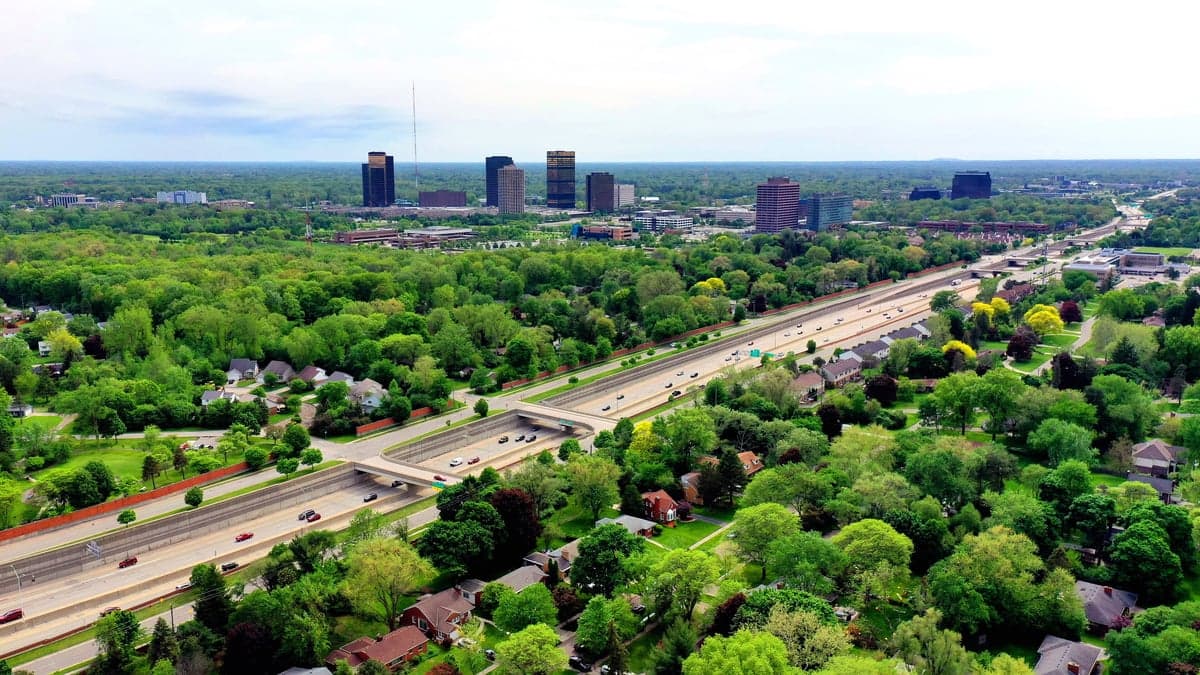
Oakland County offers one of the most diverse quality-of-life spectrums in Michigan, drawing professionals who want walkable urban energy, families seeking top-ranked school districts, and retirees looking for quiet lakefront living — all within a single county. The county’s character shifts dramatically from the high-density commercial corridors of its largest cities to the wooded, agricultural pockets of its northern and western townships, creating a genuine choice between suburban intensity and rural retreat.
Largest town(s) & population centers
The county’s primary population anchor is Troy, a city of roughly 87,000 residents that functions as a major employment hub with a dense mix of corporate headquarters, retail centers like Somerset Collection, and high-end residential subdivisions. Daily life in Troy is car-dependent but efficient, with an average commute of 26 minutes — slightly below the national average — and a median home value of $320,400 that reflects the area’s strong job market and top-rated Troy School District. Royal Oak offers a contrasting urban-village experience, with a walkable downtown packed with restaurants, breweries, and a lively nightlife scene that attracts young professionals and empty-nesters. Novi and Farmington Hills round out the major population centers, each offering extensive shopping, medical facilities, and commuter access to Detroit via I-696 and I-96. These cities share a cost-of-living index of 114 (14% above the U.S. average), driven primarily by housing costs rather than everyday expenses.
Smaller towns & rural pockets
North of the suburban core, the county opens into a series of smaller communities with distinct identities. Oxford, with its historic downtown and access to the Polly Ann Trail, feels more like a small town than a suburb, while Lake Orion centers on its namesake lake and draws residents who prioritize water recreation and a slower pace. Holly, in the county’s far northwest corner, retains a rural character with working farms, the Holly Recreation Area, and an annual Dickens Festival that anchors community life. Unincorporated areas such as Davisburg and Springfield Township offer large-lot living on unpaved roads, where median home values can drop below $250,000 and residents often commute 30-40 minutes to jobs in Troy or Pontiac. These pockets provide the county’s most affordable housing options, with median rents around $1,319 — roughly $200 less than in the urbanized south.
Cost & lifestyle range
The cost-of-living spread across Oakland County is wide. At the high end, Birmingham and Bloomfield Hills feature median home values exceeding $600,000, with boutique shopping, Michelin-recognized dining, and some of Michigan’s best public schools. At the low end, Pontiac — the county seat — offers median home values below $100,000 and a more urban, working-class environment with a growing arts scene and redevelopment efforts along the Clinton River. Between these extremes, Rochester and Rochester Hills balance strong schools with a median home value near $350,000, while Walled Lake and Wixom provide lake-adjacent living at prices 10-15% below the county average. The lifestyle range is equally broad: residents in southern Oakland County can walk to coffee shops and farmers markets, while those in northern townships may need to drive 15 minutes to the nearest grocery store but gain privacy, acreage, and direct access to state recreation areas.
Oakland County best suits people who want the economic opportunities of a major metro area — with a median household income near $85,000 and a diverse job base in automotive, healthcare, and technology — but also value the ability to choose their preferred density and pace. Families prioritizing school rankings will gravitate toward the southern and central districts, while those seeking land, lakes, and lower taxes will find their fit in the northern townships. The county’s 26-minute average commute makes it feasible to live in a rural pocket and work in a corporate tower, a flexibility that defines its broad appeal.

Crime in Oakland County
Crime rates similar to the national median for U.S. locations.
Violent CrimeViolent Crime Analysis
Property CrimeProperty Crime Analysis
Crime Analysis
Oakland County, Michigan, presents a safety profile that is notably better than the national average for violent crime but slightly elevated for property crime, with a 2024 violent crime rate of 408.1 per 100,000 residents and a property crime rate of 1,238.7 per 100,000. While the county as a whole is considered safer than many urban centers, significant variation exists between its affluent, low-crime suburbs and its more densely populated, higher-crime cities. The county's overall safety picture is heavily influenced by the policies of the Oakland County Prosecutor's Office and the judicial districts serving its largest municipalities, where progressive approaches to criminal justice have raised concerns among residents about recidivism and public safety.
Crime in context
Oakland County's violent crime rate of 408.1 per 100,000 is roughly 15% lower than the national average of approximately 380 per 100,000 (2023 FBI data), but it is significantly higher than the Michigan state average of around 450 per 100,000. The property crime rate of 1,238.7 per 100,000 is about 10% above the national average of roughly 1,100 per 100,000. These figures place Oakland County in a middle tier among Michigan's 83 counties—safer than Wayne County (Detroit) but more dangerous than neighboring Livingston or Macomb counties. The county's crime index is heavily weighted by incidents in its urban core cities, particularly Pontiac, which consistently reports violent crime rates three to four times the county average. In contrast, communities like Rochester Hills, Novi, and Birmingham maintain violent crime rates well below 200 per 100,000, often ranking among the safest cities in Michigan.
What residents experience
For the average resident, the most common crime experience is property-related—vehicle theft, larceny from vehicles, and package theft are frequent complaints in suburban neighborhoods. Violent crime, while less common, is concentrated in specific areas: Pontiac accounts for roughly 25% of the county's violent offenses despite having only 8% of its population, driven by gang activity and drug-related disputes. Southfield and Waterford Township also report elevated rates of robbery and aggravated assault compared to their neighbors. A growing concern among residents is the impact of the 52-1 District Court (serving Pontiac and surrounding areas) and the Oakland County Prosecutor's Office, which have adopted policies emphasizing diversion programs and reduced sentencing for non-violent offenders. Critics argue these progressive approaches have led to higher rates of repeat property crime in communities like Farmington Hills and Troy, where organized retail theft rings operate with relative impunity. The county's Project Safe Neighborhoods task force has had some success targeting violent offenders, but property crime clearance rates remain below 20% in many jurisdictions.
Neighborhood-level variation
Safety in Oakland County is highly localized, with sharp divides between communities just a few miles apart. The safest enclaves—Bloomfield Hills, Huntington Woods, and Franklin—report violent crime rates below 100 per 100,000, supported by well-funded police departments and low population density. In contrast, Pontiac's downtown core and the area around M-59 experience violent crime rates exceeding 1,200 per 100,000, comparable to Detroit's worst neighborhoods. Royal Oak and Ferndale, while generally safe, see elevated property crime due to their dense commercial corridors and nightlife districts. Residents considering a move to Oakland County should research specific city police reports and consult the county's online crime mapping tool, as a single school district boundary can separate a low-crime suburb from a high-crime zone. The county's 2025 budget allocated $3.2 million for new crime prevention technology in Pontiac and Southfield, but critics argue that without changes to prosecutorial policies, these investments will have limited impact on recidivism.
* Values derived from national, state, county, city and local statistics and may differ in a specific area. Last updated: 2026-05-11T22:51:11.000Z
Narrative content on this page is AI-generated and may contain mistakes. Verify any details that matter before acting on them.
ReloMaps may earn a commission from affiliate links at no extra cost to you.

