Photo: Wikipedia
Demographics of Midwest City, OK
Affluence Level in Midwest City, OK
A below-average socioeconomic profile. Incomes, home values, and educational attainment trail the U.S., with higher poverty and unemployment.
People of Midwest City, OK
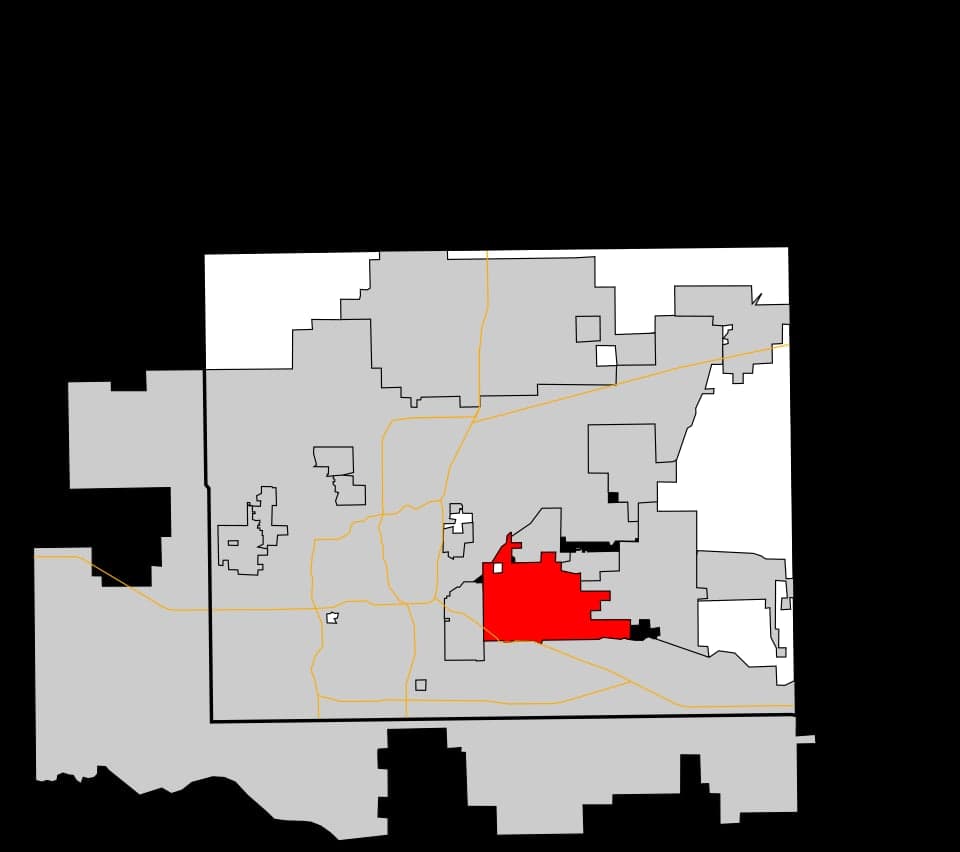
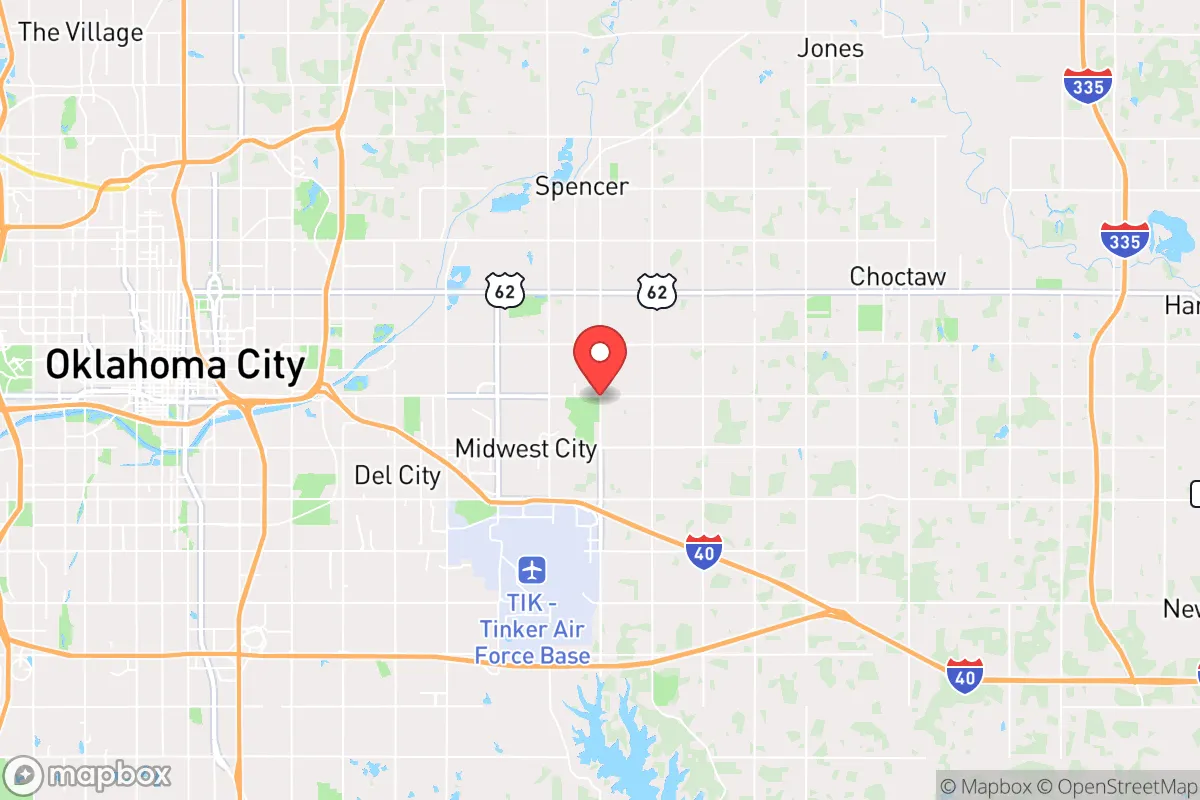
Midwest City, Oklahoma, is a predominantly White and Black working-class suburb of Oklahoma City, with a population of 58,170 that is notably less diverse than the national average. The city’s identity is rooted in its post-World War II planned development around Tinker Air Force Base, creating a community of military families, civil servants, and aerospace workers. With a foreign-born population of just 1.5% and a college attainment rate of 24.8%, Midwest City remains a stable, family-oriented enclave where generational ties to the base and local schools run deep.
How the city was settled and grew
Midwest City was founded in 1943 as a planned community to house workers at Tinker Air Force Base, which had opened the previous year. The original population was overwhelmingly White, drawn from rural Oklahoma and other Plains states by wartime defense jobs. The city’s first neighborhoods—Sun Valley and Parkview—were built by developer W.P. Atkinson as affordable housing for base personnel, with simple frame homes on small lots. These areas remain predominantly White and older, with many original residents or their descendants still in place. A second wave arrived during the 1950s and 1960s as the base expanded during the Cold War, bringing more White families from across the Midwest and South. The Del City border area and East Side neighborhoods near SE 15th Street saw the first Black families settle in the 1960s, drawn by base employment and the relative affordability of housing compared to Oklahoma City’s segregated core.
Modern era (post-1965)
After the 1965 Hart-Cellar Act, Midwest City saw modest diversification, but immigration remained minimal compared to national trends. The city’s Black population grew steadily through domestic migration from other parts of Oklahoma and the South, reaching 22.6% by 2025. These families concentrated in the Heritage Park and Meadowbrook neighborhoods, where larger, newer homes were built in the 1970s and 1980s. The Hispanic share rose to 6.9%, with most settling in the Air Depot Boulevard corridor, a commercial strip with older apartments and rental houses. East/Southeast Asian communities (1.5%) are small but visible near the base, particularly Vietnamese and Filipino families connected to military service. The Indian subcontinent population is effectively zero (0.0%), reflecting the city’s lack of tech or professional sectors that attract such groups. White flight to outer suburbs like Choctaw and Edmond has been modest but steady since 2000, leaving Midwest City’s White population at 56.7%—down from over 80% in 1990.
The future
The population is slowly homogenizing into two main blocs: older White retirees in the original neighborhoods and younger Black families in the newer subdivisions. Hispanic growth is plateauing as immigration from Latin America slows nationally, and the foreign-born share remains negligible. The city is not tribalizing into distinct ethnic enclaves—most neighborhoods are mixed, with the exception of the heavily White Sun Valley area and the more Black Heritage Park area. Over the next 10–20 years, Midwest City will likely see continued slow decline in White share, a stable Black population, and little change in Asian or Hispanic percentages. The lack of high-skilled jobs and the low college attainment rate (24.8%) mean the city will not attract significant new immigrant groups. The biggest demographic shift may come from Tinker Air Force Base’s future role—any major expansion or contraction would directly reshape the population.
Midwest City is becoming a stable, modestly diverse working-class suburb where military and civil-service roots remain central. For someone moving in now, the city offers a predictable, family-oriented environment with low crime relative to Oklahoma City proper, but limited ethnic diversity and few professional opportunities outside the base. It is a place where community ties are strong but demographic change is slow, making it best suited for those seeking affordability and stability over urban energy or rapid growth.

* Values derived from national, state, county, city and local statistics and may differ in a specific area. Last updated: 2026-04-25T13:53:56.000Z
Narrative content on this page is AI-generated and may contain mistakes. Verify any details that matter before acting on them.
ReloMaps may earn a commission from affiliate links at no extra cost to you.

