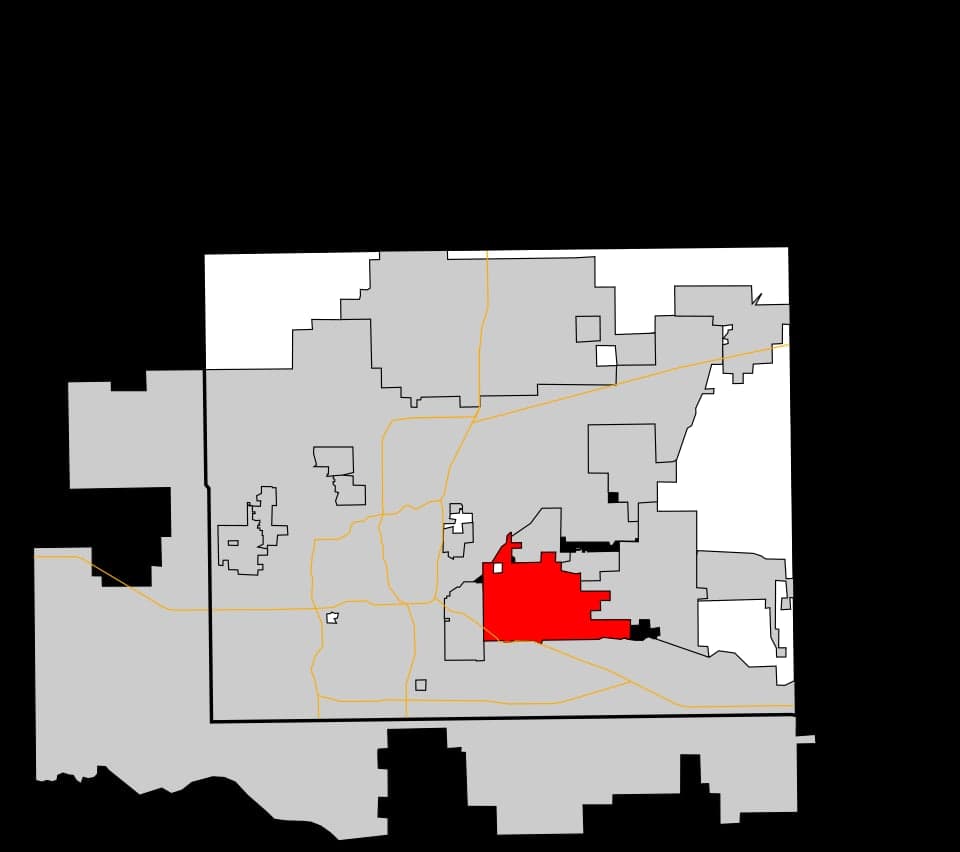
Photo: Wikipedia
Political ClimatePolitical Climate in Midwest City, OK
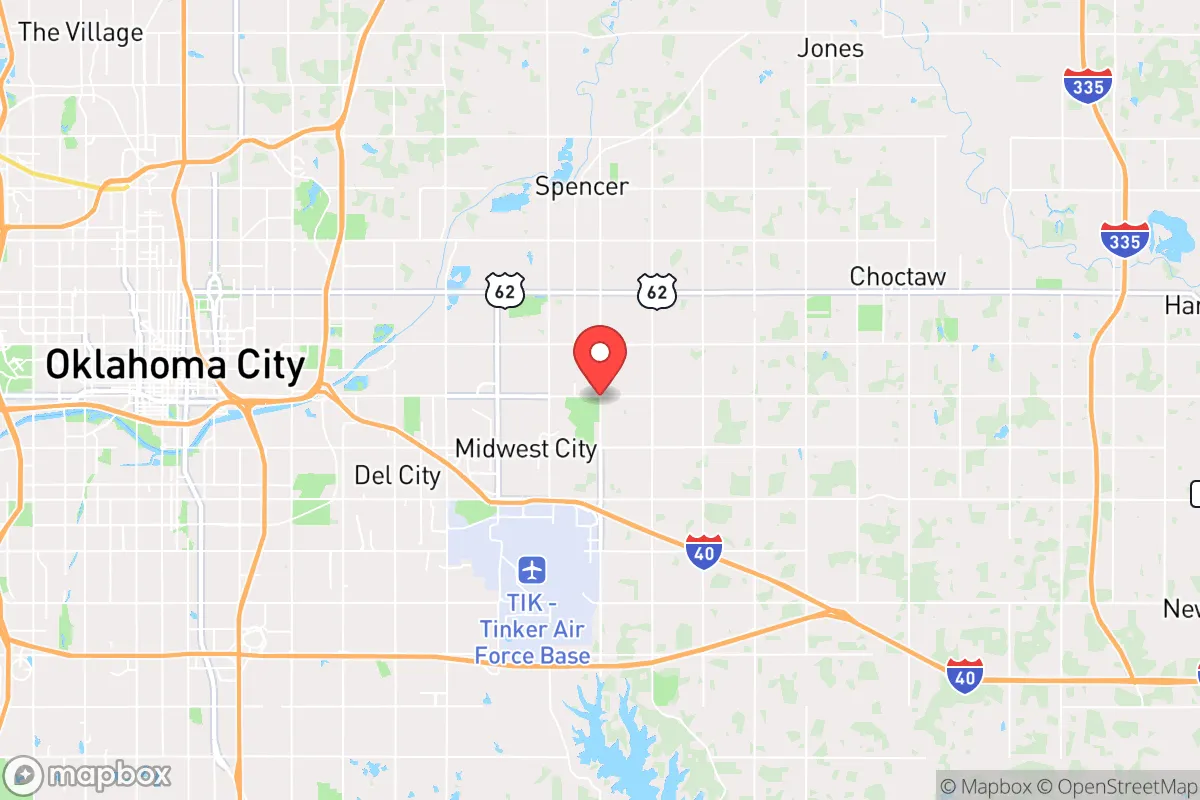
District shown is the primary district for this city’s centroid. Cities may span multiple districts.
Local Political AnalysisPolitical Analysis of Midwest City, OK
Midwest City has long been a solid conservative stronghold, and that’s not changing anytime soon. With a Cook Partisan Voting Index of R+17, this area votes Republican by a wider margin than most of the country, and that’s been the case for decades. You’ll find a lot of military families, retired veterans, and folks who work at Tinker Air Force Base, which gives the whole community a steady, patriotic, and no-nonsense vibe. The political lean here isn’t just about party labels—it’s about a deep-seated belief in personal responsibility, limited government, and keeping the feds out of your business.
How it compares
If you drive just a few miles west into Oklahoma City proper, you’ll start to see a different picture. The urban core has been trending more progressive in recent years, with younger transplants and out-of-state money pushing for higher taxes, more regulations, and a bigger government footprint. Places like the Plaza District or Midtown feel like a different world compared to Midwest City. Head east toward Choctaw or Harrah, and you’re back in familiar territory—deep red, rural-minded, and wary of any politician who talks about “transforming” the community. The contrast is stark: Midwest City sits right on the edge of that urban shift, but it’s held its ground. The local school board, city council, and county commission are still dominated by folks who believe in low taxes, Second Amendment rights, and keeping government out of your personal life.
What this means for residents
For anyone living here, the political climate translates directly into daily life. You won’t see the kind of overreach you hear about in blue states—no mask mandates that drag on for years, no heavy-handed business closures, and no city council trying to dictate what you can do on your own property. Property taxes stay reasonable, zoning is straightforward, and the local police are supported, not defunded. That said, there’s a growing concern among longtime residents about the direction of the state as a whole. Oklahoma City’s progressive drift is starting to spill over into county-level decisions, and some worry that if the urban vote keeps growing, we’ll see more state-level meddling in local affairs. The long-term outlook depends on whether Midwest City can keep its independent, conservative character as the metro area expands.
Culturally, this is a place where people still wave the flag, say the Pledge of Allegiance at school events, and expect their elected officials to actually read the bills they vote on. There’s a strong sense of community self-reliance—neighbors help neighbors, but nobody wants a government handout or a bureaucrat telling them how to live. The biggest policy distinction you’ll notice is the emphasis on local control: the city fights hard to keep its own zoning, its own police department, and its own school system independent from Oklahoma City’s influence. If you value personal freedom, low taxes, and a government that stays out of your way, Midwest City is still one of the safest bets in the region. Just keep an eye on the ballot box—because the fight to keep it that way is far from over.

State Political ClimatePolitical Climate in Oklahoma
State Political AnalysisPolitical Environment in the State
Oklahoma has been a reliably red state for decades, but the political climate here is more complicated than a simple partisan label. The state leans solidly Republican in federal elections — Donald Trump won it by 33 points in 2020 and by a similar margin in 2024 — but the real story is the internal tension between a deeply conservative rural base and a growing, more moderate urban corridor. Over the last 10-20 years, the state has shifted rightward on cultural and fiscal issues, even as its two largest metros, Oklahoma City and Tulsa, have become more politically diverse. If you’re looking for a place where conservative values still hold sway, Oklahoma is a strong contender, but you need to know where the lines are drawn.
Urban vs. rural divide
The political map of Oklahoma is stark. The rural areas — places like Enid, Ponca City, and Lawton — vote overwhelmingly Republican, often by 70-80% margins. These communities are the backbone of the state’s conservative identity, with strong ties to agriculture, oil and gas, and evangelical Christianity. Meanwhile, Oklahoma City and Tulsa are the blue dots in a red sea. Oklahoma County (OKC) has trended purple in recent cycles, with Democratic candidates winning the county in 2020 and 2024, driven by a growing suburban and professional class. Tulsa is similar: Tulsa County went for Trump in 2024, but by a much narrower margin than the rest of the state. The suburbs around these cities — Edmond, Broken Arrow, Norman — are reliably red but more moderate than rural areas, often swinging primaries toward establishment candidates over hardline populists. The divide isn’t just about party; it’s about culture. Rural Oklahomans see the cities as increasingly progressive, while urbanites view the countryside as resistant to change. This tension plays out in every legislative session.
Policy environment
Oklahoma’s policy environment is among the most conservative in the nation, but it’s not without its own brand of government overreach. The state has a flat income tax of 4.75% (down from 5% in 2022), with ongoing efforts to eliminate it entirely. Property taxes are low, and there’s no estate tax. The regulatory posture is business-friendly, especially for energy and agriculture. On education, the state passed universal school choice in 2023 through the Oklahoma Parental Choice Tax Credit Act, allowing families up to $7,500 per child for private school expenses — a major win for parental rights. However, the state also mandates a controversial “media literacy” curriculum in public schools that some conservatives worry could be used to push left-leaning narratives. Healthcare is a mixed bag: Oklahoma expanded Medicaid under the 2020 state question, which many conservatives opposed, but the state also passed strict abortion bans (SB 612 in 2022, effectively banning the procedure from conception). Election laws are tight — voter ID is required, and the state purged over 200,000 inactive voters in 2024, a move that drew criticism from the left but was praised by those concerned about election integrity. The bottom line: Oklahoma is a low-tax, low-regulation state with strong protections for traditional values, but the government still has a heavy hand in some areas, like education mandates and healthcare bureaucracy.
Trajectory & freedom
Oklahoma is becoming more free in several key areas, but there are warning signs. On gun rights, the state passed constitutional carry in 2019 (SB 1212), allowing permitless carry for anyone 21 or older. That’s a clear expansion of personal liberty. On parental rights, the Oklahoma Parents’ Bill of Rights (HB 1449, 2022) gives parents explicit authority over their children’s education and medical decisions. The state also banned transgender athletes from female sports (HB 1100, 2022) and restricted gender-affirming care for minors (SB 613, 2023). These are seen as wins for traditional values. However, there are concerning trends. The state’s Oklahoma State Bureau of Investigation has been expanding its surveillance powers, and a 2024 law (HB 3456) created a new “domestic terrorism” unit that some worry could be used to target conservative activists. On medical freedom, the state has a restrictive medical marijuana program (SQ 788, 2018) that’s been heavily regulated, with recent attempts to cap dispensary licenses. The trajectory is mixed: Oklahoma is moving toward more freedom on cultural and gun issues, but the government is also tightening its grip on surveillance and healthcare choices. A new resident should expect a state that values individual liberty in theory but still has a strong bureaucratic impulse.
Civil unrest & political movements
Oklahoma has seen its share of political flashpoints, but they’re not the kind you see in coastal states. The most visible movement in recent years has been the “Save Our State” rallies, which drew thousands to the state capitol in 2021-2022, opposing COVID mandates and vaccine passports. These were largely peaceful but signaled a deep distrust of government overreach. On the left, the Oklahoma City Black Lives Matter protests in 2020 were smaller than in other states, but they did lead to the removal of a Confederate monument in the city. Immigration politics are relatively quiet — Oklahoma is not a border state, but the legislature passed a bill in 2024 (HB 4156) requiring local law enforcement to cooperate with ICE, which drew protests from immigrant advocacy groups. Election integrity remains a hot topic: the 2020 and 2022 cycles saw allegations of irregularities in Tulsa County, leading to a 2023 audit that found no widespread fraud but did reveal administrative errors. The Oklahoma Second Amendment Association is a powerful grassroots force, often pushing back against any perceived infringement on gun rights. Overall, the political climate is stable but not passive — there’s a strong undercurrent of activism on both sides, but it rarely boils over into the kind of unrest seen in Portland or Seattle.
Projection
Over the next 5-10 years, Oklahoma is likely to become more conservative on cultural issues but more divided on economic ones. The in-migration pattern is key: people are moving to Oklahoma City and Tulsa from blue states like California and Texas, drawn by low housing costs and a business-friendly climate. These newcomers tend to be more moderate, which could shift the urban suburbs toward a center-right posture. However, the rural areas are not shrinking — they’re holding steady, and their political power is amplified by the state’s gerrymandered legislative districts. Expect continued battles over school choice (likely expansion), tax cuts (possibly a flat tax elimination by 2030), and medical freedom (a push for broader healthcare autonomy). The biggest wildcard is the state’s reliance on oil and gas revenue — if the energy sector declines, the state may face budget pressures that force tax increases, which would be a blow to fiscal conservatives. A new resident moving in now should expect a state that remains deeply red, but with a growing urban-rural tension that will shape every election. The freedom trajectory is positive on cultural issues, but keep an eye on government surveillance and healthcare mandates.
For a conservative-leaning individual or family, Oklahoma offers a strong alignment with traditional values, low taxes, and a growing economy. The key is to choose your location wisely: Edmond or Broken Arrow for a safe, family-friendly suburb with good schools; Yukon or Mustang for a more rural feel near OKC; or Owasso for a Tulsa-area community that’s growing fast. Avoid the core of Oklahoma City or Tulsa if you want to stay away from progressive influence. The state is not perfect — government overreach exists, especially in education mandates and surveillance — but it’s far better than most alternatives. If you value personal liberty, parental rights, and a community that shares your values, Oklahoma is a solid bet. Just know that the fight to keep it that way is ongoing, and your vote and voice will matter more here than in a deep-blue state.
* Values derived from national, state, county, city and local statistics and may differ in a specific area. Last updated: 2026-04-25T13:53:56.000Z
Narrative content on this page is AI-generated and may contain mistakes. Verify any details that matter before acting on them.
ReloMaps may earn a commission from affiliate links at no extra cost to you.

