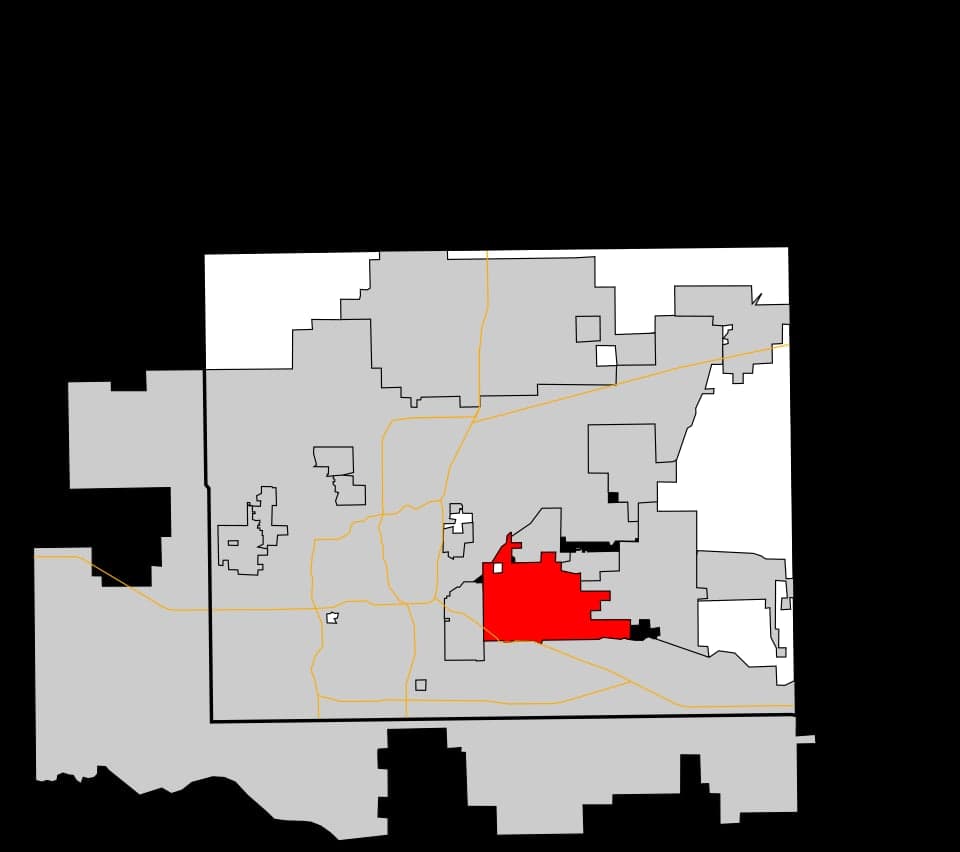
Photo: Wikipedia
Strategic Assessment of Midwest City, OK
Multiple tactical vulnerabilities. Population density, target proximity, or disaster risk are likely compounding. A retreat property and exit planning is required.
What does the Strategic Assessment tell us?
Our Strategic Assessment grades tactical survivability of an area. Major population centers, military targets, fallout zones, natural disasters, and border exposure all drive risk — lower exposure means a more defensible position in a crisis.
This is heavily inspired by Joel Skousen's Strategic Relocation book. Highly recommended you checkout the book ($)What does this tell us?
Our Strategic Assessment grades tactical survivability of an area. Major population centers, military targets, fallout zones, natural disasters, and border exposure all drive risk — lower exposure means a more defensible position in a crisis.
This is heavily inspired by Joel Skousen's Strategic Relocation book. Highly recommended you checkout the book ($)Strategic Pillars

Key Distances
Regional Safe Places
Below is our recommended "safe zones" in Oklahoma and the surrounding area based on our strategic heuristics. For most people, it's unrealistic to live in a “safe zone” full-time due to work, family or other personal reasons. They tend to be more rural. However, many of these areas are perfect for second homes and retreat properties that double as a vacation home or even a short-term rental.
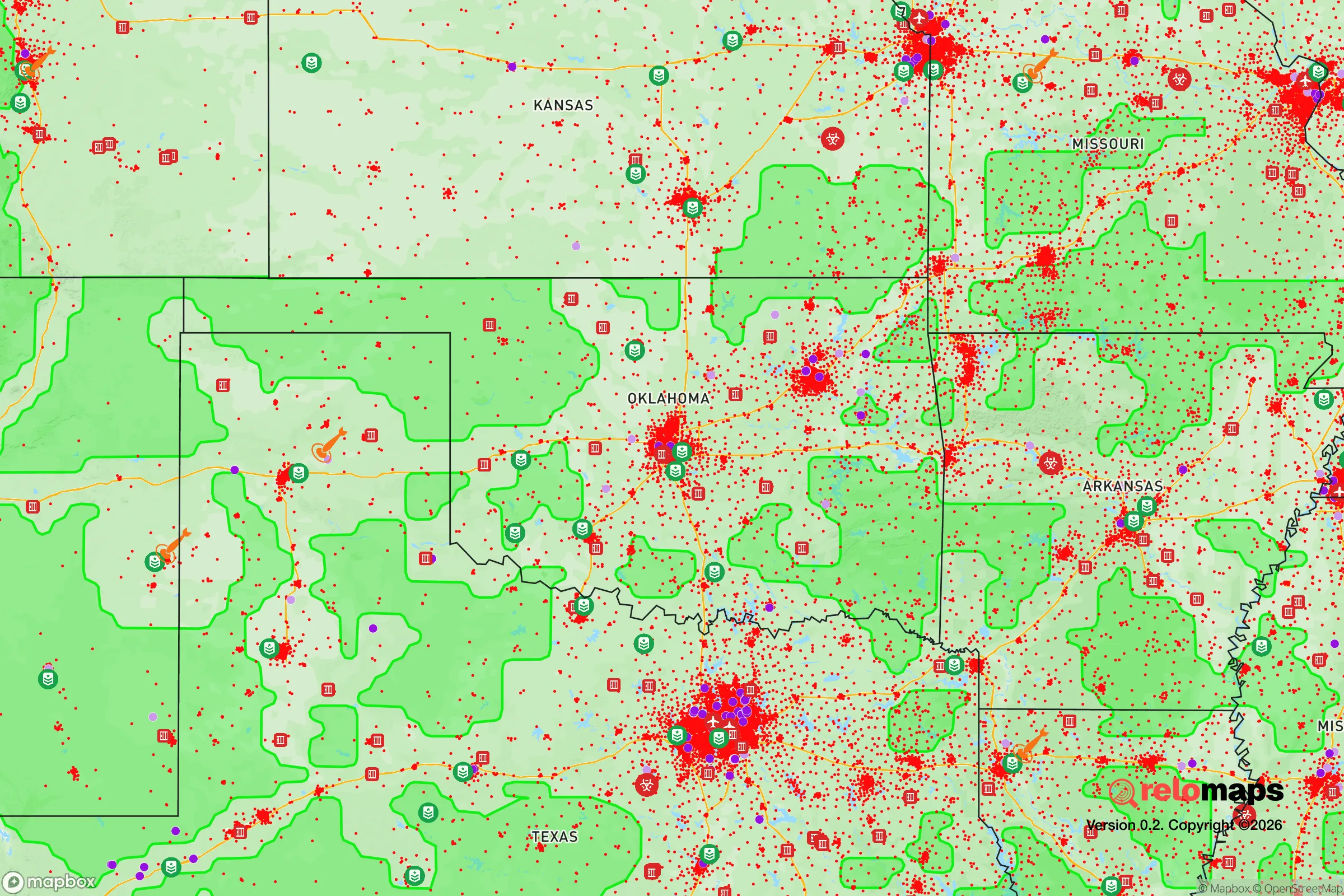
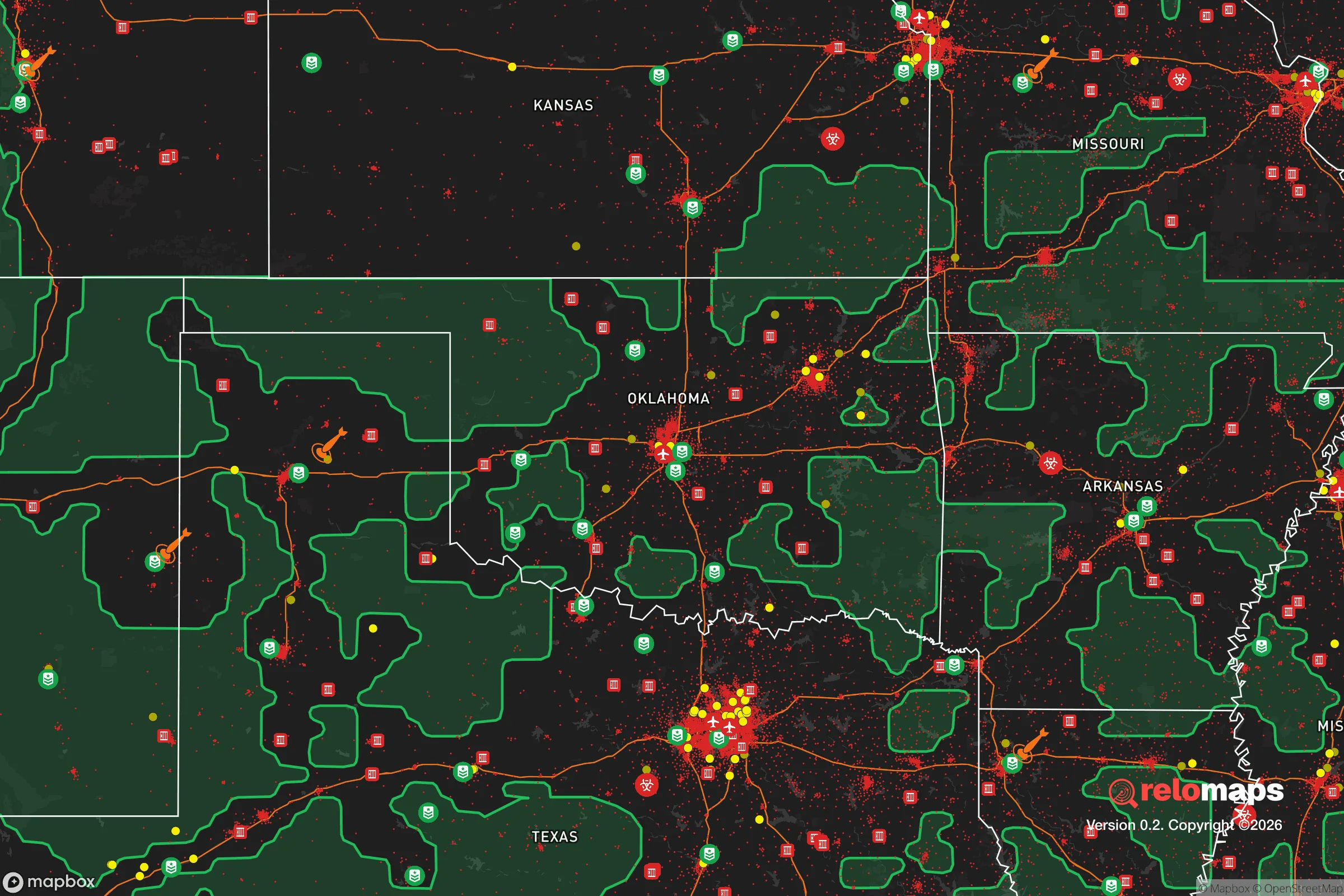


Important Note: For informational purposes only. This does not mean nothing bad ever happens in the green zones. Please use common sense. This is based on public data and modeled with AI. We tried to take a conservative approach but mistakes happen. We update this regularly as new information becomes available.
Solar Generator Recommendations
Backup power matters more here than in safer locations. We've picked three solar generators across budgets and capacity tiers — start with the budget unit if you only need a few essentials, or step up if you want to run a fridge and HVAC for days at a time.

Jackery Portable Power Station Explorer 300
Budget OptionPower on the Go: Weighing only 11 lbs, it's convenient to set up and store with book-sized foldable solar panels

BLUETTI Portable Power Station AC180
Designed for both indoor and outdoor scenarios, AC180 is highly capable as it has a robost capacity and continuous output power.

EF ECOFLOW DELTA Pro Ultra Power Station
Upgraded PickEcoFlow DELTA Pro Ultra is a whole-home energy system designed to grow with your family. Integrated with the Smart Home Panel 2, it scales to meet your evolving energy needs — keeping your home powered, intelligent, and secure through every stage of life.
We earn a commission, at no additional cost to you.
Strategic Assessment Analysis
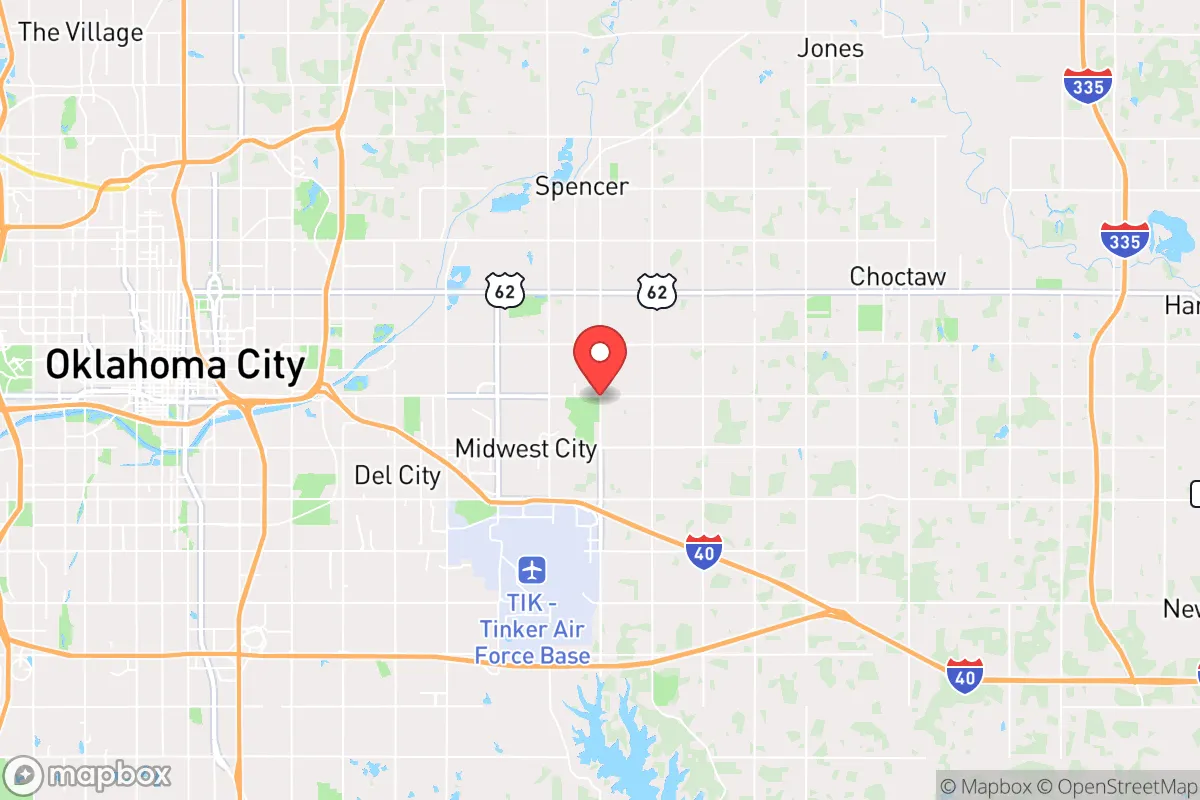
Midwest City, Oklahoma, sits in a precarious but potentially advantageous position for those serious about long-term resilience. Its location just east of Oklahoma City offers proximity to regional infrastructure while maintaining enough distance from the urban core to avoid the worst of any civil unrest or disaster fallout. The area’s flat terrain, central U.S. positioning, and relatively low population density compared to coastal metros make it a plausible staging ground for those who want to stay connected to resources without being trapped in a high-risk zone. However, the same geographic factors that provide access also create vulnerabilities that demand careful consideration.
Geographic position and natural advantages for long-term stability
Midwest City’s location in central Oklahoma places it squarely in Tornado Alley, which is a double-edged sword. On the plus side, the region is far from seismic zones, hurricane storm surge areas, and wildfire-prone chaparral. The land is flat and agricultural, which means groundwater access is generally good and the soil supports small-scale farming. The city sits on the North Canadian River, providing a surface water source, though it’s not a major river system. The climate is semi-arid continental, with hot summers and cold winters, but the growing season is long enough for staple crops like corn, beans, and squash. For a relocator, the key advantage is distance from both coasts—any major port disruption, nuclear exchange targeting coastal cities, or pandemic-driven coastal evacuation would leave this area relatively untouched. The nearest major military target is Tinker Air Force Base, which is actually within Midwest City’s city limits—a significant concern we’ll address shortly. The broader region, including rural areas east toward Shawnee or south toward Ada, offers even more buffer, but Midwest City itself provides a solid base camp with existing housing stock and infrastructure.
Risks, exposures, and proximity to fallout-relevant landmarks
The elephant in the room is Tinker Air Force Base, a major strategic asset for the U.S. military. It’s a hub for aircraft maintenance, logistics, and command-and-control operations. In any conflict involving strategic strikes on U.S. infrastructure, Tinker is a high-priority target. Midwest City essentially wraps around the base, meaning a direct hit would devastate the community. Even a near-miss or conventional attack could produce fallout patterns that affect the entire metro area. Additionally, Oklahoma City itself is home to the federal government’s regional offices, the FAA’s Mike Monroney Aeronautical Center, and major energy infrastructure like pipelines and refineries in the surrounding counties. Interstate 35 and 40 intersect just west of the city, making it a chokepoint for logistics but also a target for disruption. For a prepper, the calculus is: you want to be close enough to benefit from the base’s resources (medical, logistical, employment) but far enough to survive its destruction. Living in Midwest City proper puts you inside the blast radius for a large-yield weapon. Rural areas 20–30 miles east or south offer a much better risk profile while still allowing access to the city’s hospitals and supply chains.
Practical resilience for a relocator: food, water, energy, and defensibility
For someone serious about self-sufficiency, Midwest City has mixed marks. Water is the biggest concern. The city draws from the Garber-Wellington Aquifer and Lake Thunderbird, but both are subject to drought and contamination risks from agricultural runoff and industrial activity. A well on private land is the gold standard, but drilling costs in central Oklahoma run $5,000–$15,000 depending on depth. The soil is clay-heavy in many areas, which means poor drainage and limited gardening potential without raised beds or soil amendment. That said, the region has a strong agricultural tradition, and local farmers’ markets and co-ops are common—good for building supply networks before any crisis. Energy is less of a worry: Oklahoma is a major natural gas producer, and the grid is relatively stable compared to Texas or California. Solar is viable, with around 230 sunny days per year, but hail storms can damage panels. Defensibility is where Midwest City falls short. The terrain is flat and open, with few natural chokepoints or cover. Suburban sprawl means neighbors are close, and Oklahoma City’s population of 700,000+ could become a liability during a collapse, as refugees would flow east along I-40. A rural homestead with a perimeter and good sightlines is far preferable. For a single individual or family, the best play is to buy land 30–45 minutes east (near Meeker or Prague) and use Midwest City as a supply hub and job base until the SHTF.
Overall strategic picture for the conservative relocator
Midwest City offers a decent starting point for someone who wants to be in the heartland with access to jobs, medical care, and military-adjacent infrastructure, but it is not a bug-out location. The presence of Tinker Air Force Base is a double-edged sword—it provides economic stability and a sense of security, but it also paints a target on the area. For a conservative audience concerned with civil unrest, mass casualty events, and national instability, the smart move is to treat Midwest City as a forward operating base, not a final redoubt. The political climate in Oklahoma is broadly favorable to Second Amendment rights, low taxes, and limited government, which aligns with the values of most preppers. The state has strong castle doctrine laws, constitutional carry, and a culture of self-reliance. But the practical realities of living near a major military target and a large urban population mean that true resilience requires a secondary location—a rural property with a well, solar panels, and a defensible perimeter. If you’re willing to commute and build that outpost, Midwest City can work as a launchpad. If you’re looking for a single place to ride out the storm, look further east or south, where the population thins and the targets disappear.

* Values derived from national, state, county, city and local statistics and may differ in a specific area. Last updated: 2026-04-25T13:53:56.000Z
Narrative content on this page is AI-generated and may contain mistakes. Verify any details that matter before acting on them.
ReloMaps may earn a commission from affiliate links at no extra cost to you.

