Photo: Wikipedia
Personal Sovereignty in Millsboro, DE
Viable for self-reliance. Generally workable, though some barriers may limit total independence.
What does Personal Sovereignty tell us?
Personal Sovereignty measures your capacity for self-reliance and independence with minimal government friction. Higher scores mean fewer barriers between you and the way you want to live... but it assumes you have the space you need and good neighbors.
What does this tell us?
Personal Sovereignty measures your capacity for self-reliance and independence with minimal government friction. Higher scores mean fewer barriers between you and the way you want to live... but it assumes you have the space you need and good neighbors.
State Policy
Energy independence: Importer (2% of energy produced in-state)
Personal Liberty
Homesteading

Personal Liberty Analysis
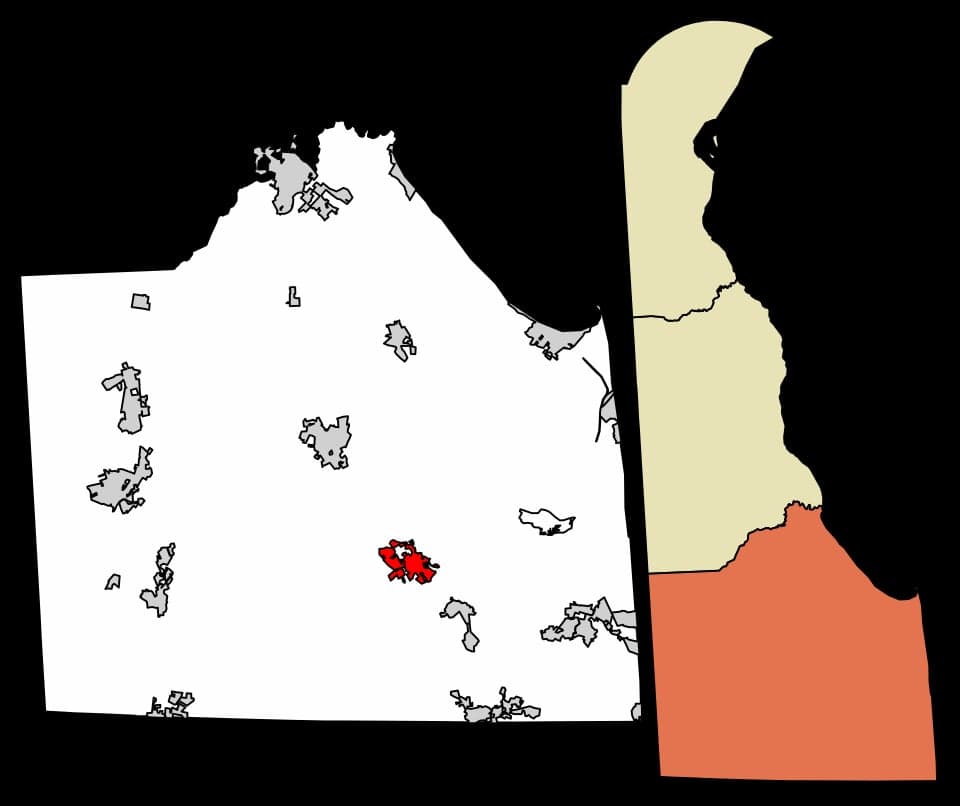
For the individual or family prioritizing personal sovereignty—the ability to live, defend, and provide for oneself without excessive government interference—Millsboro, Delaware offers a notably permissive environment compared to the restrictive corridors of the Northeast or the West Coast. Situated in Sussex County, the state’s most rural and politically conservative region, Millsboro sits within a legal and cultural framework that generally respects the autonomy of its residents. While Delaware is not a libertarian paradise—it has state income tax and some regulatory oversight—the practical reality for a prepper or survivalist-minded person is that local governance in Sussex County leans heavily toward property rights, self-reliance, and minimal intrusion into daily life. The key is understanding where the state-level friction points are and how the local culture offsets them.
Tax burden and regulatory posture for self-reliant individuals
Delaware’s tax structure is a mixed bag for the sovereignty-minded. The state imposes a progressive income tax ranging from 2.2% to 6.6%, which is moderate compared to neighboring Maryland (up to 5.75%) but higher than no-income-tax states like Florida or Texas. However, Delaware has no sales tax, which is a significant advantage for anyone stockpiling supplies, tools, or building materials—every dollar spent goes further. Property taxes in Sussex County are among the lowest in the Mid-Atlantic, with effective rates around 0.55% of assessed value, meaning a $300,000 home costs roughly $1,650 annually. This low property tax burden directly supports long-term land ownership and homesteading. On the regulatory side, Sussex County is far less restrictive than New Castle County (northern Delaware). Zoning is generally permissive for agricultural and residential uses, and the county’s comprehensive plan does not aggressively push high-density development in rural areas. There is no county-level building permit requirement for structures under 200 square feet in most agricultural zones, which is a practical nod to the DIY builder. The state’s business-friendly incorporation laws (over 60% of Fortune 500 companies are incorporated in Delaware) also mean that forming an LLC for a small farm, workshop, or side business is straightforward and inexpensive—a critical tool for anyone seeking to operate outside the W-2 economy.
Self-defense and gun law specifics for personal protection
Delaware’s gun laws have shifted leftward in recent years, which is a genuine concern for the sovereignty-focused. In 2022, the state passed a permit-to-purchase law for handguns, requiring a background check, fingerprinting, and a training course before buying. Magazine capacity is limited to 17 rounds for handguns and 15 for long guns. However, Sussex County’s sheriff and local law enforcement are generally pro-Second Amendment, and the cultural enforcement of these laws is lax compared to urban areas. Open carry is legal without a permit for anyone 18 or older who can legally possess a firearm, and concealed carry permits are issued on a “shall issue” basis—meaning if you meet the requirements, the state must issue it. The permit process involves a background check, a training course, and a fee, but it is not discretionary. Stand-your-ground laws are not explicitly codified in Delaware statute, but the state’s Castle Doctrine is strong: there is no duty to retreat in your home, workplace, or occupied vehicle. For the prepper, the practical takeaway is that you can legally defend your property and person, but you must navigate a more bureaucratic purchase process than in states like Texas or Arizona. Stockpiling ammunition and firearms before moving is advisable, as the state’s political trajectory could tighten further. The local gun culture in Millsboro is robust, with several gun shops and ranges within a 20-minute drive, and private sales of long guns remain unregulated at the state level.
Self-reliance and homesteading viability: lot sizes, zoning, and off-grid feasibility
Millsboro’s rural character is the strongest asset for the homesteader. The town itself is small (population roughly 4,200), but the surrounding unincorporated areas of Sussex County offer affordable land with minimal restrictions. Minimum lot sizes in agricultural-residential zones are typically 1 acre, and many parcels of 2 to 5 acres are available for under $50,000. Zoning allows for keeping livestock—chickens, goats, sheep, and even cattle—on parcels as small as 1 acre, provided setbacks are met. There are no county-level restrictions on rainwater collection, which is critical for off-grid water security. Solar panels are permitted by right in most zones, and net metering is available through the local utility (Delmarva Power), though the state’s renewable portfolio standards do not penalize self-generation. Off-grid living is legally feasible but practically challenging: the county requires a septic system for any dwelling, and well permits are issued by the state’s Division of Water, which can be slow. However, there is no county ordinance prohibiting composting toilets or alternative waste systems if they meet health codes. The biggest regulatory hurdle is the state’s building code, which requires permits for any habitable structure. That said, many preppers circumvent this by building “workshops” or “sheds” (under 200 sq ft) that are not classified as dwellings, then living in them while constructing a compliant home. The local Amish and Mennonite communities in the area demonstrate that a low-tech, self-sufficient lifestyle is culturally accepted and legally tolerated.
Personal liberties: parental rights, medical autonomy, speech, and property
On the broader spectrum of personal liberties, Millsboro and Sussex County score well for the conservative individual. Parental rights are strong in Delaware law, with a presumption that parents have the primary authority over their children’s education, healthcare, and upbringing. Homeschooling is legal and relatively unregulated: parents must file a simple intent form annually and provide a basic curriculum outline, but there are no standardized testing requirements or home visits. The state does not mandate vaccines for homeschooled children, and medical exemptions for school-required vaccines are available for religious or philosophical reasons. Medical autonomy is more contested: Delaware has a prescription drug monitoring program and strict regulations on controlled substances, but there is no state-level vaccine passport mandate or forced medical treatment for adults. The state’s emergency powers were heavily debated during the COVID-19 pandemic, and while Governor John Carney did impose restrictions, Sussex County’s local government pushed back, and many businesses and churches in the Millsboro area remained open. Free speech is protected under the First Amendment, and there are no state-level hate speech laws that criminalize political or religious expression. Property rights are well-protected: eminent domain is rarely used for private development, and the county’s comprehensive plan does not include inclusionary zoning or rent control. The biggest threat to property sovereignty is the state’s wetland and coastal zone regulations, which can restrict development near waterways—something to check before buying land.
In the broader context of the Mid-Atlantic and Northeast, Millsboro represents a relative stronghold of personal sovereignty. Compared to Maryland’s strict gun laws, New Jersey’s high taxes, or New York’s aggressive regulatory state, Delaware—and Sussex County in particular—offers a more permissive environment for the survivalist or prepper. The trade-offs are real: state income tax, a permit-to-purchase gun law, and some building code oversight. But the low property taxes, permissive zoning for homesteading, strong Castle Doctrine, and cultural respect for self-reliance make Millsboro a viable base for those seeking to live with maximum personal autonomy. For the strategic relocator, the calculus is clear: you can build, defend, and provide for your family here with fewer obstacles than in most of the surrounding region. The key is to act before the political winds shift further, as Delaware’s northern counties continue to drive state-level policy in a more restrictive direction.

* Values derived from national, state, county, city and local statistics and may differ in a specific area. Last updated: 2026-04-30T03:27:22.000Z
Narrative content on this page is AI-generated and may contain mistakes. Verify any details that matter before acting on them.
ReloMaps may earn a commission from affiliate links at no extra cost to you.

