Photo: Wikipedia
Quality of Life in Millsboro, DE
Above-average quality of iife. The area offers a reasonable cost of living, decent mobility, and a mix of neighborhood amenities.
What does Quality of Life tell us?
Quality of Life blends cost of living, nearby amenities, socioeconomic signals, and neighborhood character. City-level scores represent the whole municipality; individual neighborhoods can differ.
What does this tell us?
Quality of Life blends cost of living, nearby amenities, socioeconomic signals, and neighborhood character. City-level scores represent the whole municipality; individual neighborhoods can differ.
Cost of Living
4% above national average
The Real Cost of Living in Millsboro, DE for 2026
| Tier | Individual | Family (4) |
|---|---|---|
| Survival | $19k | $36k |
| Comfortable | $58k | $85k |
| Luxury | $98k+ | $153k+ |
| Elite (Top 5%) | $116k+ | $180k+ |
92%
The Area Signal
A metric tracking the socioeconomic signals of the area.
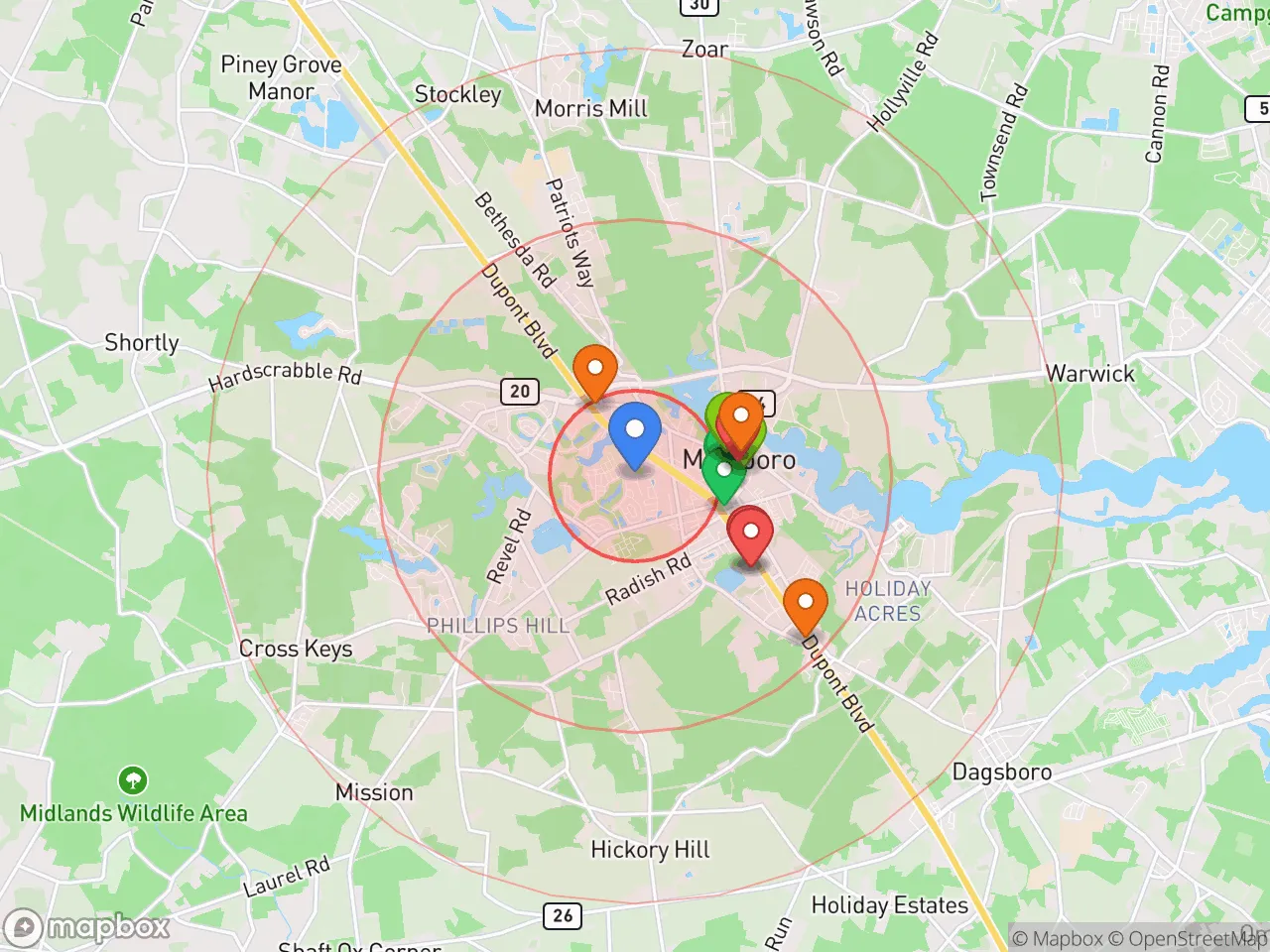
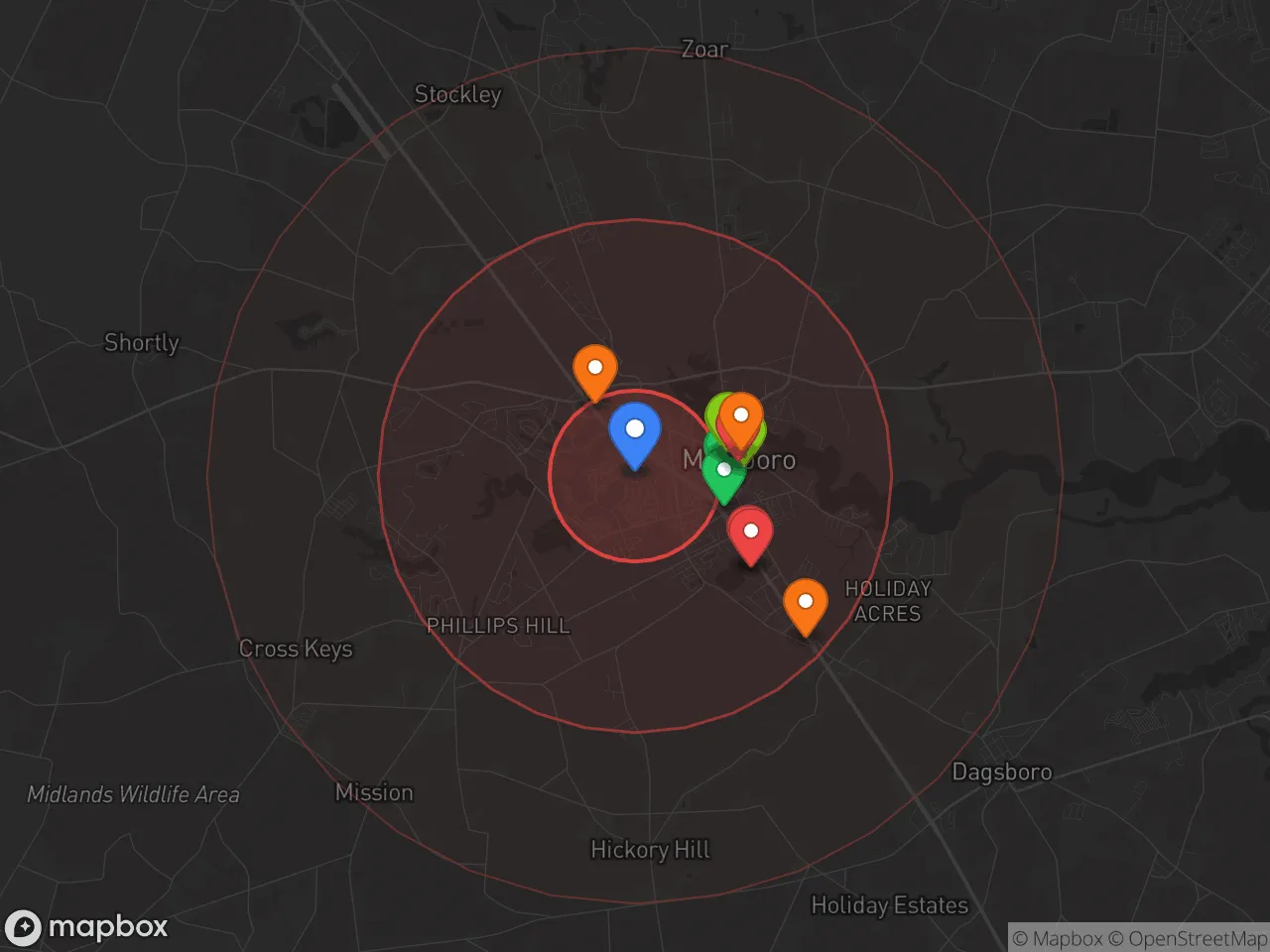
Hobbies
Explore the areaGroceries
5 within 10 miles
Gas
20 within 10 miles
Hospital
5 within 20 miles
Airport
BWI — Baltimore/Washington International Thurgood Marshall
Post Office
USPS — Millsboro, DE
Critical Amenities
Quality-of-Life Analysis
Millsboro, Delaware, presents a quality-of-life profile that blends small-town affordability with the pressures of rapid growth, attracting a mix of young families, retirees, and commuters priced out of coastal Sussex County. The town’s cost of living index of 104 (just above the U.S. average of 100) and a median home value of $297,000 position it as a relative bargain compared to beach-adjacent communities like Rehoboth Beach or Lewes, where median prices often exceed $500,000. This economic reality draws a predominantly middle-class, family-oriented population, with a growing share of remote workers and retirees seeking quieter, more affordable surroundings within striking distance of the Atlantic coast.
Cost of living, housing, and how Millsboro compares to nearby areas
Millsboro’s housing market remains one of the most accessible in Sussex County, with a median home value of $297,000 and a median rent of $1,207—both significantly lower than the countywide medians of roughly $380,000 and $1,500, respectively. The cost-of-living index of 104 is driven primarily by housing, which is about 10% below the national average, while groceries and utilities hover near the U.S. baseline. However, the average one-way commute of 36.7 minutes is notably longer than the national average of 26 minutes, reflecting the town’s role as a bedroom community for workers employed in the higher-cost coastal corridor (e.g., Ocean City, MD, or Rehoboth Beach) and in northern Sussex County’s industrial zones. Property taxes in Sussex County are relatively low—around 0.55% of assessed value—which helps offset the commute burden for homeowners. Compared to nearby Georgetown (median home value $275,000) or Seaford ($240,000), Millsboro is slightly pricier but offers newer subdivisions and closer proximity to Route 1 and the beaches.
What daily life is like for families: schools, amenities, and local rhythm
Daily life in Millsboro centers on a mix of established neighborhoods and rapidly expanding subdivisions like the Plantation Lakes community, which features a golf course, pools, and walking trails. The Indian River School District serves the area, with Millsboro’s elementary and middle schools generally rated average by state standards—East Millsboro Elementary and Millsboro Middle School both score around 6 out of 10 on GreatSchools metrics—while high school students attend Sussex Central High School, which offers vocational programs and Advanced Placement courses. For shopping and dining, residents rely on the Millsboro Town Center (anchored by a Walmart and a Food Lion) and a growing strip of chain restaurants along Route 113, though most entertainment and medical services require a 15- to 20-minute drive to Georgetown or Lewes. The town’s recreational offerings include the Millsboro Pond for kayaking and fishing, the annual Millsboro Mushroom Festival in October, and the nearby Cape Henlopen State Park for beach access. The rhythm is distinctly suburban: quiet evenings, weekend trips to the coast, and a reliance on personal vehicles for nearly all errands.
Millsboro is best suited for those who prioritize affordable homeownership and a slower pace over urban amenities or walkability. Families with school-age children will find adequate public schools and a safe environment (violent crime rates are roughly half the national average), while retirees on fixed incomes benefit from low property taxes and proximity to healthcare facilities in Lewes. Commuters should budget for the 36-minute average drive, but for those who work remotely or locally, the trade-off of lower housing costs and a tight-knit community feel makes Millsboro a practical choice in an increasingly expensive region.

Crime in Millsboro, DE
Generally safer than 63% of comparable U.S. locations.
Violent CrimeViolent Crime Analysis
Property CrimeProperty Crime Analysis
Crime Analysis
Millsboro, Delaware, presents a mixed safety profile that demands careful consideration from potential residents. The town's violent crime rate of 332.8 incidents per 100,000 residents and property crime rate of 2,748.7 per 100,000 place it above national averages, a reality shaped in part by broader regional justice system trends. Prospective movers should weigh these statistics against the town's growing popularity and proximity to the beaches, understanding that crime patterns here are influenced by both local conditions and the progressive judicial philosophy prevalent in Delaware's larger metro areas.
Crime in context
Millsboro's violent crime rate is roughly 10% higher than the national average of about 300 per 100,000, while its property crime rate exceeds the U.S. norm by approximately 45%. These figures place Millsboro above the Delaware state average for both categories. The state's overall crime landscape is shaped by policies in larger jurisdictions like Wilmington and New Castle County, where progressive district attorneys and judges have implemented bail reform and diversion programs. While these measures aim to reduce incarceration, critics argue they contribute to higher recidivism and embolden property criminals, a dynamic that spills into surrounding communities like Millsboro as offenders travel from metro areas to target less densely policed towns.
What residents experience
For those living in Millsboro, property crime is the most tangible concern. Theft from vehicles, package theft, and burglaries are the most commonly reported incidents, particularly in neighborhoods near Route 113 and the town's commercial corridors. Violent crime is less frequent but not negligible—assaults and robberies occur, often tied to disputes or drug-related activity. Residents report that police response times are generally adequate, but the Sussex County Sheriff's Office and Millsboro Police Department face resource constraints common to growing exurban communities. The presence of a progressive judicial philosophy in Delaware's court system means that many property offenders receive probation or short sentences, a pattern that frustrates victims and can create a perception of impunity among repeat offenders.
Neighborhood-level variation
Crime in Millsboro is not evenly distributed. The older downtown core and areas along Route 24 east of town see higher incident rates, while newer subdivisions like Plantation Lakes and Peninsula Lakes report fewer property crimes, largely due to homeowner association security measures and more vigilant neighbor networks. The town's proximity to the resort areas of Rehoboth Beach and Bethany Beach also introduces seasonal crime spikes, as summer crowds bring increased theft and occasional violent incidents. For those considering a move, choosing a neighborhood with active community watch programs and avoiding properties directly on major thoroughfares can reduce risk, though the broader regional justice environment remains a factor that all residents must navigate.
* Values derived from national, state, county, city and local statistics and may differ in a specific area. Last updated: 2026-04-30T03:27:22.000Z
Narrative content on this page is AI-generated and may contain mistakes. Verify any details that matter before acting on them.
ReloMaps may earn a commission from affiliate links at no extra cost to you.

