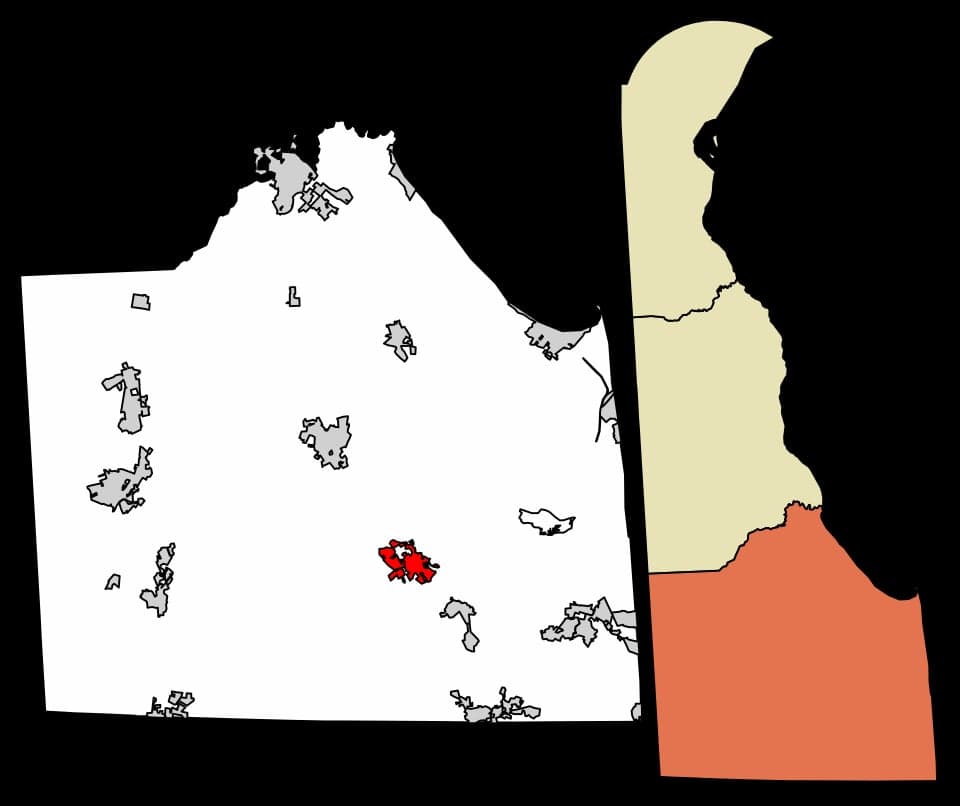
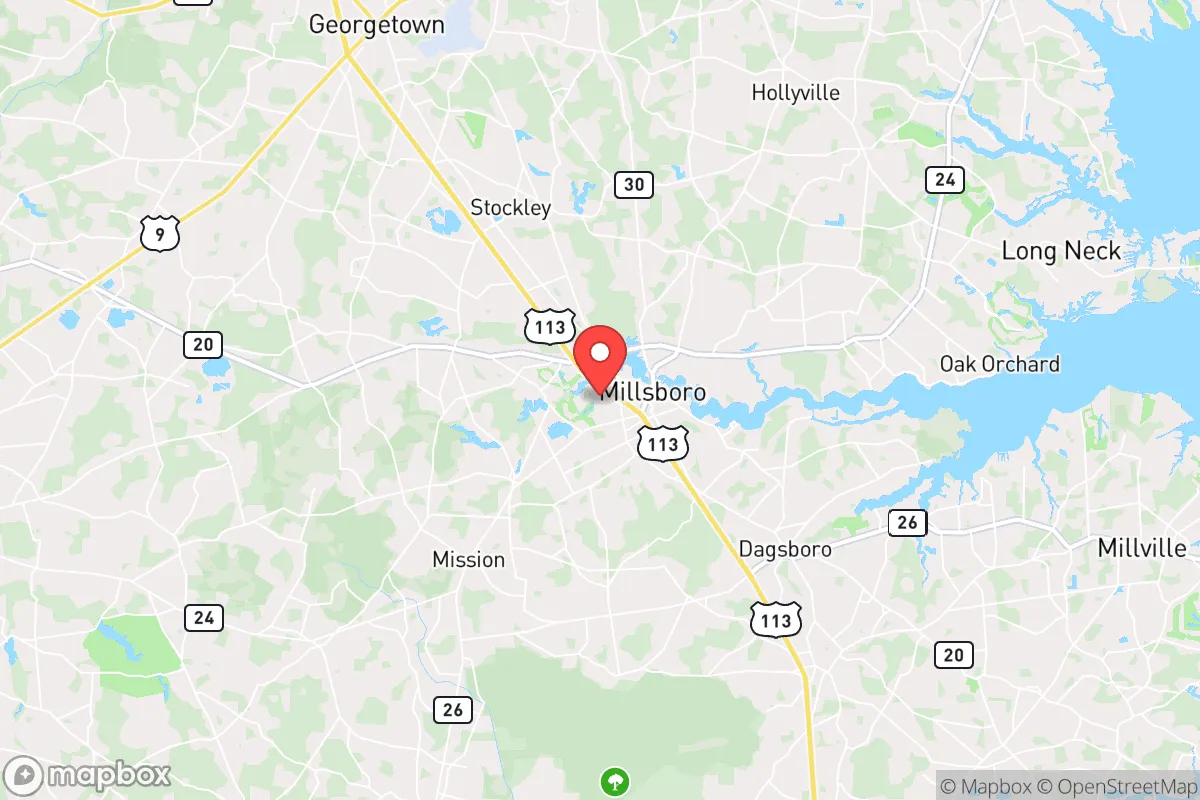
Photo: Wikipedia
Strategic Assessment of Millsboro, DE
Multiple tactical vulnerabilities. Population density, target proximity, or disaster risk are likely compounding. A retreat property and exit planning is required.
What does the Strategic Assessment tell us?
Our Strategic Assessment grades tactical survivability of an area. Major population centers, military targets, fallout zones, natural disasters, and border exposure all drive risk — lower exposure means a more defensible position in a crisis.
This is heavily inspired by Joel Skousen's Strategic Relocation book. Highly recommended you checkout the book ($)What does this tell us?
Our Strategic Assessment grades tactical survivability of an area. Major population centers, military targets, fallout zones, natural disasters, and border exposure all drive risk — lower exposure means a more defensible position in a crisis.
This is heavily inspired by Joel Skousen's Strategic Relocation book. Highly recommended you checkout the book ($)Strategic Pillars

Key Distances
Regional Safe Places
Below is our recommended "safe zones" in Delaware and the surrounding area based on our strategic heuristics. For most people, it's unrealistic to live in a “safe zone” full-time due to work, family or other personal reasons. They tend to be more rural. However, many of these areas are perfect for second homes and retreat properties that double as a vacation home or even a short-term rental.
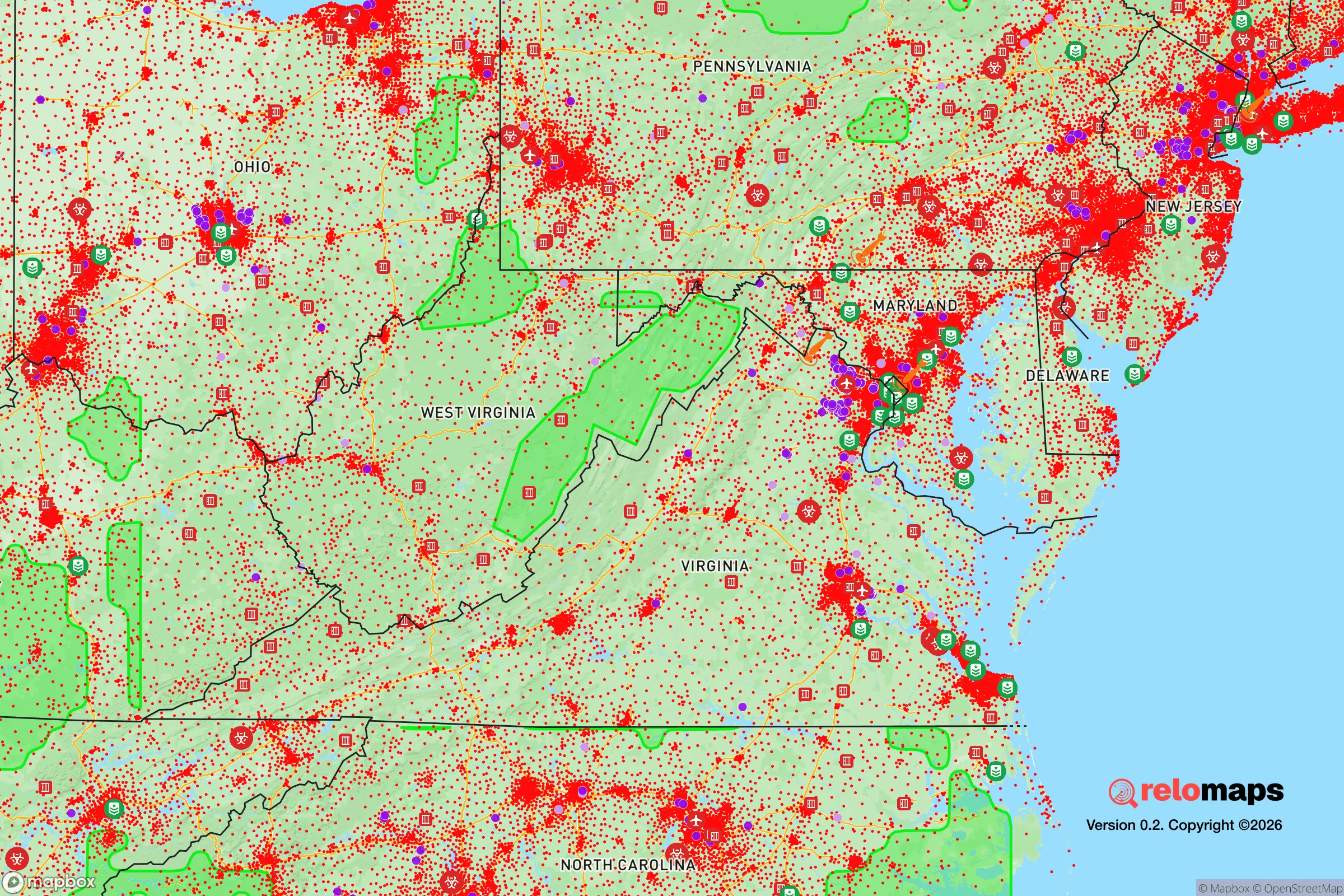
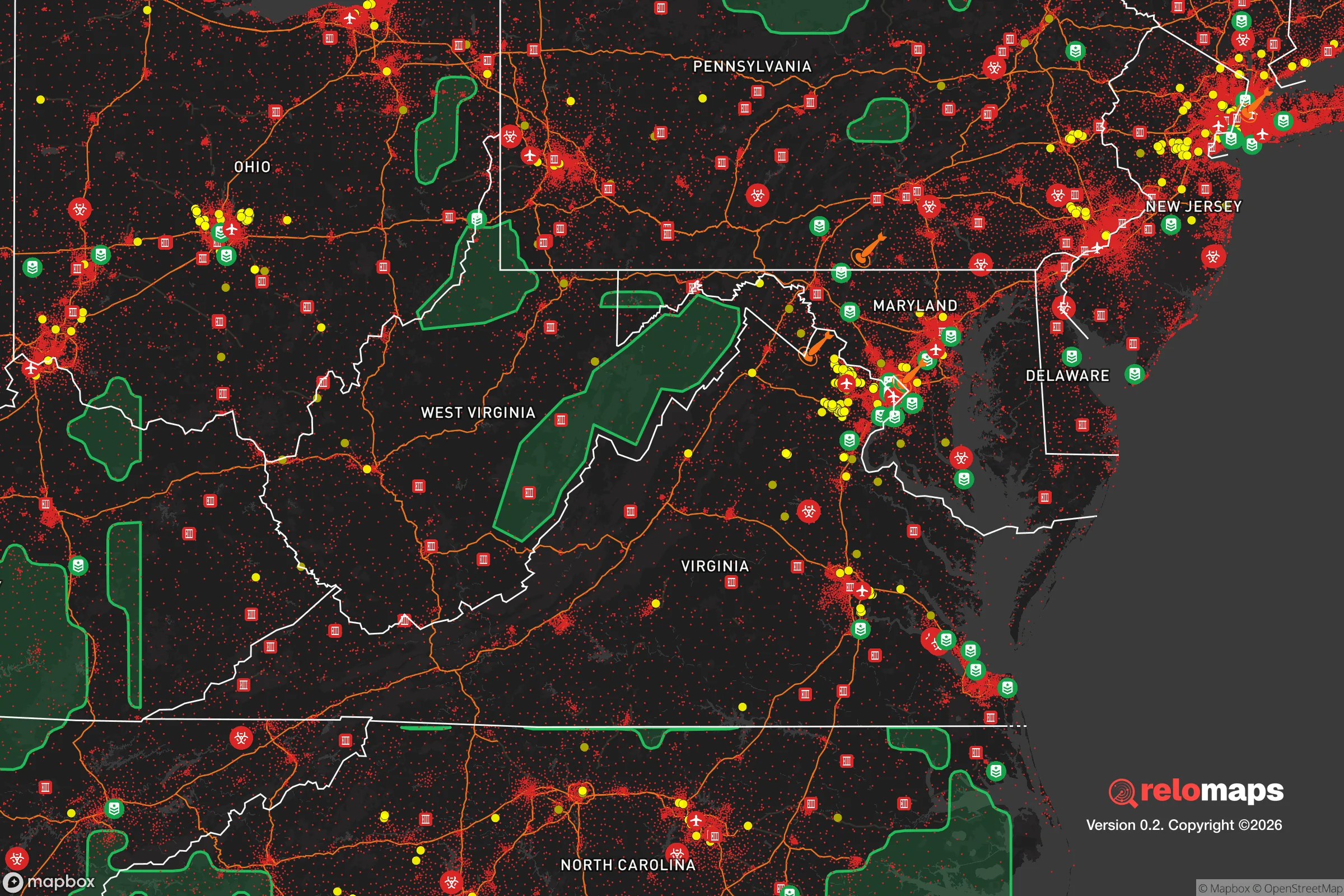


Important Note: For informational purposes only. This does not mean nothing bad ever happens in the green zones. Please use common sense. This is based on public data and modeled with AI. We tried to take a conservative approach but mistakes happen. We update this regularly as new information becomes available.
Solar Generator Recommendations
Backup power matters more here than in safer locations. We've picked three solar generators across budgets and capacity tiers — start with the budget unit if you only need a few essentials, or step up if you want to run a fridge and HVAC for days at a time.

Jackery Portable Power Station Explorer 300
Budget OptionPower on the Go: Weighing only 11 lbs, it's convenient to set up and store with book-sized foldable solar panels

BLUETTI Portable Power Station AC180
Designed for both indoor and outdoor scenarios, AC180 is highly capable as it has a robost capacity and continuous output power.

EF ECOFLOW DELTA Pro Ultra Power Station
Upgraded PickEcoFlow DELTA Pro Ultra is a whole-home energy system designed to grow with your family. Integrated with the Smart Home Panel 2, it scales to meet your evolving energy needs — keeping your home powered, intelligent, and secure through every stage of life.
We earn a commission, at no additional cost to you.
Strategic Assessment Analysis
Millsboro, Delaware, sits in a sweet spot that few relocators fully appreciate: close enough to the Mid-Atlantic’s economic spine to sustain a career, yet far enough from the major population centers to offer genuine strategic depth. The town’s position along the Indian River and its proximity to the Atlantic coast provide natural buffers and escape routes, while the surrounding Sussex County landscape remains largely agricultural and low-density. For someone thinking in terms of decades—not just the next election cycle—Millsboro presents a rare combination of defensible geography, resource access, and relative isolation from the worst-case scenarios that keep preppers up at night.
Geographic position and natural advantages for long-term security
Millsboro’s location is its first and strongest asset. The town sits roughly 30 miles inland from the Atlantic Ocean, far enough to avoid the direct brunt of hurricane storm surge but close enough to tap coastal resources if needed. The Indian River and its tributaries form a natural moat to the east and south, creating chokepoints that could be controlled with minimal effort. To the north and west, the land opens into the Delmarva Peninsula’s agricultural heartland—corn, soybeans, poultry operations, and timber. This is not suburban sprawl; this is working countryside where a family could realistically supplement its food supply from local farms within a 15-minute drive. The area’s flat terrain and sandy soils mean that groundwater recharge is decent, and private wells are common outside town limits. For a relocator prioritizing self-sufficiency, Millsboro offers a base that is both productive and defensible without requiring a move to the remote mountains.
Risks, exposures, and proximity to fallout-relevant landmarks
No location is without vulnerabilities, and Millsboro has a few that demand honest assessment. The most obvious is the Salem-Hope Creek nuclear generating station, located about 40 miles north in New Jersey, across Delaware Bay. While 40 miles provides a substantial buffer, a major release under prevailing winds could still deposit fallout across southern Delaware within hours. The same wind patterns that keep the area’s air generally clean could become a liability in a radiological event. Additionally, the Indian River Inlet and the coastal highway corridor (Route 1) are potential chokepoints for evacuation or resupply during a crisis—if those routes are compromised, Millsboro could become a dead end rather than a safe haven. The town itself is not a primary target for any plausible adversary, but its proximity to the Dover Air Force Base (about 45 miles north) and the Port of Wilmington (about 70 miles north) means that secondary effects—refugee flows, supply chain disruptions, or military checkpoints—could ripple southward. The key takeaway: Millsboro is not a zero-risk zone, but its risks are manageable with basic preparation, unlike the existential exposure of living within the blast radius of a major city or military installation.
Practical resilience for a relocator: food, water, energy, and defensibility
For the individual or family serious about resilience, Millsboro delivers on the fundamentals. Water is the first concern, and the area’s shallow aquifer—the Columbia aquifer—is accessible via standard well drilling at depths of 50 to 150 feet. Most rural properties already have wells, and the water quality is generally good, though iron and sulfur can be issues that simple filtration solves. Food security is equally strong: Sussex County is Delaware’s leading agricultural producer, with over 200 poultry farms, dozens of grain operations, and a growing network of farmers’ markets and CSAs within a 20-mile radius. The nearby Atlantic and inland bays provide year-round fishing and crabbing, and the region’s mild winters allow for extended growing seasons in hoop houses or cold frames. Energy resilience is more mixed. The local grid is served by Delmarva Power, which has a mixed reliability record during storms—power outages after nor’easters or hurricanes can last 24 to 72 hours. However, solar adoption is rising rapidly in Sussex County, and net metering policies are favorable, making it feasible to pair rooftop solar with battery storage for off-grid capability. Propane is widely available for heating and cooking, and wood-burning stoves are common in older homes. Defensibility is where Millsboro truly shines: the town’s layout—a compact historic core surrounded by farmland and wetlands—means that a small group could monitor the few paved roads leading in. The local law enforcement presence is modest (Sussex County Sheriff’s Office and Delaware State Police), but the community culture is heavily oriented toward self-reliance and mutual aid, not dependence on distant authorities. For a relocator, the practical takeaway is that Millsboro allows you to build a resilient lifestyle without the extreme isolation or harsh climate of more remote prepper destinations.
The overall strategic picture for a conservative relocator
Stepping back, Millsboro fits a specific profile that is increasingly hard to find: a place where you can still buy a modest home on an acre or two for under $400,000, where the local economy is rooted in real work (agriculture, construction, healthcare), and where the political culture leans conservative without being insular. The town’s population has grown from about 4,000 in 2010 to over 7,000 today, driven largely by retirees and remote workers fleeing higher-tax states—a trend that brings both new neighbors and new pressure on infrastructure. The strategic calculus is straightforward: Millsboro offers a low-profile, resource-rich base that can sustain a family through most disruptions short of a direct nuclear strike or a complete collapse of the Eastern Seaboard. Its weaknesses—proximity to a nuclear plant, dependence on a few road corridors, and vulnerability to hurricane-related flooding in low-lying areas—are manageable with standard prepping measures: a well, solar panels, a year’s worth of food stores, and a plan for alternate routes. For the conservative relocator who values community, self-sufficiency, and a buffer from the chaos of the cities, Millsboro deserves a serious look. It is not a fortress, but it is a foundation—and in the current climate, that is more than most places can offer.

* Values derived from national, state, county, city and local statistics and may differ in a specific area. Last updated: 2026-04-30T03:27:22.000Z
Narrative content on this page is AI-generated and may contain mistakes. Verify any details that matter before acting on them.
ReloMaps may earn a commission from affiliate links at no extra cost to you.

