Photo: Wikipedia
Demographics of Milton, DE
Affluence Level in Milton, DE
A middle-class area roughly in line with national averages across income, home values, education, and employment.
People of Milton, DE
The people of Milton, Delaware today form a small, predominantly white community of 3,469 residents, with a notable Black minority of 12.8% and a growing Hispanic population of 6.0%. The city is characterized by a tight-knit, family-oriented character, with 38.2% of adults holding a college degree and a remarkably low foreign-born share of just 0.4%, making it one of the least ethnically diverse towns in Sussex County. Distinctive identity markers include a strong local pride in the historic downtown and a population that is overwhelmingly native-born, with deep roots in the surrounding agricultural and coastal economy.
How the city was settled and grew
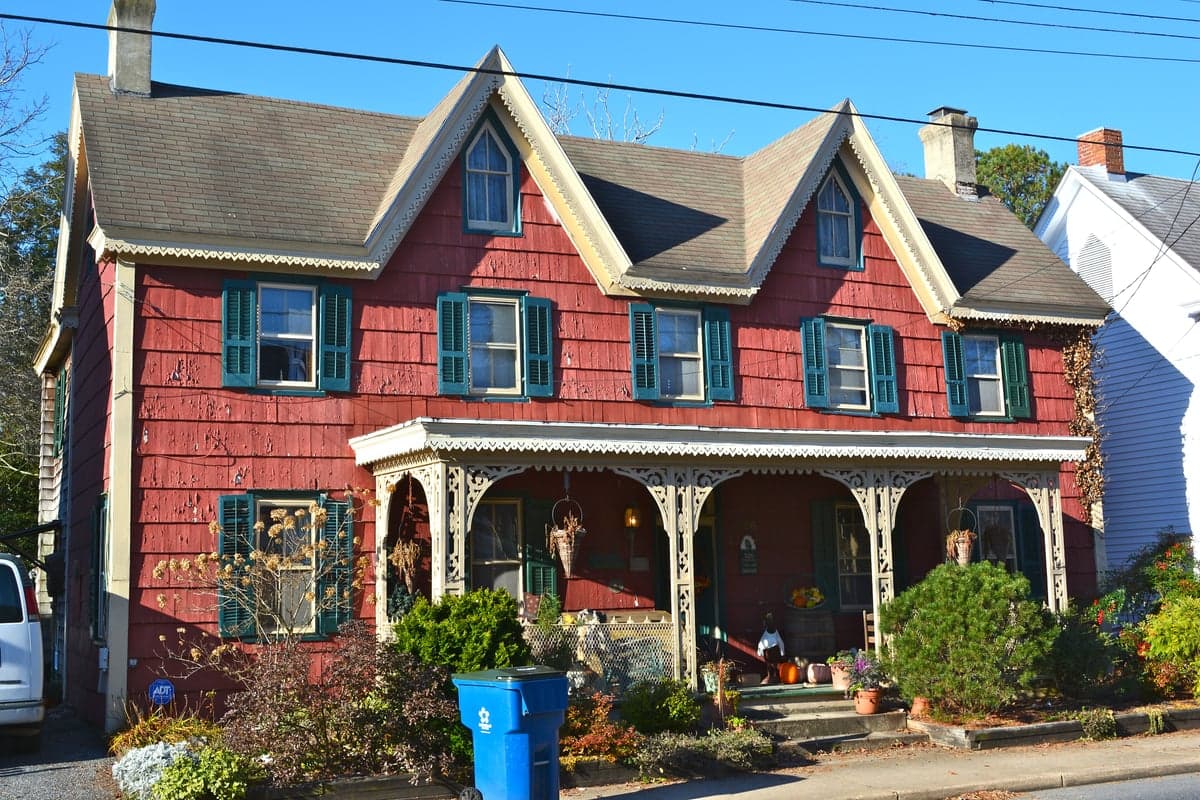
Milton was founded in 1807 as a port town on the Broadkill River, originally called "Head of the Broadkill" before being renamed after the English poet John Milton. The first wave of settlers were English and Scottish farmers and shipbuilders drawn by the region's fertile soil and navigable waterways. By the mid-19th century, the town became a center for shipbuilding and fruit canning, attracting a small but steady influx of German and Irish laborers. The historic Shipbuilder's District, centered along Union Street and Federal Street, still contains the modest frame homes built by these early craftsmen. A second wave arrived after the Civil War, when freed Black families established the Wharton's Hill neighborhood, a historically African American enclave near the town's eastern edge, where many descendants still reside today. The early 20th century saw little new immigration, as Milton's economy stagnated with the decline of the shipbuilding industry, keeping the population largely homogeneous and locally rooted.
Modern era (post-1965)
The post-1965 era brought no significant foreign-born influx to Milton, as the town remained off the main migration corridors. Instead, domestic in-migration from the Mid-Atlantic states—particularly Pennsylvania, New Jersey, and New York—began in the 1990s as retirees and second-home buyers discovered the lower cost of living and proximity to the Delaware beaches. These newcomers, overwhelmingly white and often college-educated, settled primarily in newer subdivisions on the town's periphery, such as Milton Crossing and Harbeson Estates, which feature larger single-family homes on cul-de-sacs. The Black population, which had been concentrated in Wharton's Hill and the West Milton area near the railroad tracks, declined slightly as younger families moved to more affordable areas in Georgetown or Millsboro. The Hispanic share grew from near zero in 1990 to 6.0% by 2024, driven largely by Mexican and Central American laborers working in the region's poultry processing plants and agricultural fields. These families have clustered in the Pine Street Corridor, a working-class area south of the historic downtown, where rental duplexes and mobile homes provide affordable entry points. The Asian population remains negligible at 0.5%, with no Indian subcontinent presence recorded, reflecting the town's limited professional job base and lack of ethnic infrastructure.
The future
Milton's population is projected to grow modestly, driven by continued domestic in-migration from the Northeast rather than international immigration. The Hispanic share is likely to rise slowly, possibly reaching 10-12% by 2040, as families already in the area sponsor relatives and as agricultural labor demand persists. However, the town is not expected to tribalize into distinct ethnic enclaves; instead, the Hispanic population is assimilating into existing neighborhoods like the Pine Street Corridor and Old Landing, a mixed-income area near the river. The Black population is plateauing, with younger generations moving to larger cities for employment, while the white population remains dominant but aging, as retirees continue to buy into Milton Crossing and newer developments like Cedar Creek Village. The foreign-born share will likely remain below 2%, as Milton lacks the job diversity and housing stock to attract significant international migration. The city is homogenizing in terms of nativity but slowly diversifying in ethnicity, creating a community that is still overwhelmingly native-born but gradually less monochrome.
For someone moving in now, Milton is becoming a stable, family-oriented town with a slowly diversifying population, dominated by native-born whites and a small but established Black and Hispanic minority. The lack of foreign-born residents means a culturally insular environment, but the growing Hispanic presence is adding modest linguistic and culinary diversity. The city's future is one of gradual, organic change—not rapid transformation—making it a predictable choice for those seeking a quiet, small-town life within commuting distance of the Delaware beaches and the broader Sussex County economy.

* Values derived from national, state, county, city and local statistics and may differ in a specific area. Last updated: 2026-04-30T02:13:23.000Z
Narrative content on this page is AI-generated and may contain mistakes. Verify any details that matter before acting on them.
ReloMaps may earn a commission from affiliate links at no extra cost to you.

