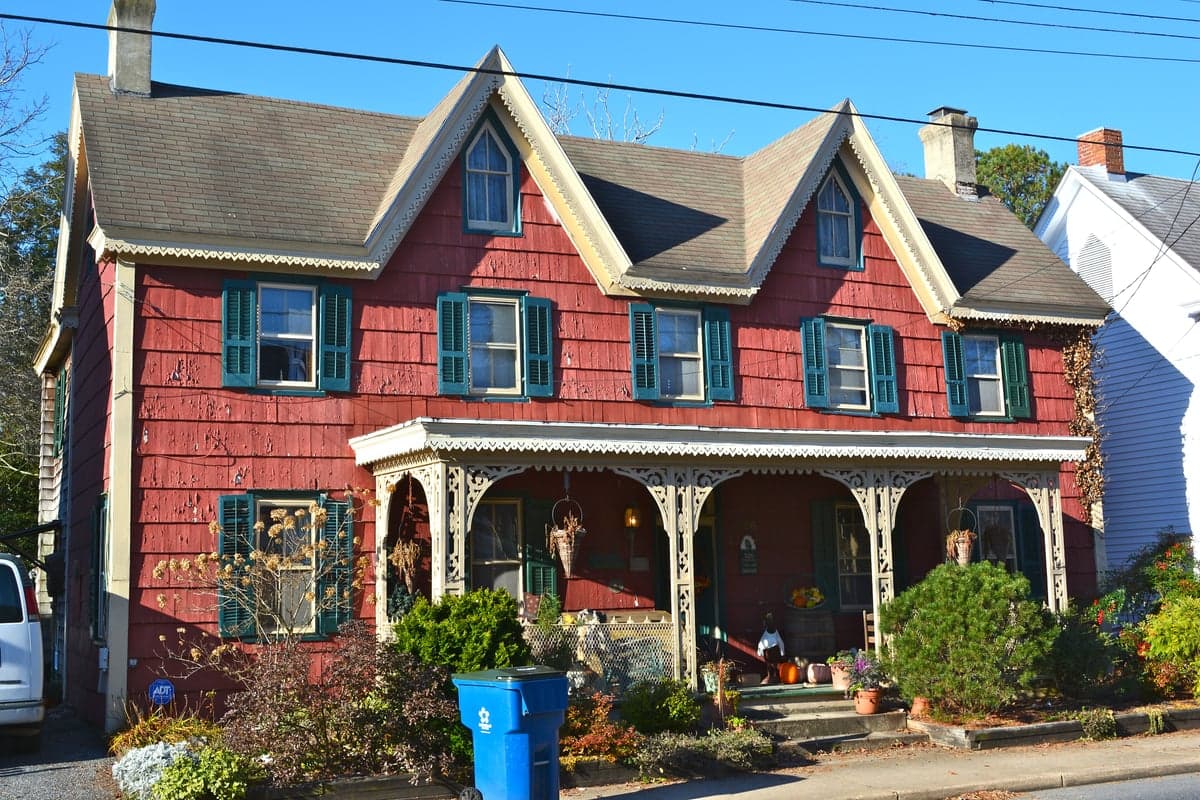
Photo: Wikipedia
Strategic Assessment of Milton, DE
Multiple tactical vulnerabilities. Population density, target proximity, or disaster risk are likely compounding. A retreat property and exit planning is required.
What does the Strategic Assessment tell us?
Our Strategic Assessment grades tactical survivability of an area. Major population centers, military targets, fallout zones, natural disasters, and border exposure all drive risk — lower exposure means a more defensible position in a crisis.
This is heavily inspired by Joel Skousen's Strategic Relocation book. Highly recommended you checkout the book ($)What does this tell us?
Our Strategic Assessment grades tactical survivability of an area. Major population centers, military targets, fallout zones, natural disasters, and border exposure all drive risk — lower exposure means a more defensible position in a crisis.
This is heavily inspired by Joel Skousen's Strategic Relocation book. Highly recommended you checkout the book ($)Strategic Pillars

Key Distances
Regional Safe Places
Below is our recommended "safe zones" in Delaware and the surrounding area based on our strategic heuristics. For most people, it's unrealistic to live in a “safe zone” full-time due to work, family or other personal reasons. They tend to be more rural. However, many of these areas are perfect for second homes and retreat properties that double as a vacation home or even a short-term rental.
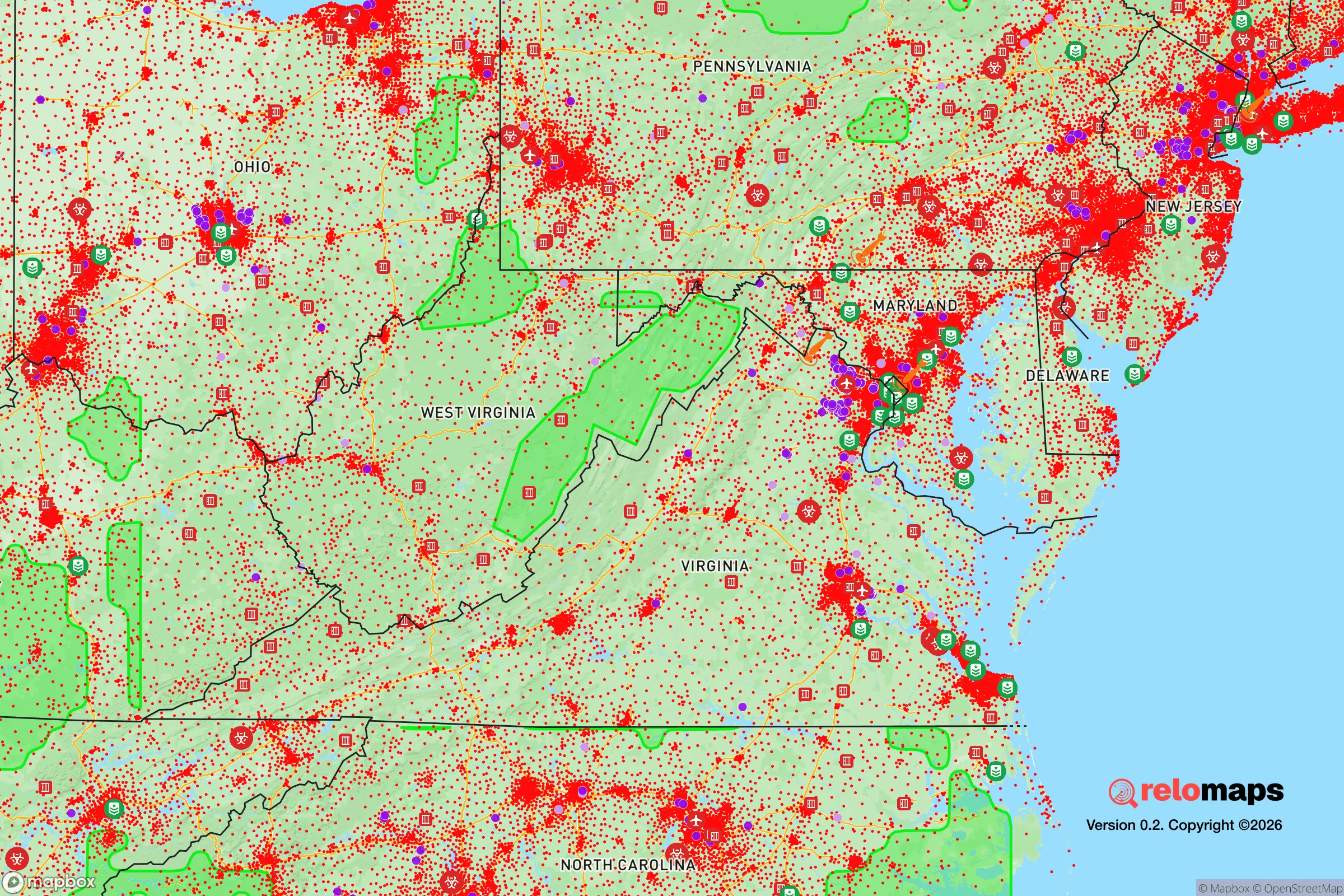
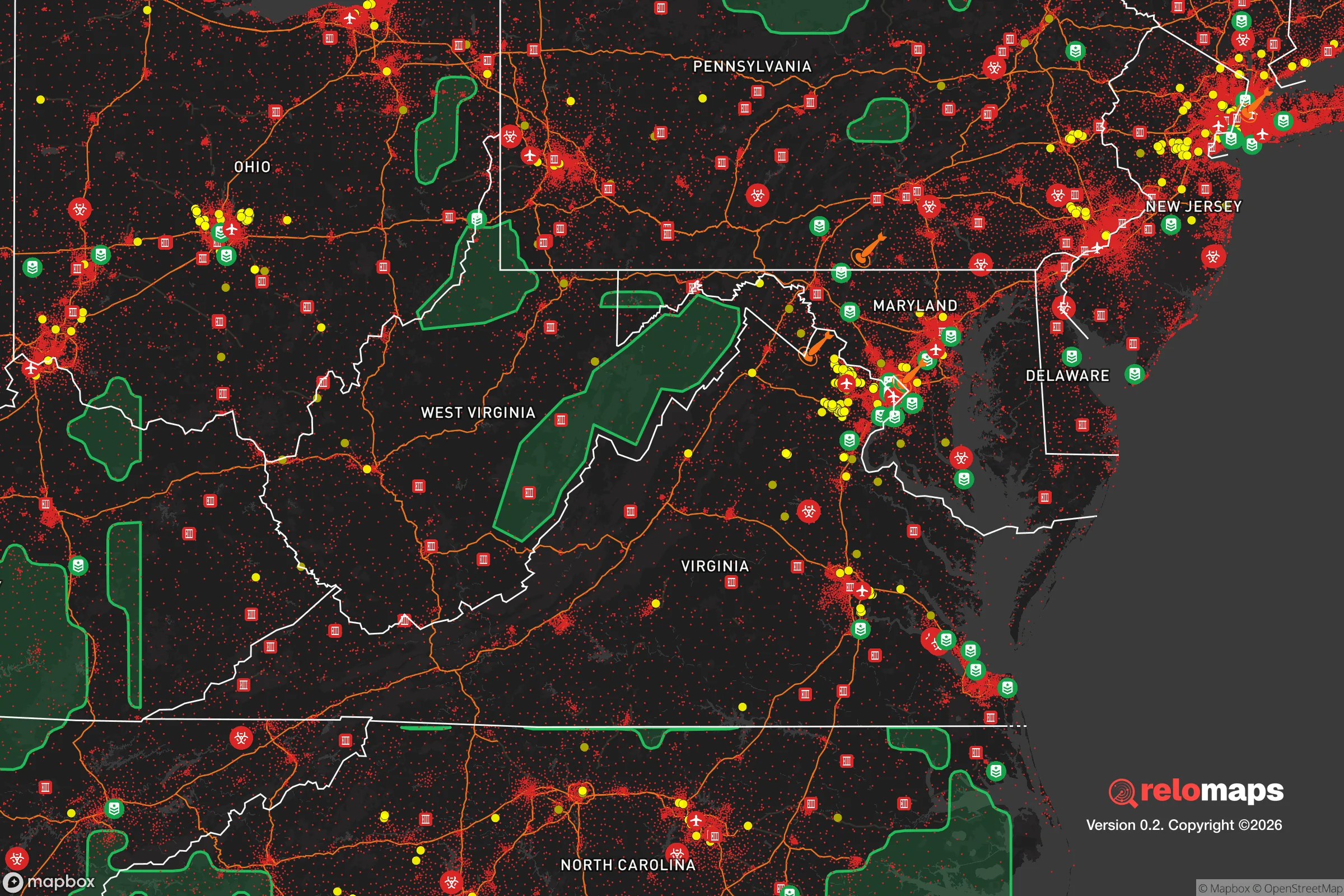


Important Note: For informational purposes only. This does not mean nothing bad ever happens in the green zones. Please use common sense. This is based on public data and modeled with AI. We tried to take a conservative approach but mistakes happen. We update this regularly as new information becomes available.
Solar Generator Recommendations
Backup power matters more here than in safer locations. We've picked three solar generators across budgets and capacity tiers — start with the budget unit if you only need a few essentials, or step up if you want to run a fridge and HVAC for days at a time.

Jackery Portable Power Station Explorer 300
Budget OptionPower on the Go: Weighing only 11 lbs, it's convenient to set up and store with book-sized foldable solar panels

BLUETTI Portable Power Station AC180
Designed for both indoor and outdoor scenarios, AC180 is highly capable as it has a robost capacity and continuous output power.

EF ECOFLOW DELTA Pro Ultra Power Station
Upgraded PickEcoFlow DELTA Pro Ultra is a whole-home energy system designed to grow with your family. Integrated with the Smart Home Panel 2, it scales to meet your evolving energy needs — keeping your home powered, intelligent, and secure through every stage of life.
We earn a commission, at no additional cost to you.
Strategic Assessment Analysis
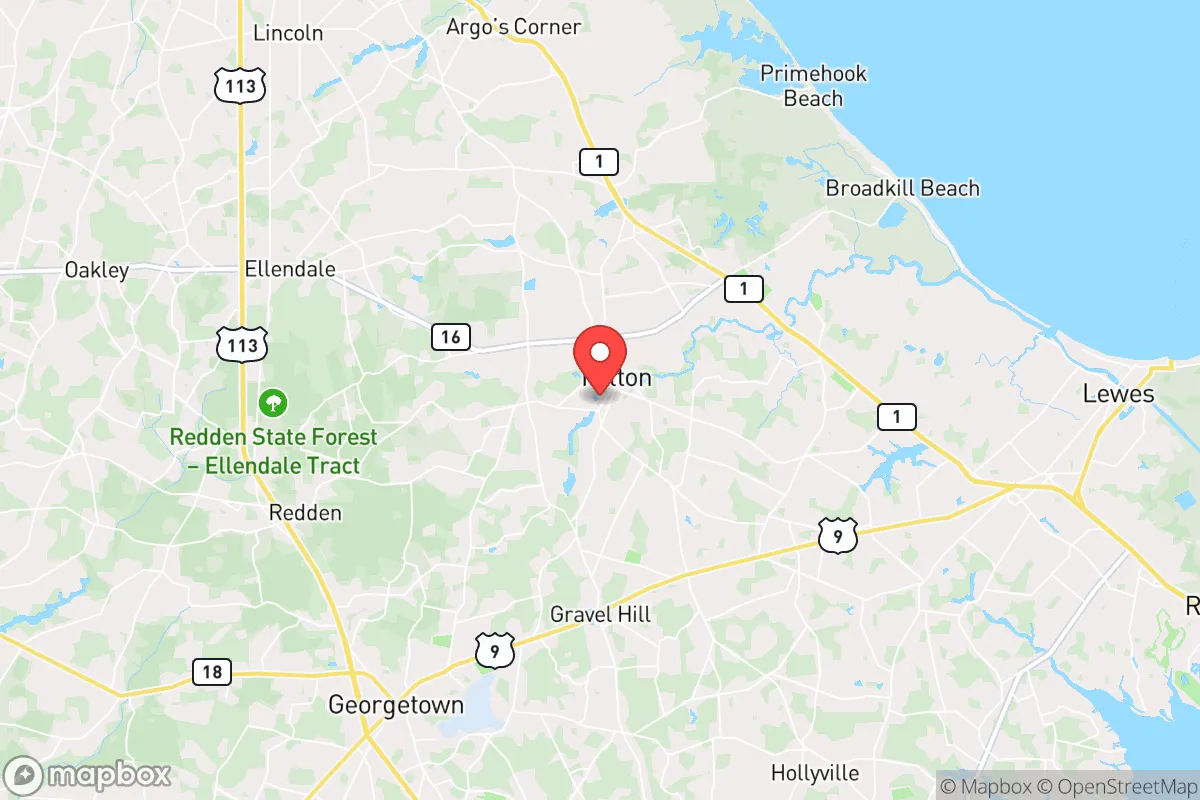
Milton, Delaware, offers a surprisingly resilient strategic position for those prioritizing long-term preparedness, sitting far enough from major metropolitan targets to avoid the worst fallout risks while remaining close enough to access critical resources when conditions allow. Located in Sussex County, this small town of roughly 3,500 residents benefits from the Delmarva Peninsula’s natural isolation—bounded by the Atlantic Ocean and Delaware Bay to the east and the Chesapeake Bay to the west—which inherently limits ingress and egress, a double-edged sword that can work in a relocator’s favor during widespread unrest. For a conservative-leaning individual or family assessing this area through a survivalist lens, Milton’s key advantage is its position as a quiet agricultural hub with a low population density, offering a buffer against the cascading failures that would likely engulf the I-95 corridor from Washington, D.C., to New York City.
Geographic position and natural advantages for long-term security
Milton’s location on the Delmarva Peninsula creates a natural choke point that can be leveraged for security. The peninsula is connected to the mainland only via a narrow isthmus near Newark, Delaware, and the Chesapeake & Delaware Canal—both of which could be monitored or controlled in a crisis. This geographic isolation means that Milton is roughly 90 miles from Philadelphia and 110 miles from Washington, D.C., placing it outside the immediate blast and fallout zones of a nuclear event targeting those cities, while still being within a day’s drive for resupply or evacuation if conditions stabilize. The area’s flat, fertile terrain supports small-scale agriculture, and the nearby Inland Bays (Indian River Bay, Rehoboth Bay, and Little Assawoman Bay) provide access to fishing and shellfish harvesting, a critical protein source if supply chains collapse. The local water table is generally high, and many properties have private wells, reducing dependence on municipal systems that could fail during grid-down scenarios. The temperate climate also means heating demands are moderate, and the growing season runs from April to October, allowing for substantial food production with minimal infrastructure.
Risks, exposures, and proximity to fallout-relevant landmarks
No location is without vulnerabilities, and Milton’s proximity to several high-value targets requires careful consideration. The most immediate risk is the Salem Nuclear Power Plant in New Jersey, approximately 50 miles north—a potential target for sabotage or accident that could release radioactive material into prevailing winds, which typically blow from the southwest in summer and northwest in winter. A plume from Salem could reach Milton within 4-6 hours, so a potassium iodide stockpile and a sealed safe room are non-negotiable for any prepper here. Additionally, the Dover Air Force Base, about 30 miles north, is a major logistics hub for the U.S. military and a likely target in a conflict, potentially drawing conventional or asymmetric attacks. The nearby beaches—Rehoboth, Dewey, and Bethany—are seasonal population magnets, swelling from 50,000 year-round residents to over 300,000 in summer, creating a massive transient population that could become a liability during an evacuation or civil unrest. Milton itself sits on the edge of this tourist zone, so a relocator must plan for the possibility of coastal refugees fleeing inland, potentially overwhelming local resources. The town’s main road, Route 16, connects to Route 1, the primary coastal artery, which would become a parking lot in a crisis—meaning any prepper should have alternate routes mapped via backroads like Cave Neck Road or Beaver Dam Road.
Practical resilience for a relocator: food, water, energy, and defensibility
For a family or individual serious about self-sufficiency, Milton’s practical resilience hinges on several factors that can be addressed with planning. Water is the most critical resource, and while the water table is high, well water in Sussex County can contain high levels of iron, sulfur, or nitrates from agricultural runoff, so a robust filtration system (e.g., a Berkey with fluoride and heavy metal filters) is essential. Rainwater collection is viable, with an average annual rainfall of 45 inches, but a 1,000-gallon cistern should be paired with a first-flush diverter to keep roof debris out. For food, the surrounding farmland produces corn, soybeans, and poultry—Perdue and Mountaire have processing plants within 20 miles—but a prepper should establish a home garden with heirloom seeds (corn, beans, squash, and leafy greens) and consider raising chickens or rabbits, which are legal within town limits with proper permits. The local soil is sandy loam, requiring compost amendment, but raised beds can overcome this. Energy resilience is achievable: solar panels are common in the area, and net metering is available through Delmarva Power, but a grid-down scenario demands battery storage (e.g., a Tesla Powerwall or DIY lithium setup) and a backup generator for winter heating, as natural gas lines are not universal. Defensibility is moderate: Milton’s layout is a traditional small town with a central square and residential streets, but most homes sit on quarter-acre lots with open sightlines, making perimeter security straightforward with fencing and motion-sensor lighting. The local police force is small (around 12 officers), so in a prolonged crisis, residents would need to rely on mutual aid networks—the Sussex County Amateur Radio Emergency Service (ARES) is active and can provide communication if cell towers go down. The biggest practical challenge is the lack of a local hospital; the nearest emergency room is Beebe Healthcare in Lewes, 10 miles away, which could be overwhelmed in a mass casualty event, so a trauma kit and advanced first-aid training are mandatory.
The overall strategic picture for Milton is one of cautious optimism for the prepared relocator. It is not a hardened bunker location—it lacks the mountainous terrain or deep rural isolation of, say, West Virginia or Montana—but it offers a balanced mix of natural resources, geographic isolation, and proximity to coastal food sources that can sustain a family through moderate disruptions. The key is to treat Milton as a base of operations rather than a fortress: stockpile for 6-12 months of self-sufficiency, build relationships with neighbors who share a preparedness mindset, and maintain a low profile to avoid drawing attention during a crisis. The area’s conservative lean (Sussex County voted +15 for Trump in 2020) aligns with a culture of self-reliance and community support, but the influx of out-of-state retirees and second-home owners means not everyone will be prepared—so a relocator should vet their immediate neighbors early. For those willing to invest in water filtration, solar power, and a defensible property, Milton provides a viable fallback position that is close enough to the Eastern Seaboard’s resources to be useful, yet far enough from its targets to be survivable. The real test will come when the tourists flee and the power goes out—and that’s when Milton’s quiet resilience will either shine or fail, depending entirely on how well you’ve prepared.

* Values derived from national, state, county, city and local statistics and may differ in a specific area. Last updated: 2026-04-30T02:13:23.000Z
Narrative content on this page is AI-generated and may contain mistakes. Verify any details that matter before acting on them.
ReloMaps may earn a commission from affiliate links at no extra cost to you.

