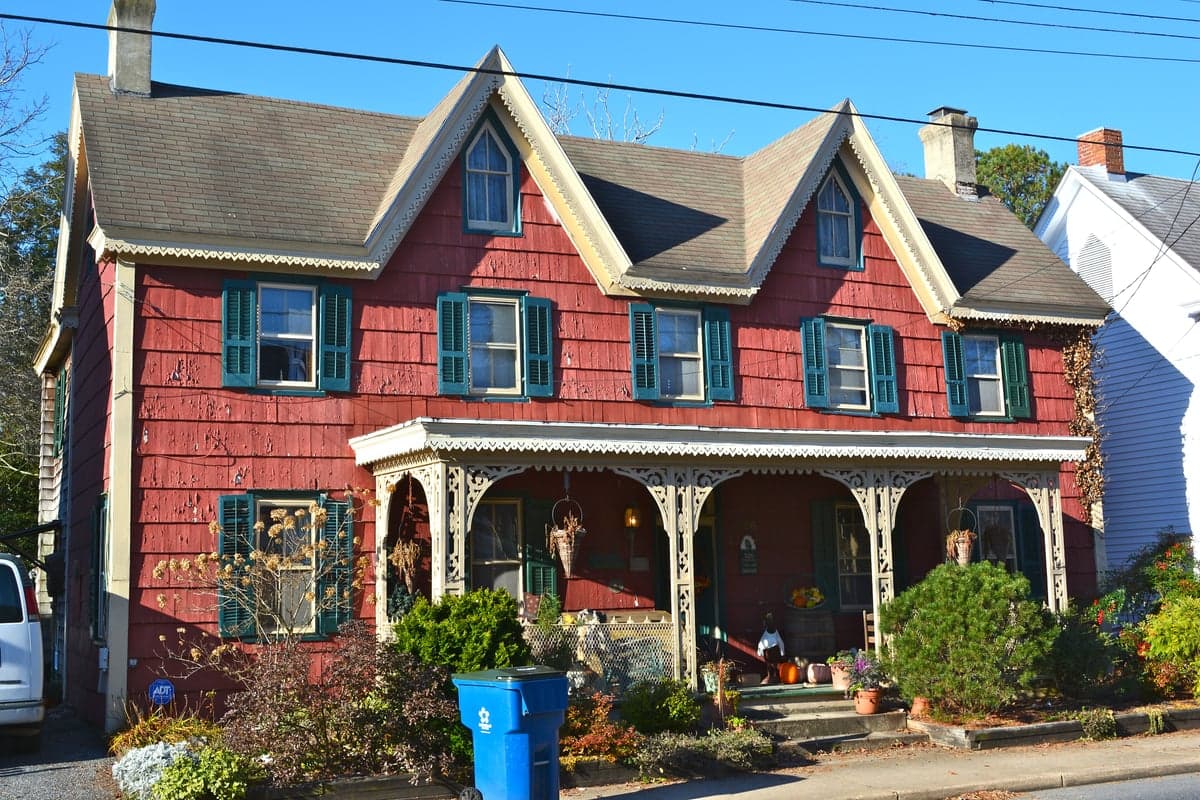
Photo: Wikipedia
Political ClimatePolitical Climate in Milton, DE
District shown is the primary district for this city’s centroid. Cities may span multiple districts.
Inherited from parent state — no local data available.
Local Political AnalysisPolitical Analysis of Milton, DE
Milton, Delaware, has a Cook PVI of D+8, meaning it leans significantly more Democratic than the nation as a whole, and that shift has been accelerating. If you’d asked me ten years ago, this was a quiet, conservative-leaning town where folks mostly kept to themselves and let you live your life. Now, the political climate feels like it’s been imported straight from New Castle County, with progressive policies and a growing government presence that would have been unthinkable here just a few years back. The trajectory is clear: more regulation, higher taxes, and a steady erosion of the personal freedoms that made this area attractive in the first place.
How it compares
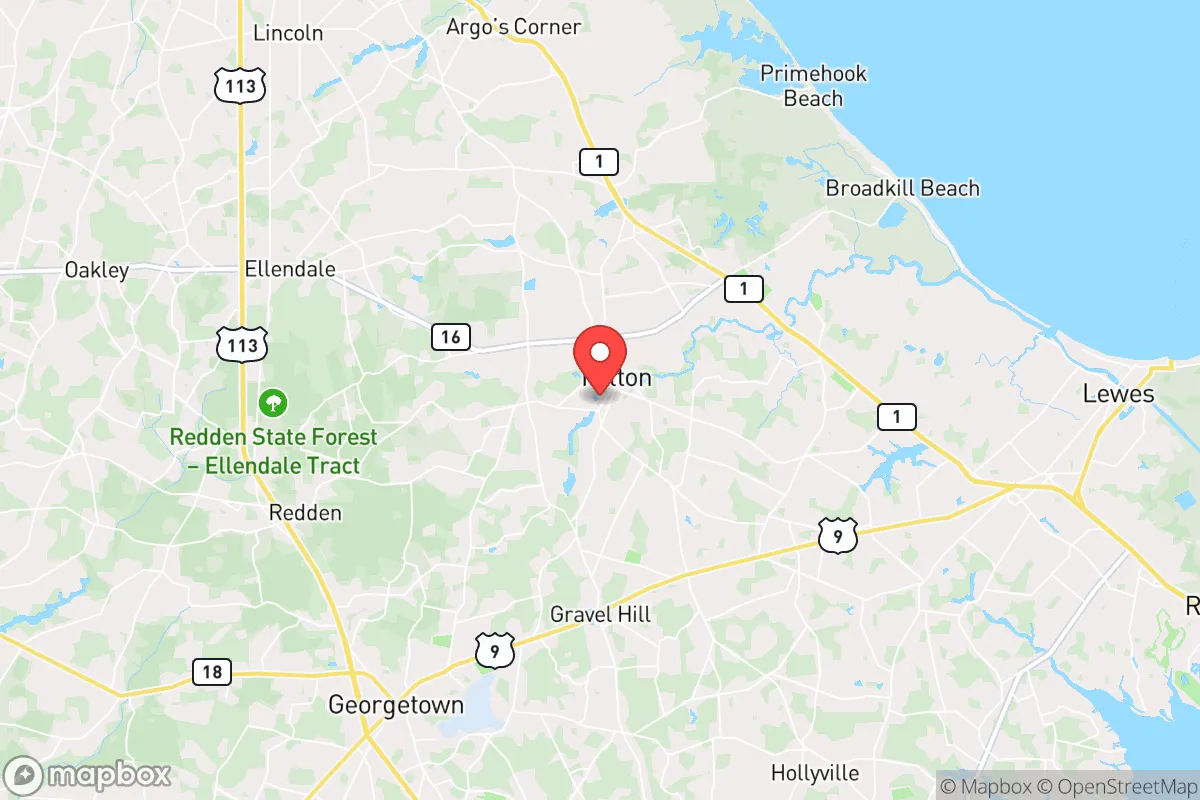
Drive ten minutes west to Georgetown, and you’ll find a place that still feels like the old Milton—solidly conservative, with a county government that’s skeptical of state-level overreach. Head east toward Lewes or Rehoboth Beach, and you’ll see the same progressive wave that’s washing over Milton, only more intense. The contrast is stark: in Georgetown, you can still have a conversation about property rights without someone lecturing you about “equity.” In Milton, the town council has been pushing zoning changes and affordable housing mandates that feel like they’re designed to centralize control, not solve real problems. The surrounding Sussex County is still a red island in a blue state, but Milton is increasingly becoming an outlier within that island—a place where the local government seems eager to adopt policies that restrict what you can do with your own land and your own money.
What this means for residents
For a long-time resident, the biggest red flag is how quickly the culture has changed. It used to be that if you wanted to build a shed or run a small business from your home, you just did it. Now, you’re looking at permit fees, inspections, and public hearings where activists argue that your property rights should take a back seat to “community goals.” The school board has also shifted, with curriculum changes that prioritize social-emotional learning over academics—something that would have been laughed out of the room a decade ago. Property taxes are creeping up, and there’s talk of a local income tax to fund programs that many of us never asked for. If you value being left alone to make your own choices, Milton is becoming a harder place to call home.
What the future looks like
Looking ahead, I don’t see this trend reversing unless there’s a serious pushback at the ballot box. The newcomers driving this change are often retirees from blue states who bring their political habits with them—they want the government to solve every little problem, and they don’t see the irony in moving to Delaware for lower taxes only to vote for higher ones. The long-term risk is that Milton loses its character entirely, becoming just another bedroom community for Dover or Wilmington, with all the bureaucracy and none of the independence. If you’re considering a move here, I’d recommend looking at the county level first—Georgetown or even Millsboro might give you more breathing room. Milton still has good people, but the political winds are blowing in a direction that should give any freedom-minded person pause.

State Political ClimatePolitical Climate in Delaware
State Political AnalysisPolitical Environment in the State
Delaware has long been a blue state in presidential elections, but its political climate is far more nuanced than the statewide vote suggests. The northernmost county, New Castle, home to Wilmington and the corporate suburbs, reliably delivers massive Democratic margins, while the more rural Kent and Sussex counties lean increasingly Republican. Over the last 10-20 years, the state has shifted leftward on social and cultural issues, driven by in-migration from the Northeast and a powerful corporate influence, but a growing conservative counter-movement is visible in the southern half of the state.
Urban vs. rural divide
The political map of Delaware is a tale of three counties. New Castle County, anchored by Wilmington and its sprawling suburbs like Newark and Hockessin, is the Democratic engine. This area votes 60-70% Democratic in statewide races, powered by a mix of corporate professionals, university faculty from the University of Delaware, and a significant African American population in Wilmington. In contrast, Kent County (home to Dover) and Sussex County (home to Georgetown, Lewes, and Rehoboth Beach) are the Republican strongholds. Sussex, in particular, has seen explosive growth from retirees and families fleeing higher-tax states like New Jersey and New York, and it now votes 55-60% Republican. The divide is stark: a drive from the liberal, walkable streets of Newark to the conservative, agricultural landscape of Georgetown feels like crossing into a different state entirely.
Policy environment
Delaware’s policy environment is a mixed bag for a conservative. On the plus side, the state has no sales tax, which is a major draw for families and retirees. Property taxes are also relatively low compared to neighboring states like Maryland and Pennsylvania. However, the state income tax is progressive, with a top rate of 6.6%, and the corporate tax structure is heavily tilted toward the massive financial services sector (credit card banks, insurance) that dominates Wilmington. Education policy is a flashpoint: the state has a strong teachers’ union and has resisted school choice expansion, though charter schools exist in limited numbers. Healthcare is heavily regulated, with a state-based exchange under the ACA. Election laws are among the most permissive in the country—no-excuse absentee voting, same-day registration, and early voting are all in place, which conservatives view as a risk to election integrity. The state also has a strict gun control regime, including a 2022 law banning the sale of assault-style weapons and high-capacity magazines, which was a major point of contention.
Trajectory & freedom
Over the past five years, Delaware has moved decisively toward more government control in several key areas. The 2022 assault weapons ban and the 2023 “red flag” law (allowing courts to temporarily confiscate firearms from individuals deemed a threat) are seen by conservatives as a direct infringement on Second Amendment rights. On parental rights, the state has moved in the opposite direction of places like Florida: in 2021, it passed a law requiring schools to adopt LGBTQ-inclusive curricula, and there is no state-level parental notification requirement for a minor’s abortion. Medical autonomy took a hit with the 2023 law requiring all healthcare workers to receive COVID-19 and flu vaccines, a mandate that sparked protests. On the economic freedom front, the state’s heavy reliance on corporate franchise taxes (over 20% of state revenue) means the legislature is often more responsive to corporate lobbyists than to individual citizens. The overall trajectory is toward a more regulatory, top-down governance model, particularly in New Castle County.
Civil unrest & political movements
Delaware is not a hotbed of civil unrest, but there have been visible flashpoints. The 2020 Black Lives Matter protests in Wilmington and Dover were large and occasionally violent, leading to curfews and property damage. The 2021-2022 school board meetings in Sussex County (especially in Millsboro and Georgetown) became battlegrounds over critical race theory and mask mandates, with conservative parents organizing through groups like the Delaware Parents Association. The 2023 gun control laws prompted a massive rally at the state capitol in Dover, with thousands of gun rights activists from across the state. Immigration politics are less heated here than in border states, but the presence of a sanctuary policy in New Castle County (which limits cooperation with ICE) is a recurring grievance for conservatives in the southern counties. The 2020 election saw no major fraud allegations, but the state’s heavy use of mail-in ballots and same-day registration remains a point of distrust for many on the right.
Projection
Looking ahead 5-10 years, the trend is clear: Delaware will continue to become more progressive on social and cultural issues, driven by the growth of New Castle County and the influx of out-of-state professionals. The southern counties (Kent and Sussex) will remain Republican, but their growth is slower and they lack the population to flip the state legislature or the governor’s office. The state’s reliance on corporate tax revenue means that business-friendly policies will likely persist, but individual freedoms—especially gun rights, school choice, and medical autonomy—will face continued pressure. A new resident moving to Sussex County (e.g., Lewes or Milton) will find a conservative community with low taxes and a slower pace of life, but they will be governed by a state government in Dover that is increasingly out of step with their values. In a decade, expect a more polarized state, with the rural-urban divide deepening and the state’s political center of gravity shifting further north.
For a conservative individual or family considering a move, the bottom line is this: Delaware offers a low-tax, low-regulation environment in its southern half, but you will be living under a state government that is actively hostile to many of your core values. If you prioritize low property taxes and a quiet, rural lifestyle, Sussex County is a solid choice. But if you value gun rights, school choice, and limited government, you will find yourself fighting an uphill battle against a legislature that is firmly controlled by progressive interests. The state is not a lost cause, but it is a place where you will need to be politically engaged to protect your freedoms.
* Values derived from national, state, county, city and local statistics and may differ in a specific area. Last updated: 2026-04-30T02:13:23.000Z
Narrative content on this page is AI-generated and may contain mistakes. Verify any details that matter before acting on them.
ReloMaps may earn a commission from affiliate links at no extra cost to you.

