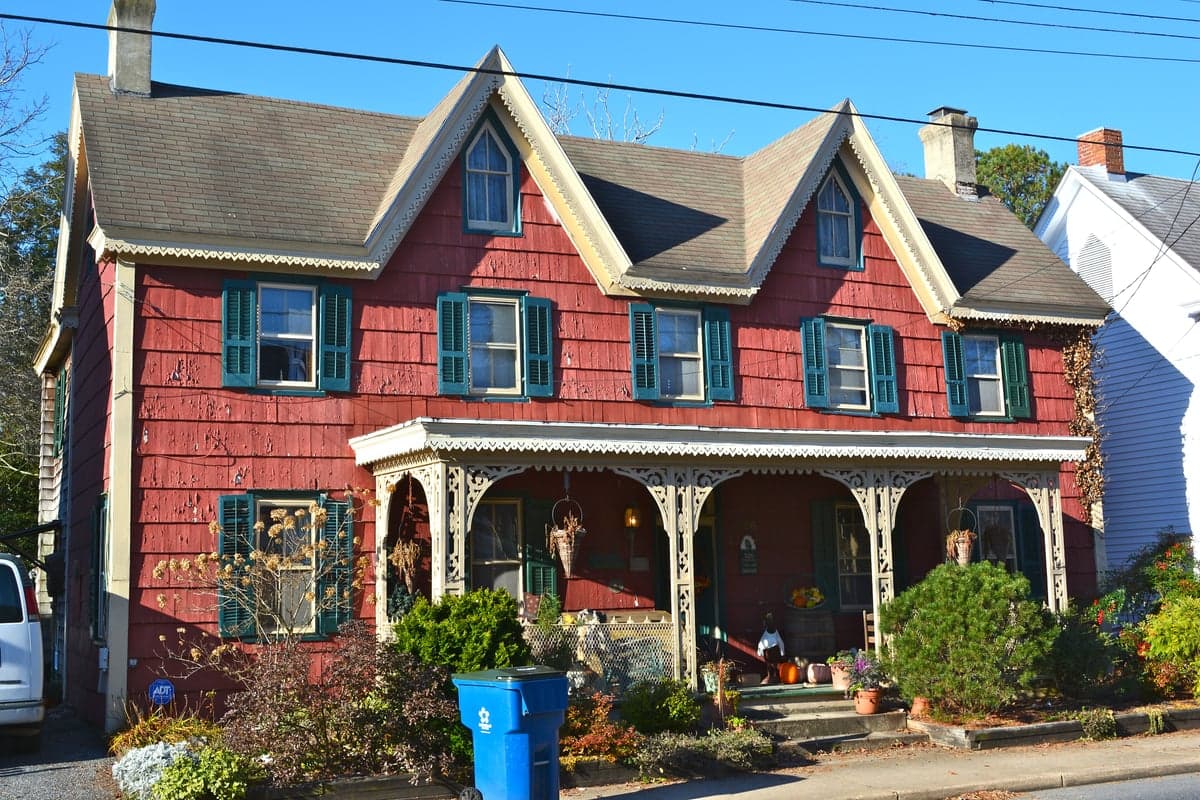
Photo: Wikipedia
Personal Sovereignty in Milton, DE
Viable for self-reliance. Generally workable, though some barriers may limit total independence.
What does Personal Sovereignty tell us?
Personal Sovereignty measures your capacity for self-reliance and independence with minimal government friction. Higher scores mean fewer barriers between you and the way you want to live... but it assumes you have the space you need and good neighbors.
What does this tell us?
Personal Sovereignty measures your capacity for self-reliance and independence with minimal government friction. Higher scores mean fewer barriers between you and the way you want to live... but it assumes you have the space you need and good neighbors.
State Policy
Energy independence: Importer (2% of energy produced in-state)
Personal Liberty
Homesteading

Personal Liberty Analysis
Milton, Delaware, offers a mixed bag for those prioritizing personal sovereignty, with the state’s overall regulatory environment creating both opportunities and constraints for individuals and families seeking maximum autonomy. While Delaware lacks a state-level income tax on wages—a significant plus for financial independence—its heavy reliance on property and business taxes, coupled with a relatively active state government, means that true self-determination requires careful navigation of local and state codes. For conservative-leaning preppers and survivalists, Milton’s small-town character and rural outskirts provide a foundation for self-reliance, but the state’s gun laws, zoning restrictions, and medical autonomy policies demand a clear-eyed assessment before committing to the area.
Tax burden and regulatory posture in Milton and Sussex County
Delaware’s tax structure is a double-edged sword for sovereignty-minded residents. The absence of a state sales tax and no tax on earned wages (though investment income is taxed) keeps more money in your pocket for supplies, land, and gear. However, property taxes in Sussex County, while lower than in northern Delaware, are not negligible—expect around 0.55% of assessed value annually, which can add up on larger homesteads. The state’s corporate-friendly reputation means business licensing is straightforward, but individual property owners face a thicket of county-level regulations. Sussex County enforces a minimum lot size of one acre for new subdivisions in agricultural zones, which is workable for homesteading, but any off-grid systems—like solar arrays, rainwater collection, or composting toilets—must comply with state plumbing and electrical codes that can be costly and time-consuming to navigate. The Delaware Department of Natural Resources and Environmental Control (DNREC) has broad authority over land use, particularly near wetlands and waterways, which cover much of the Milton area. For a prepper, this means that building a fully self-sufficient compound may require permits and inspections that erode the very autonomy you’re seeking. The regulatory posture is not hostile, but it is bureaucratic—expect to file forms and pay fees for anything beyond basic gardening.
Self-defense and gun law specifics in Delaware
Delaware’s gun laws are a significant concern for those prioritizing the right to self-defense. The state requires a permit to purchase a handgun, which involves a background check, fingerprinting, and a 10-day waiting period—a clear infringement on immediate access to defensive tools. Open carry is legal without a permit, but concealed carry requires a permit, which is issued on a “shall-issue” basis after a training course and background check. Magazine capacity is restricted to 17 rounds for handguns and 15 for long guns, limiting your options for defensive firearms. More troubling for preppers: Delaware has a “red flag” law (Extreme Risk Protection Order) that allows law enforcement or family members to petition a court to temporarily seize firearms based on vague claims of “dangerousness,” with no criminal conviction required. This law, combined with the state’s universal background check requirement for all firearm sales (including private transfers), creates a paper trail that could be used against gun owners in a future political climate. On the positive side, Delaware is a “castle doctrine” state with no duty to retreat in your home or vehicle, and self-defense immunity is strong if you’re not the initial aggressor. For a survivalist, the takeaway is clear: you can legally defend your property, but the state’s gun control infrastructure makes stockpiling and discreet ownership more complicated than in freer states like Texas or New Hampshire.
Self-reliance and homesteading viability in Milton
Milton’s rural character offers genuine potential for self-reliance, but zoning and environmental regulations impose limits. The town itself is a historic small town with a mix of residential lots (often under a quarter-acre), while the surrounding unincorporated areas of Sussex County feature larger parcels—many between 1 and 5 acres—that are zoned AR-1 (Agricultural Residential). These AR-1 zones allow for livestock, gardens, and outbuildings, but you’ll need at least one acre for a single-family home with a well and septic system. Off-grid living is technically feasible but practically challenging: Delaware requires connection to the electrical grid for new construction unless you can demonstrate a fully self-sufficient renewable energy system that meets state codes, which is expensive and subject to DNREC approval. Rainwater collection is legal but limited to 2,500 gallons of storage without a permit, and any system used for potable water must meet strict health standards. Composting toilets are allowed only if connected to an approved septic system for graywater—a bureaucratic hurdle that makes true off-grid independence difficult. The growing season is long (about 200 days), and the soil is sandy loam, good for vegetables and fruit trees, but deer and pests are abundant. For a prepper, Milton’s outskirts are viable for a semi-self-sufficient lifestyle—think large garden, chickens, and solar backup—but full autonomy from utilities and government oversight is not realistic without significant legal and financial investment.
Personal liberties: parental rights, medical autonomy, speech, and property
On parental rights, Delaware is a mixed jurisdiction. The state has mandatory vaccination requirements for school attendance (with medical and religious exemptions available, though religious exemptions have been under legal challenge), and parents face a strong child protective services system that can investigate based on anonymous reports. Homeschooling is legal but requires annual notification to the Department of Education and submission of a curriculum plan—a level of oversight that some sovereignty-minded families find intrusive. Medical autonomy is limited: Delaware has no right-to-try law for terminally ill patients, and the state’s health code gives broad authority to public health officials during emergencies, as seen during the COVID-19 pandemic when mask and vaccine mandates were enforced. Freedom of speech is protected under the First Amendment, but Delaware has a hate crimes statute that can enhance penalties for speech deemed to incite violence—a potential chill for controversial political expression. Property rights are generally strong, with no statewide rent control and relatively straightforward eviction processes for landlords, but the state’s environmental regulations (especially around wetlands and coastal zones) can restrict what you do with your land. The Sussex County government is more conservative than the state as a whole, but it still enforces building codes and setback requirements that limit your ability to build fortifications or bunkers without permits. For a prepper, the key liberty concern is the state’s emergency powers: Delaware’s governor has broad authority to declare a state of emergency and impose restrictions on movement, commerce, and assembly, which could directly impact your ability to bug in or bug out during a crisis.
Overall, Milton offers a moderate level of personal sovereignty compared to other areas in the Mid-Atlantic, but it falls short of the autonomy found in states like Idaho, Montana, or even rural Virginia. The tax advantages (no wage tax, low sales tax) are real, and the rural zoning allows for a degree of self-sufficiency, but Delaware’s gun control, regulatory oversight, and emergency powers create a ceiling on how independent you can truly be. For a conservative-leaning individual or family willing to work within the system—filing permits, paying fees, and staying under the radar—Milton can be a functional base for a prepared lifestyle. But for those seeking maximum freedom from government intrusion, the First State is a compromise, not a sanctuary. The best strategy here is to buy land with good water access, invest in solar and battery backup, and keep a low profile while building your capabilities. Just know that the state’s long arm can reach further than you might like, especially in a crisis.

* Values derived from national, state, county, city and local statistics and may differ in a specific area. Last updated: 2026-04-30T02:13:23.000Z
Narrative content on this page is AI-generated and may contain mistakes. Verify any details that matter before acting on them.
ReloMaps may earn a commission from affiliate links at no extra cost to you.

