 Popular
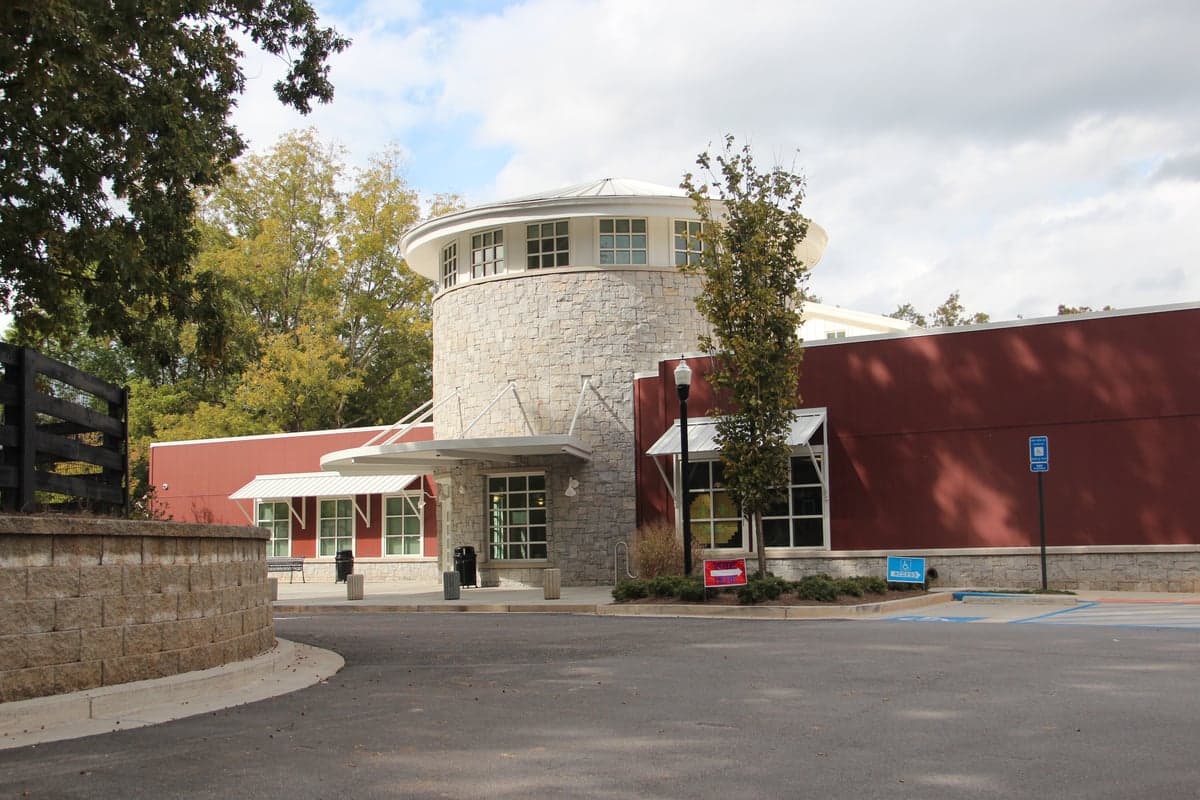
Photo: Wikipedia
Quality of Life in Milton, GA
A high quality of life with strong walkability, manageable living costs, healthy neighborhood signals, and solid amenity access.
What does Quality of Life tell us?
Quality of Life blends cost of living, nearby amenities, socioeconomic signals, and neighborhood character. City-level scores represent the whole municipality; individual neighborhoods can differ.
What does this tell us?
Quality of Life blends cost of living, nearby amenities, socioeconomic signals, and neighborhood character. City-level scores represent the whole municipality; individual neighborhoods can differ.
Cost of Living
97% above national average
The Real Cost of Living in Milton, GA for 2026
| Tier | Individual | Family (4) |
|---|---|---|
| Survival | $30k | $56k |
| Comfortable | $138k | $203k |
| Luxury | $273k+ | $423k+ |
| Elite (Top 5%) | $370k+ | $573k+ |
74%
The Area Signal
A metric tracking the socioeconomic signals of the area.
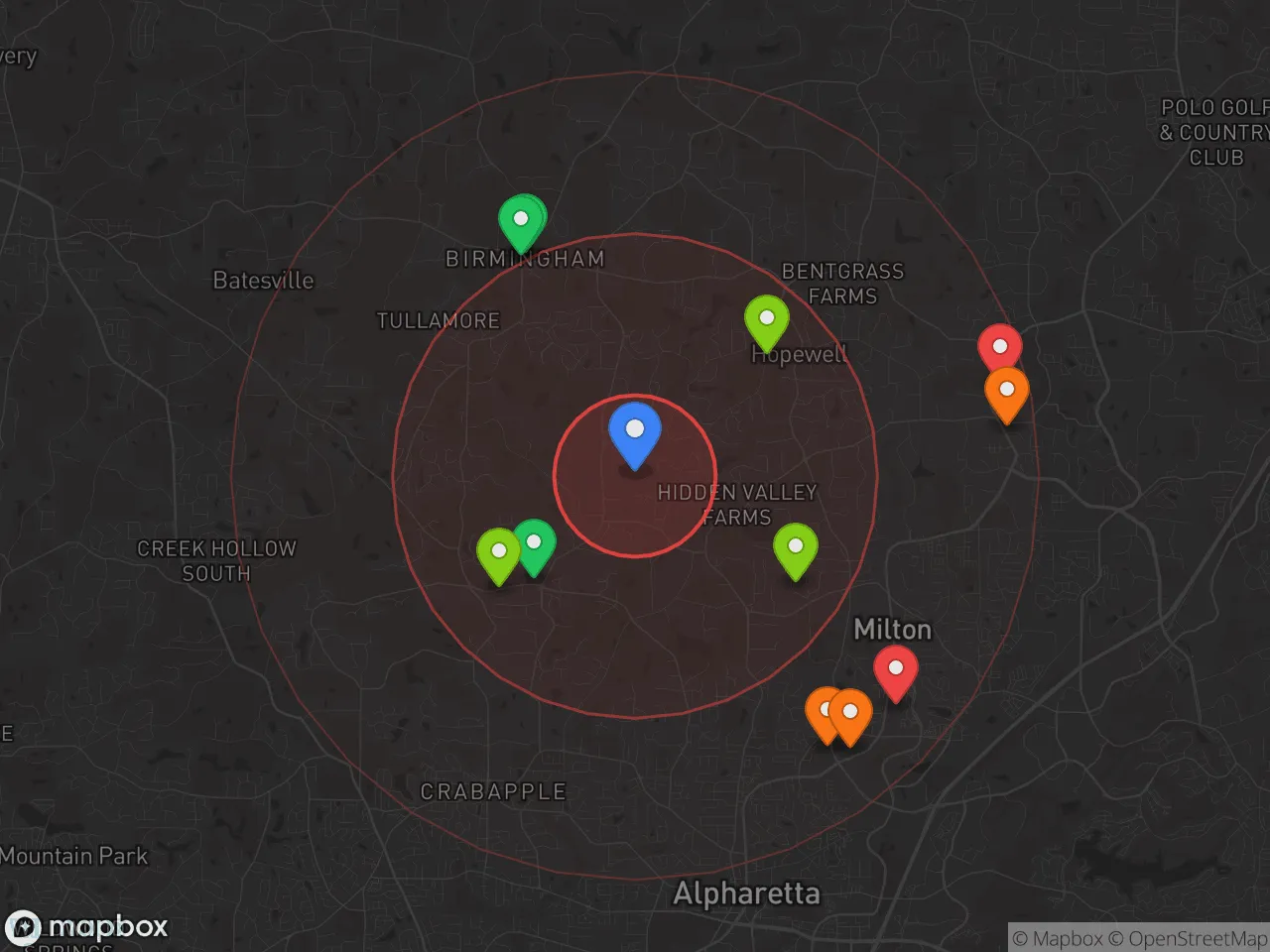
Hobbies
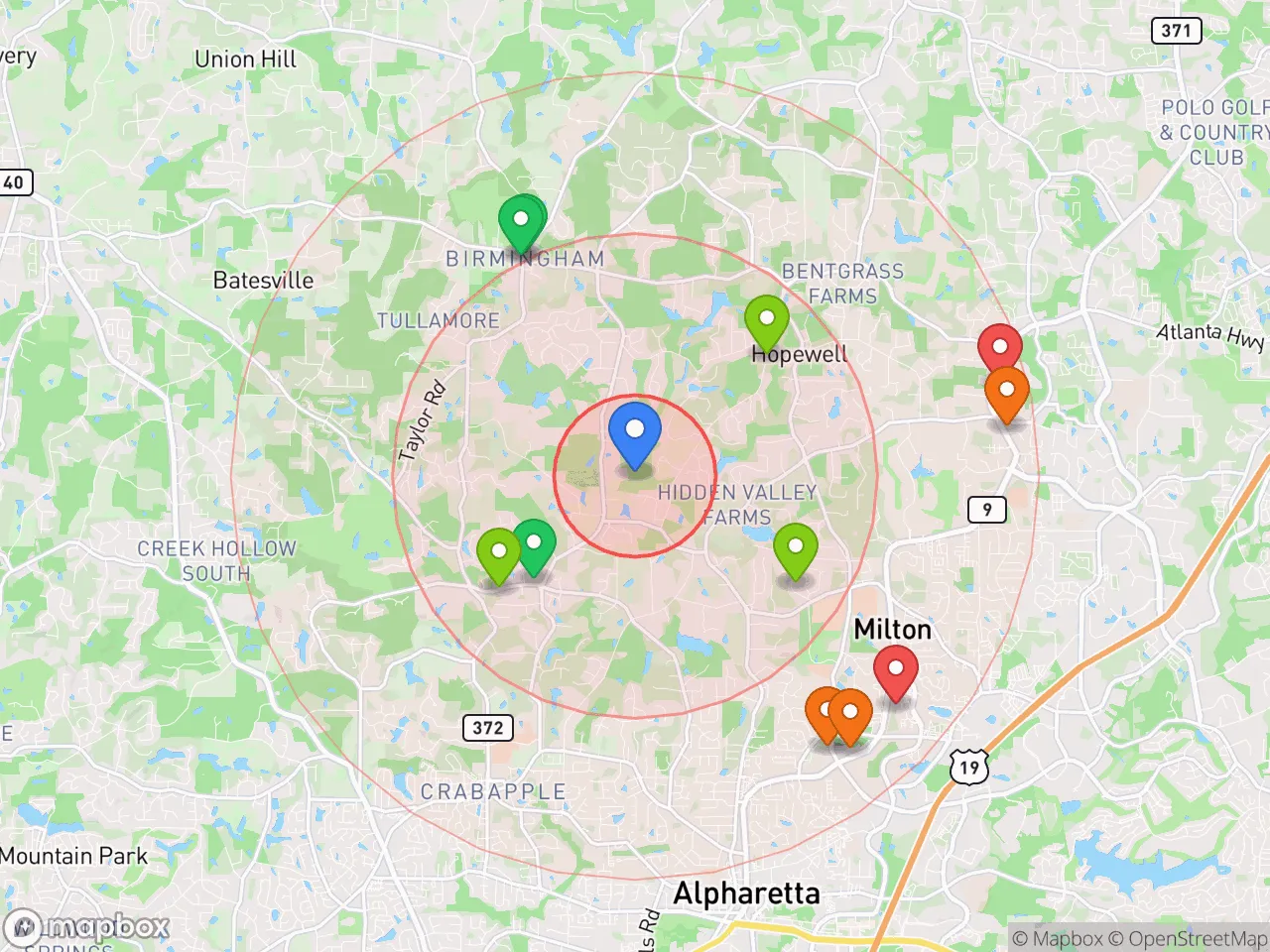
Explore the areaGroceries
6 within 10 miles
Gas
20 within 10 miles
Hospital
20 within 20 miles
Airport
ATL — Hartsfield–Jackson Atlanta International
Post Office
USPS — Milton, GA
Critical Amenities
Quality-of-Life Analysis
Milton, Georgia, is one of the most affluent communities in the Atlanta metropolitan area, with a cost of living index of 197—nearly double the U.S. average—reflecting a population of high-income professionals, executives, and families seeking large lots, top-tier schools, and a semi-rural atmosphere within commuting distance of the city. The city’s 41,000 residents are predominantly white-collar, with many working in finance, technology, and healthcare in Alpharetta, Sandy Springs, and downtown Atlanta. This is not a place for budget-conscious newcomers; it is a deliberate choice for those who prioritize space, privacy, and exclusivity over urban convenience or lower housing costs.
Cost of living, housing affordability, and how Milton compares to nearby cities
Milton’s cost of living index of 197 is driven overwhelmingly by housing: the median home value sits at $712,200, roughly 2.5 times the national median, while the median rent of $1,853 is more modest but still above the national average. Compared to neighboring Alpharetta (median home value ~$650,000) and Johns Creek (~$600,000), Milton commands a premium for its larger minimum lot sizes (typically 1 to 3 acres) and strict zoning that limits commercial development. The average commute of 28.5 minutes is slightly longer than the metro Atlanta average of 27 minutes, reflecting the trade-off of living farther from the core job centers in exchange for land. Property taxes in Fulton County are moderate for the region, but the lack of a state income tax on retirement income is a draw for older buyers. Renters face a tight market, with vacancy rates below 3%, making homeownership the default path for most newcomers.
Schools, amenities, and what daily life feels like in Milton
Daily life in Milton revolves around its highly rated public schools—Milton High School and Cambridge High School both rank in Georgia’s top 20—and a calendar packed with community events like the Milton Music Fest and the annual July 4th parade. The city’s 7,000 acres of green space include Birmingham Park and the Milton City Park and Preserve, offering hiking, equestrian trails, and youth sports leagues that dominate weekend schedules. Retail and dining are concentrated along Ga-400 at the Avalon and Halcyon mixed-use developments in nearby Alpharetta, as Milton itself restricts commercial zoning to preserve its rural character. Residents rely heavily on cars; there is no MARTA rail service, and the only public transit is a limited ride-share program for seniors. The pace is slower than intown neighborhoods like Virginia-Highland, but the trade-off is a strong sense of community and low crime—Milton’s violent crime rate is 75% below the national average.
Milton is best suited for families with school-aged children, empty nesters downsizing from larger estates, and remote workers who can afford the housing premium and value land and quiet over walkability. Singles and young professionals without children may find the social scene limited and the commute to Midtown or Buckhead draining. The city’s strict zoning and slow-growth ethos mean that newcomers should expect a stable, predictable environment—but also limited rental options and few entry-level homes. For those who fit the demographic profile, Milton offers one of the highest quality-of-life scores in metro Atlanta, backed by strong schools, low crime, and a deliberate separation from the region’s sprawl.

Crime in Milton, GA
Lower crime rates than 96% of comparable U.S. locations.
Violent CrimeViolent Crime Analysis
Property CrimeProperty Crime Analysis
Crime Analysis
Milton, Georgia, is one of the safest cities in the Atlanta metropolitan area, with violent and property crime rates far below both state and national averages. The city’s 2024 crime statistics show a violent crime rate of just 33.7 incidents per 100,000 residents and a property crime rate of 476.3 per 100,000, placing it in the top percentile for safety among U.S. cities of comparable size. However, as a suburb within a large metro area, Milton’s safety profile is influenced by broader regional trends, including the criminal justice policies of Fulton County, which many residents view as a significant concern.
Crime in context
Milton’s violent crime rate is roughly 90% lower than the national average (approximately 380 per 100K) and about 85% lower than Georgia’s state average. Property crime in Milton is also well below the national benchmark of roughly 2,000 per 100K. These figures reflect a community with strong socioeconomic indicators, high homeownership rates, and proactive local policing. Yet Milton sits within Fulton County, where progressive district attorneys and judges have implemented policies such as cash bail reform, reduced sentencing guidelines, and diversion programs for repeat offenders. Critics argue these measures, while intended to reduce incarceration, have contributed to a rise in property crime and recidivism across the broader metro area, including in affluent suburbs like Milton. The county’s approach to criminal justice—prioritizing offender rehabilitation over public safety—means that criminals arrested in Milton may face lighter consequences than in more conservative jurisdictions, a dynamic that concerns many residents.
What residents experience
In daily life, Milton feels exceptionally safe. The city’s low crime rates mean that violent incidents—such as armed robbery or assault—are rare and often isolated. Property crime, while higher than violent crime, typically involves vehicle break-ins, package thefts, and occasional residential burglaries, often tied to transient offenders from nearby Atlanta. The Milton Police Department maintains a strong community presence, with neighborhood watch programs and rapid response times. However, residents express frustration that Fulton County’s justice system does not always hold offenders accountable. For example, suspects caught on home security cameras may be released on reduced bail, only to reoffend in the same area. This pattern, common in metro Atlanta’s progressive jurisdictions, creates a sense of vulnerability despite the low statistical risk.
Neighborhood-level variation is modest but notable. Gated communities and newer subdivisions in the northern and western parts of Milton report near-zero crime, while areas closer to the Highway 9 corridor and the city’s southern border with Roswell see slightly higher property crime rates. Overall, Milton remains a top-tier safe suburb, but its location within a metro area with lenient criminal justice policies means that residents must remain vigilant and engaged in local advocacy to preserve their community’s security.
* Values derived from national, state, county, city and local statistics and may differ in a specific area. Last updated: 2026-04-23T05:06:21.000Z
Narrative content on this page is AI-generated and may contain mistakes. Verify any details that matter before acting on them.
ReloMaps may earn a commission from affiliate links at no extra cost to you.

