 Popular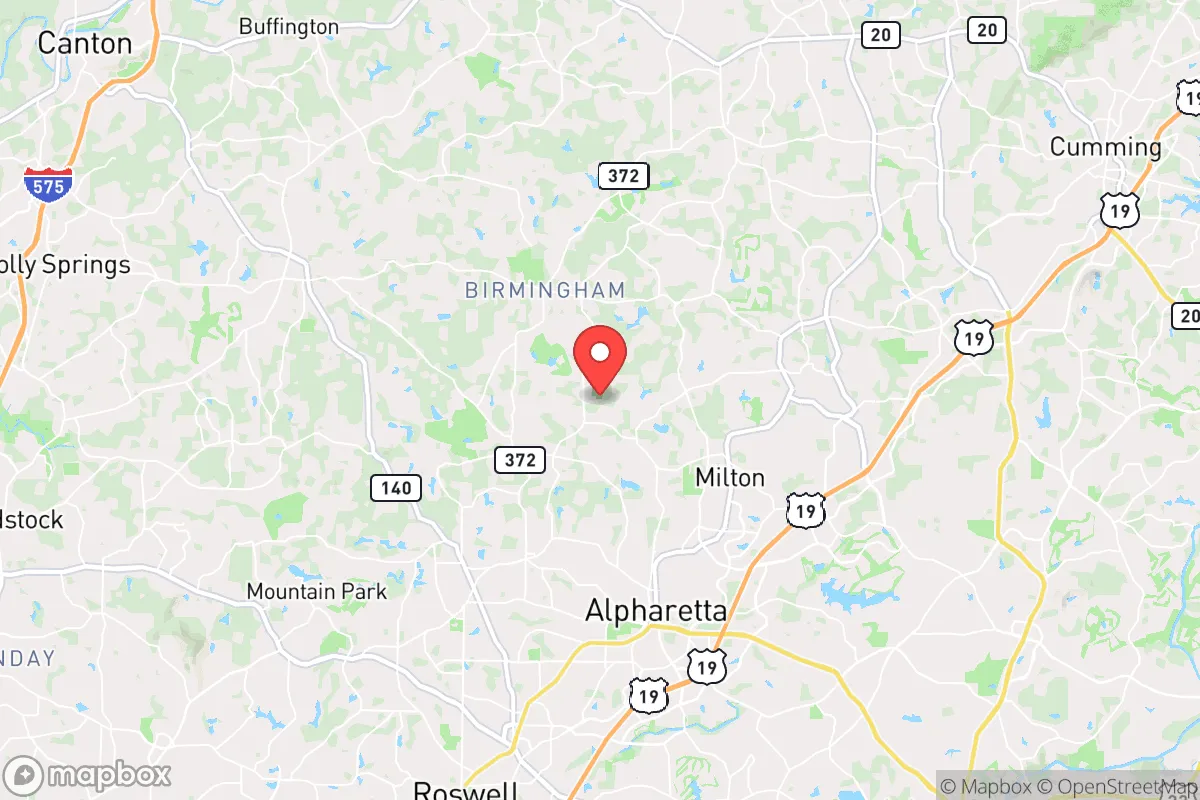
Photo: Wikipedia
Political ClimatePolitical Climate in Milton, GA
District shown is the primary district for this city’s centroid. Cities may span multiple districts.
Local Political AnalysisPolitical Analysis of Milton, GA
Milton, Georgia, is about as solidly conservative as it gets in the metro Atlanta area, with a Cook PVI of R+11 that reflects a deep-rooted, no-nonsense political culture. This isn't a place that just votes Republican; it's a community where the philosophy of limited government, personal responsibility, and local control is woven into daily life. You can feel it in the way the city council handles zoning, the way the schools operate, and the general expectation that government should stay out of your business. That said, like many suburbs in the South, there's a quiet but real concern among long-time residents about the slow creep of progressive ideas from the urban core, and folks are keeping a close eye on how that might shift things in the next decade.
How it compares
To really understand Milton's political climate, you have to look at its neighbors. Head south into Alpharetta or east into Roswell, and you'll find a much more mixed bag—those areas have seen a noticeable shift toward the center-left, especially among younger professionals and newcomers from out of state. Milton, by contrast, has held the line. It's more like its western neighbor, Cherokee County, or the rural counties to the north, where conservative values are still the default. The difference is stark: while Alpharetta's city council debates bike lanes and density bonuses, Milton's is still laser-focused on preserving the city's rural character, low taxes, and property rights. For someone who values personal freedoms—like the right to use your land as you see fit, or to send your kids to a school that doesn't push a political agenda—Milton feels like a refuge compared to the increasingly progressive policies in Fulton County's more urbanized pockets.
What this means for residents
For the people who live here, the R+11 lean translates into a government that, for the most part, keeps its hands off. You won't see the kind of overreach you hear about in places like Atlanta or Decatur—no heavy-handed mandates on what you can build on your property, no aggressive tax hikes to fund pet projects, and a general attitude that the city is here to serve, not to manage. The schools, while part of the Fulton County system, still reflect the community's values because the local board members are elected by folks who think like you do. The downside? If you're hoping for a rapid shift toward more progressive policies—like expanded public transit or affordable housing mandates—you'll be disappointed. The political climate here is stable, but it's also resistant to change, which is exactly how most residents want it. The concern, though, is that as Atlanta's influence grows, there's always pressure from the county level to adopt policies that feel like a step toward bigger government, and that's something the community watches like a hawk.
Culturally, Milton stands out for its fierce independence. You'll see more pickup trucks with "Don't Tread on Me" stickers than electric cars with "Coexist" decals. The city's identity is tied to its horse farms, its large lots, and its insistence on being a "rural" enclave in a rapidly suburbanizing region. There's a strong sense that if you want to live a certain way—whether that means homeschooling, owning firearms, or running a small business without a pile of red tape—this is the place to be. The long-term trajectory depends on who moves in next. If the influx of new residents comes from places with a more progressive mindset, the political balance could tip. But for now, Milton remains a place where the old-school conservative values of freedom and self-reliance aren't just a talking point—they're the law of the land.

State Political ClimatePolitical Climate in Georgia
State Political AnalysisPolitical Environment in the State
Georgia has shifted from a reliably red state to a competitive battleground, but its political soul remains deeply conservative outside of the Atlanta metro core. The state voted for Joe Biden in 2020 by a razor-thin 0.2% margin, then re-elected Republican Governor Brian Kemp in 2022 by 7.5 points — a split that tells you everything about the coalition. The GOP still holds both chambers of the legislature and every statewide office, but the Atlanta suburbs have moved left fast, while rural and exurban Georgia has dug in harder. If you’re looking at Georgia as a relocation option, the key question is which Georgia you’re moving to — the one inside the I-285 perimeter or the one everywhere else.
Urban vs. rural divide
The political map of Georgia is a tale of three distinct zones. Metro Atlanta — including Fulton, DeKalb, Cobb, Gwinnett, and Clayton counties — now accounts for roughly 60% of the state’s vote. Fulton and DeKalb are deep blue, with Biden winning Fulton by 47 points in 2020. Cobb and Gwinnett, once Republican strongholds, flipped to Biden in 2020 and have stayed blue in subsequent elections. This is where the state’s leftward drift is concentrated: high-density, diverse, and increasingly progressive on social issues. Outside Atlanta, the picture flips hard. North Georgia — places like Dawsonville, Ellijay, and Blairsville — is as red as any county in Alabama, with Trump winning some of these areas by 70+ points. South Georgia is more mixed: rural counties like Colquitt and Thomas are reliably red, but the Savannah area (Chatham County) and the Augusta area (Richmond County) are blue-leaning due to their urban cores and large Black populations. The Columbus area (Muscogee County) is a purple swing county that has trended blue but still elects local Republicans. The Macon area (Bibb County) is solidly blue. The real story is the exurban ring — places like Forsyth County (north of Atlanta) and Paulding County (west) — which have become the new red bastions as blue voters pushed out of the urban core. Forsyth County voted for Trump by 35 points in 2020, up from 28 points in 2016, a sign of white flight consolidation.
Policy environment
Georgia’s state-level policy is broadly conservative, but with some notable exceptions. The state has a flat income tax of 5.49%, which is being phased down to 4.99% by 2029 under a law signed by Kemp. Sales tax is 4% state-level, but local options push it to 7-8% in most areas. Property taxes are relatively low, with a statewide homestead exemption that caps annual increases. On education, Georgia has a robust school choice program: the Georgia Promise Scholarship Act (2024) provides $6,500 per student for private school or homeschooling expenses, though it’s means-tested. The state also has a strong parental rights law (HB 1178, 2022) that requires schools to notify parents of any health or counseling services provided to their child. On healthcare, Georgia did not expand Medicaid under the ACA, leaving a coverage gap for about 300,000 low-income adults. The state’s election integrity law (SB 202, 2021) tightened voter ID requirements, limited drop boxes, and banned mobile voting units — a response to the 2020 controversies that remains a flashpoint. Gun laws are permissive: constitutional carry (no permit needed to carry a concealed firearm) was signed into law in 2022. There is no red flag law, no waiting period, and no universal background check for private sales. Abortion is banned after six weeks (HB 481, 2019), with narrow exceptions for rape, incest, and life of the mother. The law was struck down by a state court in 2022 but reinstated by the Georgia Supreme Court in 2023; it remains in effect as of 2026.
Trajectory & freedom
Georgia has been moving in a more free direction on several fronts, but with some concerning countercurrents. The 2022 constitutional carry law was a major expansion of Second Amendment rights, and the state has resisted federal overreach on gun control. The 2024 school choice expansion was a win for educational freedom. However, the Atlanta city government has pushed back against state preemption on issues like minimum wage (trying to raise it to $15/hour, blocked by state law) and housing regulations (rent control is banned statewide). The biggest freedom concern for conservatives is the Atlanta-area district attorneys — particularly Fani Willis in Fulton County and Sherry Boston in DeKalb — who have adopted progressive prosecution policies, declining to charge certain low-level offenses and pushing for bail reform. This has led to a perception of rising crime in the urban core, though state data shows mixed trends. On the positive side, Georgia has a strong right-to-work law and no state-level occupational licensing for many trades, making it easier to start a business. The state also has a preemption law that prevents local governments from passing their own gun control ordinances, which has been a key battleground as Atlanta tries to restrict firearms in public spaces.
Civil unrest & political movements
Georgia has seen its share of political flashpoints. The 2020 election aftermath was intense: the Fulton County ballot counting controversy, the Trump-Kemp feud, and the subsequent investigation by Fani Willis into election interference (which led to indictments in 2023) have kept the state in the national spotlight. The Stop Cop City movement — a years-long protest against the construction of a police training facility in Atlanta — turned violent in 2023, with the state designating it as a domestic terrorism operation. This has become a rallying point for both left-wing activists and right-wing critics of Atlanta’s governance. Immigration politics are a growing issue: Georgia passed HB 1105 in 2024, which requires local law enforcement to cooperate with ICE and penalizes sanctuary policies. The state has seen a significant influx of migrants, particularly in the Dalton area (the carpet industry) and Gainesville (poultry processing), which has shifted some rural counties’ demographics. Election integrity remains a live issue: the State Election Board, now controlled by Trump-aligned Republicans, has passed new rules for hand-counting ballots and signature verification that are being challenged in court. The secession/nullification rhetoric is minimal, but there is a strong 10th Amendment movement in the legislature, with bills introduced to nullify federal gun laws and marijuana prohibition (though medical marijuana is legal in a very limited form).
Projection
Over the next 5-10 years, Georgia is likely to become more purple, not more red. The Atlanta metro continues to grow, driven by corporate relocations (Microsoft, Google, and Amazon have all expanded in the area) and a diverse, college-educated population that leans left. The exurban ring will remain red, but it’s not growing fast enough to offset the urban core. The 2026 gubernatorial election will be a key test: Kemp is term-limited, and the Republican primary will be a fight between the establishment and the Trump wing. If a hardline candidate wins the primary, it could alienate suburban moderates and hand the governorship to a Democrat for the first time since 2002. The state legislature will remain Republican for the foreseeable future, but the margins will narrow. On policy, expect continued battles over school choice (expansion likely), election laws (more restrictions likely), and abortion (the six-week ban will be a perennial campaign issue). The biggest wild card is demographics: Georgia’s Black population (about 33%) is politically diverse but leans heavily Democratic, while the Hispanic population (about 10%) is growing and could become a swing bloc. If you’re moving to Georgia now, expect a state that is politically competitive but still conservative in its laws — with the caveat that your local experience will depend entirely on whether you’re in the Atlanta bubble or the rest of the state.
Bottom line for a new resident: Georgia offers a low-tax, gun-friendly, school-choice environment with a conservative legal framework, but you need to pick your county carefully. If you want a reliably red community, look at the exurban ring — Forsyth, Paulding, Cherokee, or Coweta counties. If you want a more moderate suburban experience, Fayette or Oconee counties are good bets. Avoid the urban core of Atlanta, DeKalb, and Clayton if you’re concerned about progressive governance and rising crime. The state is trending purple, but the legislature is still solidly red, and that’s unlikely to change in the next decade. Just keep an eye on the 2026 governor’s race — that will tell you everything about where Georgia is headed.
* Values derived from national, state, county, city and local statistics and may differ in a specific area. Last updated: 2026-04-23T05:06:21.000Z
Narrative content on this page is AI-generated and may contain mistakes. Verify any details that matter before acting on them.
ReloMaps may earn a commission from affiliate links at no extra cost to you.

