Photo: Wikipedia
Demographics of Washington County
Affluence Level in Washington County
An upper-middle-class area. Household wealth, education levels, and homeownership run ahead of national benchmarks.
People of Washington County
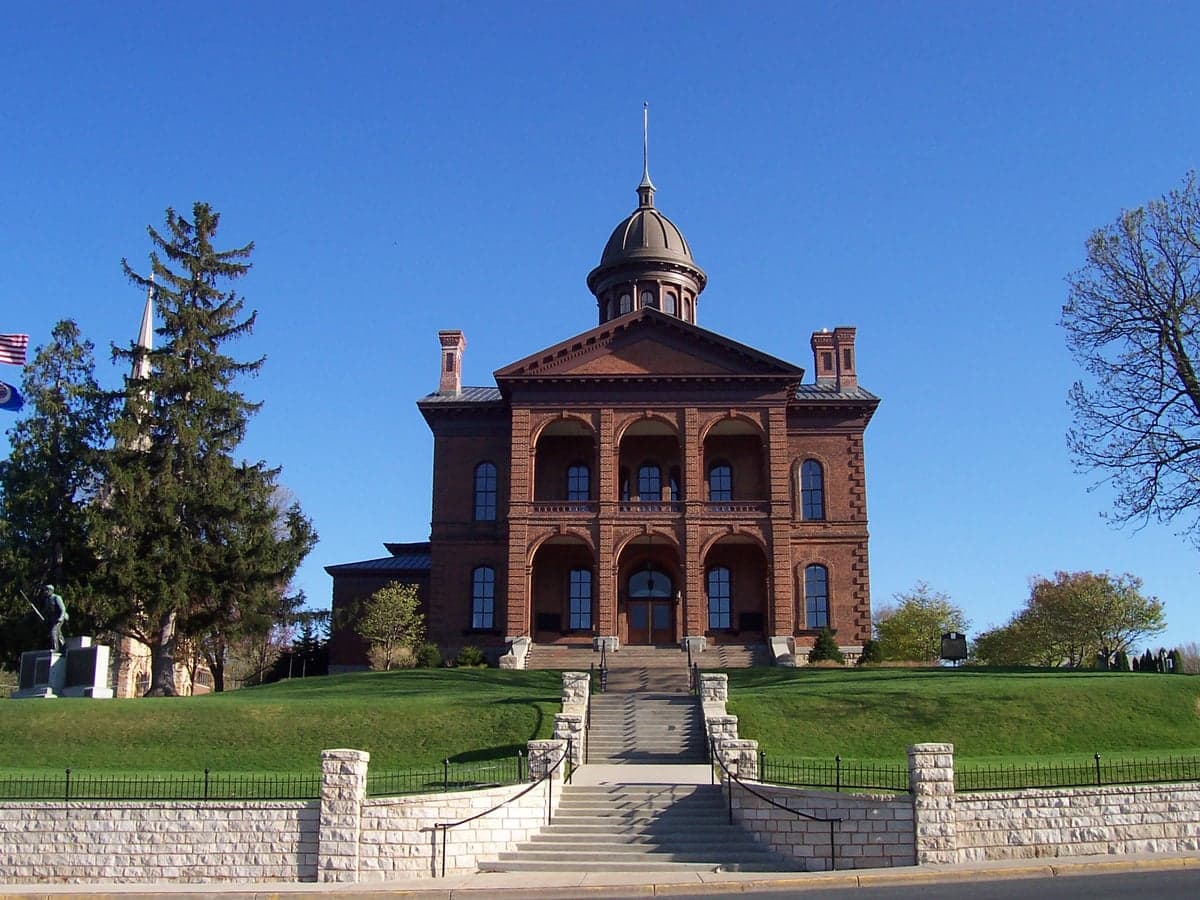
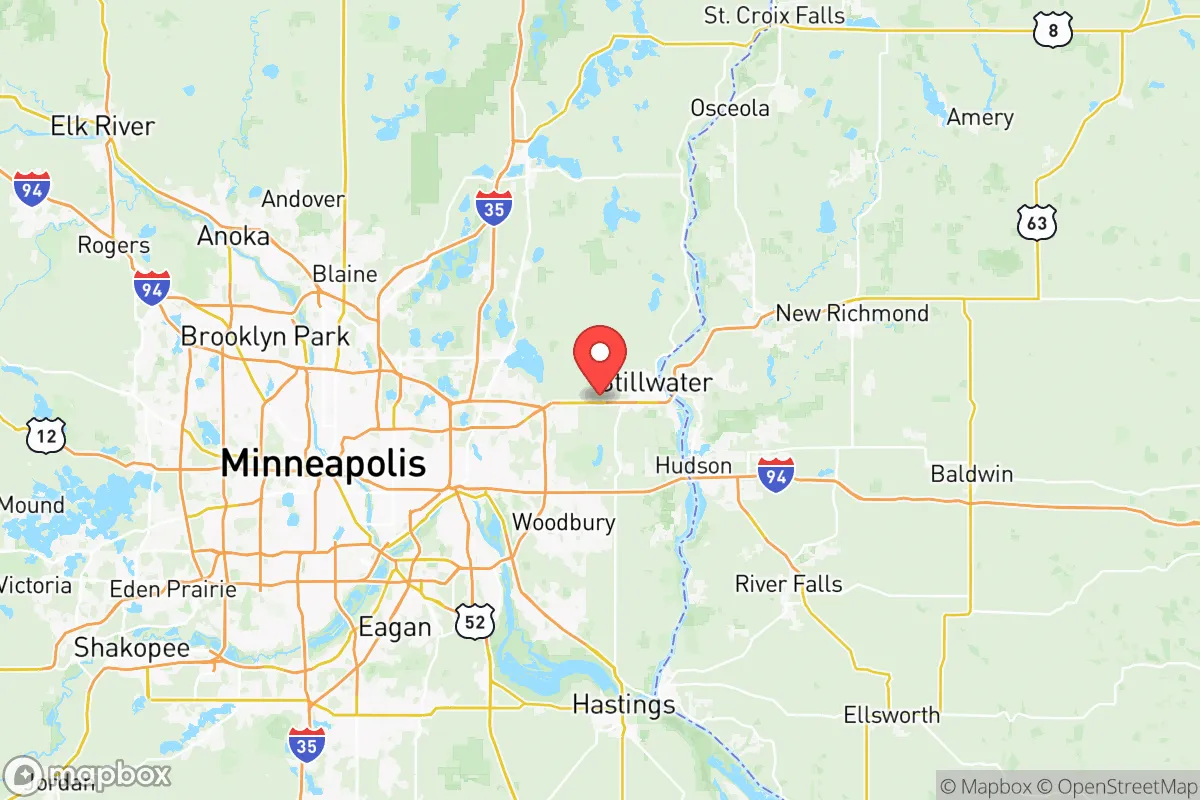
Washington County, Minnesota, is a predominantly white, highly educated, and affluent suburban corridor east of the Twin Cities, home to 272,298 residents. Its character is defined by a blend of historic river towns, post-war bedroom communities, and rapidly expanding exurban developments, creating a population that is culturally conservative-leaning but economically tied to the professional and tech sectors of the metro area. With 78.4% of residents identifying as white and nearly half holding a college degree, the county’s identity is shaped by deep Scandinavian and German roots, a small but growing diversity, and a strong sense of local governance distinct from the urban core of Minneapolis and St. Paul.
Settlement & growth (pre-1960)
Before American settlement, the area now known as Washington County was the homeland of the Dakota people, particularly the Mdewakanton band, who lived along the St. Croix River and its tributaries. French fur traders and missionaries passed through in the 17th and 18th centuries, but permanent Euro-American settlement did not begin until the 1830s and 1840s, following the 1837 land cession treaties with the Dakota. The first major wave of settlers were Yankees from New England and New York, drawn by the promise of timber and river-powered mills. They founded the county’s oldest towns, including Stillwater (1843), which became the territorial capital of the Wisconsin Territory and later the epicenter of Minnesota’s lumber industry. The St. Croix River was the region’s economic artery, and Stillwater’s sawmills employed hundreds of laborers, many of whom were Irish immigrants fleeing the Great Famine in the late 1840s. These Irish workers settled in Stillwater’s North Hill neighborhood and in the mill hamlets of Marine on St. Croix and Afton, building the county’s early Catholic parishes.
By the 1860s and 1870s, the lumber boom attracted a second wave: Swedish and Norwegian immigrants, who were recruited to work the forests and farms. They established tight-knit rural communities in the county’s interior, particularly around Scandia (named for Scandinavia) and Forest Lake. Swedish Lutherans built churches and schools, and their descendants remain a cultural backbone of the county today. German immigrants arrived in smaller numbers, settling in Cottage Grove and Hastings (which straddles the Dakota County line), where they worked as farmers and brewers. The county’s population grew steadily but remained rural and small-town through the early 20th century, reaching just 26,000 residents by 1930. The Great Depression and the decline of the lumber industry slowed growth, and the county’s character stayed largely agricultural and Scandinavian until after World War II.
The post-war boom transformed Washington County. The construction of Interstate 94 and Interstate 694 in the 1950s and 1960s opened the county to suburban development. Woodbury, originally a small farming crossroads, was platted for suburban housing in the 1960s and exploded from a few hundred residents to over 10,000 by 1980. Oakdale and Lake Elmo followed similar trajectories, attracting young families from St. Paul seeking larger lots and lower taxes. This wave was overwhelmingly white, native-born, and middle-class, drawn by the promise of new schools, safe neighborhoods, and proximity to Twin Cities jobs. By 1960, the county’s population had reached 52,000, still heavily Scandinavian and German, but now suburban in orientation.
Modern era (post-1965)
The 1965 Hart-Cellar Act had a muted effect on Washington County compared to urban centers, but it did introduce the first significant non-European populations. The county’s foreign-born share remains low at just 2.6%, but the composition has shifted. The largest post-1965 immigrant group has been East and Southeast Asian communities, who now make up 5.9% of the population. Many are Hmong families who arrived as refugees from Laos in the late 1970s and 1980s, initially settling in St. Paul’s Frogtown neighborhood before moving east to Woodbury and Oakdale for better schools and housing. A smaller wave of Vietnamese and Chinese professionals came in the 1990s and 2000s, drawn by tech and medical jobs. The Indian subcontinent population, at 1.4%, is a more recent arrival, largely composed of engineers and IT workers employed by companies like 3M (headquartered in nearby Maplewood) and Medtronic. They concentrate in Woodbury and Stillwater, where the school districts are highly rated.
Hispanic residents, now 5.1% of the county, are a mix of Mexican-American families who came for agricultural work in the 1970s and 1980s, and newer arrivals from Central America employed in construction and service industries. They are most visible in Cottage Grove and Hastings, where lower housing costs have attracted working-class families. The Black population, at 4.8%, is largely African American families moving from St. Paul and Minneapolis in search of safer neighborhoods and better schools, a trend that accelerated after the 2020 civil unrest. They have settled primarily in Woodbury and Oakdale, where the housing stock is newer and more affordable than in the western suburbs.
Domestic migration has been the dominant force shaping the county since 1990. The county’s population more than doubled from 1990 to 2020, driven by families leaving Ramsey and Hennepin counties for larger homes, lower crime rates, and conservative-leaning local governments. Woodbury has become the county’s largest city, with over 70,000 residents, and functions as a self-contained edge city with its own retail, medical, and employment base. Stillwater has gentrified into a tourist destination, while Forest Lake and Scandia have absorbed exurban commuters willing to drive 45 minutes to St. Paul. The county’s college-educated share, now 48.9%, reflects the professionalization of its workforce, with many residents employed in healthcare, finance, and technology.
The future
Washington County is likely to continue its trajectory of steady, managed growth, with the population projected to reach 320,000 by 2040. The county is not tribalizing into distinct ethnic enclaves; rather, it is homogenizing into a broadly affluent, family-oriented suburban landscape where diversity is present but dispersed. East and Southeast Asian communities are assimilating rapidly, with second-generation Hmong and Vietnamese residents attending college and entering professional careers at high rates. The Indian subcontinent population, though small, is growing through both immigration and natural increase, and is likely to concentrate further in Woodbury and Stillwater as those school districts maintain their reputations. Hispanic and Black populations are growing slowly but steadily, driven by domestic migration from the urban core rather than international immigration.
The cultural identity of the county is being reshaped by in-migration from other parts of the United States, particularly from the Midwest and the West Coast. New arrivals from California and Colorado, drawn by lower housing costs and conservative politics, are accelerating the county’s shift away from its Scandinavian roots toward a more generic, national suburban culture. The county’s political character, already Republican-leaning, is likely to harden as these migrants seek out like-minded communities. The next 10-20 years will see continued infill development in Woodbury and Cottage Grove, with new master-planned communities rising on former farmland in Lake Elmo and May Township. The county’s rural townships will face pressure to annex or develop, but the overall character will remain that of a prosperous, low-crime, family-focused suburb.
For someone moving in now, Washington County offers a stable, predictable environment where the population is growing but not transforming rapidly. The county is becoming more diverse in absolute numbers but remains overwhelmingly white and culturally conservative. The key trend is not ethnic change but economic sorting: the county is attracting families who prioritize school quality, low taxes, and personal safety, and who are willing to commute for professional jobs. The Scandinavian and German heritage is fading into a broader Midwestern identity, but the county’s institutions—its school districts, parks, and local governments—remain strong and well-funded. This is a place where the past is respected but the future is being built by newcomers who share a common vision of orderly, prosperous suburban life.

* Values derived from national, state, county, city and local statistics and may differ in a specific area. Last updated: 2026-05-24T09:47:48.000Z
Narrative content on this page is AI-generated and may contain mistakes. Verify any details that matter before acting on them.
ReloMaps may earn a commission from affiliate links at no extra cost to you.

