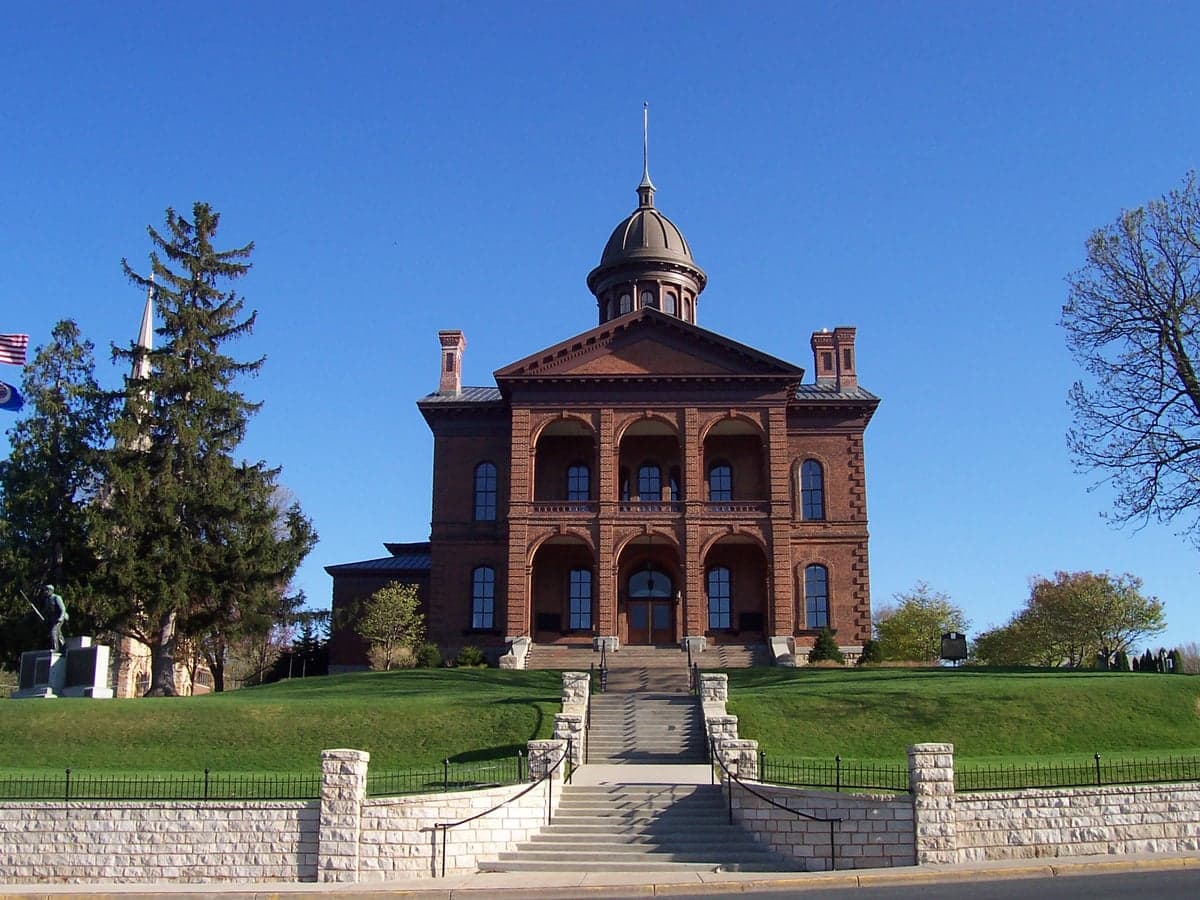
Photo: Wikipedia
Political ClimatePolitical Climate in Washington County
Showing district-level results — no local-only data available.
Local Political AnalysisPolitical Analysis of Washington County
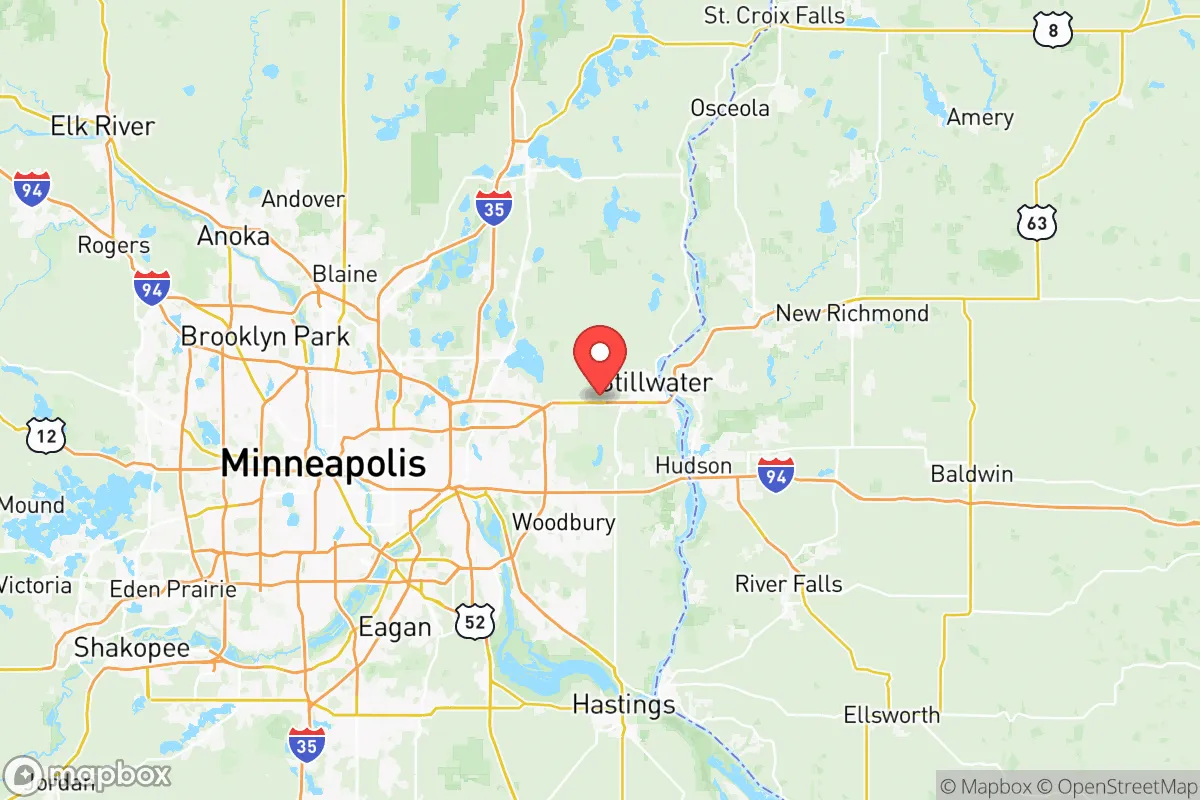
Washington County, Minnesota, is a solidly blue area with a Cook PVI of D+18, meaning it votes about 18 points more Democratic than the national average. That’s a stark contrast to the state of Minnesota as a whole, which sits at D+3, and it reflects a deep, long-term shift away from the county’s more moderate, independent roots. If you’ve been around here for a while, you remember when places like Stillwater and Forest Lake were reliably purple, with a strong conservative streak in the rural pockets. Now, the county’s political center of gravity has moved decisively left, driven by explosive growth in the southern and central townships.
How it compares
The difference between Washington County and the rest of Minnesota isn’t subtle—it’s a chasm. While the state as a whole is a competitive battleground (D+3), Washington County is a Democratic stronghold. The real story is the internal divide. The southern half of the county—places like Woodbury, Cottage Grove, and Lake Elmo—are the engine of the blue shift. Woodbury, in particular, has become a classic suburban Democratic machine, with precincts routinely going 60-70% for Democratic candidates. In contrast, the northern towns—Forest Lake, Scandia, and Marine on St. Croix—still hold onto a more conservative, rural character. Forest Lake’s western precincts often lean Republican, and Scandia’s town board elections can be fiercely contested between growth-oriented and preservationist factions. The swing precincts are in the middle, around Stillwater and Bayport, where you’ll see a mix of old-timers and new arrivals, but even there, the trend is unmistakably blue. It’s a tale of two counties under one name.
What this means for residents
For a conservative-leaning resident, this political reality has real, tangible consequences. The county government, dominated by progressive majorities, has been aggressive on issues like land use regulations, environmental mandates, and social policies. You’ve seen it in the push for higher density housing mandates, restrictions on short-term rentals, and a general attitude that the county knows best. The school boards in Woodbury and Stillwater have become battlegrounds over curriculum and parental rights, with progressive slates often winning. Property taxes have climbed steadily to fund expanded government services, and there’s a palpable sense that personal freedoms—like the right to develop your own land or run a small business without endless red tape—are being squeezed. The long-term trajectory is concerning: as the county continues to attract young, college-educated professionals from the Twin Cities, the political culture will only become more uniformly progressive. If you value limited government and local control, you’re increasingly an outlier here.
Culturally, the county has traded its old, independent Scandinavian stoicism for a more activist, government-oriented mindset. The annual events—like the Stillwater Lumberjack Days or the Washington County Fair—still have a folksy feel, but the politics behind them have shifted. You’ll see more booths for environmental groups and social justice organizations than for the local GOP or gun rights advocates. The county’s policy distinctions are clear: it was an early adopter of plastic bag bans, strict wetland protections, and “sanctuary” policies for undocumented immigrants. For a conservative, it feels like living in a place that’s increasingly run by people who don’t share your values, and the trend line isn’t promising. If you’re thinking of moving here, know that your voice on personal freedoms and fiscal restraint will be a minority one, and it’s only getting quieter.

State Political ClimatePolitical Climate in Minnesota
State Political AnalysisPolitical Environment in the State
Minnesota has shifted from a classic purple battleground to a solidly Democratic-leaning state, carrying a Cook PVI of D+3, but that number hides a deep and growing chasm. The state’s political center of gravity has moved decisively left over the past 10-20 years, driven by the explosive growth of the Twin Cities metro area and a collapse of rural Republican turnout in key races. While the state still elects some moderate Republicans in outstate districts, the governor’s mansion, both U.S. Senate seats, and the state legislature have all been under unified Democratic control since 2023, and the policy agenda has been aggressively progressive.
Urban vs. rural divide
The political map of Minnesota is a tale of two states. The Twin Cities metro — Minneapolis, St. Paul, and the inner-ring suburbs like Edina, Bloomington, and Richfield — is a deep blue engine that produces roughly 60% of the state’s votes. Hennepin and Ramsey Counties alone often deliver margins larger than the entire state’s population outside the metro. Meanwhile, greater Minnesota — places like Rochester, Duluth, St. Cloud, and the Iron Range — is far more competitive. The Iron Range, once a reliably Democratic stronghold for labor Democrats, has been trending Republican for a decade, flipping for Trump in 2016 and 2020. Rural counties like Otter Tail, Stearns, and Wright are now solidly red, but their populations are too small to offset the metro’s blue wave. The suburbs are the real battleground: Anoka County and Washington County have shifted from swing to lean-Democratic, while exurban areas like Chisago and Isanti Counties remain red but are growing slower than the inner ring.
Policy environment
Since the DFL (Democratic-Farmer-Labor Party) took full control in 2023, the policy environment has become aggressively progressive. The state enacted a new progressive income tax bracket of 10.85% on income over $1 million, making Minnesota one of the highest-tax states in the nation. Property taxes are also high, especially in the metro, with effective rates around 1.1% of home value. The regulatory posture is heavy: Minnesota has a strict environmental review law (the Minnesota Environmental Policy Act) that can delay projects for years, and the state has adopted California-style emissions standards for vehicles. Education policy is a flashpoint: the state passed a universal school lunch program and increased per-pupil funding, but also eliminated the requirement for school districts to notify parents of changes to a student’s gender identity or sexual orientation — a major concern for conservative families. Election laws have been loosened significantly: Minnesota now has automatic voter registration, same-day registration, and no-excuse absentee voting, which critics argue weakens ballot integrity. The state also legalized recreational marijuana in 2023 and expanded government-funded health insurance for low-income adults.
Trajectory & freedom
On the freedom index, Minnesota is moving decisively in the wrong direction for conservatives. The 2023 legislative session was a firehose of new restrictions on personal liberty. The state passed a “red flag” law (Extreme Risk Protection Order Act) allowing courts to temporarily seize firearms from individuals deemed a threat, without a criminal conviction. It also banned the sale of “assault weapons” to anyone under 21 and required universal background checks for private transfers. Parental rights took a hit with the aforementioned gender notification law, and the state expanded its paid family and medical leave program, funded by a new payroll tax. On the positive side for liberty, Minnesota did legalize recreational marijuana, but the regulatory framework is heavy, with strict licensing and high taxes. Property rights are under pressure from a new law allowing local governments to impose rent control and from aggressive use of eminent domain for transit projects. The state also passed a law requiring all new residential construction to be electric-ready, effectively phasing out natural gas in new homes — a direct government mandate on personal choice.
Civil unrest & political movements
Minnesota has been a national flashpoint for civil unrest. The 2020 murder of George Floyd in Minneapolis sparked the largest protests in the state’s history, leading to widespread property damage, arson, and a breakdown of public order that lasted for days. The aftermath saw a dramatic shift in the Minneapolis City Council, with a failed attempt to defund the police, followed by a slow rebuilding of the department. The state has a strong sanctuary policy: the Minnesota Driver’s License for All law allows undocumented immigrants to obtain driver’s licenses, and Minneapolis and St. Paul are “welcoming cities” that limit cooperation with federal immigration enforcement. On the right, the Minnesota Gun Owners Caucus and the Minnesota Family Council are active, but they are fighting an uphill battle. Election integrity remains a hot-button issue: the 2020 election saw record turnout and no major fraud findings, but the loosened laws since then have fueled ongoing distrust among conservatives. The “Walmart protests” of 2020 and the ongoing debate over the Minneapolis police contract are visible reminders that this is a state where political tensions can boil over quickly.
Projection
Looking ahead 5-10 years, the trend lines are clear: Minnesota will continue to drift leftward. The Twin Cities metro is growing faster than the rest of the state, and in-migration from blue states like California and Illinois is accelerating that shift. The rural areas will continue to redden, but their population decline means they will lose political power. The state’s high taxes and regulatory burden are already driving some businesses and families to neighboring states like South Dakota and Wisconsin, but the net effect is still a net gain in population from other blue states. The DFL’s trifecta is likely to persist, meaning more progressive policies on taxes, energy, and social issues. For a conservative family or individual moving in now, expect to live under a government that is increasingly hostile to your values — higher taxes, weaker parental rights, and a culture that is openly progressive. The best bet for a conservative is to look at exurban counties like Sherburne or Wright, where the local government is still red, but state-level policy will continue to override local preferences.
Bottom line for a new resident: Minnesota offers a high quality of life in terms of natural beauty, strong schools, and a robust economy, but the political climate is a serious headwind for conservatives. You will pay more in taxes, have less control over your children’s education, and live under a government that is actively expanding its reach into your personal choices. If you value low taxes, strong parental rights, and a limited government, Minnesota is not a friendly place. If you can tolerate the political environment for the sake of the lakes, the jobs, and the culture, you’ll want to settle in a red-leaning exurb and brace for the next election cycle.
* Values derived from national, state, county, city and local statistics and may differ in a specific area. Last updated: 2026-05-24T09:47:48.000Z
Narrative content on this page is AI-generated and may contain mistakes. Verify any details that matter before acting on them.
ReloMaps may earn a commission from affiliate links at no extra cost to you.

