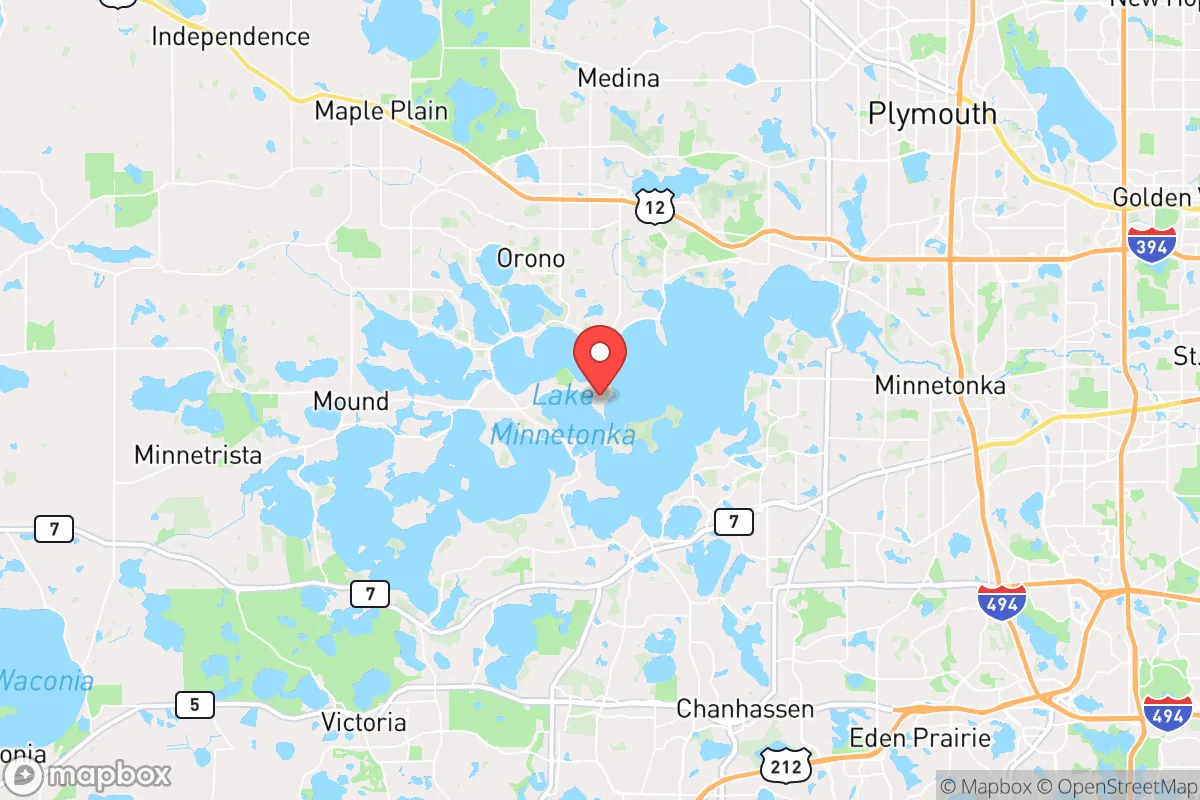
Personal Sovereignty in Minnetonka Beach, MN
Viable for self-reliance. Generally workable, though some barriers may limit total independence.
What does Personal Sovereignty tell us?
Personal Sovereignty measures your capacity for self-reliance and independence with minimal government friction. Higher scores mean fewer barriers between you and the way you want to live... but it assumes you have the space you need and good neighbors.
What does this tell us?
Personal Sovereignty measures your capacity for self-reliance and independence with minimal government friction. Higher scores mean fewer barriers between you and the way you want to live... but it assumes you have the space you need and good neighbors.
State Policy
Energy independence: Importer (20% of energy produced in-state)
Personal Liberty
Homesteading

Personal Liberty Analysis
Minnetonka Beach, Minnesota presents a complex sovereignty picture for the conservative-leaning individual or family. While the village itself is a small, affluent enclave on Lake Minnetonka with a strong sense of local control, it sits within a state government that has increasingly asserted authority over personal freedoms, particularly in the realms of taxation, self-defense, and medical autonomy. For those with a survivalist or prepper mindset, the key question is whether the community's local character can insulate residents from the broader regulatory and cultural drift of the state. The answer is a cautious "yes, with significant caveats," as the trade-off between a high-quality, secure environment and the erosion of certain personal liberties is a central tension here.
Tax burden and regulatory posture in a high-cost state
Minnesota's tax burden is among the highest in the nation, and Minnetonka Beach residents feel this acutely. The state imposes a progressive income tax with a top marginal rate of 9.85%, and property taxes in this lakeside community are substantial—often exceeding $10,000 annually on a median home value well above $1 million. For a prepper or conservative, this represents a direct transfer of personal capital to a state government that has shown a willingness to expand its reach. The regulatory environment is similarly dense: the Minnesota Department of Natural Resources (DNR) enforces strict shoreline and building codes that limit what you can do with your property, especially near the lake. Zoning is tight, with minimum lot sizes of around one acre in many parts of the village, which preserves privacy but also restricts the kind of independent infrastructure a self-reliant household might want. The state's energy code is among the most stringent in the Midwest, and environmental regulations can delay or complicate projects like installing a backup generator, a rainwater catchment system, or a root cellar. The trade-off is that the village's high property values and low crime rate create a stable, predictable environment—but the cost of that stability is a heavy tax and regulatory leash held by St. Paul.
Self-defense and gun law specifics in a restrictive state
This is the most significant sovereignty concern for a conservative or prepper in Minnetonka Beach. Minnesota has moved decisively toward gun control in recent years. In 2023, the state enacted a "red flag" law (Extreme Risk Protection Order) and universal background checks for all firearm transfers, including private sales. Permit-to-carry is shall-issue, but the process requires a training course and a background check, and permits are valid for five years. Open carry is legal with a permit, but local ordinances in some Lake Minnetonka communities can create confusion. More critically, the state has banned "binary triggers" and is considering further restrictions on semi-automatic rifles. For a survivalist, this means that building a robust personal armory is legally constrained, and the legal landscape could shift further with a change in the state legislature. The Hennepin County Sheriff's Office, which has jurisdiction over Minnetonka Beach, is generally professional but operates under state law. Self-defense in the home is protected under the "Castle Doctrine," but Minnesota does not have a "Stand Your Ground" law; there is a duty to retreat in public spaces if safely possible. This legal environment demands that any responsible gun owner here stay current on evolving statutes and consider legal counsel for any defensive use of force. The practical reality is that most residents are law-abiding and the crime rate is low, but the legal infrastructure for self-defense is weaker than in states like Texas or Florida.
Self-reliance and homesteading viability in a lakeside suburb
True homesteading is not viable within the village limits of Minnetonka Beach. Lot sizes, while generous by suburban standards (typically 0.5 to 1.5 acres), are too small for significant food production or livestock. The village's zoning code prohibits agricultural animals like chickens, goats, or bees, and the homeowners' association (HOA) covenants in many neighborhoods further restrict outbuildings, fences, and visible infrastructure like solar panels or clotheslines. Off-grid living is effectively impossible: the village requires connection to municipal water and sewer, and the electrical grid is the only practical power source. However, a prepper can still achieve a high degree of self-reliance within these constraints. A whole-house backup generator, a well-stocked pantry, a deep freezer, and a secure room or basement shelter are all feasible. The nearby Minnetonka area has several farm-to-table markets and co-ops for bulk food purchasing, and the proximity to the lake offers a fishing and water source in a crisis. For those willing to drive 30–45 minutes west, rural areas like Carver or Wright counties offer larger parcels (5–40 acres) where small-scale homesteading is possible, but that would mean leaving the village's security and school system. The strategic trade-off is clear: Minnetonka Beach offers a secure, low-crime base with good infrastructure, but it is not a place for independent food production or off-grid living. It is a "bug-in" location, not a "bug-out" retreat.
Personal liberties: parental rights, medical autonomy, speech, and property
On parental rights, Minnesota has become a battleground. The state's 2023 "trans refuge" law allows minors to receive gender-affirming care without parental consent in certain circumstances, and the Department of Education has pushed curriculum standards that some conservative parents view as infringing on their authority. The Minnetonka School District, which serves the village, is well-funded and high-performing, but it is also progressive in its approach to health and social education. Parents who want to opt their children out of certain lessons or materials may face resistance, though the district does have a formal opt-out process. Medical autonomy is similarly constrained: Minnesota has a vaccine mandate for school attendance (with medical and philosophical exemptions available, though the latter is under legal challenge), and the state's health insurance exchange is heavily regulated. During the COVID-19 pandemic, the governor imposed mask and vaccine mandates that were enforced locally. For a conservative who values medical freedom, this is a clear area of concern. Free speech is protected under the First Amendment, but the state's hate crime statutes and "bias-motivated" crime laws are broad, and local social norms in this affluent, educated community tend to lean left, which can create social pressure against expressing certain political views. Property rights are strong in terms of title and transfer, but the DNR and local zoning boards have significant say over what you can build or modify. The village's historic preservation commission also has authority over exterior changes to older homes. Overall, personal liberties in Minnetonka Beach are constrained by state law and local culture, requiring a resident to be both legally savvy and socially discreet if they hold strong conservative or libertarian views.
In the broader landscape of personal sovereignty, Minnetonka Beach offers a mixed verdict. It provides a secure, low-crime, high-amenity environment with excellent schools and a strong sense of community—factors that are themselves forms of sovereignty, as they reduce dependence on government services in a crisis. However, the state-level erosion of gun rights, parental authority, and medical freedom, combined with a heavy tax burden and restrictive zoning, means that a prepper or conservative must be proactive in protecting their autonomy. Compared to rural areas in the Upper Midwest or states like South Dakota or Wyoming, Minnetonka Beach is a compromised choice for those seeking maximum personal sovereignty. But for a family that values security, education, and a stable base from which to operate, and is willing to navigate the legal and cultural constraints, it can be a viable—if imperfect—home. The key is to enter with eyes open, a good lawyer, and a plan to stay ahead of the regulatory curve.

* Values derived from national, state, county, city and local statistics and may differ in a specific area. Last updated: 2026-04-27T14:36:44.000Z
Narrative content on this page is AI-generated and may contain mistakes. Verify any details that matter before acting on them.
ReloMaps may earn a commission from affiliate links at no extra cost to you.

