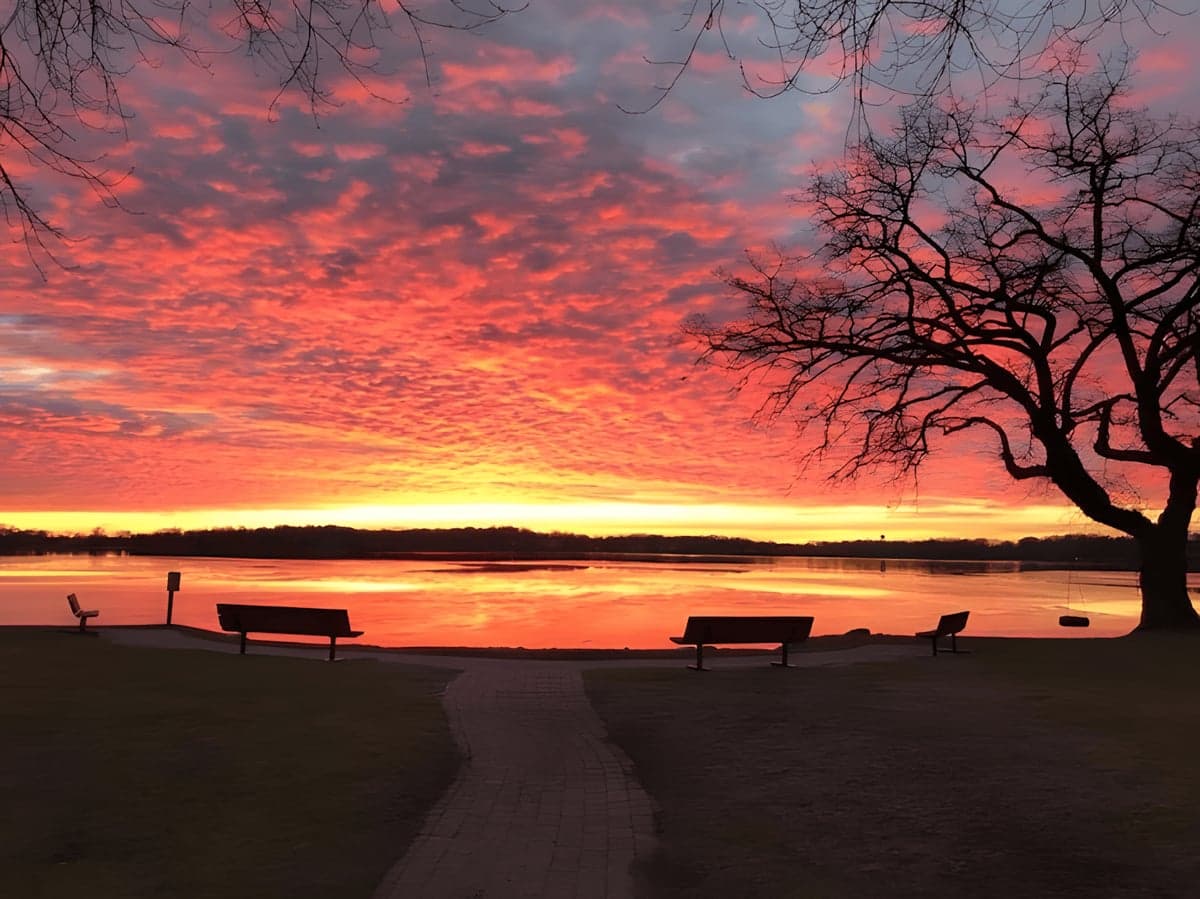
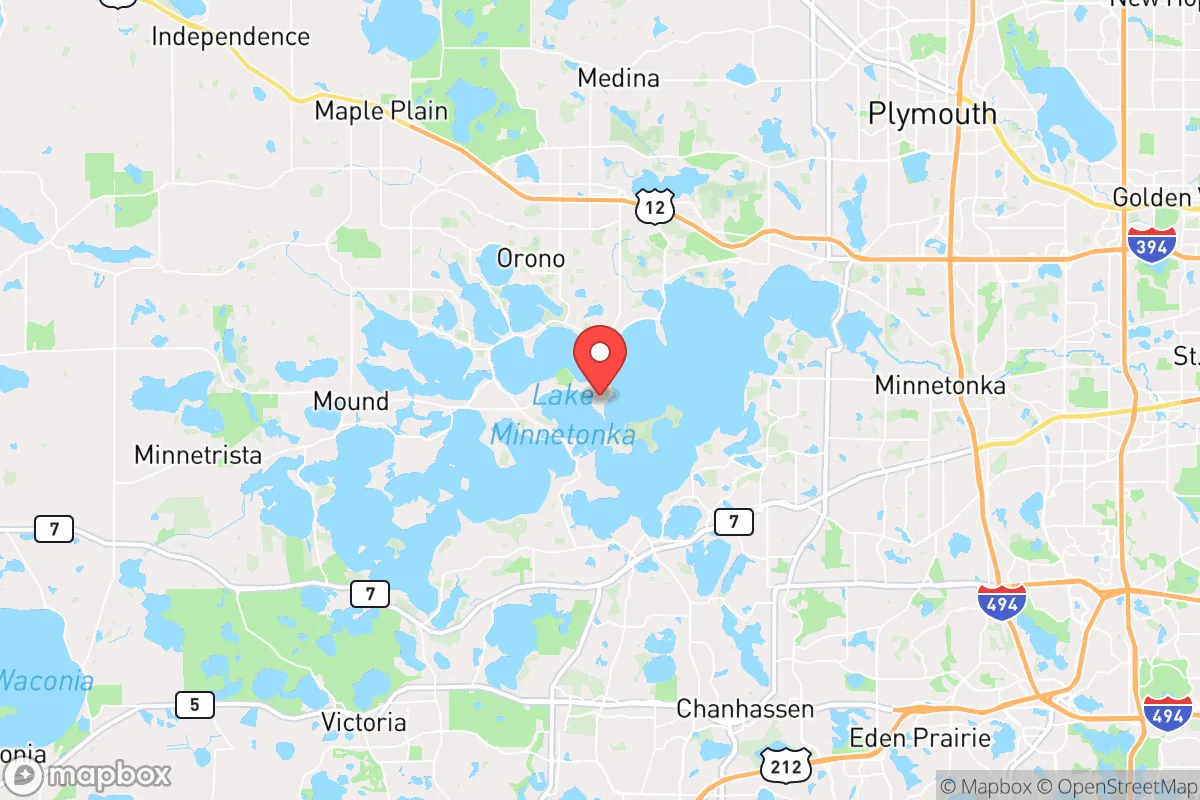
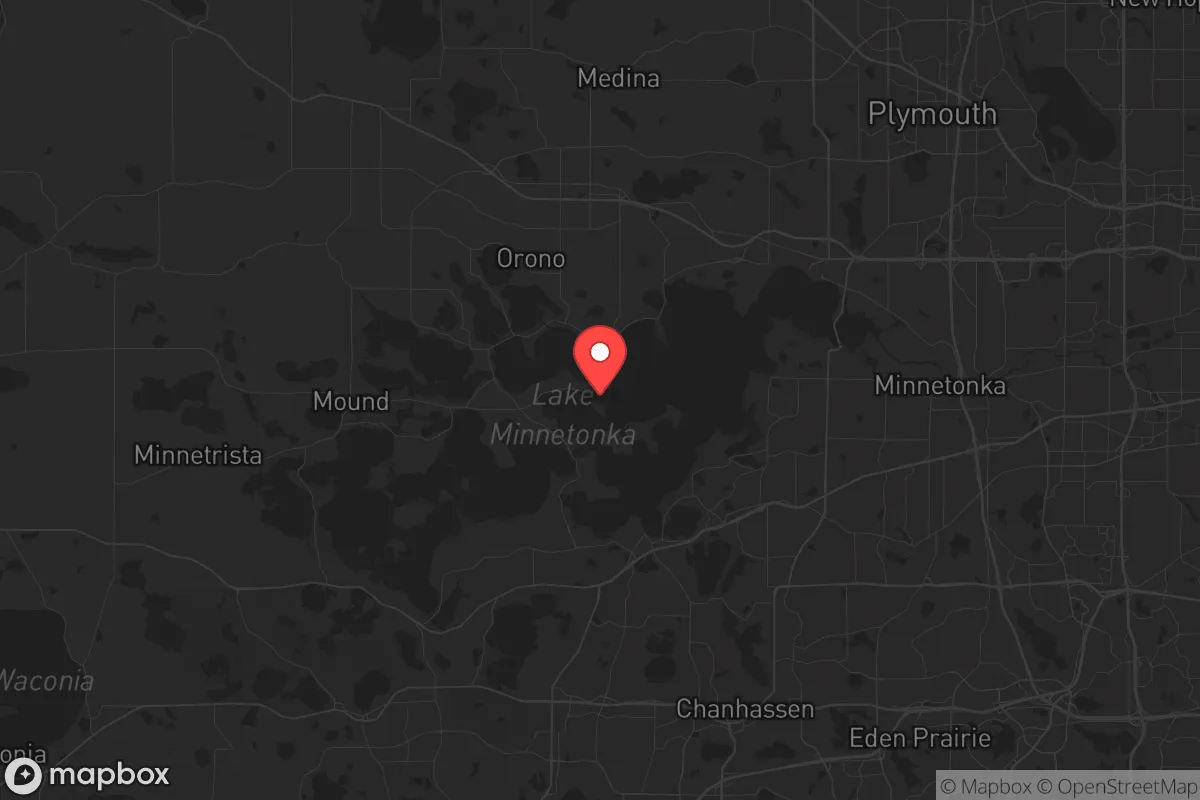
Strategic Assessment of Minnetonka Beach, MN
Workable tactical position. Some exposure to population density or targets, but generally defensible in a crisis.
What does the Strategic Assessment tell us?
Our Strategic Assessment grades tactical survivability of an area. Major population centers, military targets, fallout zones, natural disasters, and border exposure all drive risk — lower exposure means a more defensible position in a crisis.
This is heavily inspired by Joel Skousen's Strategic Relocation book. Highly recommended you checkout the book ($)What does this tell us?
Our Strategic Assessment grades tactical survivability of an area. Major population centers, military targets, fallout zones, natural disasters, and border exposure all drive risk — lower exposure means a more defensible position in a crisis.
This is heavily inspired by Joel Skousen's Strategic Relocation book. Highly recommended you checkout the book ($)Strategic Pillars

Key Distances
Regional Safe Places
Below is our recommended "safe zones" in Minnesota and the surrounding area based on our strategic heuristics. For most people, it's unrealistic to live in a “safe zone” full-time due to work, family or other personal reasons. They tend to be more rural. However, many of these areas are perfect for second homes and retreat properties that double as a vacation home or even a short-term rental.
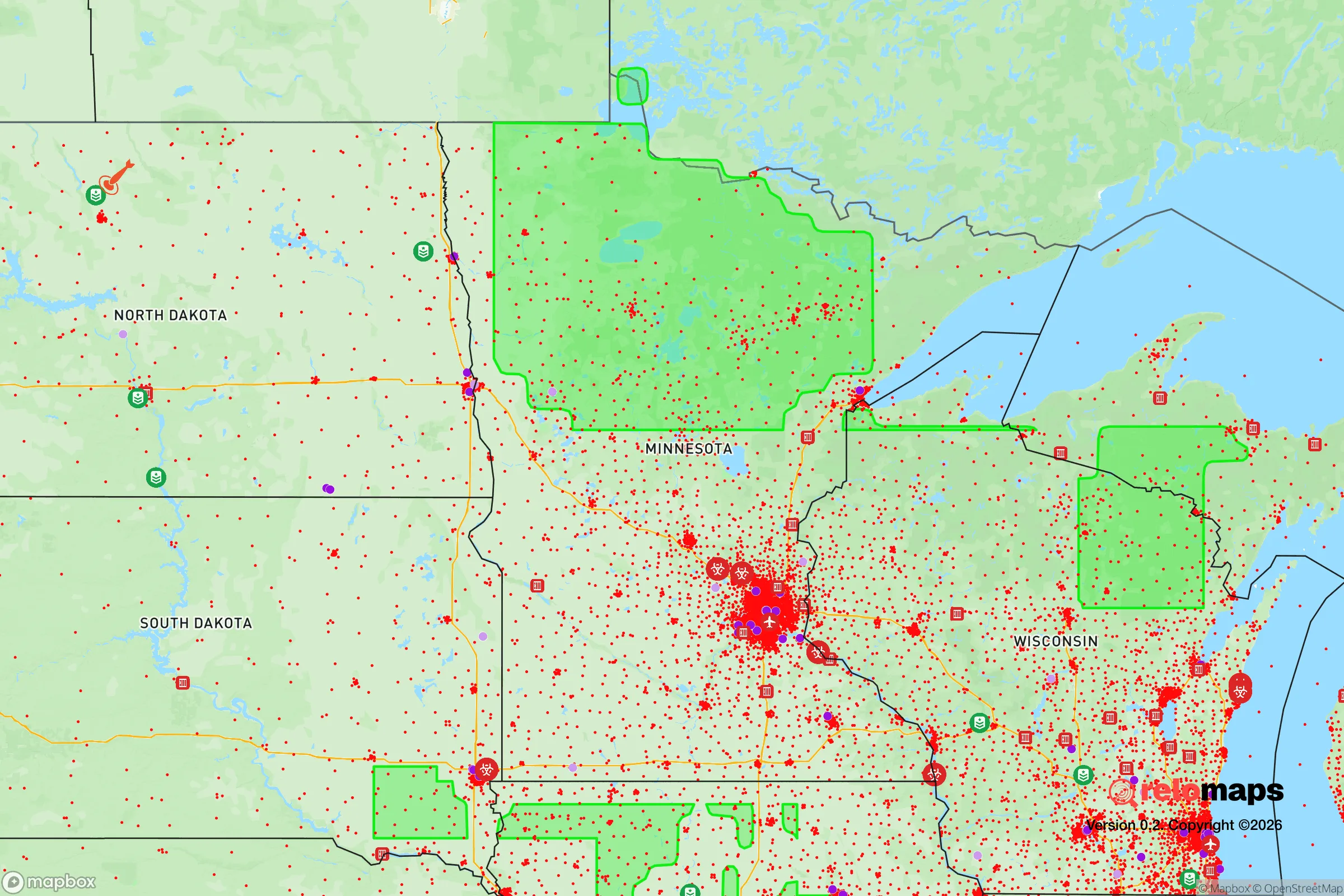
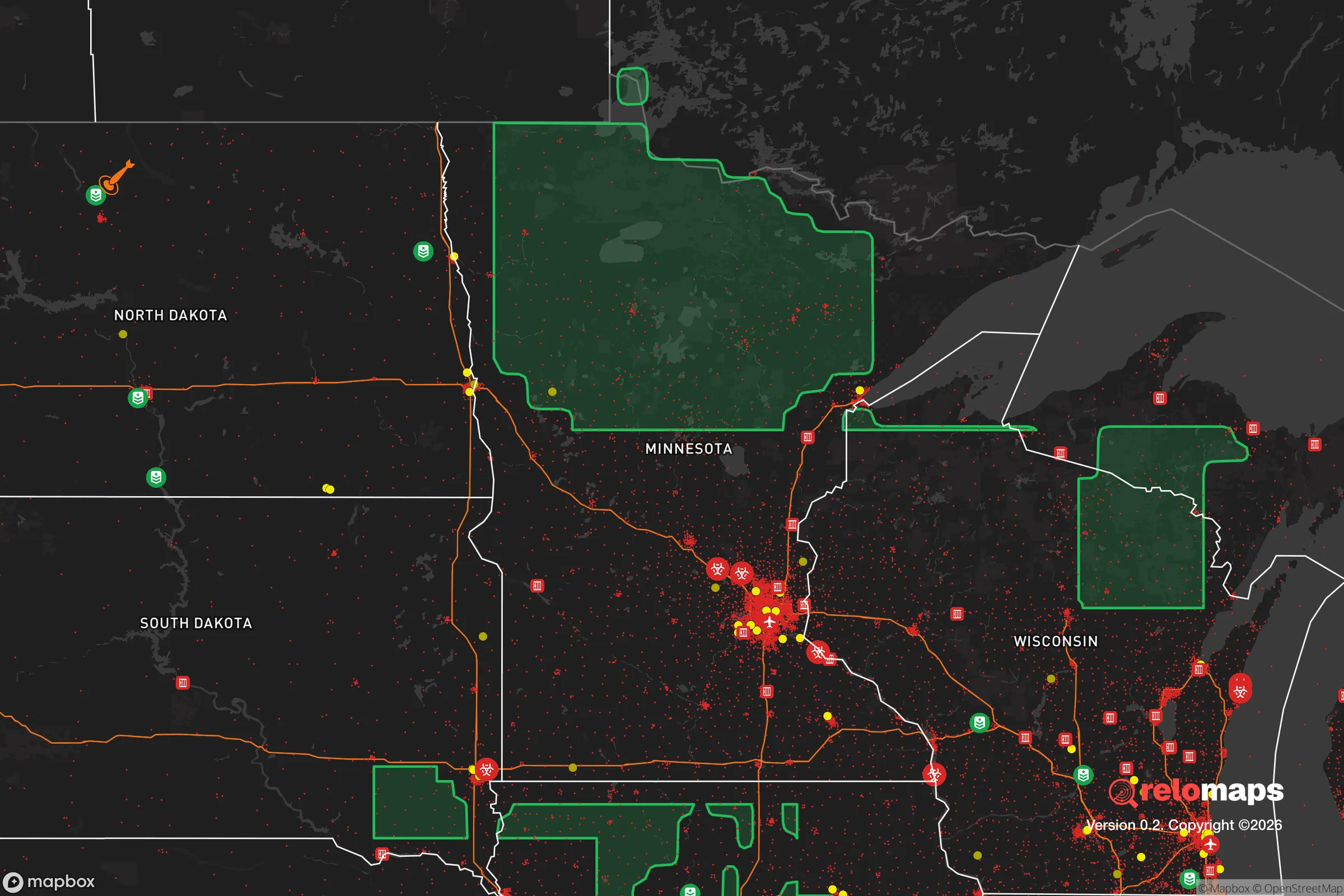


Important Note: For informational purposes only. This does not mean nothing bad ever happens in the green zones. Please use common sense. This is based on public data and modeled with AI. We tried to take a conservative approach but mistakes happen. We update this regularly as new information becomes available.
Solar Generator Recommendations
Backup power matters more here than in safer locations. We've picked three solar generators across budgets and capacity tiers — start with the budget unit if you only need a few essentials, or step up if you want to run a fridge and HVAC for days at a time.

Jackery Portable Power Station Explorer 300
Budget OptionPower on the Go: Weighing only 11 lbs, it's convenient to set up and store with book-sized foldable solar panels

BLUETTI Portable Power Station AC180
Designed for both indoor and outdoor scenarios, AC180 is highly capable as it has a robost capacity and continuous output power.

EF ECOFLOW DELTA Pro Ultra Power Station
Upgraded PickEcoFlow DELTA Pro Ultra is a whole-home energy system designed to grow with your family. Integrated with the Smart Home Panel 2, it scales to meet your evolving energy needs — keeping your home powered, intelligent, and secure through every stage of life.
We earn a commission, at no additional cost to you.
Strategic Assessment Analysis
Minnetonka Beach, Minnesota, presents a deceptively complex strategic picture for the conservative prepper or survivalist. On the surface, it’s a wealthy lakeside enclave with high property values and a quiet, insular character. But beneath that placid exterior lies a location with serious trade-offs: genuine natural advantages for water and food security are counterbalanced by extreme proximity to a major metropolitan target zone. For a relocator thinking in terms of decades, not years, this is a location that demands a clear-eyed assessment of its resilience profile, not just its scenic appeal.
Geographic position and natural advantages for long-term security
Minnetonka Beach sits on the northeastern shore of Lake Minnetonka, roughly 15 miles west of downtown Minneapolis. This places it within the outer ring of the metro area’s affluent suburbs, but its physical geography offers some genuine defensive benefits. The community is essentially a peninsula jutting into the lake, with only a few road connections—primarily County Road 15 and Minnetonka Boulevard—linking it to the mainland. In a scenario where civil unrest or gridlock makes surface travel dangerous, this limited access point becomes a natural chokepoint. The lake itself provides a 14,000-acre water reservoir that is both a resource and a barrier; approach by water is possible but easily observed, and the numerous bays and islands offer potential secondary retreat positions. The area’s dense hardwood forest and rolling terrain further break up sightlines and complicate any large-scale movement through the area. For a relocator prioritizing defensible geography and abundant fresh water, Minnetonka Beach’s position is far better than any inland suburb or flat prairie town.
Risks, exposures, and proximity to fallout-relevant landmarks
Here is where the analysis turns sobering. Minnetonka Beach’s greatest vulnerability is its proximity to the Minneapolis–Saint Paul metropolitan area, home to over 3.6 million people. In a mass casualty event—whether from a coordinated attack, a major industrial accident, or a pandemic-driven collapse of civil order—the metro’s population density becomes a liability. The community lies within 20 miles of the Minneapolis–Saint Paul International Airport (MSP), a primary target for any state-actor strike. It is also within 25 miles of the Xcel Energy Prairie Island Nuclear Generating Plant in Red Wing, a facility that, while well-regulated, represents a single-point-of-failure risk for the entire region. A radiological release from that plant, or a conventional attack on it, would place Minnetonka Beach within the potential fallout plume zone depending on wind direction. Additionally, the area’s wealth makes it a likely target for looting or organized criminal activity during a breakdown of law enforcement. The very affluence that makes it attractive for daily life also paints a target on it when the social contract frays. For a survivalist, being 15 miles from a major urban center is not a buffer—it’s a blast radius.
Practical resilience for a relocator: food, water, energy, and defensibility
On the practical side, Minnetonka Beach offers some real advantages that a prepared relocator can exploit. Water is not a concern—Lake Minnetonka is a massive, clean freshwater source, and with a simple hand-pump or solar-powered filtration system, a household can secure its water supply indefinitely. The lake also supports a robust fishery (walleye, northern pike, bass), providing a protein source that doesn’t require resupply. The surrounding area has good soil for gardening, though most lots are small and heavily wooded; a relocator would need to plan for raised beds or a community garden arrangement. Energy independence is achievable but requires investment—the region gets about 200 sunny days per year, making solar viable, but winter cloud cover and snow accumulation mean battery storage and a backup generator (preferably diesel or propane) are essential. Wood heating is a strong option, given the abundant forest cover, but a relocator must secure a woodlot or have a chainsaw and a trailer. Defensibility is mixed: the limited road access is a plus, but the community’s small police force (the Minnetonka Beach Police Department has fewer than 10 officers) means that in a crisis, residents will be largely on their own. Neighbors are likely to be like-minded, affluent, and privacy-oriented, which can be a double-edged sword—they may not be inclined to share resources or cooperate in a mutual-defense pact. A relocator should plan for a self-sufficient household, not a community network.
The overall strategic picture for a conservative prepper
Taking the long view, Minnetonka Beach is a location that works best as a secondary retreat or a “bug-in” location for a high-net-worth individual, not as a primary survival homestead. Its natural advantages—abundant water, defensible geography, and a low-crime baseline—are real and valuable. But its proximity to a major metro area and a nuclear plant introduces a level of risk that cannot be mitigated by personal preparedness alone. For a relocator who is willing to invest in a hardened home (reinforced doors, window shutters, a safe room, and a well-stocked pantry) and who has the financial resources to maintain a low profile, Minnetonka Beach offers a comfortable base for normal times and a defensible position for short-term disruptions. For those planning for a long-term collapse or a permanent shift in the national order, the metro proximity is a fatal flaw. The conservative prepper should view Minnetonka Beach as a high-quality fallback position for the first 90 days of a crisis, but not as a permanent relocation destination. The smart play is to use it as a staging ground while identifying a more remote, less visible property in northern Minnesota or Wisconsin for the long haul.

* Values derived from national, state, county, city and local statistics and may differ in a specific area. Last updated: 2026-04-27T14:36:44.000Z
Narrative content on this page is AI-generated and may contain mistakes. Verify any details that matter before acting on them.
ReloMaps may earn a commission from affiliate links at no extra cost to you.

