Political ClimatePolitical Climate in Minnetonka Beach, MN
District shown is the primary district for this city’s centroid. Cities may span multiple districts.
Local Political AnalysisPolitical Analysis of Minnetonka Beach, MN
Minnetonka Beach leans heavily Democratic, with a Cook PVI of D+11, and that shift has accelerated noticeably over the past decade. I’ve lived here long enough to remember when this was a reliably purple area—folks voted for the person, not the party, and local government mostly stayed out of your business. Now, the local precincts routinely go 60-65% for Democratic candidates, and the town council has taken on a more activist tone. It’s not the same place it was even ten years ago, and the trajectory is concerning if you value personal freedoms and limited government.
How it compares
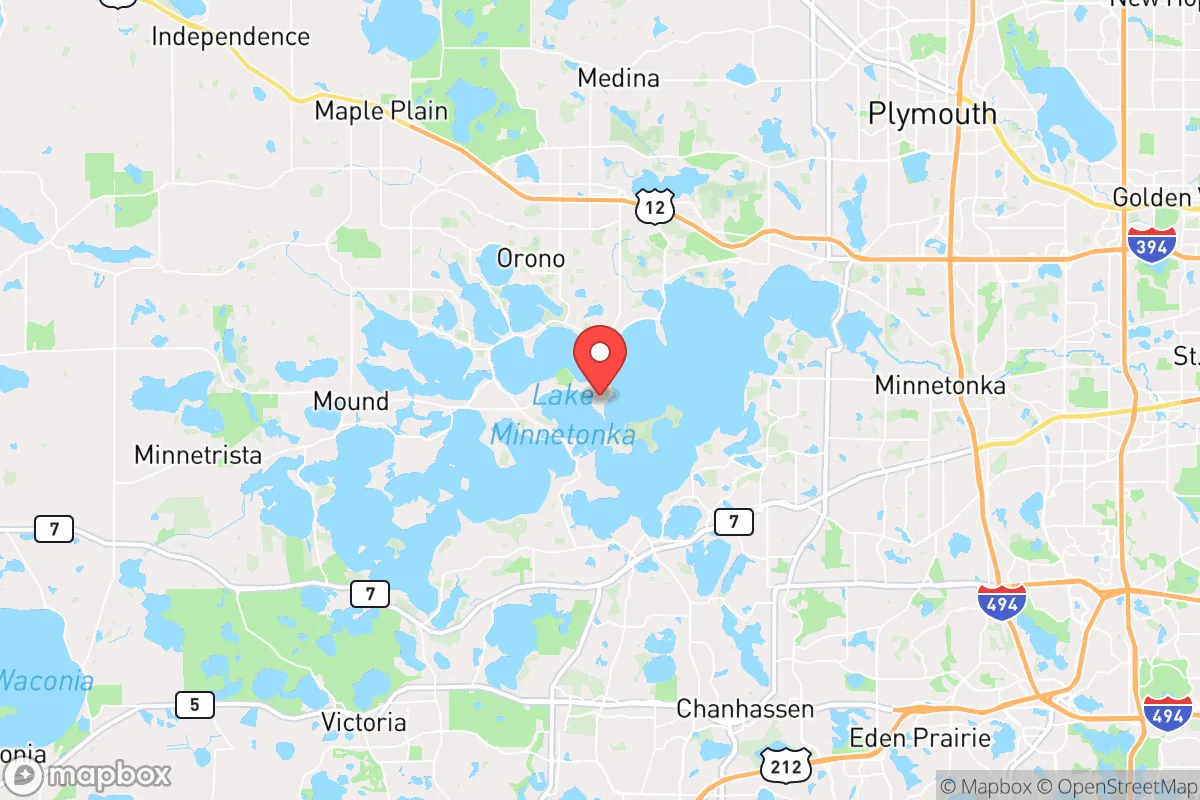
To really understand Minnetonka Beach, you have to look at the towns around it. Head west to Excelsior or Shorewood, and you’ll find a similar D+10 to D+12 lean—same lake-effect liberalism, same progressive energy. But drive just 15 minutes north to Maple Plain or Independence, and the political landscape flips hard. Those areas are more R+5 to R+8, with a much stronger libertarian streak and a “leave us alone” attitude. Even Wayzata, just a few miles east, is noticeably more moderate—closer to D+5. So Minnetonka Beach isn’t an island; it’s part of a growing suburban progressive corridor along the lake, and that’s a trend that’s been picking up steam since 2016. The contrast with the surrounding rural towns is stark, and it’s widening every election cycle.
What this means for residents
For a conservative or libertarian-leaning resident, the practical effects are real. Property taxes have climbed about 15% since 2020, driven by local levies for “sustainability” programs and equity initiatives that a lot of us never voted for. The city council has pushed through zoning changes that make it harder to build single-family homes, and there’s a growing push for rent control and short-term rental bans. School board meetings have become tense, with curriculum battles over CRT and gender ideology that would have been unthinkable here 20 years ago. If you value parental rights and local control, you’re increasingly on the defensive. The police department is still professional and responsive, but there’s been quiet talk of “reimagining public safety” that has a lot of long-time residents worried about where that leads.
On the cultural side, the lake community vibe is still strong—neighbors know each other, and the Fourth of July parade is as good as ever. But the political pressure is real. I’ve seen friends self-censor at block parties rather than risk being labeled “that guy” for questioning a new tax or a school policy. The local paper’s opinion page is almost uniformly progressive, and the city’s social media is heavy on “inclusive” messaging that feels more like virtue signaling than genuine community-building. If you’re a conservative here, you learn to pick your battles. The long-term trend is clear: Minnetonka Beach is becoming a one-party town, and that’s never healthy for personal freedom or honest debate. My advice? Keep your head down, vote in every primary, and maybe start looking at those Maple Plain listings if the zoning gets any tighter.

State Political ClimatePolitical Climate in Minnesota
State Political AnalysisPolitical Environment in the State
Minnesota has shifted from a classic purple battleground to a reliably blue state over the past two decades, with Democrats now controlling all three levers of state government. The state hasn't voted for a Republican presidential candidate since 1972, and the margin has widened from roughly 1.5 points in 2016 to over 7 points in 2020 and 2024. The dominant coalition is a mix of the Twin Cities metro, the Iron Range, and college towns, but the real story is how fast rural and exurban areas have swung right while the metro core has become overwhelmingly progressive.
Urban vs. rural divide
The political map is a tale of two Minnesotas. The Twin Cities metro — Hennepin, Ramsey, and Dakota counties — delivers roughly 60% of the state's vote and is solidly Democratic. Minneapolis and St. Paul are now among the most progressive cities in the Midwest, with city councils pushing defund-the-police resolutions and rent control. Meanwhile, greater Minnesota has swung hard right. Counties like Mille Lacs, Kanabec, and Pine have flipped from blue to deep red since 2016. The Iron Range, once a DFL stronghold, is now a battleground; St. Louis County (Duluth) still leans blue, but the surrounding mining towns like Hibbing and Virginia are voting Republican by double digits. The suburbs tell a mixed story: Anoka County, once a bellwether, now leans blue by 5-8 points, while exurban counties like Sherburne and Wright are reliably red. The only reliably red metro area is Rochester, where Olmsted County still votes Republican in state races but has drifted left in presidential years.
Policy environment
Minnesota's policy environment has become aggressively progressive under the DFL trifecta that took full control in 2023. The state now has a progressive income tax with a top rate of 9.85% on income over $200,000 (single filers), one of the highest in the nation. Property taxes are high, especially in the metro, with effective rates around 1.1% of home value. The regulatory posture is business-friendly on paper but heavily tilted toward labor and environmental interests. The 2023 session passed a paid family and medical leave program funded by a 0.7% payroll tax, a clean electricity standard requiring 100% carbon-free energy by 2040, and a sweeping driver's license law for undocumented immigrants. Education policy is a flashpoint: the state has no school choice program, no charter school expansion, and in 2023 passed a universal free school meals program. Election laws are among the most accessible in the country — automatic voter registration, same-day registration, no-excuse absentee voting, and a 2023 law restoring felon voting rights upon release from prison.
Trajectory & freedom
On the freedom scale, Minnesota is moving decisively in one direction — and it's not toward individual liberty. The 2023 session was a legislative blitz that expanded government control across multiple fronts. Gun rights took a major hit with the passage of red flag laws and universal background checks for private sales, ending Minnesota's long status as a shall-issue state. Parental rights suffered with the passage of a law allowing minors to consent to gender-affirming care without parental notification, and a separate law making Minnesota a "trans refuge" state that blocks out-of-state subpoenas related to gender care. Medical autonomy was curtailed by the codification of abortion rights into state law, removing any parental consent requirements for minors. Property rights are under pressure from a new 2024 law allowing local governments to impose rent control without a public vote. The state also passed a law banning "conversion therapy" for minors, which critics argue restricts parental choice in mental health care. On the plus side, Minnesota has no state-level occupational licensing for many trades, and the 2023 tax bill included some modest income tax cuts for middle brackets.
Civil unrest & political movements
The George Floyd protests of 2020 were a watershed moment that reshaped Minnesota politics. The Minneapolis City Council attempted to defund the police, a move that backfired spectacularly and led to a wave of suburban Republican wins in 2021. The state has become a battleground for immigration politics: Minnesota is a sanctuary state with a 2023 law prohibiting local law enforcement from cooperating with ICE detainers, and the city of Minneapolis has a "safe zone" ordinance that blocks federal immigration enforcement in city buildings. Election integrity remains a hot-button issue — the 2020 election saw a 99.9% audit rate with no evidence of fraud, but the 2023 law allowing felon voting and same-day registration has raised concerns among conservatives about chain of custody. Organized activist movements are strong on both sides: the Minnesota Freedom Fund bailed out protesters in 2020, while the Minnesota Gun Owners Caucus has become a powerful lobbying force. The state has seen a rise in "secession" rhetoric from rural counties, with several passing resolutions declaring themselves "Second Amendment sanctuaries" — though these are symbolic.
Projection
Over the next 5-10 years, Minnesota is likely to become more progressive, not less. The Twin Cities metro continues to grow while rural counties shrink, and the state's in-migration is heavily skewed toward young, college-educated professionals who lean left. The 2024 election results showed Democrats gaining ground in the suburbs while losing more rural ground, a pattern that favors continued DFL control of the legislature and governor's office. The state's demographic future is shaped by a growing immigrant population, particularly Somali and Hmong communities in the metro, who vote heavily Democratic. However, there are countervailing trends: the 2023 legislative session was so aggressive that it sparked a backlash, with Republicans flipping a state Senate seat in a special election in 2024. The state's high taxes and regulatory burden are driving some businesses to South Dakota and Wisconsin, but the economic base — health care, agriculture, and manufacturing — is stable enough to weather the shift. A new resident moving in now should expect a state where the political center of gravity is firmly in the progressive camp, with no realistic path back to purple in the near term.
For a conservative-leaning individual or family, the bottom line is this: Minnesota offers excellent schools, a strong economy, and beautiful natural amenities, but you will be living under a government that is actively hostile to many of your values. The tax burden is high, parental rights are under assault, and your Second Amendment rights are being eroded. If you're willing to be a political minority and can afford the cost of living, the quality of life is still high — but don't expect the state to become more friendly to your worldview anytime soon. The best bet for conservatives is to settle in exurban counties like Wright or Sherburne, or in the St. Croix Valley, where local governments are more aligned with traditional values.
* Values derived from national, state, county, city and local statistics and may differ in a specific area. Last updated: 2026-04-27T14:36:44.000Z
Narrative content on this page is AI-generated and may contain mistakes. Verify any details that matter before acting on them.
ReloMaps may earn a commission from affiliate links at no extra cost to you.

