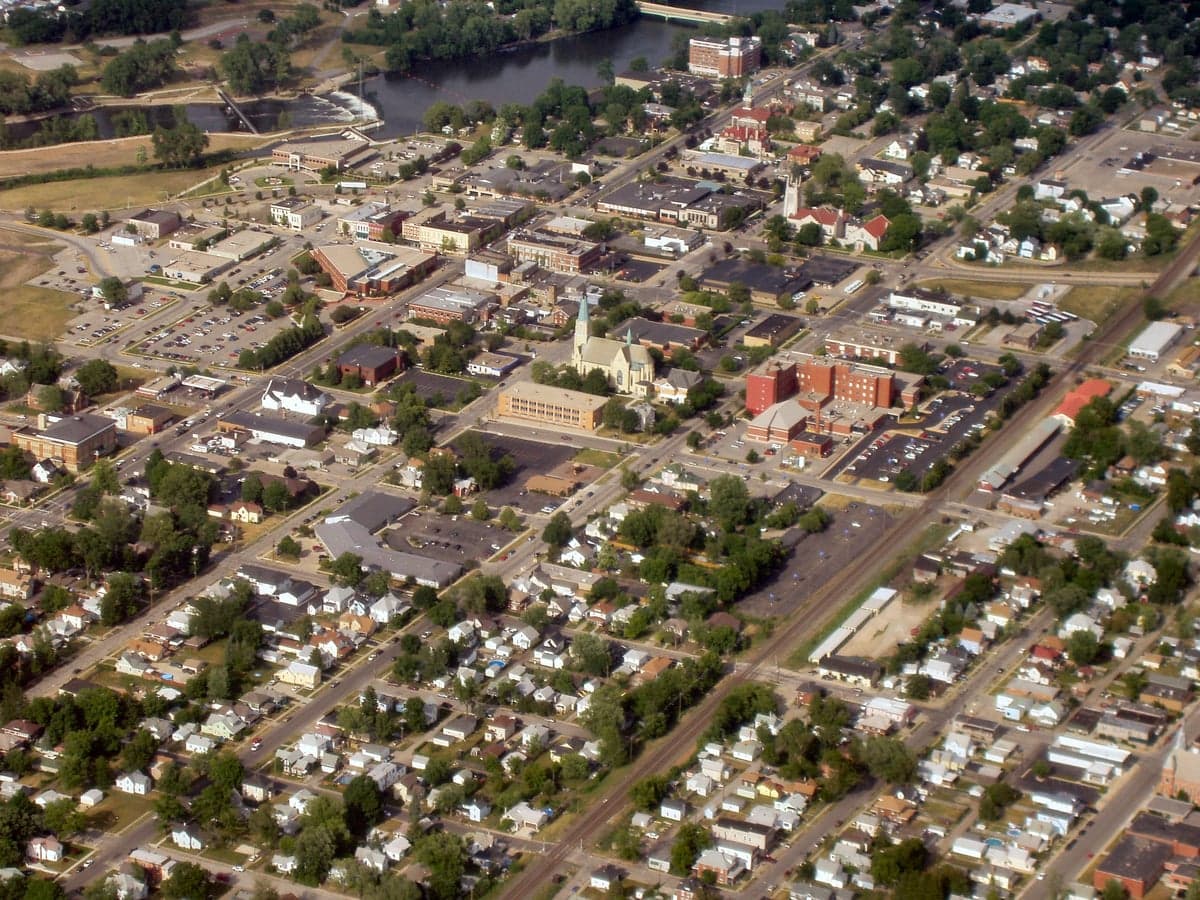
Photo: Wikipedia
Personal Sovereignty in Mishawaka, IN
Viable for self-reliance. Generally workable, though some barriers may limit total independence.
What does Personal Sovereignty tell us?
Personal Sovereignty measures your capacity for self-reliance and independence with minimal government friction. Higher scores mean fewer barriers between you and the way you want to live... but it assumes you have the space you need and good neighbors.
What does this tell us?
Personal Sovereignty measures your capacity for self-reliance and independence with minimal government friction. Higher scores mean fewer barriers between you and the way you want to live... but it assumes you have the space you need and good neighbors.
State Policy
Energy independence: Importer (35% of energy produced in-state)
Personal Liberty
Homesteading

Personal Liberty Analysis
Mishawaka, Indiana, offers a notably higher degree of personal sovereignty than many Midwestern cities, largely due to Indiana’s consistently conservative state-level governance and a local culture that values self-reliance. For individuals and families operating from a survivalist or prepper mindset, the key question isn’t just what the law allows, but how much the government stays out of your way. In Mishawaka, the answer is generally favorable: lower taxes, permissive gun laws, and a regulatory environment that doesn’t aggressively intrude on daily life, though you’re still within the orbit of South Bend’s more progressive influence. The city’s position as a smaller, manufacturing-rooted community means the default assumption is still that you manage your own affairs, from home defense to property maintenance, without excessive oversight.
Tax burden and regulatory posture in Mishawaka
Indiana’s tax structure is a clear win for those seeking to keep more of their earnings and reduce government dependency. The state’s flat income tax rate is 3.15% as of 2025, with a scheduled phase-down to 2.9% by 2027, and Mishawaka’s combined county and city income tax adds roughly 1.5%, keeping your total below 5%. Property taxes are also restrained by Indiana’s constitutional caps: 1% of assessed value for owner-occupied homes, 2% for rental properties, and 3% for commercial. On a $250,000 home, that means a maximum property tax bill of $2,500 annually, though actual rates in St. Joseph County often run slightly lower due to deductions. The regulatory posture is equally light. Indiana is a right-to-work state, meaning no forced union membership, and Mishawaka has no city-level business licensing requirements for most home-based enterprises. Zoning is present but not draconian—you can keep chickens in most residential areas with a simple permit, and there are no county-level restrictions on rainwater collection or small-scale solar panel installation. The state’s “preemption” law (Indiana Code 36-1-3-8) prevents local governments from enacting stricter regulations than the state on firearms, agriculture, and energy, which means Mishawaka can’t suddenly ban your generator or impose a city-level gun registry. For a prepper, this regulatory predictability is a major asset—you can plan long-term without fear of sudden local ordinances.
Self-defense rights and gun law specifics in Indiana
Indiana is a constitutional carry state since July 2022, meaning no permit is required to carry a handgun openly or concealed for anyone legally allowed to possess a firearm. Mishawaka’s local police department does not maintain a gun registry, and there are no city-level restrictions on magazine capacity, firearm types (including AR-15s), or ammunition purchases. The state’s “Stand Your Ground” law (Indiana Code 35-41-3-2) is unambiguous: you have no duty to retreat before using deadly force if you are in a place you have a legal right to be and reasonably believe force is necessary to prevent death or great bodily harm. This applies to your home, vehicle, or any public space. For parents, this means your family’s safety is legally prioritized over retreating from a threat. The only notable restriction is that carrying a firearm on school property (including Mishawaka public schools) is a felony unless you have a valid license and the school’s permission—a common limitation across the Midwest. However, Indiana does not require gun owners to store firearms in locked safes or use trigger locks, and there is no state-level “red flag” law that allows temporary confiscation without a criminal conviction. For a survivalist, this legal framework is as close to ideal as you’ll find in a state that borders Michigan and Illinois, both of which have far more restrictive gun laws. The practical takeaway: you can build a defensive arsenal without bureaucratic hurdles, and your right to use it is well-protected.
Self-reliance and homesteading viability in Mishawaka
Mishawaka’s residential lots average 0.25 to 0.5 acres in older neighborhoods, with newer subdivisions offering slightly larger parcels up to 1 acre. While this isn’t rural acreage, it’s enough for a substantial garden, a small chicken coop, and a workshop. The city’s zoning code explicitly allows “urban agriculture” including beekeeping, and there are no restrictions on composting or rain barrels. Off-grid feasibility is limited by utility hookup requirements—most homes are connected to municipal water and sewer, and the city does not permit permanent off-grid living without a septic system and well permit, which are expensive and rarely approved for standard lots. However, you can install grid-tied solar panels without a special permit, and Indiana’s net metering policy (up to 1 MW) lets you sell excess power back to the grid. For serious homesteading, you’ll need to look outside city limits—unincorporated St. Joseph County has no zoning for agricultural use, and you can keep livestock (goats, pigs, even a horse) on parcels as small as 2 acres. The county also allows shooting on private property if you’re at least 600 feet from any occupied building, which is a practical consideration for firearms training. The biggest constraint is water: Mishawaka sits on a glacial aquifer, so wells are viable, but drilling a new well costs $5,000–$10,000. For a prepper, the sweet spot is a 1–3 acre lot just outside the city limits, where you get the tax benefits of county living (lower property taxes) and the legal freedom to build a self-sufficient compound without city interference.
Personal liberties: parental rights, medical autonomy, and property
Indiana has been a national leader in protecting parental rights. The state’s “Parental Bill of Rights” (Indiana Code 20-33-2-17.5) requires schools to notify parents of any medical or mental health services offered to their child, and to obtain written consent before any non-emergency treatment. Mishawaka schools have complied with this law, meaning no hidden curriculum or confidential counseling without your knowledge. Medical autonomy is also strong: Indiana does not mandate COVID-19 or childhood vaccinations for school attendance (though some private schools may require them), and there is no state-level vaccine passport system. The state’s “Right to Try” law allows terminally ill patients to access experimental treatments without FDA approval, and there are no restrictions on purchasing or using ivermectin, hydroxychloroquine, or other off-label medications. Property rights are protected by Indiana’s “takings” law (Indiana Code 32-24-1), which requires just compensation and a public hearing before any eminent domain action. Mishawaka has not used eminent domain aggressively in recent years, and there are no city-level rent control or landlord licensing schemes that would infringe on property use. Speech is protected by the state’s lack of a “hate speech” law—Indiana relies on the First Amendment, and there are no local ordinances restricting political signs, flags, or public demonstrations. For a conservative-leaning individual, this means you can homeschool, refuse medical mandates, and speak your mind without fear of government retaliation. The only notable gap is that Indiana does not have a specific “medical freedom” amendment in its constitution, so future legislative changes could shift this balance, but the current political climate strongly favors individual choice.
Overall, Mishawaka offers a high degree of personal sovereignty compared to most of the Midwest, especially when stacked against neighboring Michigan or Illinois. The combination of constitutional carry, low taxes, parental rights protections, and a light regulatory touch creates an environment where a survivalist or prepper can operate with minimal government friction. The main trade-offs are the urban proximity (South Bend’s more progressive policies don’t directly affect Mishawaka, but they influence county-level decisions) and the lack of truly rural acreage within city limits. If you’re willing to live just outside the city, you can achieve near-total autonomy. For a single individual or family prioritizing freedom over convenience, Mishawaka is a solid, defensible base in a state that still respects the individual’s right to self-determination.

* Values derived from national, state, county, city and local statistics and may differ in a specific area. Last updated: 2026-04-22T09:59:27.000Z
Narrative content on this page is AI-generated and may contain mistakes. Verify any details that matter before acting on them.
ReloMaps may earn a commission from affiliate links at no extra cost to you.

