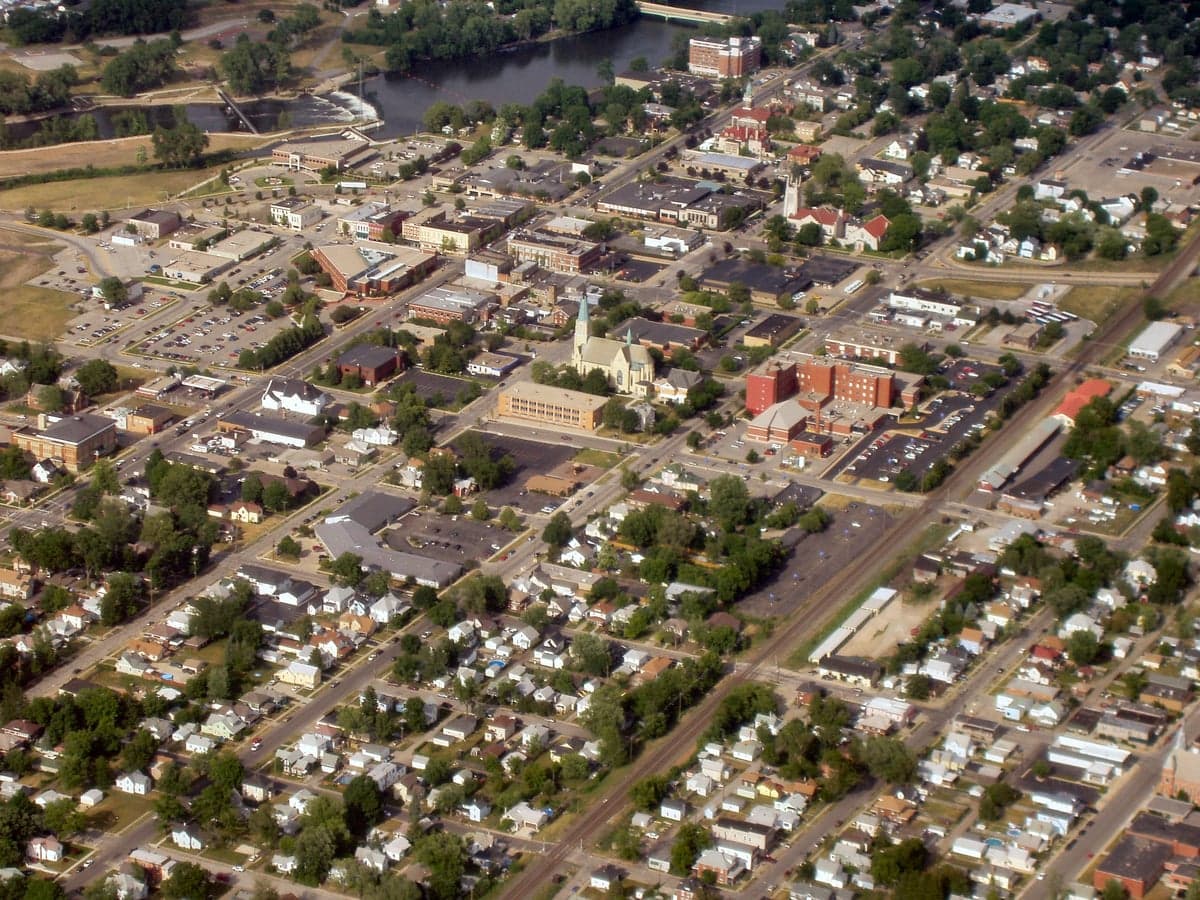
Photo: Wikipedia
Strategic Assessment of Mishawaka, IN
Meaningful friction. Expect exposure to either population pressure, blast zones, or natural disaster risk. Consider buying a retreat property.
What does the Strategic Assessment tell us?
Our Strategic Assessment grades tactical survivability of an area. Major population centers, military targets, fallout zones, natural disasters, and border exposure all drive risk — lower exposure means a more defensible position in a crisis.
This is heavily inspired by Joel Skousen's Strategic Relocation book. Highly recommended you checkout the book ($)What does this tell us?
Our Strategic Assessment grades tactical survivability of an area. Major population centers, military targets, fallout zones, natural disasters, and border exposure all drive risk — lower exposure means a more defensible position in a crisis.
This is heavily inspired by Joel Skousen's Strategic Relocation book. Highly recommended you checkout the book ($)Strategic Pillars

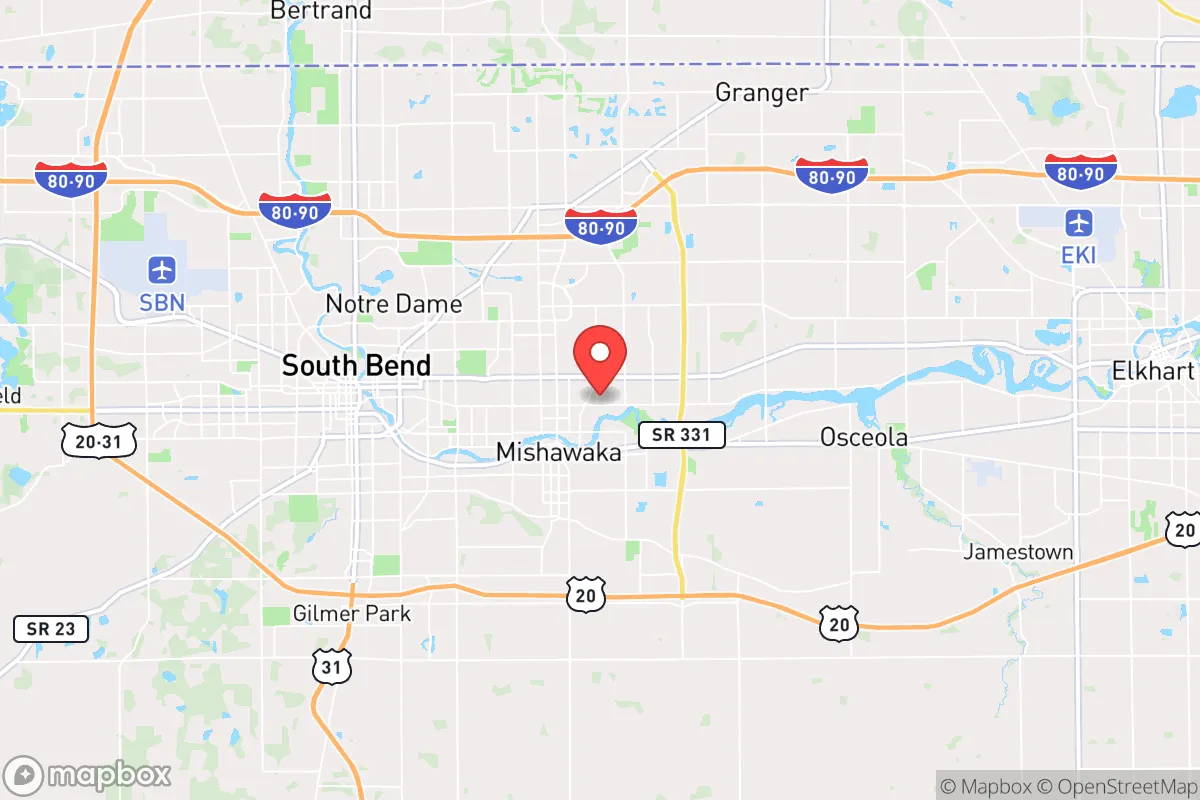
Key Distances
Regional Safe Places
Below is our recommended "safe zones" in Indiana and the surrounding area based on our strategic heuristics. For most people, it's unrealistic to live in a “safe zone” full-time due to work, family or other personal reasons. They tend to be more rural. However, many of these areas are perfect for second homes and retreat properties that double as a vacation home or even a short-term rental.

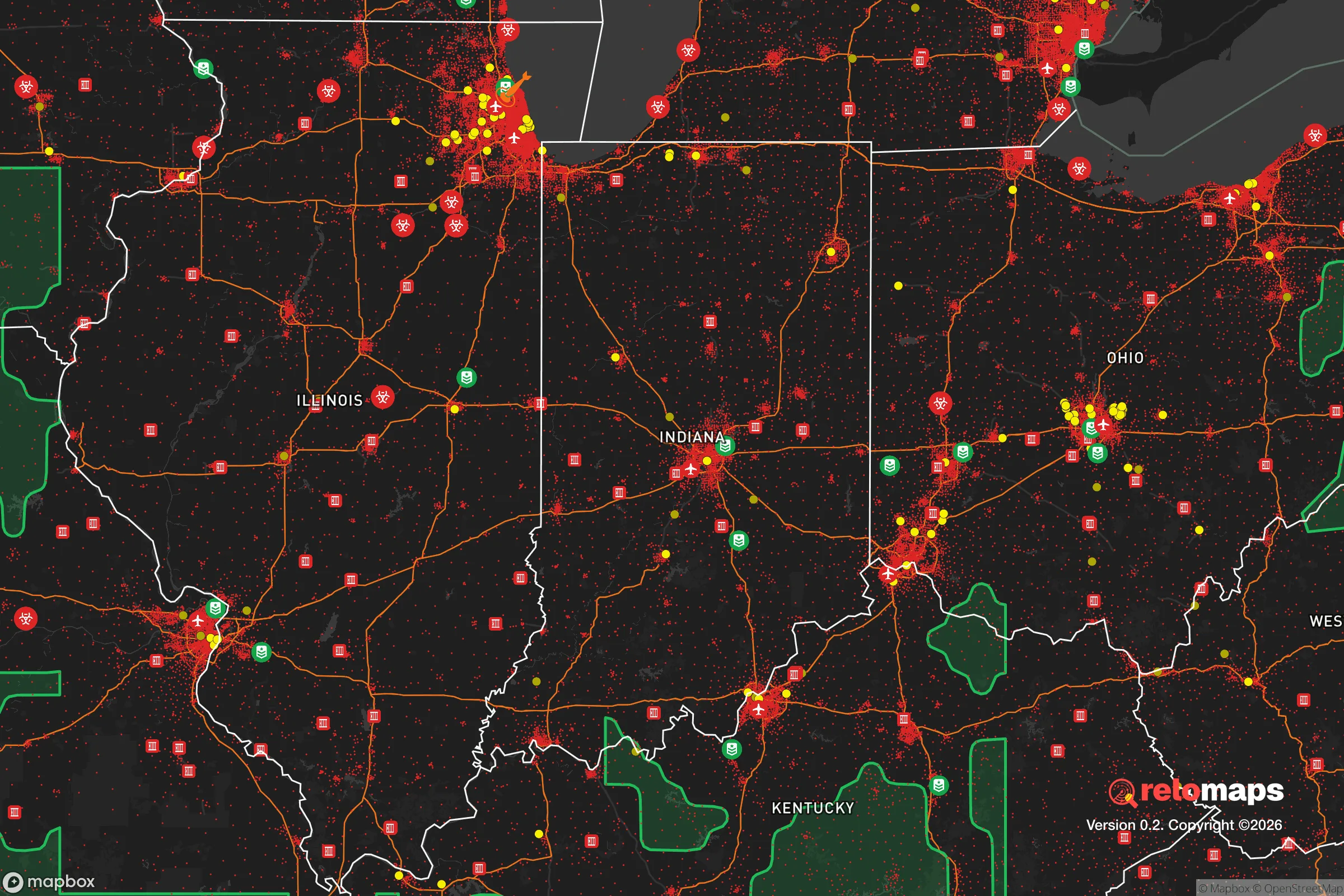


Important Note: For informational purposes only. This does not mean nothing bad ever happens in the green zones. Please use common sense. This is based on public data and modeled with AI. We tried to take a conservative approach but mistakes happen. We update this regularly as new information becomes available.
Solar Generator Recommendations
Backup power matters more here than in safer locations. We've picked three solar generators across budgets and capacity tiers — start with the budget unit if you only need a few essentials, or step up if you want to run a fridge and HVAC for days at a time.

Jackery Portable Power Station Explorer 300
Budget OptionPower on the Go: Weighing only 11 lbs, it's convenient to set up and store with book-sized foldable solar panels

BLUETTI Portable Power Station AC180
Designed for both indoor and outdoor scenarios, AC180 is highly capable as it has a robost capacity and continuous output power.

EF ECOFLOW DELTA Pro Ultra Power Station
Upgraded PickEcoFlow DELTA Pro Ultra is a whole-home energy system designed to grow with your family. Integrated with the Smart Home Panel 2, it scales to meet your evolving energy needs — keeping your home powered, intelligent, and secure through every stage of life.
We earn a commission, at no additional cost to you.
Strategic Assessment Analysis
Mishawaka, Indiana, sits in a position that demands a hard, clear-eyed look from anyone serious about long-term preparedness. Its location along the St. Joseph River, just east of South Bend, offers a mix of genuine strategic advantages and significant, non-negotiable risks. For the conservative relocator thinking in terms of decades, not months, this isn't a paradise—it's a potential base of operations that requires you to understand its specific vulnerabilities and leverage its real, if limited, strengths.
Geographic position and natural advantages for long-term security
Mishawaka's primary asset is its access to the St. Joseph River, a major waterway that flows into Lake Michigan. This isn't a creek; it's a reliable, year-round source of fresh water, which is the single most critical resource in any extended disruption. The surrounding terrain is flat, agricultural land—the kind of ground that, with work, can produce food. The soil in St. Joseph County is rich, glacial till, capable of supporting serious gardening and small-scale farming. The area is also within a reasonable drive of the Lake Michigan shoreline, offering a secondary water source and potential fishing access, though that shoreline also brings its own set of risks (more on that below). The climate is four-season, with cold winters that act as a natural population filter—those unprepared for sustained cold and snow will move on, which is a feature, not a bug, for a survival-minded community. The region's industrial past, centered on manufacturing (think RV production, automotive parts), means a local population with mechanical and fabrication skills, a resource that's often overlooked in prepper calculations. You're not in a tech hub; you're in a place where people know how to fix things.
Risks, exposures, and proximity to fallout-relevant landmarks
Here's where the analysis gets uncomfortable. Mishawaka's proximity to South Bend (population ~100,000) is a double-edged sword. In a civic unrest scenario, South Bend's urban core could become a source of looting, violence, and displaced populations moving outward. The city has a history of racial tension and economic disparity, and while it's not Chicago, it's large enough to generate serious problems in a breakdown. More critically, Mishawaka sits within 100 miles of the Gary/Chicago metroplex, a massive population center that would be a primary target for any coordinated attack or major disruption. The prevailing winds blow from the west, meaning fallout from a dirty bomb or nuclear incident at the Gary Works steel mill or the Chicago rail yards could drift directly over the area. The I-80/90 corridor, which runs just south of Mishawaka, is a major east-west logistics artery. In a crisis, this highway becomes a funnel for refugees, military convoys, and desperate people. Living near a major interstate is a liability, not an asset, for a prepper. The South Bend International Airport, while small, is also a potential target for secondary attacks. The area has no natural barriers—no mountains, no large forests—to slow down a determined group or provide easy defensible terrain. You are on a flat, open grid.
Practical resilience for a relocator: food, water, energy, and defensibility
Let's break down the practical nuts and bolts. Water: The St. Joseph River is your lifeline, but it's also a public resource. You need a plan for filtration (Berkey or similar) and storage that doesn't rely on municipal taps. The river is navigable, meaning it's a potential route for both travel and threat. Food: The surrounding farmland is a major plus. You can buy land within 20-30 minutes of Mishawaka for reasonable prices compared to the coasts. Local farmers' markets and U-pick operations are common. But you need to be growing your own or have a network of local producers, because grocery store shelves will empty in 72 hours. Energy: The grid is aging and vulnerable to both weather (ice storms, tornadoes) and cyberattack. Solar is viable, though winter production is low. Natural gas is common for heating, but that infrastructure is also fragile. A wood stove or a backup generator with stored fuel is non-negotiable. Defensibility: This is the weakest point. Mishawaka is a suburban grid of neighborhoods and strip malls. There are no chokepoints, no high ground, no natural fortifications. Your best bet is a property on the outskirts, ideally with a creek or pond, set back from the road, with a clear field of view. The local police and sheriff's department are professional but will be overwhelmed in a major event. You are your own first responder. The local gun culture is strong—Indiana is a shall-issue state with no permit required for open or concealed carry as of 2022—so you won't be alone in your preparations, but that also means your neighbors are armed. Community is a double-edged sword.
The overall strategic picture for a conservative relocator
Mishawaka is not a bug-out location. It's not a remote retreat. It's a working-class town with real assets—water, soil, industrial skills—and real liabilities—proximity to a major metro, flat terrain, and a major highway. For the conservative relocator who wants to be part of a community that values self-reliance, hard work, and local knowledge, it offers a foundation. But you cannot move here and expect to be safe by accident. You need to choose your specific location carefully: avoid the floodplains, avoid the interstate corridors, and get at least 15 minutes outside the city limits. You need to invest in water filtration, food storage, and a means of heating your home without the grid. You need to know your neighbors and build a mutual aid network before the crisis hits. The area's political leanings are mixed—St. Joseph County votes blue, but the surrounding rural counties are solidly red—so you'll find allies, but you'll also find people who don't share your worldview. The bottom line: Mishawaka can work, but only if you treat it as a base to be hardened, not a sanctuary to be found. It's a place to build, not a place to hide. If you're willing to do the work, it's a viable option. If you're looking for a turnkey solution, keep looking.

* Values derived from national, state, county, city and local statistics and may differ in a specific area. Last updated: 2026-04-22T09:59:27.000Z
Narrative content on this page is AI-generated and may contain mistakes. Verify any details that matter before acting on them.
ReloMaps may earn a commission from affiliate links at no extra cost to you.

