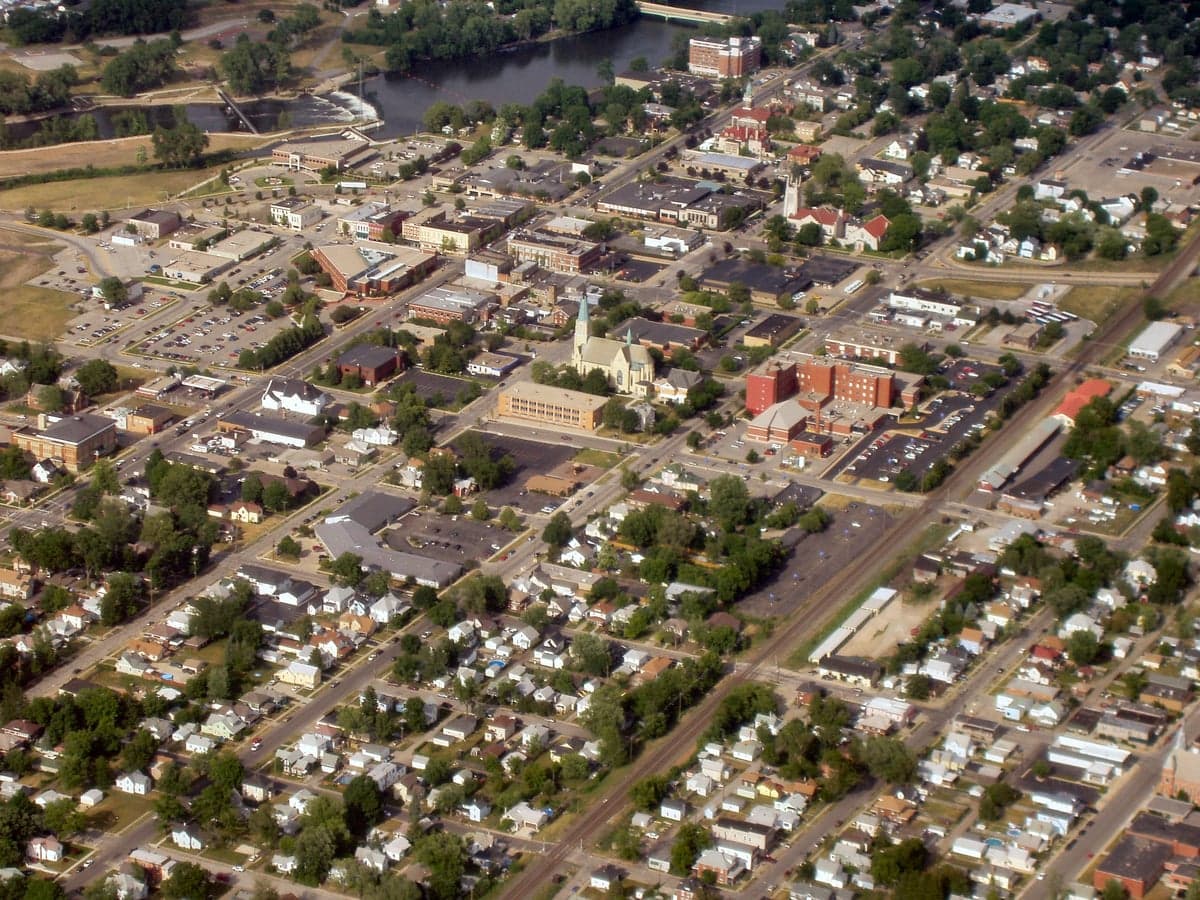
Photo: Wikipedia
Political ClimatePolitical Climate in Mishawaka, IN
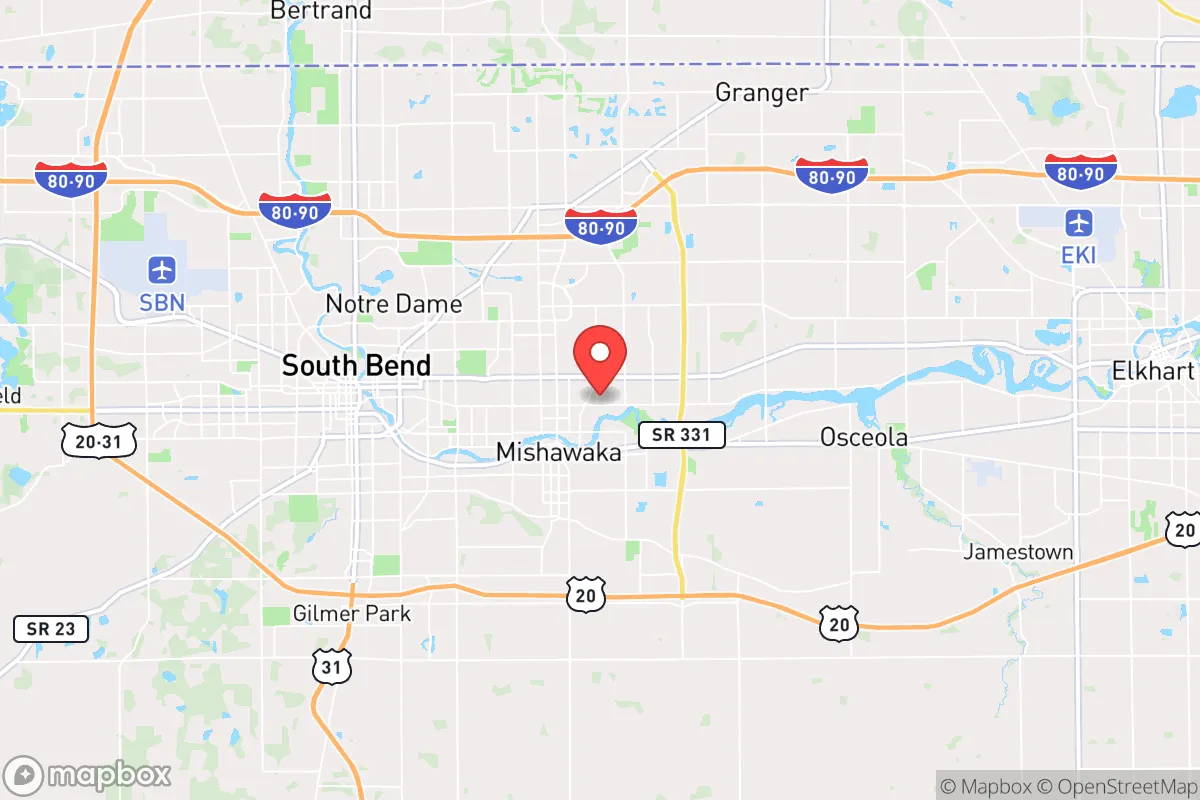
District shown is the primary district for this city’s centroid. Cities may span multiple districts.
Local Political AnalysisPolitical Analysis of Mishawaka, IN
Mishawaka leans solidly conservative, with a Cook PVI of R+13 that puts it well to the right of the national average. The city has held that general direction for decades, but I’ve seen the political undercurrents shift in ways that deserve a closer look. While the overall vote totals still favor Republicans, the local culture and policy battles have gotten more intense, especially as neighboring South Bend—just a few miles west—has swung hard left under Mayor Pete Buttigieg’s legacy and now a progressive city council. Mishawaka isn’t South Bend, but the pressure from that direction is real, and it’s showing up in school board races, zoning fights, and even how the police department operates.
How it compares
Drive ten minutes west into South Bend, and you’re in a city that voted for Biden by double digits in 2020 and has embraced things like sanctuary city policies and defund-the-police rhetoric. Mishawaka, by contrast, still elects a Republican mayor (Dave Wood, who’s been in office since 2013 and keeps taxes low) and a city council that’s majority conservative. But the comparison gets trickier when you look at the surrounding county. St. Joseph County as a whole is only R+5, meaning Mishawaka’s red tilt is diluted by the more liberal precincts in South Bend and the university crowd around Notre Dame. That’s why you’ll see conservative policies hold in Mishawaka proper—like the city’s refusal to adopt a local income tax hike that South Bend pushed through—but the county-level government can sometimes feel like it’s pulling in the opposite direction. Granger, just east of Mishawaka, is even more conservative, with a lot of families who moved out of South Bend specifically to escape the progressive agenda.
What this means for residents
For someone living here, the practical effect is that Mishawaka still feels like a place where your personal freedoms aren’t under constant assault. You won’t see mask mandates lingering in local businesses, and the city council hasn’t tried to impose the kind of housing density or zoning overrides that South Bend has used to push high-density developments into quiet neighborhoods. Property taxes are reasonable, and the city hasn’t gone down the road of creating a “human rights commission” with the power to investigate political speech, which some nearby towns have done. That said, the long-term trend is concerning. The school board has seen more progressive candidates win seats in recent cycles, and there’s been quiet pressure from county health officials to adopt stricter environmental regulations that could hit small businesses. If you value being left alone to run your life without government meddling, Mishawaka is still a good bet—but you have to stay engaged, because the same forces that turned South Bend into a laboratory for progressive experiments are knocking on the door.
Culturally, Mishawaka holds onto a distinct identity that sets it apart from the more activist vibe you get in South Bend. The annual Mishawaka Summer Concert Series and the city’s heavy investment in the Riverwalk and parks system reflect a community that prioritizes quality of life over political grandstanding. There’s no push to rename streets or take down monuments, and the local police department still enjoys strong community support. The biggest policy distinction is probably the city’s approach to development: Mishawaka has been aggressive in attracting manufacturing and logistics jobs (like the Amazon distribution center and the expansion of Lippert Components) without the kind of corporate welfare or affordable housing mandates that South Bend demands. It’s a pragmatic, pro-business conservatism that works for most folks here. But I’d be lying if I said I wasn’t watching the next few election cycles closely—because if the county keeps trending left, Mishawaka’s ability to stay its own course will be tested like never before.

State Political ClimatePolitical Climate in Indiana
State Political AnalysisPolitical Environment in the State
Indiana has been a reliably Republican state for decades, but the nature of that conservatism has shifted noticeably. The state hasn't voted for a Democratic presidential candidate since 2008, when Barack Obama narrowly won it, and since then the GOP margin has widened to around 16 points in 2024. However, the coalition is changing: the old-school, union-friendly, culturally moderate Democrats who once held sway in industrial towns like Gary, Hammond, and South Bend have largely been replaced by a more populist, culturally conservative Republican base, while the Indianapolis suburbs have become the state's main political battleground. Over the past 10-20 years, the state has moved from a purple-ish swing state to a solid red one, but with a growing urban-rural fissure that mirrors national trends.
Urban vs. rural divide
The political map of Indiana is stark. The Indianapolis metro area, including Marion County and its surrounding suburbs like Hamilton County (Carmel, Fishers, Noblesville), is the state's Democratic stronghold. Marion County consistently votes blue by double digits, while Hamilton County, once a GOP fortress, has been trending purple — it still votes Republican but by shrinking margins. Conversely, the rest of the state is deeply red. Rural counties like Adams, Jay, and Randolph routinely deliver 70-80% of their votes to Republicans. The industrial northwest corner, anchored by Lake County (Gary, Hammond), remains a Democratic holdout due to union legacy and minority populations, but its influence is waning as population shifts south and east. The state's second-largest city, Fort Wayne (Allen County), is a reliable GOP base, while Evansville (Vanderburgh County) and the Ohio River counties lean conservative but with a more moderate, business-friendly flavor. The real story is the suburban shift: places like Zionsville and Westfield, once safely Republican, are now seeing competitive local races as young families and professionals move in from more liberal states.
Policy environment
Indiana's policy environment is broadly conservative, but with some notable wrinkles. The state has a flat income tax rate of 3.05% (down from 3.15% in 2025, with a scheduled phase-down to 2.9% by 2029), and no inheritance or estate tax. Property taxes are capped at 1% of assessed value for owner-occupied homes, which is a major draw for families. The regulatory climate is business-friendly, with a right-to-work law (passed in 2012) and a tort reform system that caps damages. On education, Indiana has a robust school choice program — the Choice Scholarship voucher program is one of the largest in the nation, and charter schools are widely available. However, the state has also seen a push for more centralized control over curriculum and library content, with the 2023 law allowing parents to challenge "harmful" materials in school libraries. Healthcare is a mixed bag: Indiana expanded Medicaid under the HIP 2.0 program (a conservative alternative to traditional expansion), but the state has not fully embraced telehealth or medical freedom. Election laws are strict: voter ID is required, and the state purges inactive voters regularly. There is no early voting by mail without an excuse, though in-person early voting is available.
Trajectory & freedom
On balance, Indiana is moving in a more conservative direction on most fronts, but with some concerning trends. The 2022 passage of a near-total abortion ban (Senate Enrolled Act 1) was a major win for pro-life advocates, though it has sparked ongoing legal challenges and a political backlash in the suburbs. Gun rights are strong: Indiana is a permitless carry state (since 2022), and there is no state-level red flag law — though a 2023 law did create a process for law enforcement to temporarily seize firearms from individuals deemed a danger, which some gun rights advocates view as a slippery slope. Parental rights have been strengthened with the 2023 law requiring schools to notify parents of any changes to a student's gender identity or health services. On the downside, the state has seen a creeping expansion of government surveillance through license plate readers and police data sharing, and the 2024 law requiring age verification for adult websites has raised free speech concerns. Property rights are generally respected, but there have been fights over wind and solar farm siting, with the state legislature preempting local control in some cases. Overall, Indiana is more free than many states, but the trend is toward more government involvement in personal decisions, especially around health and education.
Civil unrest & political movements
Indiana has not seen the level of civil unrest seen in coastal states, but there have been flashpoints. The 2020 George Floyd protests in Indianapolis led to some property damage and a heavy police response, but the state avoided the widespread rioting seen in other cities. The abortion ban has energized both sides: pro-life groups like Indiana Right to Life are powerful, while Planned Parenthood and local activist networks have organized protests and canvassing efforts. Immigration politics are less heated than in border states, but there have been tensions in towns like Logansport and Goshen, where meatpacking plants have drawn immigrant workers. There is no sanctuary city policy in Indiana; in fact, the state passed a law in 2011 requiring local law enforcement to cooperate with federal immigration authorities. Election integrity has been a hot topic since 2020, with the state passing stricter voter ID laws and purging non-active voters, but there have been no major fraud scandals. The most visible political movement in recent years has been the school board wars, with conservative parents organizing to challenge curriculum and library books in districts like Hamilton Southeastern and Carmel Clay. These fights have been intense but largely peaceful.
Projection
Over the next 5-10 years, Indiana is likely to remain a solidly Republican state, but the suburban shift will continue to make some races competitive. The Indianapolis suburbs will become more purple, potentially flipping some state legislative seats and congressional districts (like the 5th District, currently held by Republican Victoria Spartz). The rural areas will stay deeply red, and the industrial northwest will continue its slow decline. In-migration is a wild card: Indiana is attracting people from Illinois, California, and New York due to lower taxes and housing costs, but these newcomers tend to be more moderate or even left-leaning on cultural issues. If this trend accelerates, it could moderate the state's politics over time. However, the state's political infrastructure — the state legislature, the governor's office, and the courts — is firmly in GOP hands and likely to stay that way. The biggest wild card is the abortion issue: if the ban remains in place, it could continue to drive suburban women to the polls for Democrats. For a new resident, expect a state that is conservative but not reactionary, with a growing tension between the old guard and the new arrivals.
For someone moving to Indiana, the bottom line is this: you'll find a state that respects your right to keep and bear arms, keeps taxes low, and gives you choices in education. But you'll also see a government that is increasingly willing to involve itself in personal medical decisions and school curriculum. The political climate is stable and predictable, but the culture wars are real and visible, especially in the suburbs. If you're looking for a place where your vote counts and your values are broadly shared, Indiana is a solid bet — just be prepared for the occasional fight at the school board meeting.
* Values derived from national, state, county, city and local statistics and may differ in a specific area. Last updated: 2026-04-22T09:59:27.000Z
Narrative content on this page is AI-generated and may contain mistakes. Verify any details that matter before acting on them.
ReloMaps may earn a commission from affiliate links at no extra cost to you.

