Photo: Wikipedia
Demographics of Cole County
Affluence Level in Cole County
A middle-class area roughly in line with national averages across income, home values, education, and employment.
People of Cole County
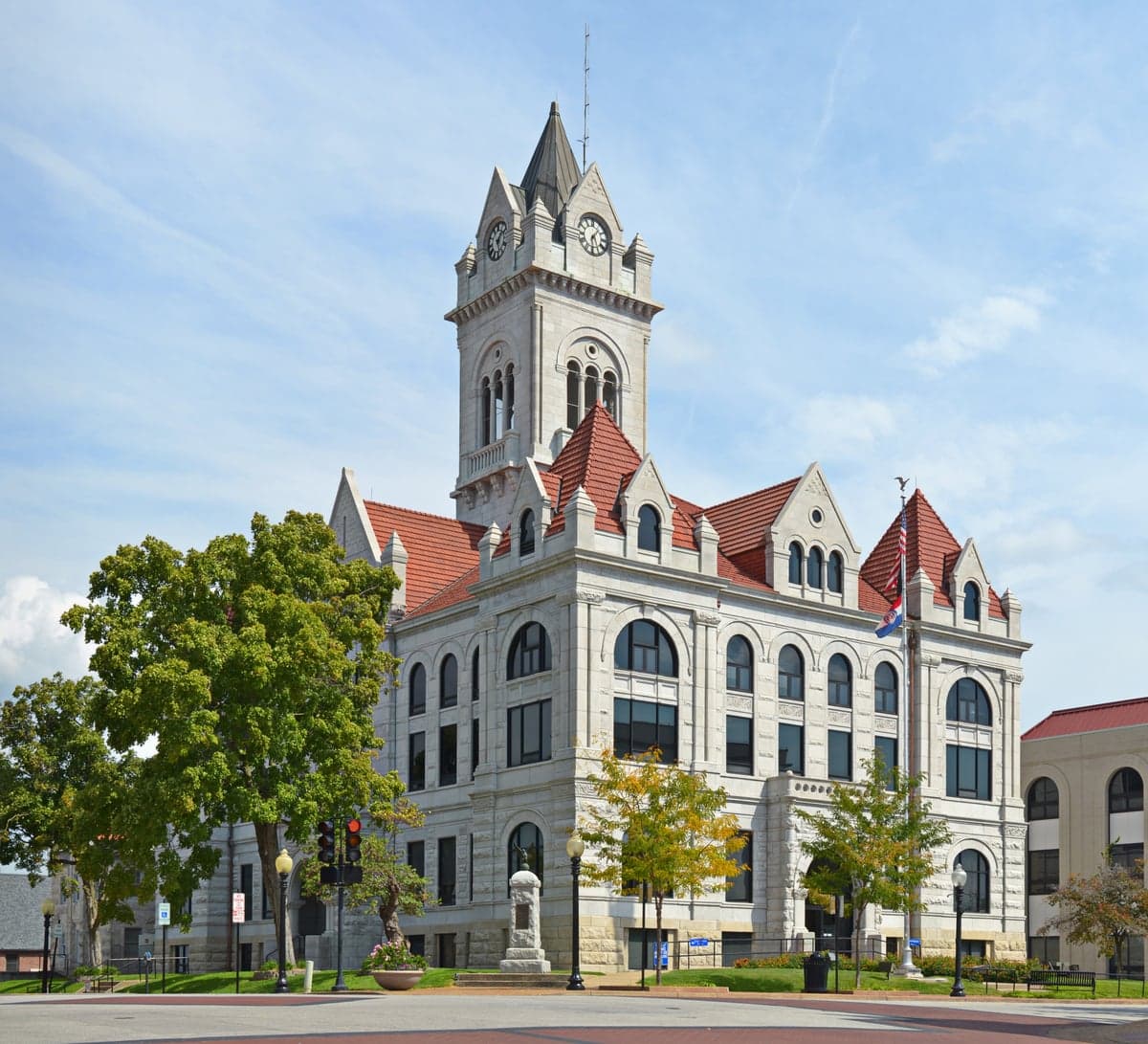
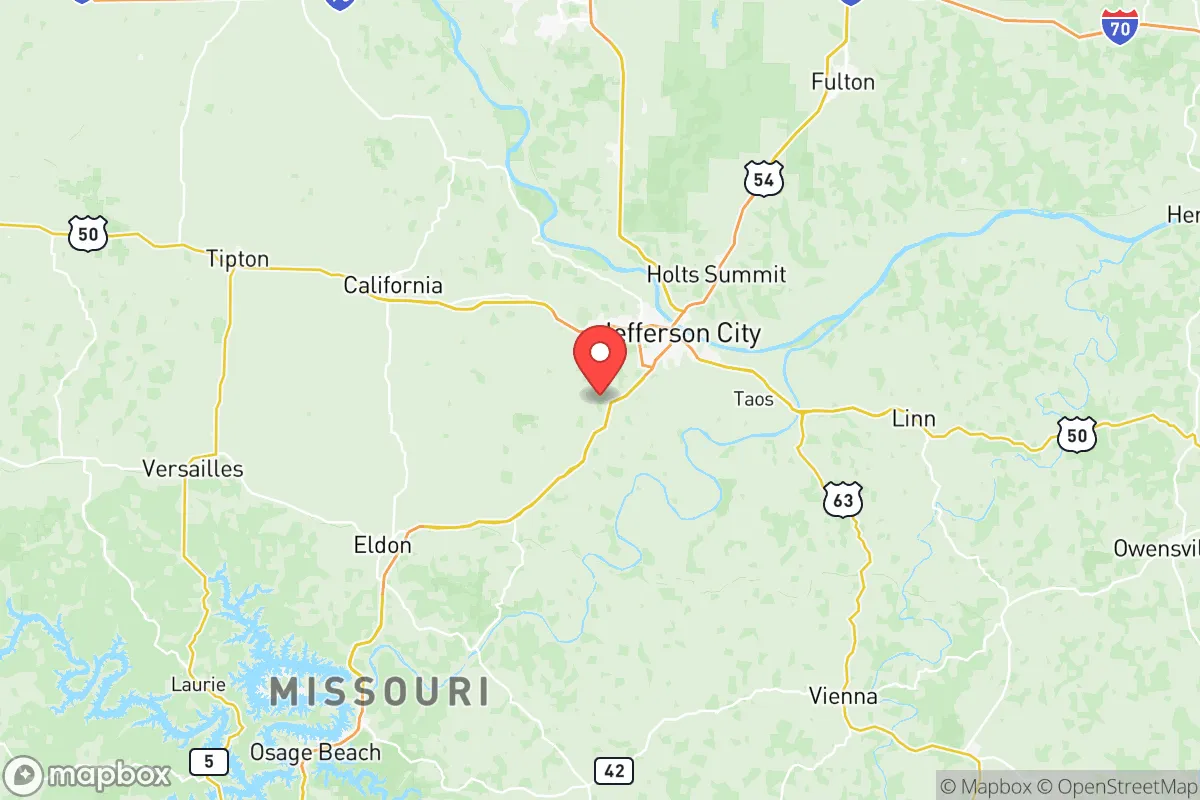
Cole County, Missouri, is a predominantly white, politically conservative, and family-oriented community anchored by the state capital, Jefferson City. With a population of 76,924, the county is notably less diverse than the national average, with a foreign-born population of just 1.6% and a population that is 79.7% white. Its identity is shaped by a deep-rooted German Catholic heritage, a strong state-government employment base, and a growing suburban corridor along the US-54 and US-50 highways.
Settlement & growth (pre-1960)
Before American settlement, the land that is now Cole County was part of the traditional territory of the Osage Nation, who controlled much of central and western Missouri. The Osage were forcibly removed through treaties in the early 19th century, most notably the 1808 Treaty of Fort Clark, which ceded vast tracts of land to the U.S. government. French fur traders and trappers had passed through the area along the Missouri River, but no permanent European settlements were established until after the Louisiana Purchase in 1803.
The first major wave of American settlers arrived in the 1810s and 1820s, primarily from Kentucky, Tennessee, and Virginia. These were largely of English and Scots-Irish descent, drawn by the promise of cheap, fertile land along the Missouri River bottoms. They established the earliest settlements, including the original county seat of Lohman (founded 1820) and the river town of Marion. Jefferson City was founded in 1821 specifically to serve as the new state capital, and its construction drew a mix of laborers, merchants, and government officials.
The defining demographic event for Cole County was the arrival of German immigrants, beginning in the 1830s and accelerating through the 1850s. These were primarily Catholic Germans from the Rhineland and Bavaria, fleeing economic hardship and political unrest. They were drawn to central Missouri by the promise of affordable farmland and the presence of an established German Catholic community in nearby St. Louis. The German immigrants settled heavily in the northern and western parts of the county, founding the towns of St. Thomas (1842), Taos (1845), and Westphalia (1836). These communities became the heart of a distinct German Catholic subculture, with German-language churches, schools, and newspapers persisting well into the 20th century. The German influence remains visible today in the county's strong Catholic identity, local festivals, and family names.
A smaller but significant wave of Irish immigrants arrived in the 1840s and 1850s, fleeing the Great Famine. They settled primarily in Jefferson City, where they found work as laborers on the Missouri Pacific Railroad and in the growing state government. The Irish established St. Peter's Catholic Church in Jefferson City, which remains a landmark. Unlike the rural German settlements, the Irish were more urban and integrated more quickly into the English-speaking mainstream.
Following the Civil War, the county's population grew more slowly. The post-Reconstruction period saw a small influx of African Americans, many of whom were freed slaves moving from rural areas of the Missouri Bootheel and the Deep South. They settled almost exclusively in Jefferson City, forming a community centered around Lincoln University (founded in 1866 by the 62nd U.S. Colored Infantry). This community remained small but stable, with the Black population hovering around 10-12% of the county total for much of the 20th century.
The early 20th century brought no major new immigrant waves to Cole County. The county's population grew steadily but slowly, driven by natural increase and the expansion of state government. The construction of the Missouri State Capitol (1911-1917) and the growth of state agencies created a stable, middle-class job base that attracted workers from surrounding rural counties. The Great Depression and Dust Bowl had a muted impact, as the county's economy was not heavily dependent on agriculture or industry. The post-World War II period saw the beginning of suburbanization, with new housing developments spreading south and west of Jefferson City along the US-54 corridor.
Modern era (post-1965)
The 1965 Hart-Cellar Act, which dramatically increased immigration from Asia and Latin America, had a minimal direct impact on Cole County. The county's foreign-born population remains very low at 1.6%, far below the national average of 13.7%. The small Hispanic population (3.5%) is largely composed of Mexican-American families who moved to the area for work in construction, agriculture, and food processing, with a small concentration in Jefferson City's southwest side. The East/Southeast Asian population (0.8%) is primarily Vietnamese and Filipino, many of whom are professionals in healthcare and higher education, often affiliated with SSM Health St. Mary's Hospital or Lincoln University. The Indian subcontinent population (0.7%) is a very recent arrival, mostly professionals in information technology and engineering, many working for the state government or at the University of Missouri in nearby Columbia.
The most significant demographic shift since 1965 has been domestic, not international. Cole County has experienced steady in-migration from the St. Louis and Kansas City metropolitan areas, as well as from rural counties in northern and western Missouri. These domestic migrants are predominantly white, middle-class, and politically conservative, drawn by the county's lower cost of living, slower pace of life, and reputation for good schools. This has reinforced the county's existing cultural and political character. The suburban corridor along US-54, including the communities of Wardsville and Russellville, has seen the most growth, with new subdivisions and retail developments catering to families and state-government commuters.
The Black population has remained relatively stable at 11.2%, concentrated in Jefferson City's historic Lincoln University neighborhood and the nearby Binder Lake area. This community has not grown significantly through in-migration, and its share of the county population has declined slightly as the white population has grown faster. The county's overall racial composition has changed very little since 1990, with the white share declining only marginally from 83% to 79.7%.
The future
Cole County is likely to remain a predominantly white, conservative, and family-oriented community for the foreseeable future. The county's low foreign-born population and lack of major immigrant-attracting industries suggest that international migration will continue to play a minor role. The small Hispanic and Asian communities are expected to grow slowly, primarily through natural increase and a trickle of professional migration, but they are unlikely to reach a critical mass that would alter the county's cultural identity.
The primary driver of future population change will be domestic in-migration from other parts of Missouri and the broader Midwest. The county's location on the US-54 corridor, between the state capital and the Lake of the Ozarks recreation area, positions it to attract retirees, remote workers, and families seeking a lower cost of living. The communities of Eugene and Centertown are likely to see continued suburban-style development. The county's population is projected to grow modestly, reaching approximately 80,000-82,000 by 2035, with the growth concentrated in the suburban fringe rather than in Jefferson City itself.
The county's cultural identity is likely to remain stable. The German Catholic heritage, while less dominant than in the past, will continue to shape local festivals, church life, and family traditions. The political character will remain conservative, with the county likely to continue voting Republican by wide margins. The small immigrant communities will likely assimilate into the broader culture, as the German and Irish communities did before them, rather than forming distinct, self-perpetuating enclaves.
For someone moving to Cole County today, the area offers a stable, safe, and culturally homogeneous environment. The population is aging slightly, with a median age of 39.8, but the county remains family-friendly, with strong public schools and a low crime rate. The primary challenge for newcomers will be the limited diversity and the insular nature of a community where many residents have deep generational roots. The county is not a place of rapid demographic change or cultural experimentation, but rather a place where tradition, stability, and community ties remain the dominant values.

* Values derived from national, state, county, city and local statistics and may differ in a specific area. Last updated: 2026-06-06T03:25:47.000Z
Narrative content on this page is AI-generated and may contain mistakes. Verify any details that matter before acting on them.
ReloMaps may earn a commission from affiliate links at no extra cost to you.

