Photo: Wikipedia
Political ClimatePolitical Climate in Cole County
Showing district-level results — no local-only data available.
Local Political AnalysisPolitical Analysis of Cole County
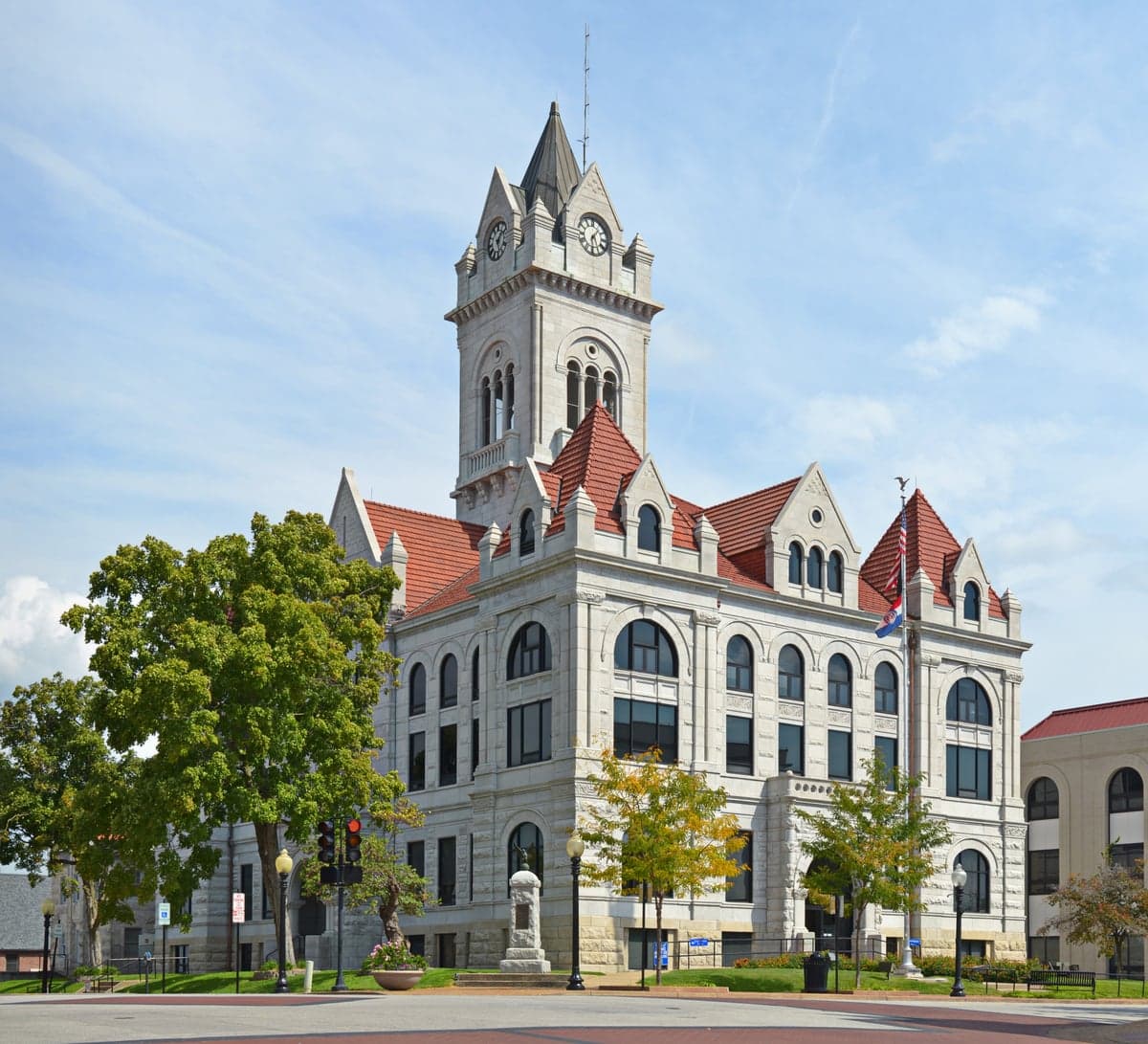
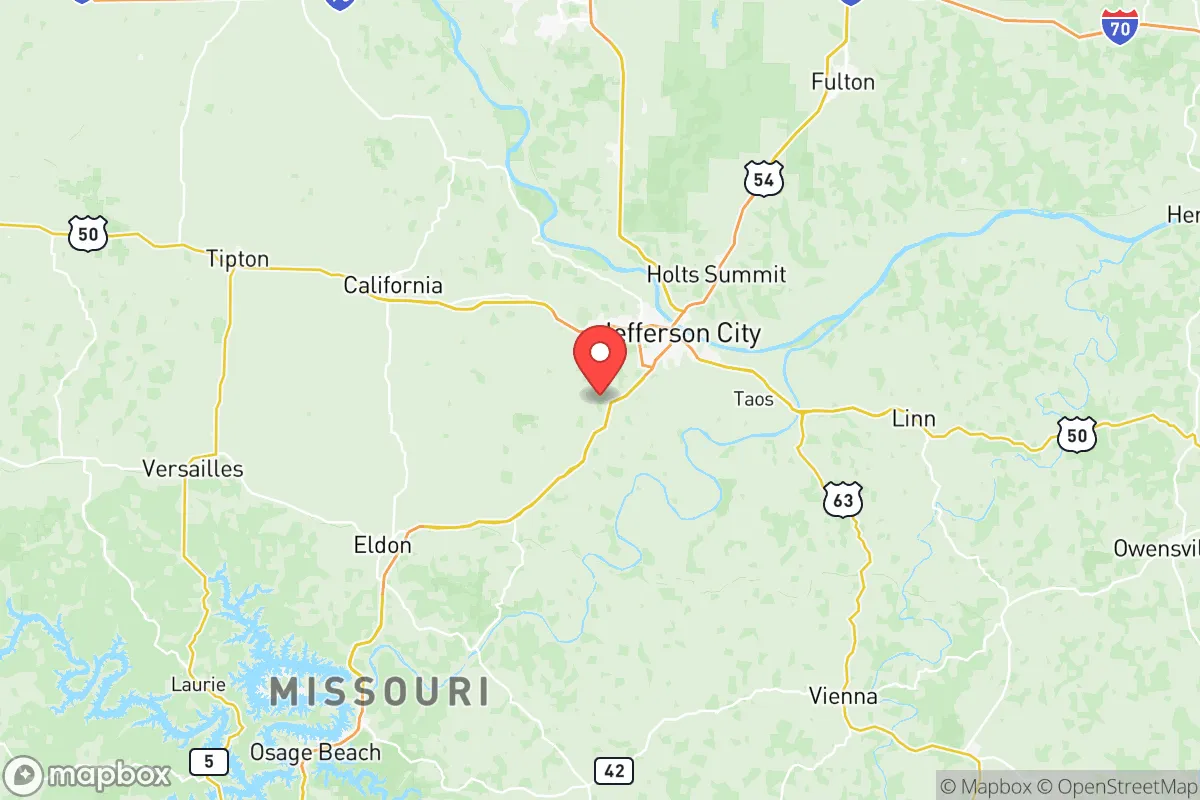
Cole County leans heavily Republican, with a Cook PVI of R+13 that puts it solidly to the right of Missouri's statewide R+8 rating. Sitting here in Jefferson City, I've watched the county hold its conservative line for decades, but the past few years have seen some subtle shifts that give me pause. The rural areas

State Political ClimatePolitical Climate in Missouri
State Political AnalysisPolitical Environment in the State
Missouri has shifted from a perennial bellwether to a solidly Republican state over the last 20 years, with a Cook PVI of R+8 that reflects a decisive rightward march. The dominant coalition is a mix of rural conservatives, suburban ex-urbanites fleeing blue metros, and a shrinking but vocal blue urban core. While the state voted for the Republican presidential candidate by double digits in 2024, the trajectory wasn't always this steep—as recently as 2008, it was a true toss-up. Today, the political center of gravity has moved decisively west and south, away from the St. Louis and Kansas City corridors, and the trend is still accelerating.
Urban vs. rural divide
The political map is a study in stark contrasts. The two major metros—St. Louis and Kansas City—anchor the state's blue vote, with St. Louis City and County delivering massive margins for Democrats, while Kansas City and its inner-ring suburbs do the same in the west. But outside those bubbles, the landscape flips hard. The I-70 corridor from Columbia (a university town that votes blue) to the state capital of Jefferson City (pragmatic red) is a narrow band of purple, but once you hit rural counties like Texas, Dallas, and Ozark, the GOP routinely pulls 80% of the vote. A key bellwether is exurban St. Charles County: it was competitive a generation ago but is now rock-ribbed Republican, reflecting the flight of conservative families from St. Louis city. Similarly, Greene County (Springfield) has only deepened its red hue as the city grows as a conservative hub. The Bootheel and the southern Ozarks remain among the most culturally and politically traditional areas in the entire Midwest.
Policy environment
Missouri's policy posture is a mix of genuine conservative gains and lingering old-guard compromises. The state has a flat income tax that is being phased down toward zero—a major win for fiscal conservatives. Property taxes remain among the nation's lowest, and there is no estate or inheritance tax, making it a haven for retirees. On education, the Missouri Course Access and Virtual School Program (MOCAP) and a growing charter school presence in St. Louis and Kansas City give families alternatives, though the powerful teachers' unions still fight expansion of school choice at the legislative level. The state enacted a near-total abortion ban after the Dobbs decision, a clear sign of social conservatism. Election integrity remains a hot topic—Missouri has a strong voter ID law and has banned private funding of election administration (a response to the "Zuckerbucks" controversy), but liberals in St. Louis and Kansas City have pushed back with lawsuits and local resistance. Right-to-work was repealed by referendum in 2018, a rare recent loss for the conservative agenda, but the general regulatory environment is still business-friendly compared to neighboring Illinois.
Trajectory & freedom
The trajectory over the past five years has been toward more personal freedom in areas conservatives care about most. The Second Amendment Preservation Act (SAPA), signed in 2021, declares federal gun laws that infringe on the right to keep and bear arms as "invalid" in Missouri—a direct nullification-style challenge that has put the state at odds with the Biden administration but energized gun owners. The state also passed constitutional carry in 2016, and no permit is needed to carry a concealed firearm. On parental rights, Missouri passed HB 85, which requires school districts to notify parents of any curriculum changes involving sexual orientation or gender identity, and prohibits instruction on these topics in K-3. This is a clear win for families who see the classroom as off-limits for ideological experimentation. On the other hand, the state has seen a troubling expansion of local control in the cities—St. Louis and Kansas City have repeatedly tried to raise their minimum wages and impose local gun ordinances, only to be blocked by state preemption laws. This tension between state-level freedom and city-level overreach is the central battleground for a new resident to watch.
Civil unrest & political movements
The flashpoints are real and visible. Ferguson, a suburb of St. Louis, became a national symbol of unrest in 2014, and the legacy still simmers—though the community has calmed, activist groups like Action St. Louis continue to agitate for defunding the police and reparation programs. St. Louis City has seen persistent protests and occasional violence, especially after high-profile police incidents, driving many conservative families to move to St. Charles or Jefferson counties. Kansas City has its own version of this tension, with a progressive city council pushing for sanctuary city policies and local activists clashing with state preemption laws. On the right, the Missouri Freedom Caucus is a vocal force in the statehouse, pushing for stricter election integrity laws and tax elimination, though they often clash with the more establishment GOP leadership. Immigration politics are relatively quiet compared to border states, but sanctuary city rhetoric in Kansas City is a recurring fight that galvanizes rural voters. The Missouri State Highway Patrol has occasionally been deployed to St. Louis to handle violent crime spikes, which pleases law-and-order types but angers local progressives who see it as state overreach—an ironic inversion of the usual freedom narrative.
Projection
Over the next 5-10 years, the trend is clear: Missouri will become more conservative, not less. In-migration is heavily tilted toward the western and southern parts of the state, especially the Springfield and Branson areas, as well as the fast-growing Lake of the Ozarks region. These are culturally traditional, family-oriented areas. The urban cores of St. Louis and Kansas City will continue to lose population to the suburbs and exurbs, further diluting their political clout. The state's Republican supermajority is likely to hold or expand, meaning further tax cuts, aggressive preemption of city ordinances, and continued resistance to federal gun control will remain the norm. However, the wild card is the possibility of a fractured GOP—if the Freedom Caucus pushes too hard on budget austerity or social issues, it could open the door for a pragmatic Democrat in a statewide race, but that's a long shot. For now, Missouri is on a path to look more like Arkansas or Oklahoma than any of its Midwestern neighbors.
For a new resident—especially a conservative single person or parent—the bottom line is that Missouri offers a low-tax, high-freedom environment that respects the Second Amendment and parental rights, provided you choose your community wisely. St. Louis City and Kansas City come with ongoing civil unrest risk and local overreach, while the suburbs, exurbs, and small towns offer a stable, family-oriented political culture. If you want to live in a state that is still fighting for its own sovereignty against federal overreach, and where your vote actually moves the needle in the right direction, Missouri is a solid bet. Just research your zip code carefully—the divide between the metro cores and the rest of the state is the sharpest of any place you'll find in the Midwest.
* Values derived from national, state, county, city and local statistics and may differ in a specific area. Last updated: 2026-06-06T03:25:47.000Z
Narrative content on this page is AI-generated and may contain mistakes. Verify any details that matter before acting on them.
ReloMaps may earn a commission from affiliate links at no extra cost to you.

