Political ClimatePolitical Climate in Monroe, LA
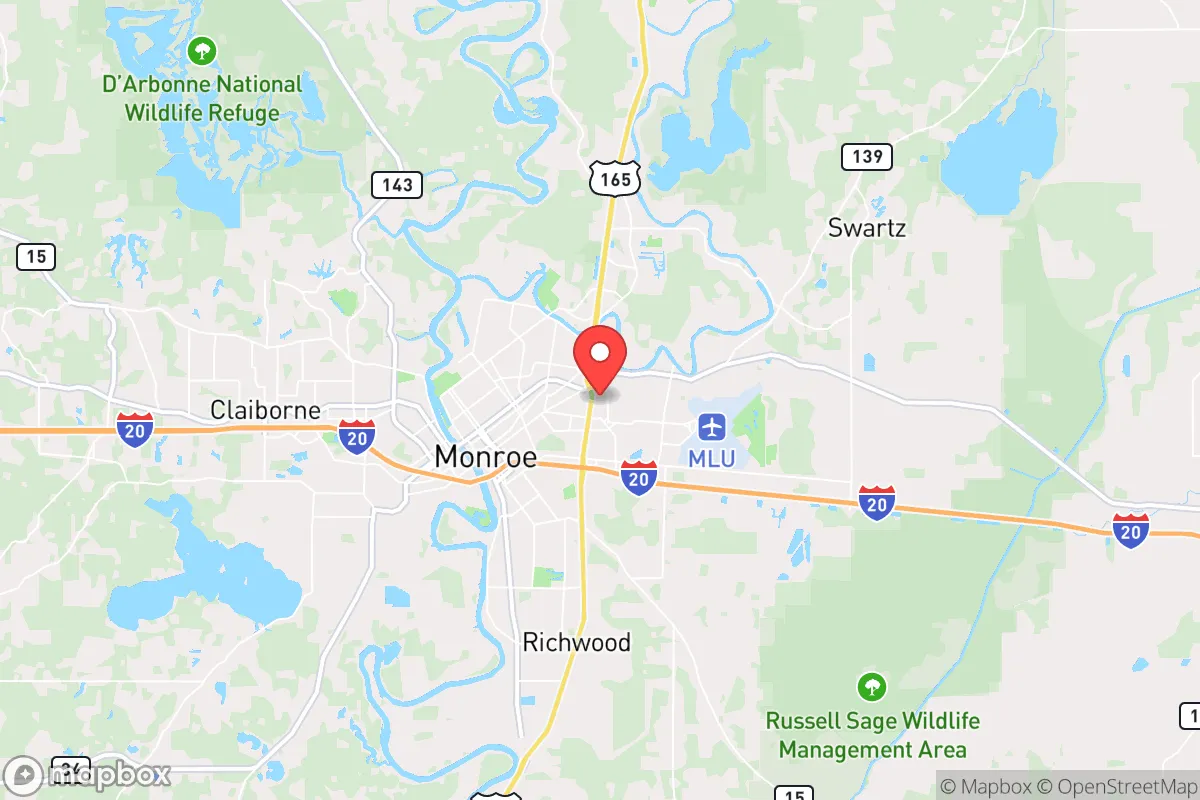
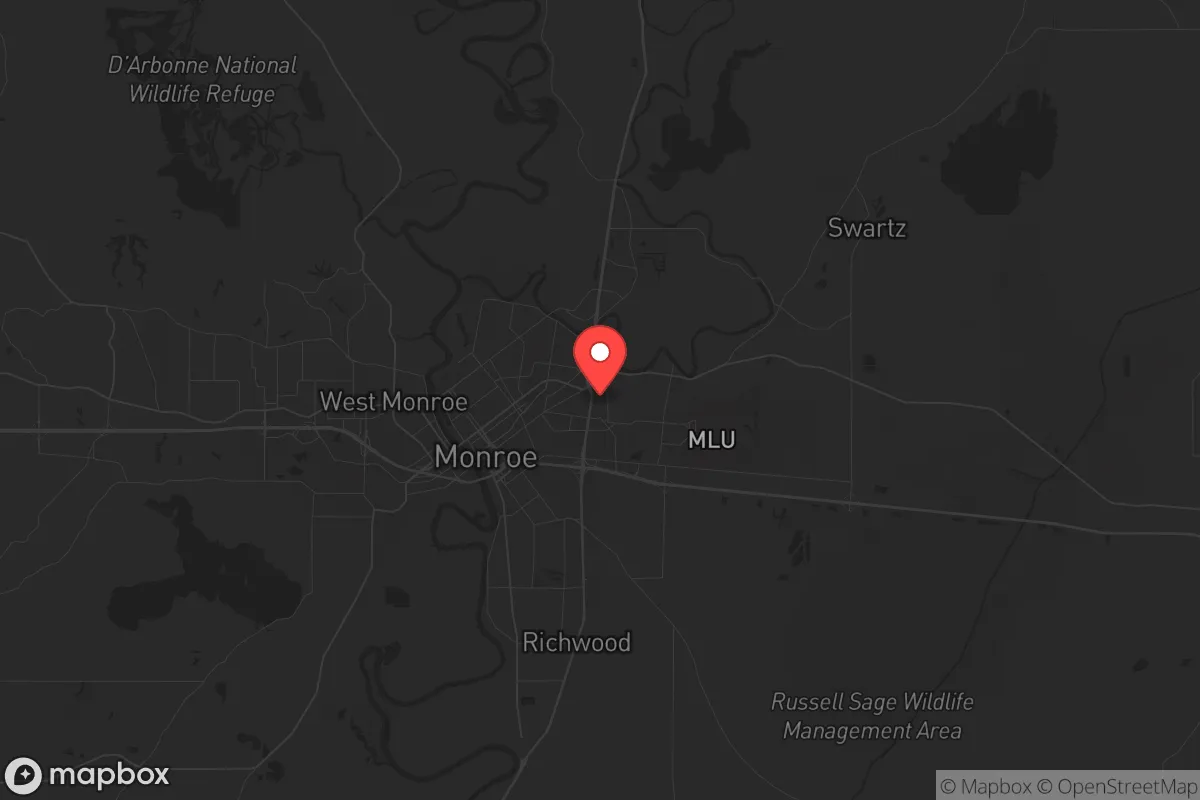
District shown is the primary district for this city’s centroid. Cities may span multiple districts.
Local Political AnalysisPolitical Analysis of Monroe, LA
Monroe, Louisiana, sits solidly in the red, with a Cook PVI of R+18 that reflects the deep conservative roots of this northeast Louisiana hub. For decades, this area has been a reliable stronghold for traditional values, where folks tend to vote their conscience on issues like gun rights, local control, and fiscal responsibility. You don’t see much of the coastal liberal drift here—Monroe’s politics are grounded in a belief that government should stay out of your business, your church, and your family life. That said, there’s been a subtle shift in the last few election cycles, with a younger crowd moving in from places like Baton Rouge or even Texas, bringing some progressive leanings that have locals watching closely.
How it compares
When you stack Monroe up against its neighbors, the contrast is pretty stark. Drive west to Ruston, home of Louisiana Tech, and you’ll find a more college-town vibe that’s slightly less predictable—still conservative, but with a libertarian streak that can swing on issues like marijuana reform. Head south to Alexandria, and you’re in a similar R+18 pocket, but with a heavier military influence from Fort Johnson that keeps things reliably red. The real eye-opener is just across the Mississippi River in Vicksburg, Mississippi, where the politics are just as conservative but the culture feels more Deep South traditional. Monroe, by comparison, has a bit more of a suburban sprawl feel, with newer developments and a growing medical sector that’s bringing in professionals who sometimes vote differently than the old guard. The surrounding Ouachita Parish is even more conservative than the city itself, so if you’re worried about progressive overreach, the county commissioners and school board are your best bet for keeping things grounded.
What this means for residents
For the average person living here, the political climate means you can generally expect low taxes, minimal regulation on small businesses, and a school system that hasn’t been hijacked by radical curriculum changes—yet. The local government in Monroe has historically been cautious about raising property taxes or imposing new fees, which is a relief if you’re trying to make a living or retire on a fixed income. But there’s a growing concern among long-time residents about the city council’s recent flirtations with “equity” initiatives and zoning changes that feel like they’re borrowed from bigger, bluer cities. The sheriff’s office and police department still operate with a “law and order” mindset, which most folks appreciate, but you’ll hear grumbles about state-level mandates coming down from Baton Rouge that try to override local preferences on things like mask mandates or vaccine requirements. If you value personal freedom and limited government, Monroe is still a good bet, but you’ve got to stay engaged in local elections to keep it that way.
One thing that sets Monroe apart culturally is its strong sense of community self-reliance—people here don’t look to the government to solve every problem. You see it in the way churches and civic groups step up for disaster relief after floods, or how the local business owners band together to support youth sports without waiting for a city grant. The Ouachita River and the surrounding piney woods give the area a slower, more independent rhythm that aligns with the conservative mindset. That said, the University of Louisiana at Monroe brings in a transient population that sometimes pushes for more progressive policies on campus, like diversity training or sustainability initiatives, which can feel out of step with the broader community. If you’re considering a move here, just know that the political climate is stable but not immune to change—keep an eye on the city council races and the school board elections, because that’s where the real battles over your rights and your tax dollars are fought.

State Political ClimatePolitical Climate in Louisiana
State Political AnalysisPolitical Environment in the State
Louisiana has long been a reliably Republican state at the federal level, but its state-level politics are a fascinating, often chaotic mix of conservative populism, Cajun libertarianism, and old-school Democratic machine holdovers. Over the last 10-20 years, the state has shifted from a purple-ish, Democrat-dominated legislature to a solidly red one, with Republicans holding supermajorities in both chambers and every statewide elected office. However, this isn't a clean-cut Texas-style conservatism; it’s a unique blend where fiscal restraint often clashes with a deep love for government services, and where cultural conservatism on guns and family is matched by a fierce independence from federal overreach. The 2024 presidential election saw Donald Trump win the state by over 20 points, but down-ballot races often feature more moderate, deal-making figures.
Urban vs. rural divide
The political map of Louisiana is starkly divided between its urban crescent and its vast rural parishes. The Democratic stronghold is centered on New Orleans (Orleans Parish) and its inner suburbs, along with Baton Rouge (East Baton Rouge Parish) and the industrial corridor along the Mississippi River. These areas deliver massive Democratic margins, driven by a coalition of Black voters and progressive white professionals. In contrast, the rest of the state—from the piney woods of north Louisiana to the Cajun prairies of Acadiana—is deeply Republican. Lafayette, the heart of Acadiana, is a conservative hub, while Shreveport (Caddo Parish) is a rare blue dot in the northwest, kept Democratic by a large Black population. The suburbs of New Orleans, like Mandeville and Covington in St. Tammany Parish, are among the most reliably Republican areas in the entire South, often voting 70-80% for GOP candidates. The rural parishes of north Louisiana, such as Webster and Union, are similarly deep red. The divide isn't just about race; it's about culture—the urban areas are more secular and diverse, while rural and suburban areas prioritize gun rights, school choice, and low taxes.
Policy environment
Louisiana’s policy environment is a mixed bag for conservatives. On the plus side, the state has no personal property tax on vehicles or boats, and its homestead exemption shields the first $75,000 of a home’s value from property tax—a major win for homeowners. The state income tax is a flat 3% for most filers, down from a progressive 6% just a few years ago, thanks to a 2021 tax reform package. However, the state sales tax is high, often exceeding 10% in some parishes when local taxes are added. On education, Louisiana has a robust school choice program, including the Louisiana Scholarship Program and a thriving charter school sector, especially in New Orleans. Governor Jeff Landry, a Republican who took office in 2024, has pushed for a constitutional convention to further limit government growth. On the concerning side, the state’s regulatory environment can be unpredictable, especially for oil and gas, where lawsuits and coastal erosion policies create uncertainty. Healthcare is a mixed bag: the state expanded Medicaid under the Affordable Care Act, which many conservatives view as a federal overreach, but it has also kept certificate-of-need laws that limit competition in healthcare. Election laws are solid, with voter ID requirements and no-excuse absentee voting, though the state has moved to ban private funding of elections, a win for election integrity.
Trajectory & freedom
Louisiana is trending toward more personal freedom in several key areas, but the path is uneven. The most significant recent win for liberty was the 2024 passage of a constitutional carry law (Act 123), allowing any adult who can legally possess a firearm to carry it concealed without a permit. This was a huge victory for gun rights advocates. On parental rights, the state passed the "Parents' Bill of Rights" in 2023 (Act 287), which requires schools to notify parents of any changes to a child’s mental or physical health and prohibits instruction on sexual orientation or gender identity in K-12 classrooms. This aligns with the conservative view that parents, not the state, should guide their children’s upbringing. On medical freedom, Louisiana has banned COVID-19 vaccine mandates for state employees and students, and it has a strong religious exemption law. However, the state still has a high incarceration rate and a civil asset forfeiture system that critics say is ripe for abuse. The biggest threat to freedom is arguably the state’s reliance on federal dollars—Louisiana is one of the most federally dependent states, which gives Washington leverage over state policy. The Landry administration is pushing for a flat income tax and further deregulation, but the state’s budget is still heavily tied to oil and gas revenues, making it vulnerable to boom-and-bust cycles.
Civil unrest & political movements
Louisiana has a history of political flashpoints, but in recent years, the most visible unrest has been around policing and race. The 2016 shooting of Alton Sterling in Baton Rouge sparked protests and a subsequent ambush of police officers, which left three officers dead. This event still resonates, and tensions between law enforcement and activist groups remain high in Baton Rouge and New Orleans. On the right, the "Cajun Navy" is a powerful grassroots movement of volunteers who provide disaster relief, but it has also become a symbol of self-reliance and distrust of FEMA. Immigration politics are less heated than in border states, but there is a growing concern over illegal immigration, with Governor Landry deploying the Louisiana National Guard to Texas in 2024 as part of a multi-state border security effort. There is no sanctuary city policy in Louisiana; in fact, the state passed a law in 2024 requiring local law enforcement to cooperate with ICE. Election integrity remains a hot topic, with the state’s Republican Secretary of State, Nancy Landry, pushing for stricter voter roll maintenance and a ban on ballot harvesting. Secessionist rhetoric is rare, but there is a strong strain of "leave us alone" libertarianism, especially in rural areas. A new resident would notice that political conversations are often more about local issues—like coastal restoration, flood insurance, and the fate of the oil industry—than national culture wars.
Projection
Over the next 5-10 years, Louisiana is likely to become more conservative, but with a distinctly populist flavor. The demographic trends favor Republicans: the state’s population is aging, and the white working-class base is solidifying. However, the state is also losing population overall, especially from New Orleans and Baton Rouge, which could weaken the Democratic base. The in-migration from other states is small but growing, with some retirees and remote workers moving to areas like St. Tammany Parish and Lafayette for the low cost of living and relaxed lifestyle. The biggest wildcard is the energy transition: if the federal government pushes aggressively toward green energy, Louisiana’s oil and gas economy could suffer, leading to economic hardship that might fuel anti-establishment politics. On the freedom front, expect further tax cuts, a push for school choice expansion, and continued resistance to federal mandates on everything from environmental regulations to vaccine passports. The state’s biggest challenge will be balancing its desire for limited government with its need for federal disaster aid and infrastructure funding. A new resident moving in now should expect a state that is culturally conservative, fiercely independent, and increasingly skeptical of federal authority, but also one that is pragmatic enough to take federal money when it’s offered.
For a conservative individual or family considering a move, Louisiana offers a compelling package: low property taxes, strong gun rights, parental control in schools, and a culture that values community and self-reliance. The downsides are the high sales tax, the reliance on federal dollars, and the lingering effects of a corrupt political past. But if you’re looking for a place where your voice matters, where the government is more likely to leave you alone than to meddle, and where you can actually afford to buy a home, Louisiana is worth a serious look. Just be ready for the humidity and the hurricanes—and the fact that your neighbors will probably be armed, friendly, and ready to help you rebuild after a storm.
* Values derived from national, state, county, city and local statistics and may differ in a specific area. Last updated: 2026-05-01T22:53:41.000Z
Narrative content on this page is AI-generated and may contain mistakes. Verify any details that matter before acting on them.
ReloMaps may earn a commission from affiliate links at no extra cost to you.

