Quality of Life in Monroe, LA
A high quality of life with strong walkability, manageable living costs, healthy neighborhood signals, and solid amenity access.
What does Quality of Life tell us?
Quality of Life blends cost of living, nearby amenities, socioeconomic signals, and neighborhood character. City-level scores represent the whole municipality; individual neighborhoods can differ.
What does this tell us?
Quality of Life blends cost of living, nearby amenities, socioeconomic signals, and neighborhood character. City-level scores represent the whole municipality; individual neighborhoods can differ.
Cost of Living
33% below national average
The Real Cost of Living in Monroe, LA for 2026
| Tier | Individual | Family (4) |
|---|---|---|
| Survival | $13k | $25k |
| Comfortable | $34k | $50k |
| Luxury | $66k+ | $102k+ |
| Elite (Top 5%) | $135k+ | $210k+ |
73%
The Area Signal
A metric tracking the socioeconomic signals of the area.
Hobbies
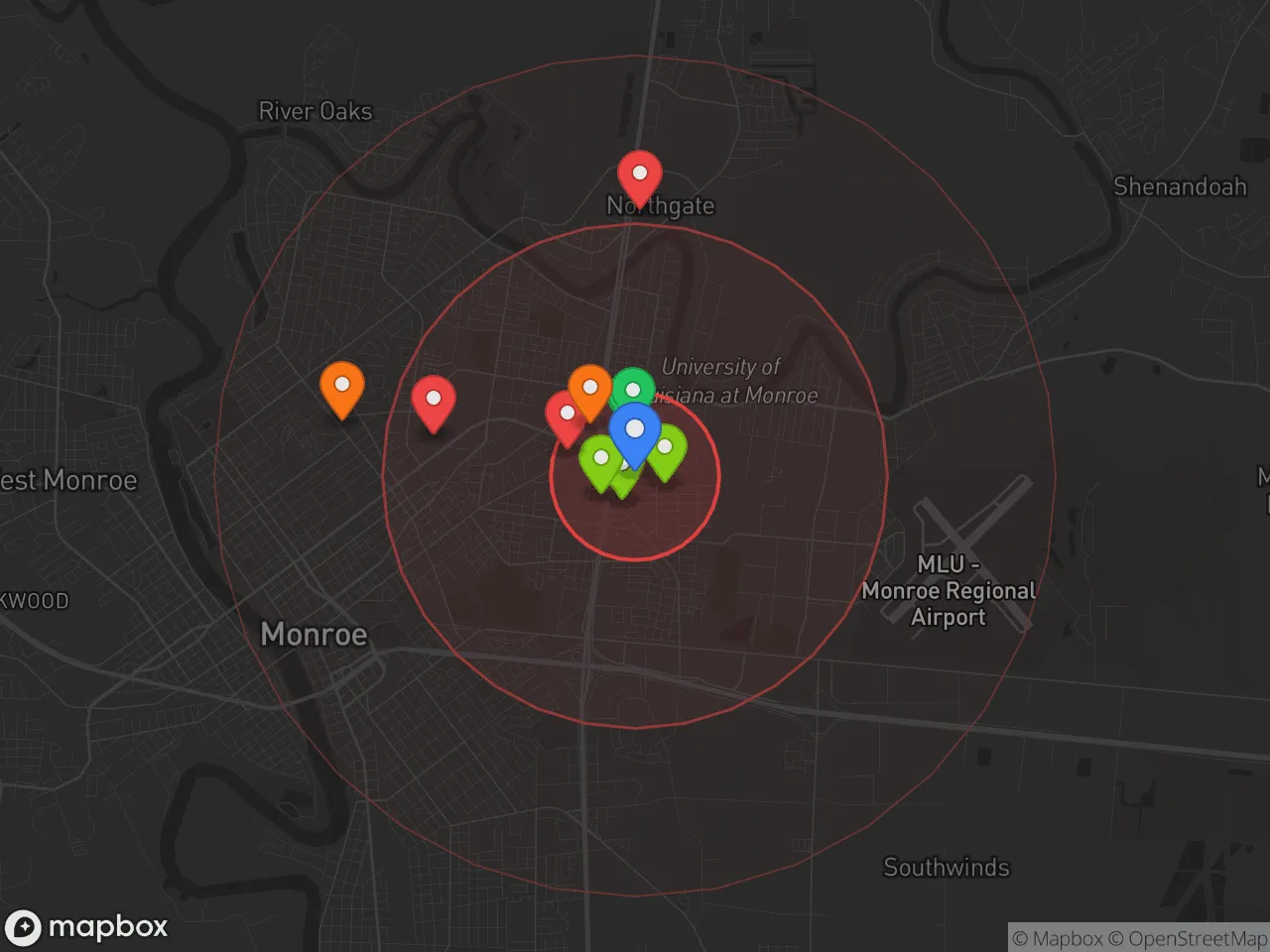
Explore the areaGroceries
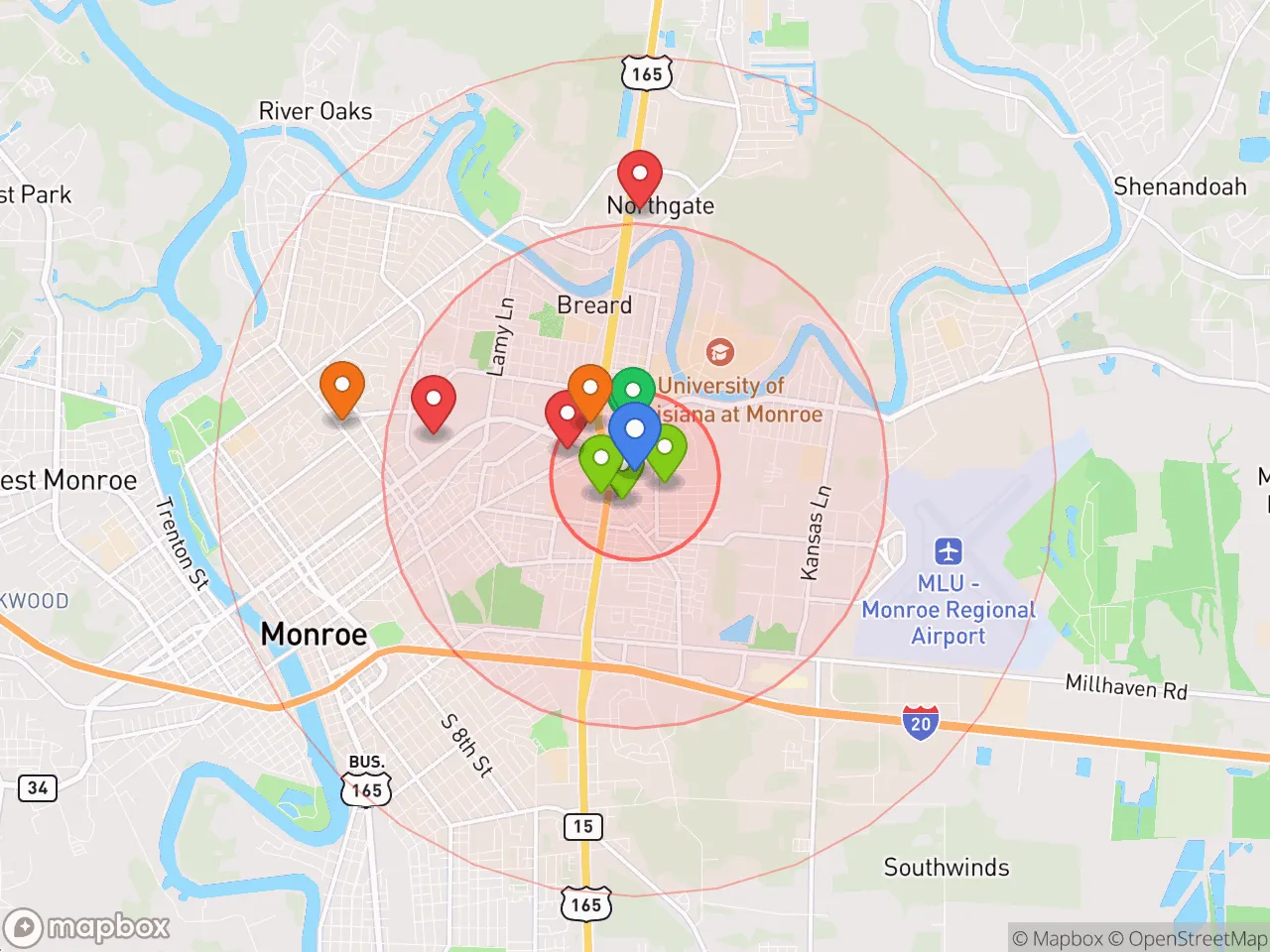
6 within 10 miles
Gas
20 within 10 miles
Hospital
10 within 20 miles
Airport
IAH — George Bush Intercontinental
Post Office
USPS — Monroe, LA
Critical Amenities
Quality-of-Life Analysis
Monroe, Louisiana, offers a notably low cost of living that attracts a mix of working-class families, retirees, and university-affiliated residents, though its overall affluence level is modest compared to national averages. The city’s economy is anchored by the University of Louisiana at Monroe, regional healthcare systems, and manufacturing, creating a stable but not high-income environment. With a cost of living index of 67 (100 equals the U.S. average), Monroe is significantly more affordable than most American cities, drawing people who prioritize financial breathing room over high salaries or rapid career growth.
How housing costs and affordability compare to nearby areas
Monroe’s housing market is a standout feature for budget-conscious movers. The median home value sits at $174,800, roughly half the national median, while the median rent is just $823 per month. These figures are substantially lower than in nearby Shreveport (median home value around $190,000) or Ruston (around $200,000), making Monroe one of the most affordable urban centers in northern Louisiana. The average commute of 18 minutes is well below the national average of 26 minutes, meaning residents save both time and transportation costs. However, property taxes are relatively low in Louisiana, and Monroe’s housing stock includes many older homes in established neighborhoods like Garden District or newer subdivisions in the southern part of the city, giving buyers options across price points.
What daily life is like for families and professionals
Daily life in Monroe revolves around a handful of key anchors. The University of Louisiana at Monroe provides cultural events, sports, and a steady influx of young adults, while the Ouachita Parish School System serves most families, with standout magnet programs at Neville High School and Carroll High School. For shopping and dining, the Pecanland Mall area and the Antique Alley district offer variety, though fine dining options are limited compared to larger metros. Outdoor amenities include the Black Bayou Lake National Wildlife Refuge and the Ouachita River, popular for fishing and kayaking. Healthcare is a major local employer, with St. Francis Medical Center and Glenwood Regional Medical Center providing solid medical access. The city’s rhythm is slower and more car-dependent, with most errands requiring a drive, but the short commute times mean less time stuck in traffic.
Monroe is best suited for people who value low housing costs, a relaxed pace, and proximity to outdoor recreation over urban excitement or high-paying jobs. Retirees on fixed incomes, remote workers seeking affordable homeownership, and families who prioritize short commutes and access to decent public schools will find the city appealing. Professionals in healthcare, education, or manufacturing will have the strongest local job prospects, while those in tech or corporate fields may need to commute to Shreveport or work remotely. The trade-off for affordability is a limited cultural scene and fewer high-end amenities, but for the right resident, Monroe offers a stable, low-stress quality of life at a fraction of the national cost.

Crime in Monroe, LA
Significantly higher crime rates than 86% of comparable U.S. locations.
Violent CrimeViolent Crime Analysis
Property CrimeProperty Crime Analysis
Crime Analysis
Monroe, Louisiana, reports a violent crime rate of 1,634.5 per 100,000 residents and a property crime rate of 5,175.1 per 100,000, placing it among the most dangerous cities in the state for its size. These figures significantly exceed both Louisiana and national averages, indicating a serious public safety challenge. The city’s crime statistics reflect broader issues within the justice system, where progressive policies and lenient sentencing by district attorneys and judges have been linked to higher recidivism and reduced deterrence.
Crime in context
Monroe’s violent crime rate is roughly 4.5 times the national average and well above Louisiana’s already elevated state rate of about 560 per 100,000. Property crime in Monroe is nearly 3 times the national average of 1,954 per 100,000. These disparities are not accidental. The Ouachita Parish District Attorney’s office, like many in Louisiana’s larger metro areas, has faced criticism for implementing progressive prosecution policies that prioritize diversion and reduced incarceration for repeat offenders. This approach, while intended to reduce jail populations, has been correlated with rising crime rates as offenders face minimal consequences and return to the streets quickly.
What residents experience
Residents report that property crimes—including burglary, theft, and vehicle break-ins—are a near-daily concern, particularly in areas near the University of Louisiana at Monroe and along the I-20 corridor. Violent incidents, including aggravated assault and robbery, are concentrated in specific neighborhoods but can occur in commercial districts as well. The presence of liberal-leaning judges in the 4th Judicial District Court has resulted in plea deals and suspended sentences for violent offenders, undermining public confidence in the justice system. Many locals express frustration that the system prioritizes offender rehabilitation over victim safety, leading to a perception that crime carries little real consequence.
Neighborhood-level variation is stark. Areas like the Garden District and parts of Kiroli Park have lower crime rates due to higher property values and stronger neighborhood watch programs. In contrast, the southern and eastern sections of Monroe, including the 18th Street corridor and areas near the Ouachita River, experience the highest concentrations of violent crime. Prospective residents are advised to research specific blocks and consult local police crime maps, as safety can change dramatically within a few blocks. The city’s overall trajectory remains concerning, with progressive justice policies continuing to shape outcomes for victims and the public alike.
* Values derived from national, state, county, city and local statistics and may differ in a specific area. Last updated: 2026-05-01T22:53:41.000Z
Narrative content on this page is AI-generated and may contain mistakes. Verify any details that matter before acting on them.
ReloMaps may earn a commission from affiliate links at no extra cost to you.

