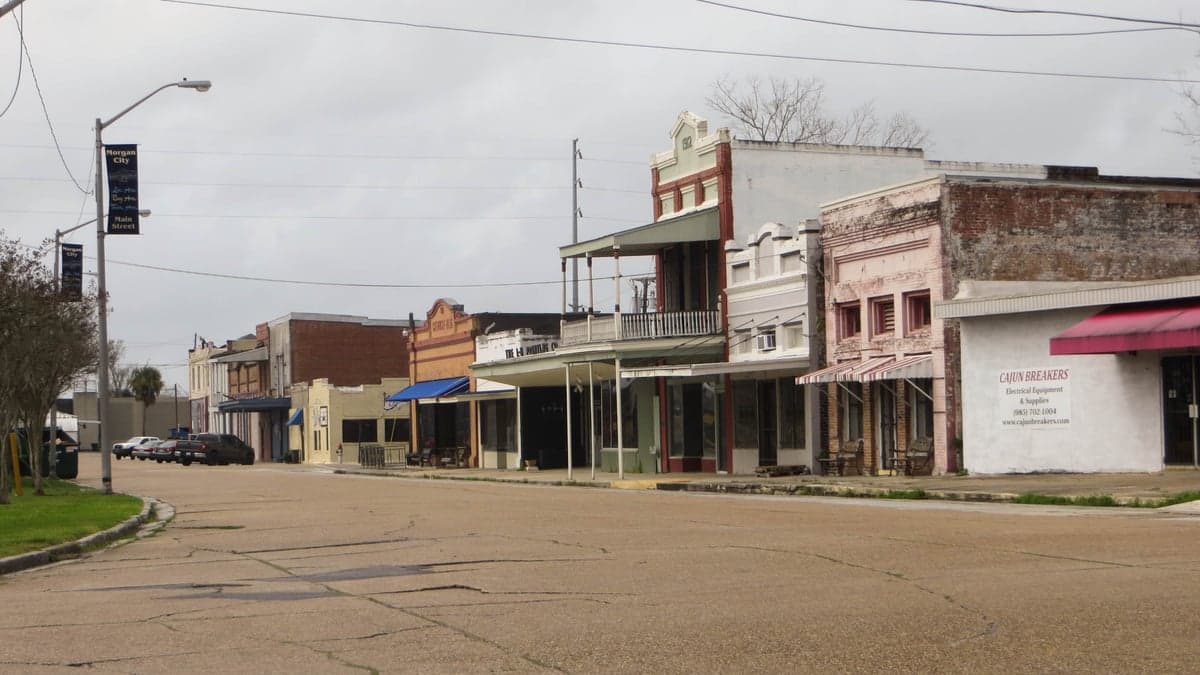
Photo: Wikipedia
Quality of Life in Morgan City, LA
A high quality of life with strong walkability, manageable living costs, healthy neighborhood signals, and solid amenity access.
What does Quality of Life tell us?
Quality of Life blends cost of living, nearby amenities, socioeconomic signals, and neighborhood character. City-level scores represent the whole municipality; individual neighborhoods can differ.
What does this tell us?
Quality of Life blends cost of living, nearby amenities, socioeconomic signals, and neighborhood character. City-level scores represent the whole municipality; individual neighborhoods can differ.
Cost of Living
35% below national average
The Real Cost of Living in Morgan City, LA for 2026
| Tier | Individual | Family (4) |
|---|---|---|
| Survival | $14k | $26k |
| Comfortable | $28k | $42k |
| Luxury | $102k+ | $159k+ |
| Elite (Top 5%) | $121k+ | $188k+ |
136%
The Area Signal
A metric tracking the socioeconomic signals of the area.
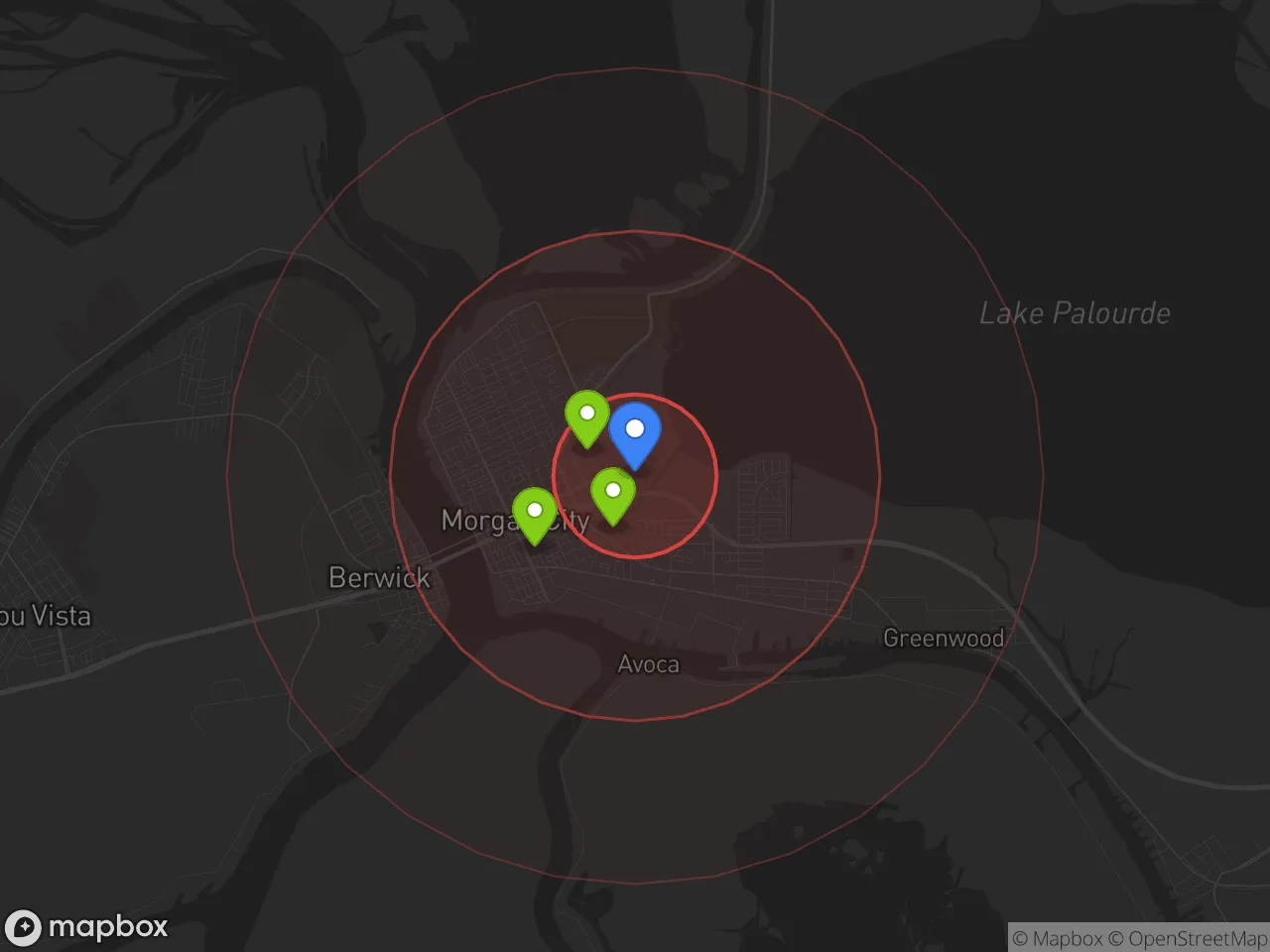
Hobbies
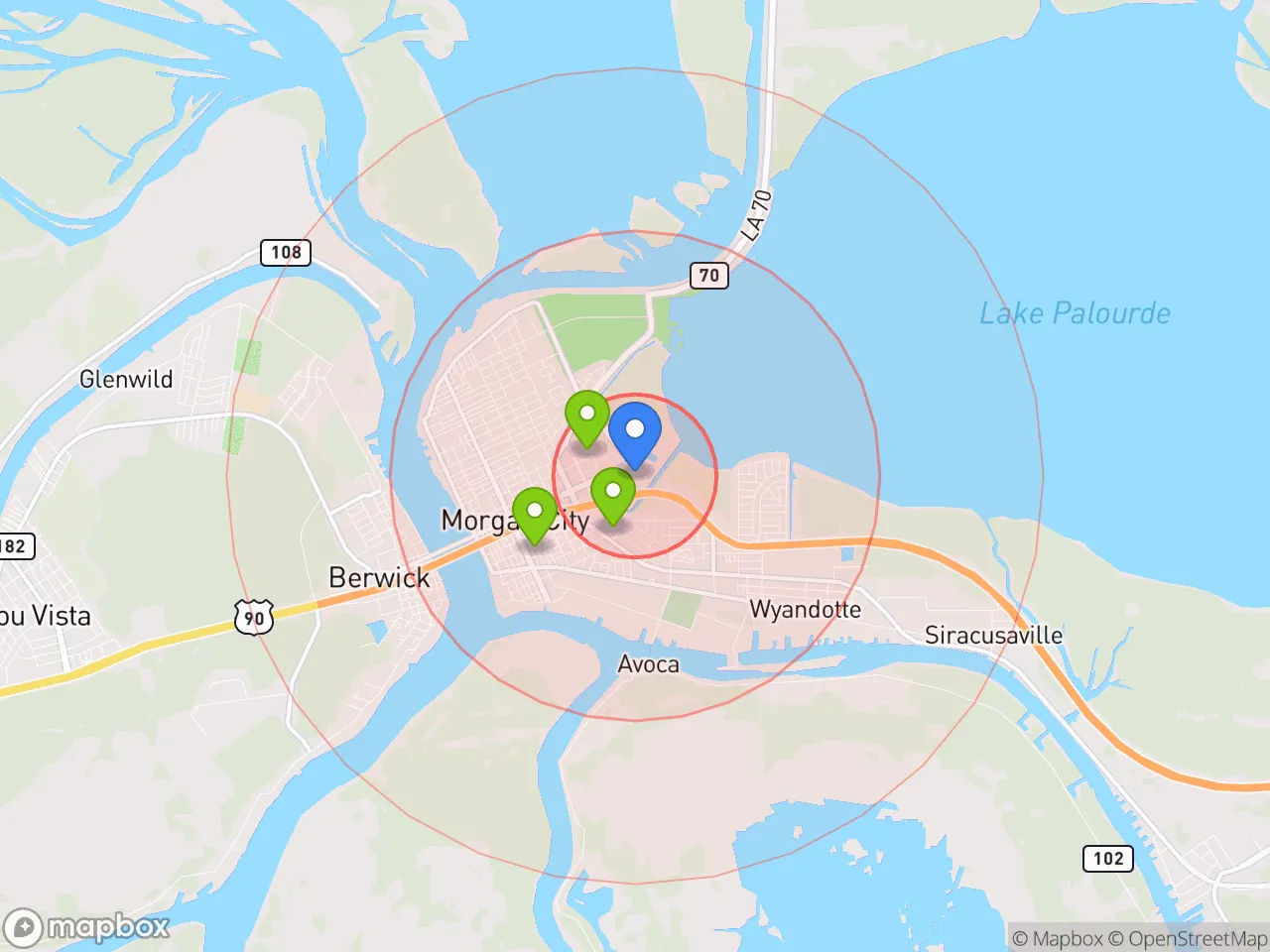
Explore the areaGroceries
1 within 10 miles
Gas
7 within 10 miles
Hospital
3 within 20 miles
Airport
IAH — George Bush Intercontinental
Post Office
USPS — Morgan City, LA
Critical Amenities
Quality-of-Life Analysis
Morgan City, Louisiana, offers a distinctly affordable quality of life that attracts a mix of blue-collar workers, retirees, and young families seeking a low-cost, slow-paced environment along the Atchafalaya River. With a cost-of-living index of 65—well below the national average of 100—the city provides significant financial breathing room compared to larger Louisiana metros like Baton Rouge or New Orleans. The population skews toward those employed in the energy, maritime, and fishing industries, giving the community a practical, hardworking character rather than a transient or affluent one.
How housing costs and daily expenses compare to nearby cities
Housing in Morgan City is exceptionally affordable by national and regional standards. The median home value sits at $146,100, roughly half the Louisiana state median of around $200,000, while the median rent of $861 is similarly below the state average of about $1,050. This makes homeownership attainable for households earning median incomes, and renters can often find two- or three-bedroom units for under $900. Compared to Houma (about 40 miles east) or Lafayette (60 miles north), Morgan City’s housing stock is older and less expensive, reflecting its slower economic growth. The average commute of 25.8 minutes is slightly longer than the national average of 26 minutes, but still manageable; most residents drive to jobs in local shipyards, oilfield service companies, or retail hubs along Highway 90. Utility costs and groceries also track below the U.S. average, though sales tax in St. Mary Parish is relatively high at 9.45%, which can offset some savings on everyday purchases.
What daily life is like for families and retirees
Daily life in Morgan City revolves around the Atchafalaya Basin and the Gulf Intracoastal Waterway, with fishing, boating, and hunting forming the core of local recreation. The city’s public schools, part of the St. Mary Parish School Board, have mixed ratings—Morgan City High School and Central Catholic High School are the primary options, with some families choosing private or charter schools in nearby Patterson or Berwick. Healthcare access is adequate but limited: Teche Regional Medical Center and Ochsner St. Mary provide emergency and primary care, though specialists often require a drive to Houma or Lafayette. Retail and dining are concentrated along Highway 182 and Federal Avenue, with national chains like Walmart and local seafood spots such as Boudreaux’s Cajun Grill anchoring the scene. The city lacks a vibrant nightlife or arts district, but annual events like the Louisiana Shrimp & Petroleum Festival draw crowds and reinforce community ties. For families, the low crime rate relative to similar-sized Louisiana towns (though property crime is a concern) and the abundance of outdoor space make it a practical choice for raising children who enjoy nature.
Morgan City is best suited for those who prioritize affordability and a quiet, outdoor-oriented lifestyle over urban amenities or career diversity. Retirees on fixed incomes will find the low housing costs and slow pace appealing, while workers in the energy, maritime, or fishing sectors can benefit from short commutes and a tight-knit professional network. Professionals seeking high-end dining, cultural events, or rapid career advancement may feel constrained, but for anyone willing to trade convenience for financial freedom and access to Louisiana’s wetlands, Morgan City delivers a stable, grounded quality of life.

Crime in Morgan City, LA
Generally safer than 57% of comparable U.S. locations.
Violent CrimeViolent Crime Analysis
Property CrimeProperty Crime Analysis
Crime Analysis
Morgan City, Louisiana, reports a violent crime rate of 440.5 incidents per 100,000 residents and a property crime rate of 2,240.1 per 100,000, placing it above both state and national averages for overall crime. These figures indicate that safety is a significant concern for residents and prospective movers, particularly given the city’s location within St. Mary Parish and its proximity to larger metro areas like Baton Rouge and New Orleans. The data suggests that while Morgan City is not the most dangerous community in Louisiana, it faces persistent challenges that require careful consideration.
Crime in context
Morgan City’s violent crime rate of 440.5 per 100,000 is roughly 25% higher than the national average of approximately 380 per 100,000 and aligns closely with Louisiana’s elevated statewide rate, which consistently ranks among the highest in the U.S. Property crime in Morgan City, at 2,240.1 per 100,000, also exceeds the national benchmark of about 1,950 per 100,000. These numbers place the city in a higher-risk tier compared to smaller, more rural communities in the region, though they are lower than the most dangerous urban cores in nearby metro areas. The influence of progressive prosecutorial policies in larger surrounding jurisdictions—such as Orleans Parish and East Baton Rouge Parish—can contribute to a revolving-door justice system that may embolden offenders and increase recidivism, indirectly affecting smaller cities like Morgan City through regional crime patterns.
What residents experience
Residents commonly report property crimes—including theft, burglary, and vehicle break-ins—as the most frequent safety issue, with the property crime rate of 2,240.1 per 100,000 translating to roughly one incident per 45 residents annually. Violent crime, while less common, is a serious concern, with the 440.5 per 100,000 rate equating to about one violent crime per 227 residents per year. These incidents are not evenly distributed; they tend to cluster in areas with higher poverty and lower police presence, such as parts of the historic downtown and neighborhoods near the Atchafalaya River. Residents often adjust daily routines—avoiding certain streets after dark, securing vehicles and homes vigilantly—to mitigate risk. The local police department and St. Mary Parish Sheriff’s Office actively patrol, but resource constraints limit proactive crime prevention.
Neighborhood-level variation
Safety in Morgan City varies noticeably by neighborhood. Areas closer to the city’s core, particularly around Front Street and the industrial zones along the Intracoastal Waterway, see higher concentrations of property crime and occasional violent incidents. In contrast, residential subdivisions on the city’s outskirts—such as those near Lake Palourde or along La. Highway 182—tend to report lower crime rates, benefiting from less foot traffic and stronger community watch efforts. Prospective residents should research specific blocks and consult local police crime maps, as a few streets can differ dramatically in safety. Overall, Morgan City demands a cautious approach, especially for those moving from lower-crime regions, with an emphasis on securing property and staying informed about local justice system trends that may affect public safety.
* Values derived from national, state, county, city and local statistics and may differ in a specific area. Last updated: 2026-05-01T04:03:57.000Z
Narrative content on this page is AI-generated and may contain mistakes. Verify any details that matter before acting on them.
ReloMaps may earn a commission from affiliate links at no extra cost to you.

