Photo: Wikipedia
Political ClimatePolitical Climate in Morgan City, LA
District shown is the primary district for this city’s centroid. Cities may span multiple districts.
Local Political AnalysisPolitical Analysis of Morgan City, LA
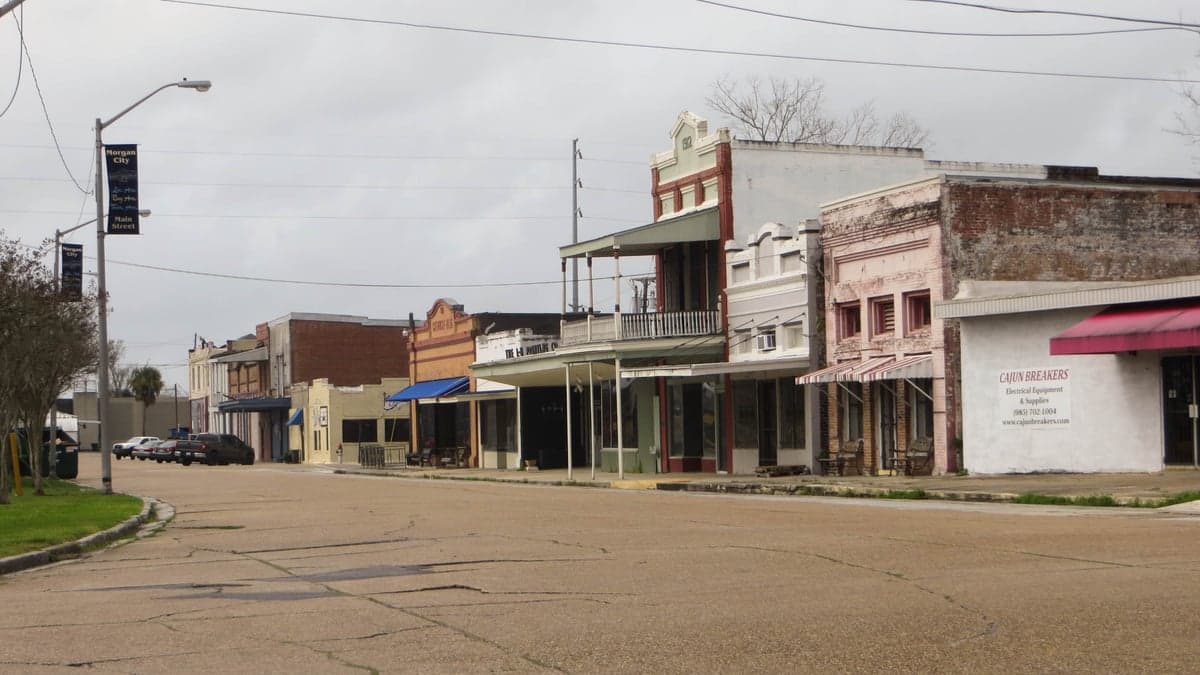
Morgan City is about as reliably conservative as it gets in Louisiana, with a Cook PVI of R+22 that puts it deep in solid-red territory. The area has voted Republican by wide margins for decades, and that trend has only strengthened in recent years as national politics have polarized further. While the city itself has a working-class, Cajun-rooted identity that leans traditional, the surrounding St. Mary Parish and neighboring towns like Patterson and Berwick share the same general outlook — pro-business, pro-gun, and skeptical of government overreach into local affairs.
How it compares
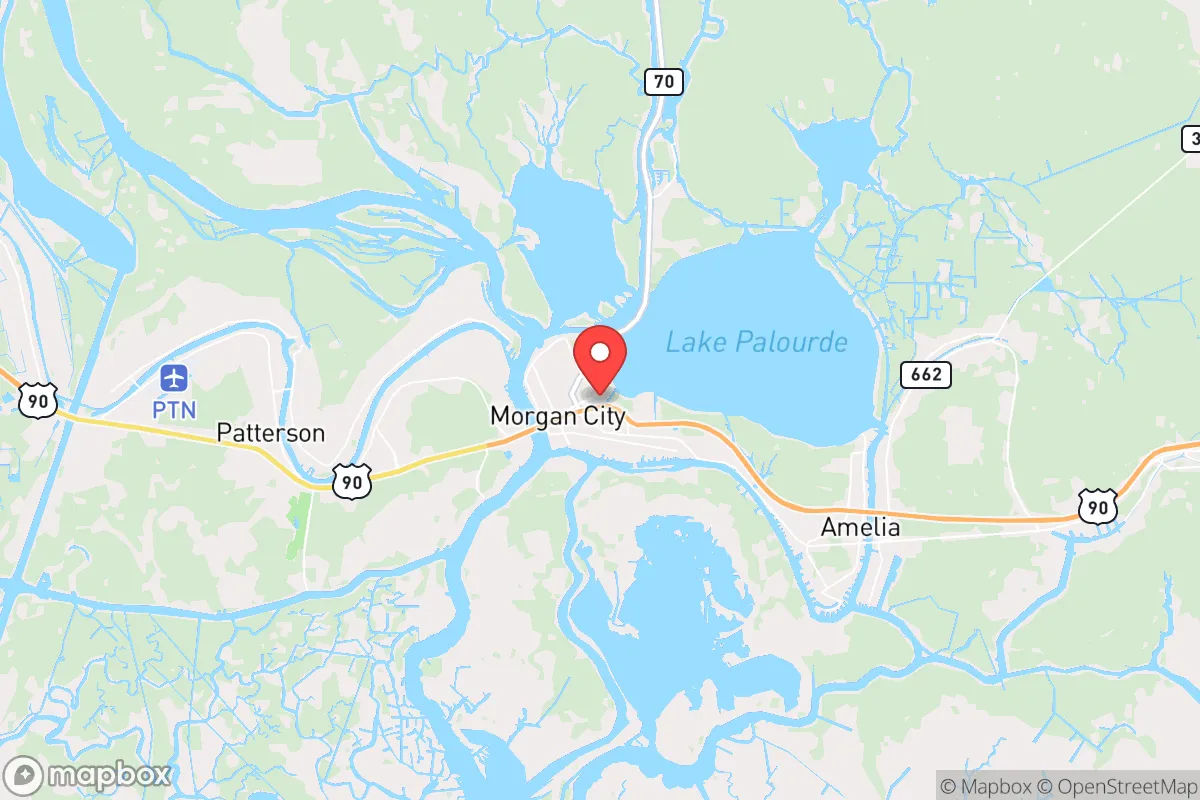
If you drive an hour west to Lafayette, you'll find a more moderate, university-influenced electorate that occasionally flips seats to Democrats in local races. Head east toward New Orleans, and the political landscape shifts dramatically — Orleans Parish votes heavily blue, with a Cook PVI of D+30. Morgan City sits in a different world entirely. The nearest real contrast is Houma, about 40 minutes east in Terrebonne Parish, which is also deeply conservative but has a slightly more suburban, oil-and-gas-driven economy. Morgan City's politics are more blue-collar and independent-minded — folks here don't like being told what to do by Baton Rouge or Washington, and they vote accordingly. The R+22 rating isn't just a number; it reflects a community that consistently rejects progressive policy shifts, whether on energy regulation, gun rights, or school curriculum.
What this means for residents
For someone moving here, the political climate means you can expect local government to stay out of your business for the most part. Property taxes are low, zoning is minimal, and there's no appetite for the kind of overreach you see in blue cities — no mask mandates that drag on for years, no heavy-handed business closures, no push to defund the police. The city council and parish government are dominated by conservatives who prioritize public safety and infrastructure over social experiments. That said, there are signs of concern. As Louisiana's coastal parishes lose population, some local leaders have started courting state and federal grants with strings attached — money that could eventually come with mandates on housing, environmental standards, or diversity quotas. The long-term worry is that outside funding could slowly erode local control, especially if younger residents who move away for college return with more progressive ideas. For now, though, Morgan City remains a place where a person can live freely without constant government intrusion.
Culturally, the area stands apart from much of the rest of Louisiana. The Cajun and Creole heritage here is strong, and that comes with a deep-seated distrust of centralized authority — a legacy of the region's history as a frontier where people relied on themselves, not the government. You'll see that in the local opposition to coastal restoration plans that restrict fishing and shrimping, and in the widespread support for the Second Amendment. There's also a notable absence of the kind of woke corporate influence you find in bigger cities; local businesses are family-owned and tend to reflect the values of the community. The biggest policy distinction is probably the area's relationship with the oil and gas industry — Morgan City is a hub for offshore energy, and any talk of a "green transition" is met with serious skepticism. Residents see it as a direct threat to their livelihoods and their way of life, and they vote to protect both.

State Political ClimatePolitical Climate in Louisiana
State Political AnalysisPolitical Environment in the State
Louisiana has long been a reliably red state in federal elections, but its political climate is far more complex than a simple partisan label suggests. The state has voted for the Republican presidential candidate in every election since 2000, with Donald Trump winning by nearly 20 points in 2020 and by a similar margin in 2024. However, the state’s political landscape is defined by a deep urban-rural divide, a unique Cajun and Creole cultural heritage, and a history of populist and often idiosyncratic governance. Over the last 10-20 years, the state has shifted from a competitive, Democrat-leaning state in local races to a solidly Republican stronghold, driven by the realignment of white working-class voters and the exodus of the Democratic Party’s base from rural areas.
Urban vs. rural divide
The political map of Louisiana is a stark study in contrasts. The state’s two major metros, New Orleans and Baton Rouge, are Democratic strongholds, with Orleans Parish consistently delivering 70-80% of its vote to Democratic candidates. In 2024, New Orleans voted over 80% for Joe Biden. Baton Rouge, home to the state capital and Louisiana State University, is more competitive but still leans blue, with East Baton Rouge Parish going about 55% Democratic. In contrast, the sprawling, rural parishes of north Louisiana—like Ouachita Parish (Monroe), Caddo Parish (Shreveport), and Rapides Parish (Alexandria)—are deeply red, often voting 70-80% Republican. The Acadiana region, centered on Lafayette, is a fascinating mix: Lafayette Parish itself is a reliably red suburban hub, while the surrounding rural parishes like St. Landry and Evangeline are more conservative but with a strong Democratic tradition among older Cajun voters. The Northshore suburbs of New Orleans, particularly St. Tammany Parish, are among the most Republican areas in the state, with the parish voting over 70% for Trump in 2024. The key takeaway: if you’re looking for a conservative environment, stick to the rural parishes, the Northshore, or the Lafayette area. New Orleans and Baton Rouge are increasingly progressive enclaves.
Policy environment
Louisiana’s policy environment is a mixed bag for conservatives. On the plus side, the state has no state income tax on corporate income, and the individual income tax rate is a flat 3% after recent reforms. The state’s regulatory posture is generally business-friendly, particularly in the oil and gas and petrochemical sectors. However, the state’s sales tax is high, averaging over 9.5% in many areas, and property taxes are relatively low. On education, Louisiana has a robust school choice program, including the Louisiana Scholarship Program (vouchers) and a thriving charter school sector, especially in New Orleans. The state has also passed a parental rights in education law, Act 468, which requires schools to notify parents of any curriculum involving sexual orientation or gender identity. On healthcare, the state expanded Medicaid under the Affordable Care Act in 2016, a move that many conservatives opposed, but it has not been reversed. Election laws are relatively secure: the state requires a photo ID to vote, and there is no widespread mail-in voting system. However, the state’s unique “jungle primary” system, where all candidates run on the same ballot regardless of party, can lead to unpredictable outcomes.
Trajectory & freedom
Louisiana is trending in a mixed direction on personal freedom. On the positive side, the state has expanded gun rights significantly. In 2024, Louisiana became a constitutional carry state, allowing permitless carry of concealed firearms for anyone 18 or older who can legally possess a gun. This was a major victory for Second Amendment advocates. The state also passed a near-total abortion ban in 2022, with no exceptions for rape or incest, which aligns with the conservative majority. On parental rights, Act 468 (2023) requires schools to get parental consent before using a student’s preferred name or pronouns, and it bans classroom instruction on sexual orientation and gender identity in grades K-12. However, there are concerning trends. The state’s criminal justice reform efforts under former Governor John Bel Edwards (a Democrat) led to early release of some violent offenders, which many conservatives view as a public safety failure. Additionally, the state’s high incarceration rate and the Louisiana State Police’s reputation for aggressive enforcement are ongoing concerns. The state’s tax burden remains high for low-income earners due to the regressive sales tax, and property rights are sometimes compromised by the state’s powerful coastal restoration and eminent domain authorities, particularly in the energy sector.
Civil unrest & political movements
Louisiana has a history of political flashpoints, but recent years have been relatively calm compared to other states. The most visible unrest occurred in 2020 following the death of George Floyd, with protests in New Orleans and Baton Rouge that were largely peaceful but included some property damage. The Take ’Em Down NOLA movement, which sought to remove Confederate monuments, was a local flashpoint. On the right, the Louisiana Republican Party has been energized by the state’s shift to the right, with groups like the Louisiana Family Forum (a conservative Christian organization) wielding significant influence in the legislature. Immigration politics are less heated than in border states, but there is a growing concern about illegal immigration, particularly in the New Orleans metro area, where some sanctuary-like policies have been debated. The state has no official sanctuary cities, but New Orleans has a “welcoming city” ordinance that limits cooperation with federal immigration enforcement. Election integrity is a hot topic: the state’s Secretary of State has implemented voter ID laws and purged inactive voters, but there have been no major controversies. The Louisiana Secession Party is a fringe group with no real political power.
Projection
Over the next 5-10 years, Louisiana is likely to become more Republican and more culturally conservative, but with significant caveats. The state’s population is aging and declining, with young people and minorities leaving for Texas, Florida, and other states. This demographic trend will likely accelerate the state’s reddening, as the remaining population is older, whiter, and more rural. In-migration is minimal, and the state’s economy, heavily dependent on oil and gas, is volatile. The New Orleans metro area will continue to be a blue island, but its influence will wane as its population shrinks. The Baton Rouge area may become more competitive as suburban growth continues. The biggest wildcard is the state’s education system: if school choice continues to expand, it could attract conservative families from other states. However, the state’s high crime rates, particularly in New Orleans and Baton Rouge, and its poor infrastructure are major deterrents. A new resident moving in now should expect a state that is solidly conservative on social issues, with low taxes on income but high sales taxes, and a government that is generally friendly to business but hampered by corruption and inefficiency.
For a conservative individual or family considering a move, Louisiana offers a strong cultural fit in most areas outside of the major cities. The state’s gun laws are excellent, school choice is robust, and the cost of living is low. However, be prepared for high crime in urban centers, a regressive tax system, and a state government that, while Republican-controlled, is often slow to reform. If you’re looking for a place where your values are respected and your freedoms are protected, the rural parishes, the Northshore, or the Lafayette area are your best bets. Just don’t expect the same level of economic opportunity or infrastructure you’d find in Texas or Florida.
* Values derived from national, state, county, city and local statistics and may differ in a specific area. Last updated: 2026-05-01T04:03:57.000Z
Narrative content on this page is AI-generated and may contain mistakes. Verify any details that matter before acting on them.
ReloMaps may earn a commission from affiliate links at no extra cost to you.

