 Popular
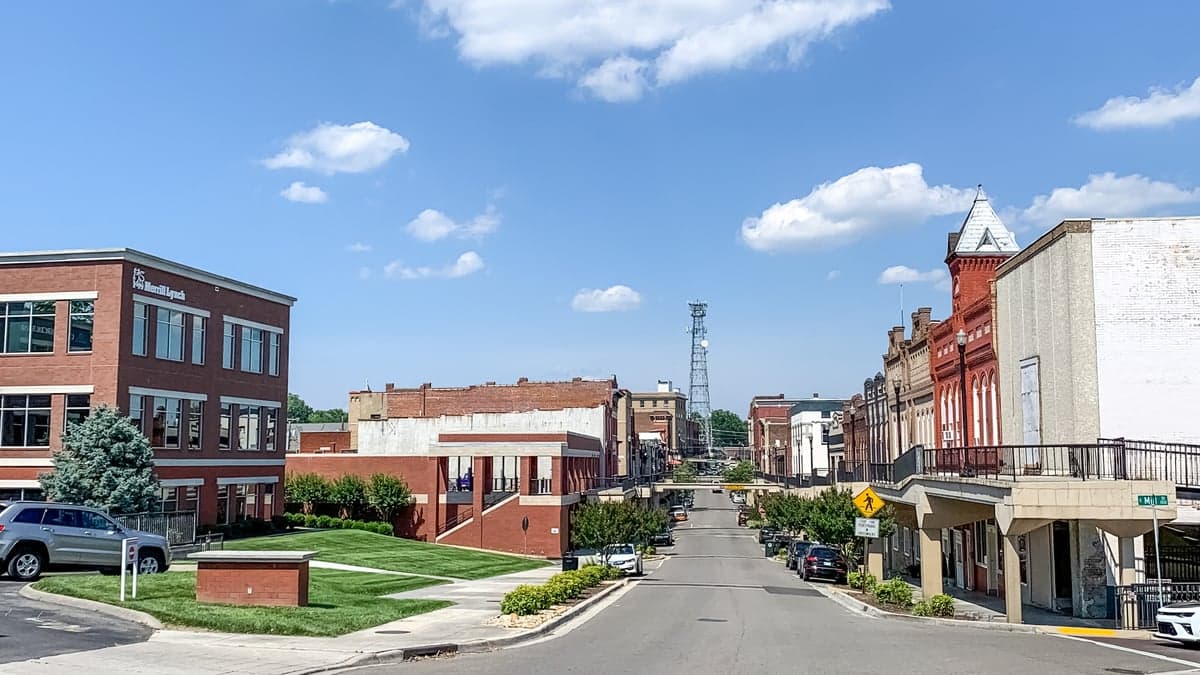
Photo: Wikipedia
Demographics of Morristown, TN
Affluence Level in Morristown, TN
A below-average socioeconomic profile. Incomes, home values, and educational attainment trail the U.S., with higher poverty and unemployment.
People of Morristown, TN
The people of Morristown, Tennessee today number 30,983, forming a community that is predominantly White (65.4%) with a substantial and growing Hispanic population (22.9%) and smaller Black (4.9%), East/Southeast Asian (0.5%), and Indian subcontinent (0.1%) communities. The city’s character is shaped by its manufacturing and logistics economy, a relatively low college attainment rate (14.7%), and a distinctive blend of Appalachian roots with new immigrant-driven growth. Morristown is denser than surrounding Hamblen County, with a population identity that balances traditional Southern conservatism with the cultural and economic contributions of a significant Hispanic minority.
How the city was settled and grew
Morristown was founded in 1787 by a land grant to Gideon Morris, a veteran of the American Revolution, who settled along the banks of the Nolichucky River. The original population was overwhelmingly of Scots-Irish and English descent, migrating from Virginia and North Carolina through the Cumberland Gap. These early settlers built the core of what is now Downtown Morristown, centered on Main Street and the historic courthouse square. The arrival of the East Tennessee and Virginia Railroad in the 1850s spurred a second wave of growth, drawing German and Irish laborers who settled in the West End neighborhood near the rail yards. By the early 20th century, the city’s economy diversified into textiles and furniture manufacturing, attracting more Appalachian migrants from surrounding rural counties. The College Park district, anchored by the former Morristown College (founded 1881 for Black students), became a hub for the city’s small African American community, which grew through the Great Migration as Black families moved from Deep South farms to industrial work in Morristown’s factories.
Modern era (post-1965)
The 1965 Hart-Cellar Act had a modest immediate effect on Morristown, but the city’s modern demographic transformation began in the 1990s with the expansion of manufacturing plants, particularly in automotive parts and food processing. The East Morristown area, along Highway 11E, became the primary landing point for a wave of Hispanic immigrants, primarily from Mexico and Central America, drawn by jobs at companies like Bush Brothers & Company and TRW Automotive. This community has since spread into the Alpha Estates and Morningside neighborhoods, where Hispanic-owned businesses and Spanish-language churches now anchor daily life. The foreign-born population now stands at 10.6%, nearly double the national average for a city of this size. Meanwhile, the White population, while still the majority, has seen relative decline as younger families move to newer subdivisions in West Hills and Riverside, leaving older core neighborhoods with an aging demographic. The Black population has remained stable at 4.9%, concentrated in the historic College Park area, while East/Southeast Asian and Indian subcontinent communities remain very small (0.5% and 0.1% respectively), largely composed of professionals in healthcare and engineering who settled in the West Hills area.
The future
Morristown’s population is heading toward greater Hispanic plurality, with the Hispanic share projected to reach 30-35% by 2040 if current growth rates hold. The city is not homogenizing but rather tribalizing into distinct enclaves: the White population increasingly clusters in newer subdivisions like West Hills and Riverside, while Hispanic families concentrate in East Morristown and Alpha Estates. The Black and Asian communities are likely to remain small and stable, with little new in-migration. The immigrant community is growing and shows signs of assimilation—second-generation Hispanic residents are moving into mixed neighborhoods and attending local colleges—but the city’s low college attainment rate (14.7%) suggests that economic mobility may remain limited for all groups. The next 10-20 years will likely see Morristown become a more bifurcated community: a majority-minority working-class east side and a predominantly White, more affluent west side.
For someone moving in now, Morristown is a city in demographic transition—still culturally conservative and rooted in Appalachian traditions, but increasingly shaped by a Hispanic population that is becoming the new face of its working class. The city offers affordable housing and a strong manufacturing job base, but newcomers should expect distinct neighborhood identities and a community where economic and ethnic lines are becoming more, not less, defined.

* Values derived from national, state, county, city and local statistics and may differ in a specific area. Last updated: 2026-05-01T02:46:40.000Z
Narrative content on this page is AI-generated and may contain mistakes. Verify any details that matter before acting on them.
ReloMaps may earn a commission from affiliate links at no extra cost to you.

