 Popular
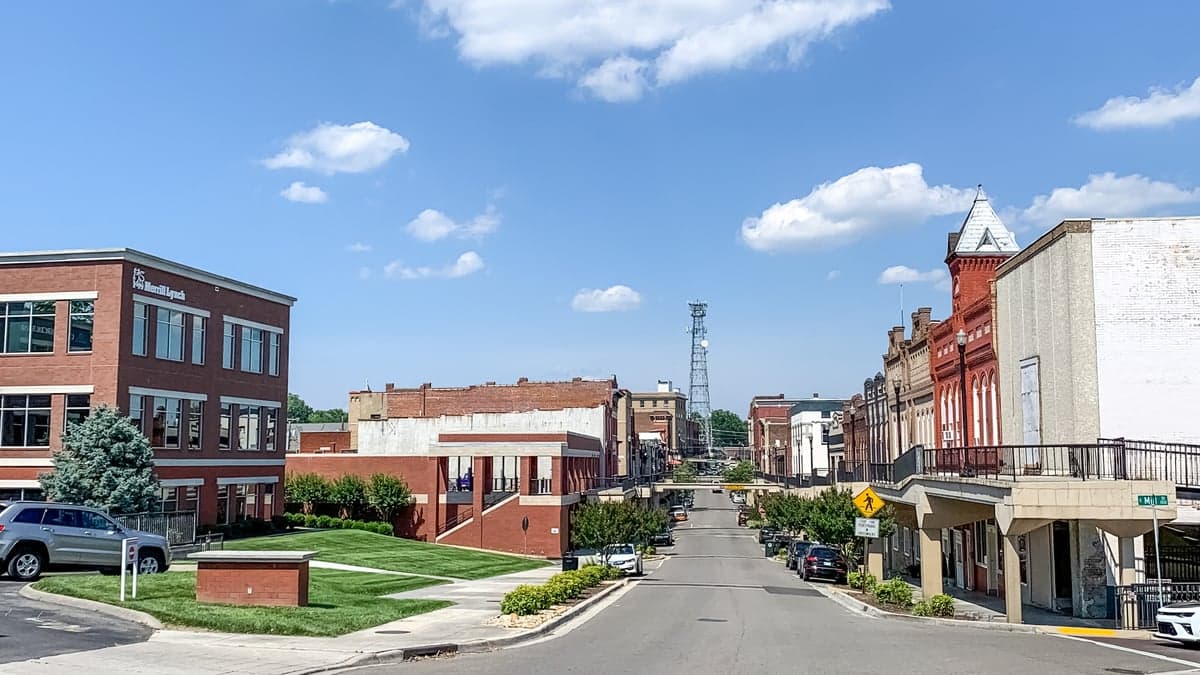
Photo: Wikipedia
Strategic Assessment of Morristown, TN
Workable tactical position. Some exposure to population density or targets, but generally defensible in a crisis.
What does the Strategic Assessment tell us?
Our Strategic Assessment grades tactical survivability of an area. Major population centers, military targets, fallout zones, natural disasters, and border exposure all drive risk — lower exposure means a more defensible position in a crisis.
This is heavily inspired by Joel Skousen's Strategic Relocation book. Highly recommended you checkout the book ($)What does this tell us?
Our Strategic Assessment grades tactical survivability of an area. Major population centers, military targets, fallout zones, natural disasters, and border exposure all drive risk — lower exposure means a more defensible position in a crisis.
This is heavily inspired by Joel Skousen's Strategic Relocation book. Highly recommended you checkout the book ($)Strategic Pillars

Key Distances
Regional Safe Places
Below is our recommended "safe zones" in Tennessee and the surrounding area based on our strategic heuristics. For most people, it's unrealistic to live in a “safe zone” full-time due to work, family or other personal reasons. They tend to be more rural. However, many of these areas are perfect for second homes and retreat properties that double as a vacation home or even a short-term rental.
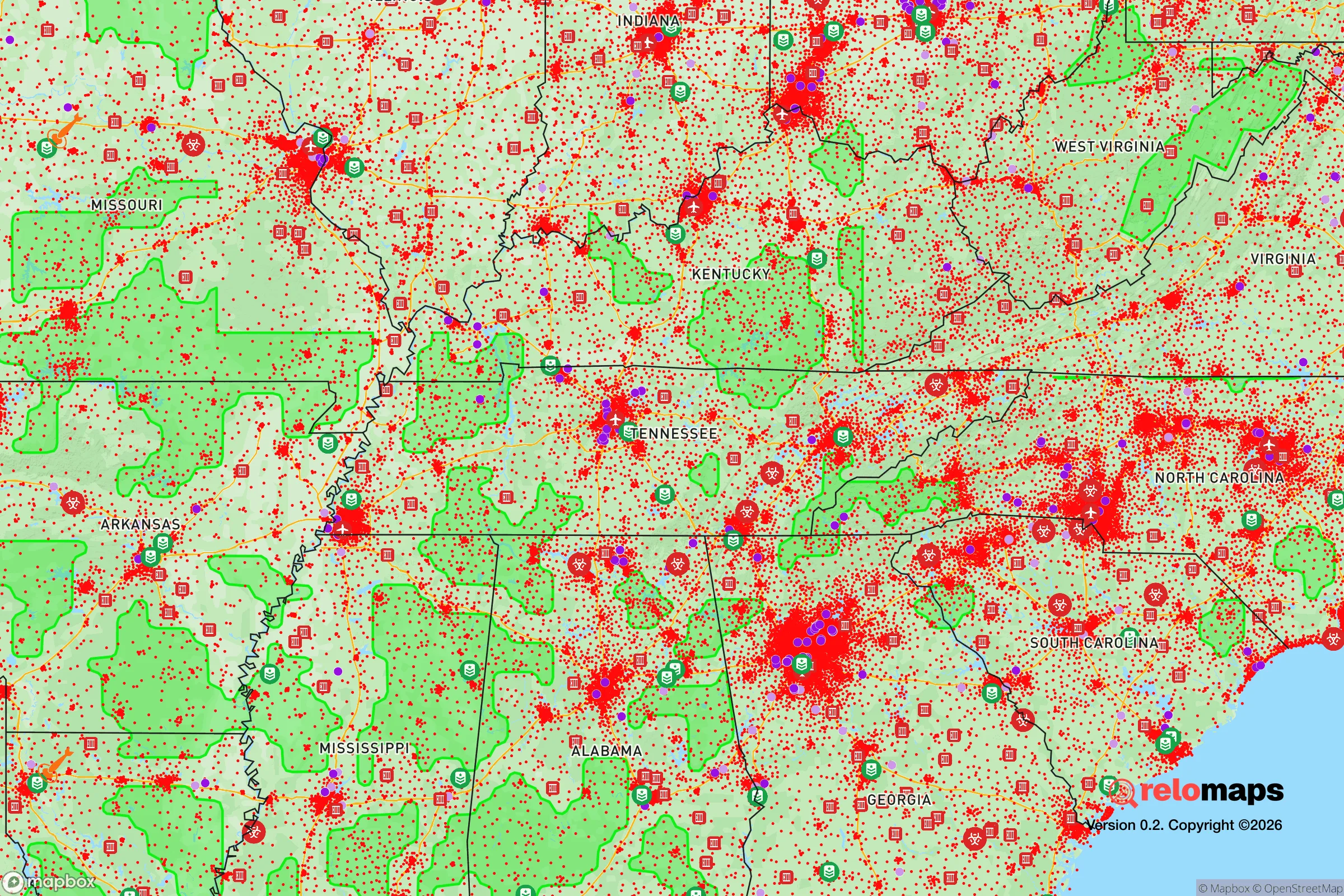
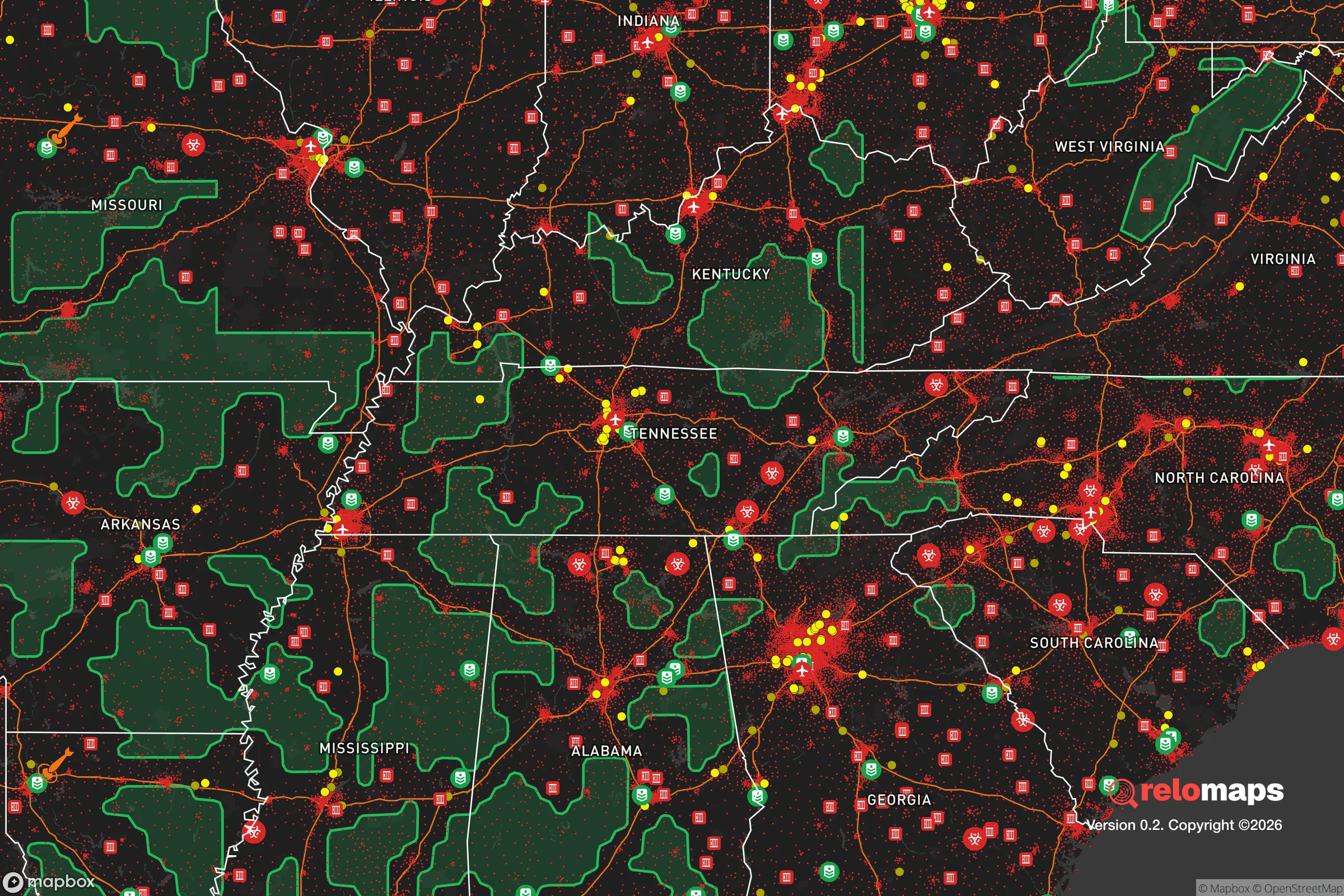


Important Note: For informational purposes only. This does not mean nothing bad ever happens in the green zones. Please use common sense. This is based on public data and modeled with AI. We tried to take a conservative approach but mistakes happen. We update this regularly as new information becomes available.
Solar Generator Recommendations
Backup power matters more here than in safer locations. We've picked three solar generators across budgets and capacity tiers — start with the budget unit if you only need a few essentials, or step up if you want to run a fridge and HVAC for days at a time.

Jackery Portable Power Station Explorer 300
Budget OptionPower on the Go: Weighing only 11 lbs, it's convenient to set up and store with book-sized foldable solar panels

BLUETTI Portable Power Station AC180
Designed for both indoor and outdoor scenarios, AC180 is highly capable as it has a robost capacity and continuous output power.

EF ECOFLOW DELTA Pro Ultra Power Station
Upgraded PickEcoFlow DELTA Pro Ultra is a whole-home energy system designed to grow with your family. Integrated with the Smart Home Panel 2, it scales to meet your evolving energy needs — keeping your home powered, intelligent, and secure through every stage of life.
We earn a commission, at no additional cost to you.
Strategic Assessment Analysis
Morristown, Tennessee, sits in a strategic pocket of the Appalachian foothills that offers genuine resilience advantages for those thinking ahead about civic unrest, supply chain disruptions, or large-scale disasters. Its location in Hamblen County places it roughly 45 miles northeast of Knoxville and 90 miles from the Asheville, NC metro area—close enough to access regional resources, but far enough to avoid the immediate fallout zones of major population centers. The area’s topography, water access, and agricultural capacity give it a baseline of self-sufficiency that many flatter, more developed parts of the Southeast simply lack.
Geographic position and natural advantages for long-term security
Morristown sits in the Ridge-and-Valley region of East Tennessee, a landscape that provides natural defensibility through rolling hills, forested ridges, and multiple river corridors. The Holston River and Cherokee Lake border the area to the north and east, offering reliable surface water and a buffer against uncontrolled sprawl from Knoxville. Cherokee Lake, a Tennessee Valley Authority reservoir, spans over 28,000 acres with 400 miles of shoreline—enough to support fishing, small-scale irrigation, and emergency water supply for a dispersed population. The surrounding Cherokee National Forest and numerous wildlife management areas provide additional buffer zones and potential foraging or hunting grounds. Elevation in the county ranges from roughly 1,000 to 2,500 feet, which reduces flood risk compared to low-lying river towns and keeps summer temperatures moderate. For a relocator prioritizing geographic isolation from major target zones, Morristown’s position 30 miles from the nearest interstate (I-81) and 20 miles from the nearest four-lane highway (US-25E) means that chokepoints on major evacuation routes are less likely to gridlock here than in suburbs directly adjacent to Knoxville or Nashville.
Risks, exposures, and proximity to fallout-relevant landmarks
No location is immune to risk, and Morristown has several exposure points that a prepper-minded relocator must weigh. The most significant is proximity to the Oak Ridge National Laboratory complex, roughly 60 miles west. Oak Ridge is a primary DOE nuclear facility with weapons-related research and uranium processing history—a potential target for state-level adversaries or domestic sabotage. While 60 miles provides a substantial buffer against blast effects, prevailing westerly winds could carry fallout across the Tennessee Valley in a worst-case scenario. The same wind pattern applies to the Watts Bar Nuclear Plant (50 miles southwest) and the Sequoyah Nuclear Plant (60 miles west). Morristown also sits within 100 miles of the Interstate 81 corridor, a major north-south trucking route that could become a target for infrastructure attacks or a chokepoint during mass evacuations from the Northeast. The nearby Jefferson County landfill and a handful of chemical storage facilities along the Holston River present localized hazards, but these are minor compared to the nuclear exposure risk. On the natural disaster front, the area is in a moderate seismic zone (New Madrid fault effects are dampened by distance), and tornado risk is real but lower than in the Plains—Hamblen County averages 2-3 tornado warnings per year, typically EF-1 or lower. Flooding is limited to low-lying areas near the Holston and Nolichucky rivers; most of Morristown’s residential areas sit above the 100-year floodplain.
Practical resilience for a relocator: food, water, energy, and defensibility
For someone looking to establish a self-sufficient household, Morristown offers a mix of advantages and gaps. Water availability is strong: the Morristown Utility System draws from Cherokee Lake and the Holston River, and most rural properties can drill wells at 100-300 feet with yields of 5-20 gallons per minute. The county’s average annual rainfall of 45 inches means rainwater catchment is viable for supplemental use. Food production potential is above average for the region: Hamblen County has over 600 farms covering 80,000 acres, with a strong base in cattle, poultry, hay, and row crops. The growing season runs roughly April through October, and the local farmers’ market operates year-round. For energy resilience, the area is served by the Tennessee Valley Authority grid, which is relatively stable but vulnerable to cyberattack or EMP due to its centralized infrastructure. Solar potential is moderate—East Tennessee averages 4-5 peak sun hours per day, enough for a well-sized off-grid system but not as favorable as the Southwest. Natural gas is available in town, but rural properties often rely on propane or wood heat. Defensibility is a mixed picture: the terrain provides natural cover and chokepoints on secondary roads, but the county’s population density (roughly 200 people per square mile) means that a determined group could still move through the area. The local law enforcement presence is modest—Hamblen County Sheriff’s Office has about 60 sworn deputies for a county of 65,000—so community-based security networks would be essential in a prolonged SHTF scenario. The Morristown Regional Airport is a general aviation field with a 5,000-foot runway, which could serve as a resupply or evacuation point for those with aircraft access, but it also represents a potential landing zone for unwanted attention.
Overall, Morristown presents a tier-two strategic relocation option for the conservative prepper. It lacks the deep isolation of far-west Tennessee or the high-altitude security of the North Carolina mountains, but it compensates with reliable water, decent farmland, and proximity to multiple regional medical centers (Morristown-Hamblen Healthcare System and Lakeway Regional Hospital are both within 15 minutes). The nuclear exposure risk from Oak Ridge and the two power plants is the single biggest variable—any relocator should have a fallout shelter plan and a westward evacuation route if that scenario materializes. For someone who wants to stay within a few hours of Knoxville’s resources while maintaining a buffer from urban chaos, Morristown is a solid, defensible choice that doesn’t require living off-grid in a remote hollow. Just don’t expect to be completely invisible—this is a growing area, and the same factors that attract preppers are drawing mainstream retirees and remote workers. The key is to secure land with water access, build community ties early, and keep a low profile until the situation demands otherwise.

* Values derived from national, state, county, city and local statistics and may differ in a specific area. Last updated: 2026-05-01T02:46:40.000Z
Narrative content on this page is AI-generated and may contain mistakes. Verify any details that matter before acting on them.
ReloMaps may earn a commission from affiliate links at no extra cost to you.

